SenTree 🌲
Background
Camping can be an amazing adventure, full of unexpected surprises and unforgettable moments. But even when properly prepared, you might find yourself in one situation no camper wishes for: local wildlife invading your campsite.
Instead of needing to deal with the hassle of rummaged supplies and the potential danger of an encounter, what if we could harness IoT and Bluetooth frameworks to make camping safer and more secure? What if we could remotely alert individuals to activity in a campsite and use methods to deter animals from further intruding?
We wanted to build a project with campers in mind. Ensuring a campsite remains a place where campers can rest easy after an unforgettable day was our driving mission behind SenTree.
Fun fact: SenTree was initially inspired by a protective sentry robot ability in a video game adored by its developers. We just decided to tweak the nomenclature a bit to pay homage to the theme of The Great Outdoors.
What it does

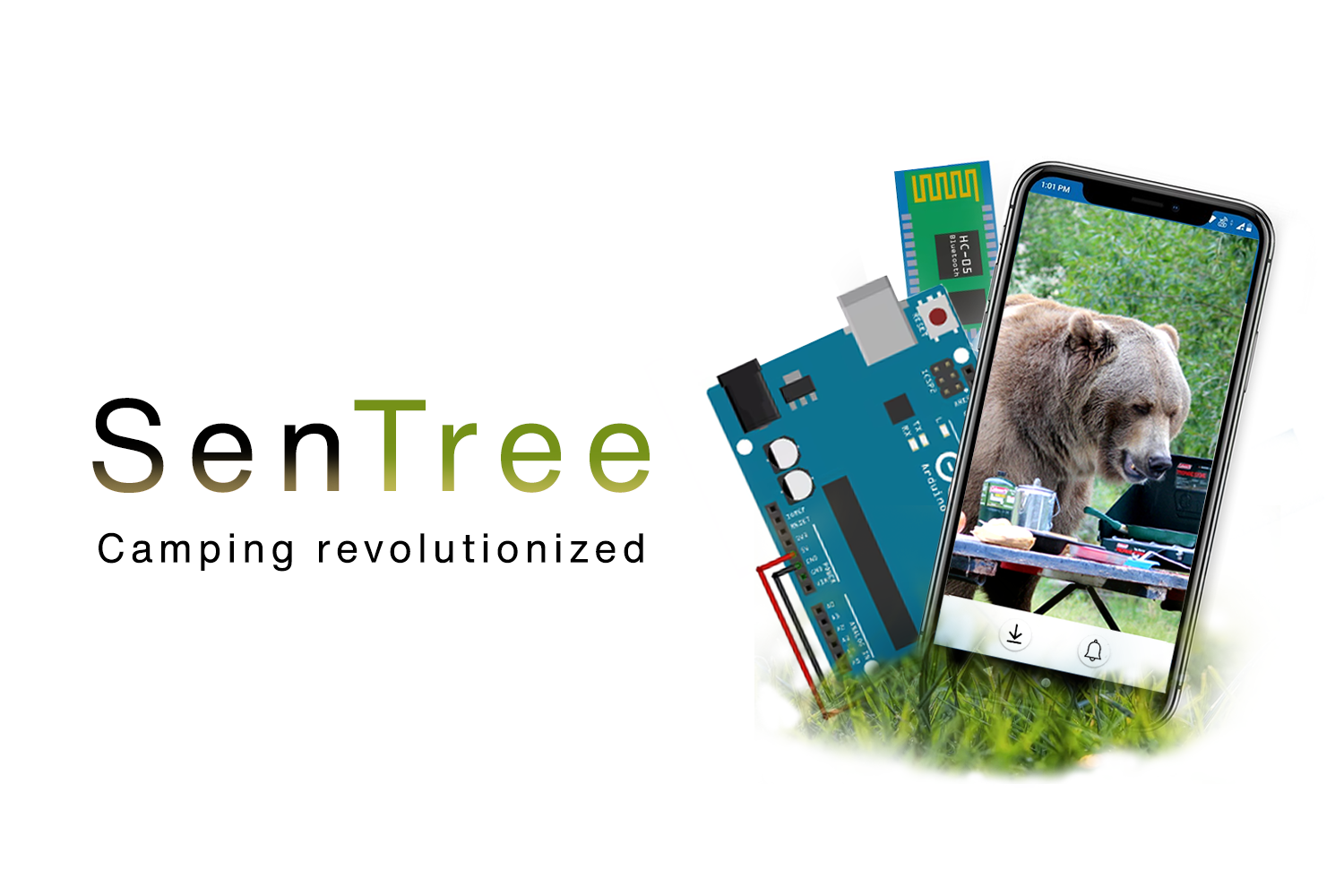
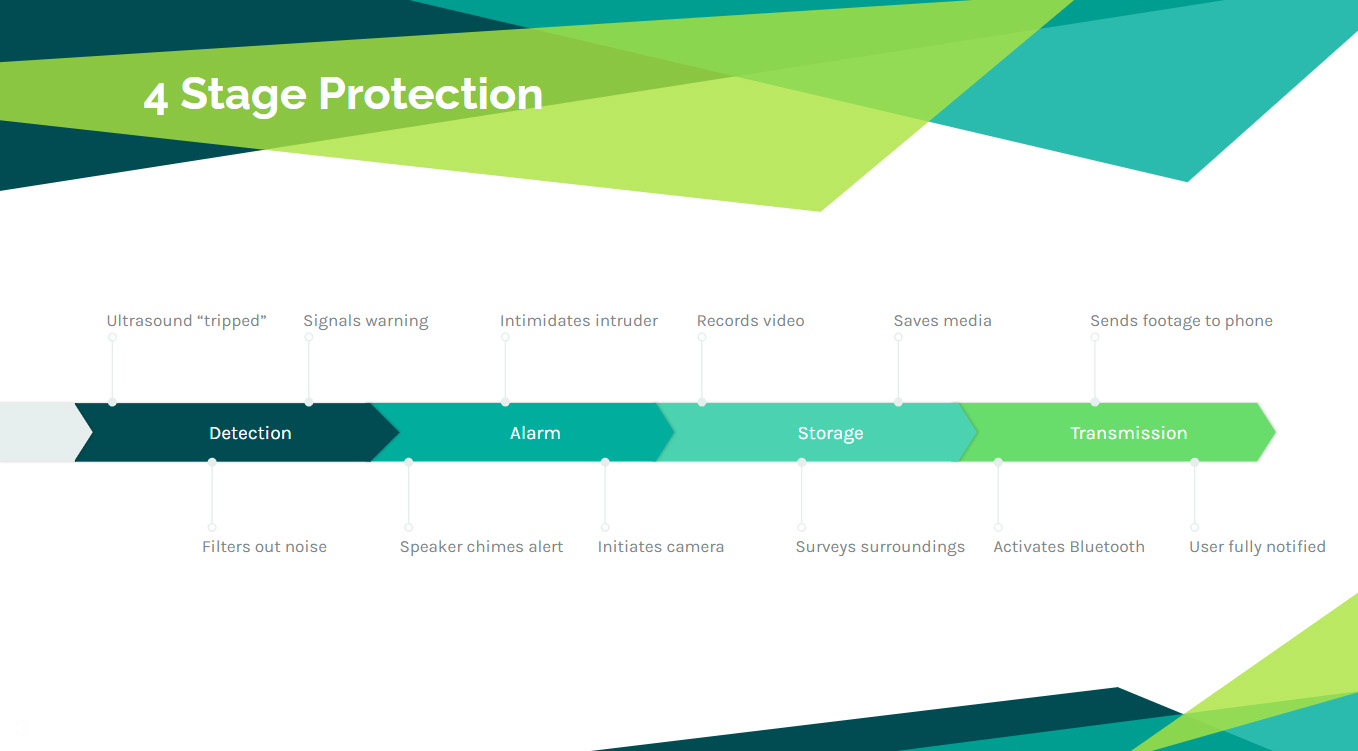
SenTree is a campsite security system that utilizes Bluetooth technology to send alerts and video to your phone. On detection of movement using the HC-SR04 ultrasonic sensor, SenTree springs into life. It denoises retrieved data to classify whether movement belongs to an animal. Then using its built in magnetic speaker, SenTree issues an alarm, intimidating wildlife in the vicinity into leaving. The OV760 camera allows the system to record a 640x480 VGA resolution image at 30fps. At this point, we alert users to activity in their campsite and send images directly to their phone using the HC-05 Bluetooth module. Locally, video is stored within an onboard SD card as footage for later access.
How we built it
Breadboarding. Debugging. Sleeping.

Challenges we ran into
Initially, we wanted to implement the entire system using the STM32 Nucleo board, however, even basic setup of the STM environment proved to be cumbersome. We then transitioned to the Arduino environment for ease of use. Unfortunately, the tradeoff in performance, especially in terms of RAM size to process camera footage, came back to bite us in the end. A prudent alternative would have been to select the Raspberry Pi to maintain a balance of both ease of use and performance simultaneously.
What we learned
- File transfer over Bluetooth = no go
- STM32 Nucleo = unnecessarily complex
- Peripherals + breakouts > peripherals alone
- Camera imaging = suspicious
Accomplishments
For one, we pride ourselves on our ultrasonic motion detection algorithm. Although the cheap HC-SR04 ultrasonic sensor reads data with frequent noise spikes, we processed the sensor input with a median filter and derivative calculations to reliably detect disturbances in the surrounding environment.
Secondly, although it took us 12+ hours to debug, we were able to capture 640x480 RGB video through the OV7670 camera module. For a camera commonly advertised as easy as plug-and-play, this module's intricacies were quite the beast to tame.
What's next for SenTree
Moving forward, we want to construct a tripod body for SenTree. Due to the limited time constraints of the competition and lack of 3d printing resources, our prototype did not include the outer frame initially envisioned. Creating a secure, easily manufactured shell will improve the functionality and stability of SenTree to face even the harshest outdoor environments.
Software-wise, we also hope to complete our Bluetooth file transfer capability. After numerous hours of debugging, we concluded that the available hardware makes video streaming to a nearby phone unnecessarily difficult, but we have ideas for hardware improvements which would allow us to implement this aspect of our design properly.
Built With
- arduino-nano
- hc-05-bluetooth-module
- hc-sr04-ultrasonic-sensor
- microsd-card
- ov760
- sparkfun-magnetic-speaker

Log in or sign up for Devpost to join the conversation.