-
-
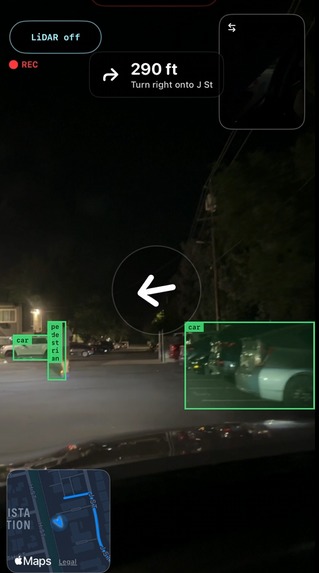
tracking in gps
-
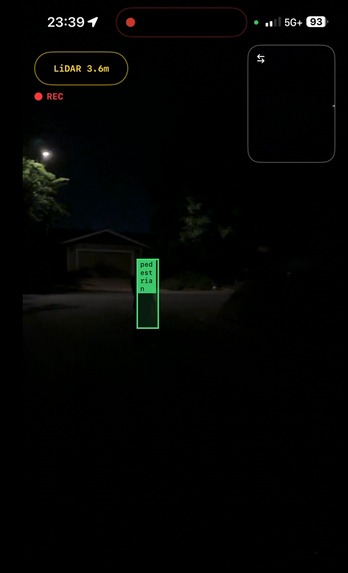
3x simultaneous camera comparison
-
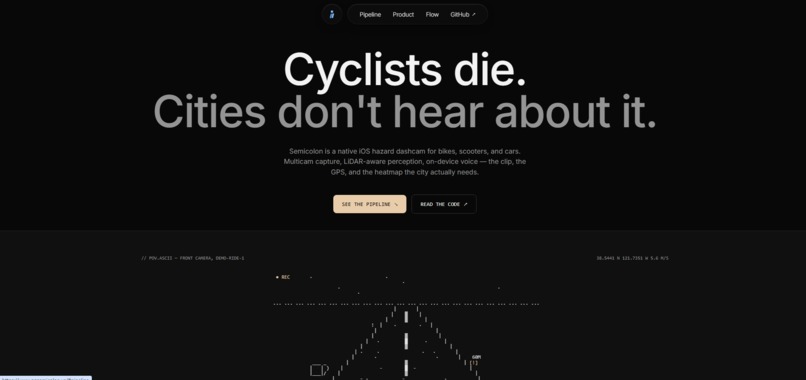
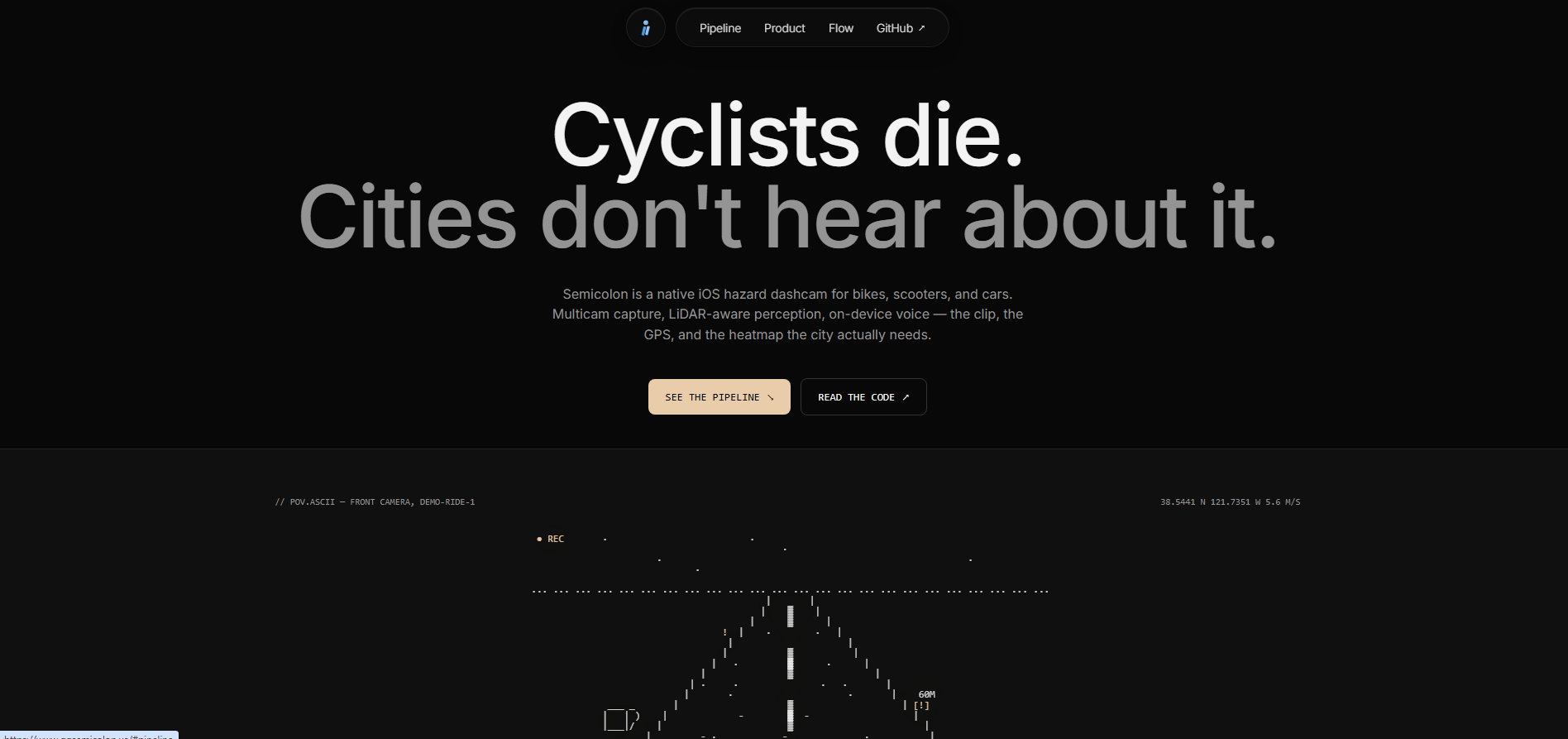
website ggsemicolon.us
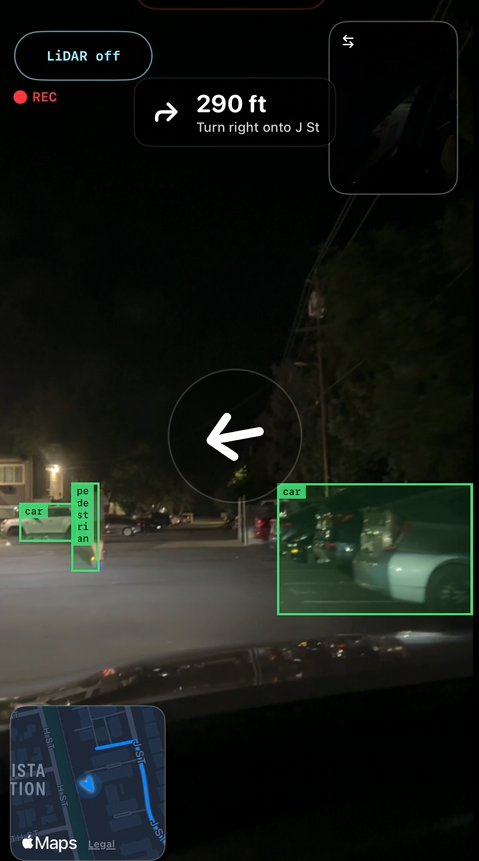
Semicolon Project Story
Inspiration
Semicolon started from a simple problem: people know which streets feel dangerous, but that knowledge usually stays anecdotal. Accidents, deaths, incidents all problems that need to be solved; with semicolon. Semicolon starts to combatting this with live hazard detection and dashcam potential for all vehicular devices whether it be a car, scooter or a bike!
What it does
Semicolon detects and documents road hazards in real time.
- Monitors camera frames for vehicles, pedestrians, and other hazards.
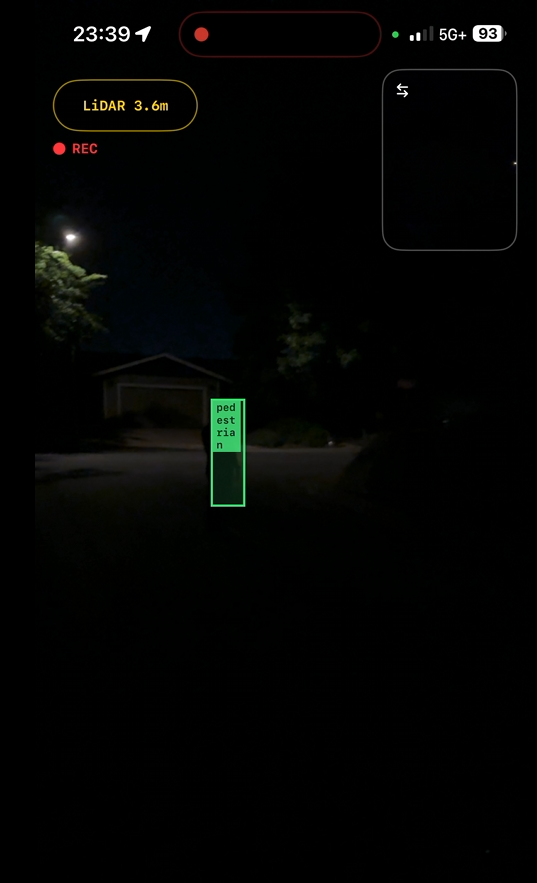
- Provides immediate rider-facing awareness through a live HUD.
- Logs geotagged events with context so incidents are not lost.
- Powers replay, records, and danger-map views to reveal recurring risk areas.
In short, it helps people react to risk now while building a clearer picture of unsafe streets over time.
How we built it
Semicolon is an end-to-end system across mobile, backend, and visualization layers.
- Mobile clients: Native iOS (Swift/Xcode).
- Perception service: Python FastAPI sidecar running YOLO for frame-level detection.
- API layer: Next.js routes for perception orchestration and event flow.
- Data layer: Event persistence and retrieval for records and replay.
- UI layer: Dashcam-style overlays, detection boxes, scoring, and navigation/gallery controls.
At a high level, our HUD risk score can be represented as: Score = min(100, max over i of (42*c_i + alpha_i + beta_i + gamma_i))
Where:
- c_i = confidence of detection i
- alpha_i = hazard-class bonus
- beta_i = center-proximity bonus
- gamma_i = box-prominence bonus
Challenges we ran into
- Keeping behavior consistent across Swift, Next.js, and Python.
- Balancing latency, frame throughput, and network reliability for live inference.
- Managing camera edge cases (orientation, multicam limits, front/back handling).
- Resolving class-label mismatches and downstream scoring assumptions.
- Handling setup friction (dependencies, local networking, ngrok, environment config).
Accomplishments that we're proud of
- Built a full pipeline from live camera input to usable safety events.
- Shipped real-time HUD detection behavior, not just offline analysis.
- Added conditional front-camera PIP in the native iOS app when detections appear.
- Standardized around raw COCO labels and aligned downstream logic.
- Delivered a demo-ready system that can evolve into long-term civic tooling.
What we learned
- Integration quality matters as much as model quality.
- Stable data contracts are essential across multi-service systems.
- Safety UX must be clear, fast, and low-distraction.
- Near-miss data is highly valuable and often missing from traditional datasets.
- Clear ownership boundaries make multi-stack collaboration much faster.
What's next for Semicolon
- Improve low-light robustness and nighttime detection performance.
- Add stronger on-device inference paths for latency and offline reliability.
- Expand event intelligence (similar-incident retrieval and better hotspot clustering).
- Validate with more real-world ride data and edge-case testing.
- Improve reporting workflows so communities and planners can act on the data faster.

Log in or sign up for Devpost to join the conversation.