-
-
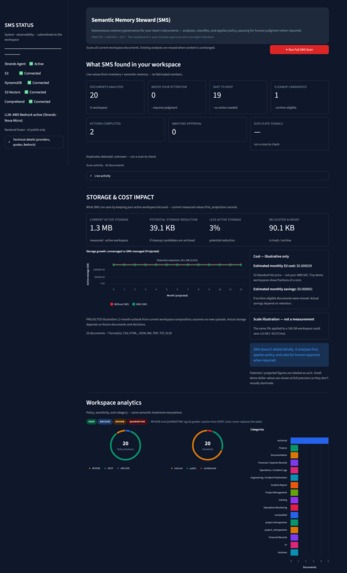
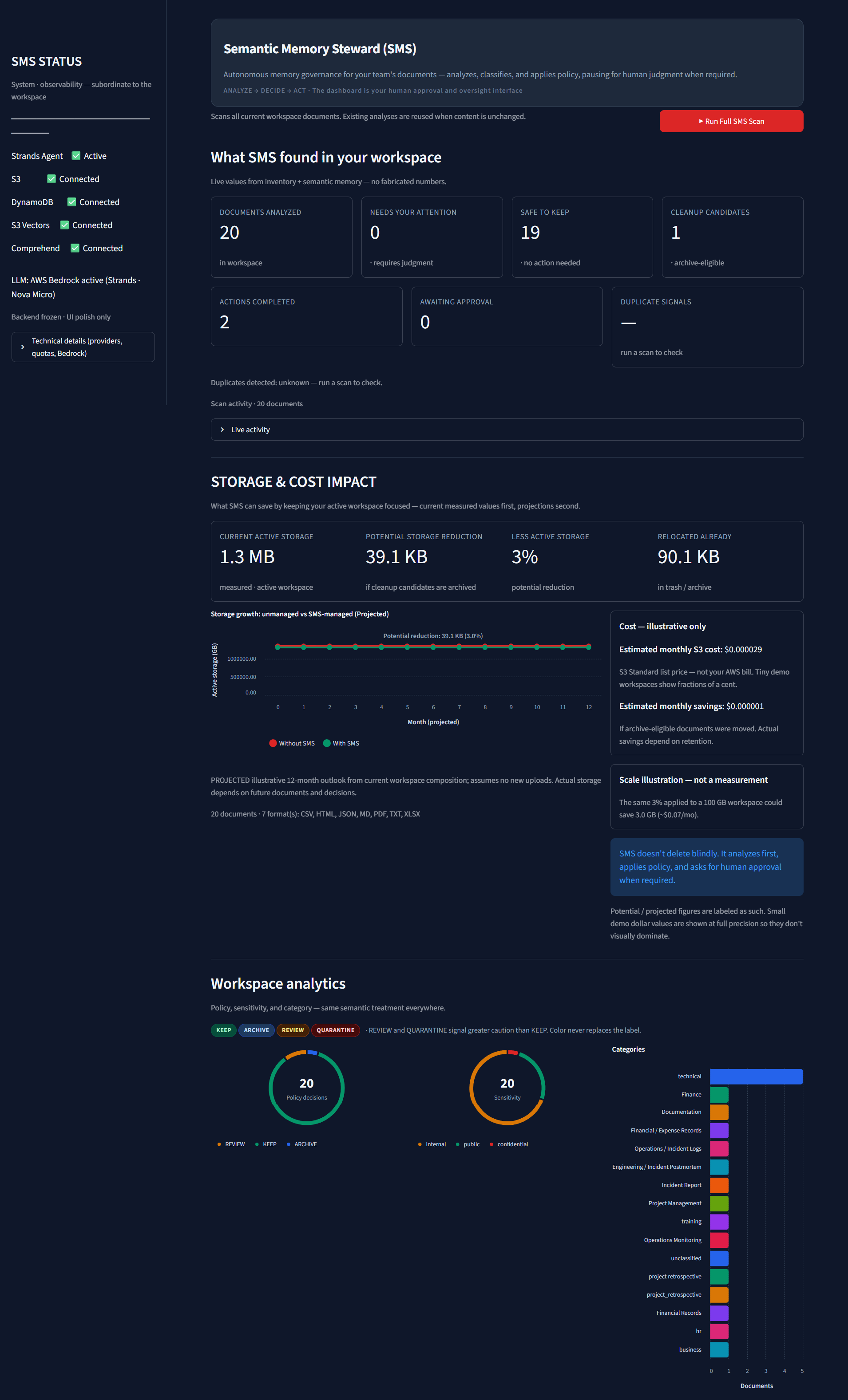
SMS Dashboard
-
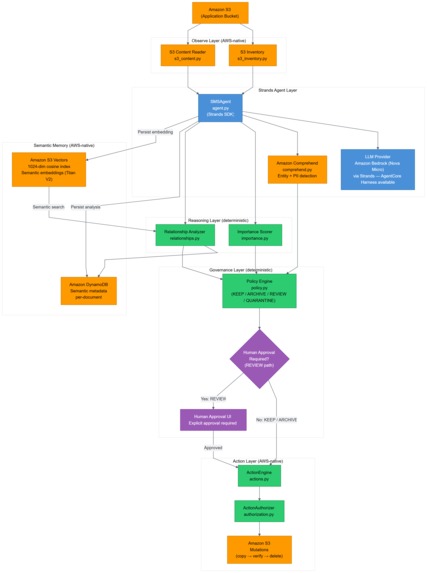
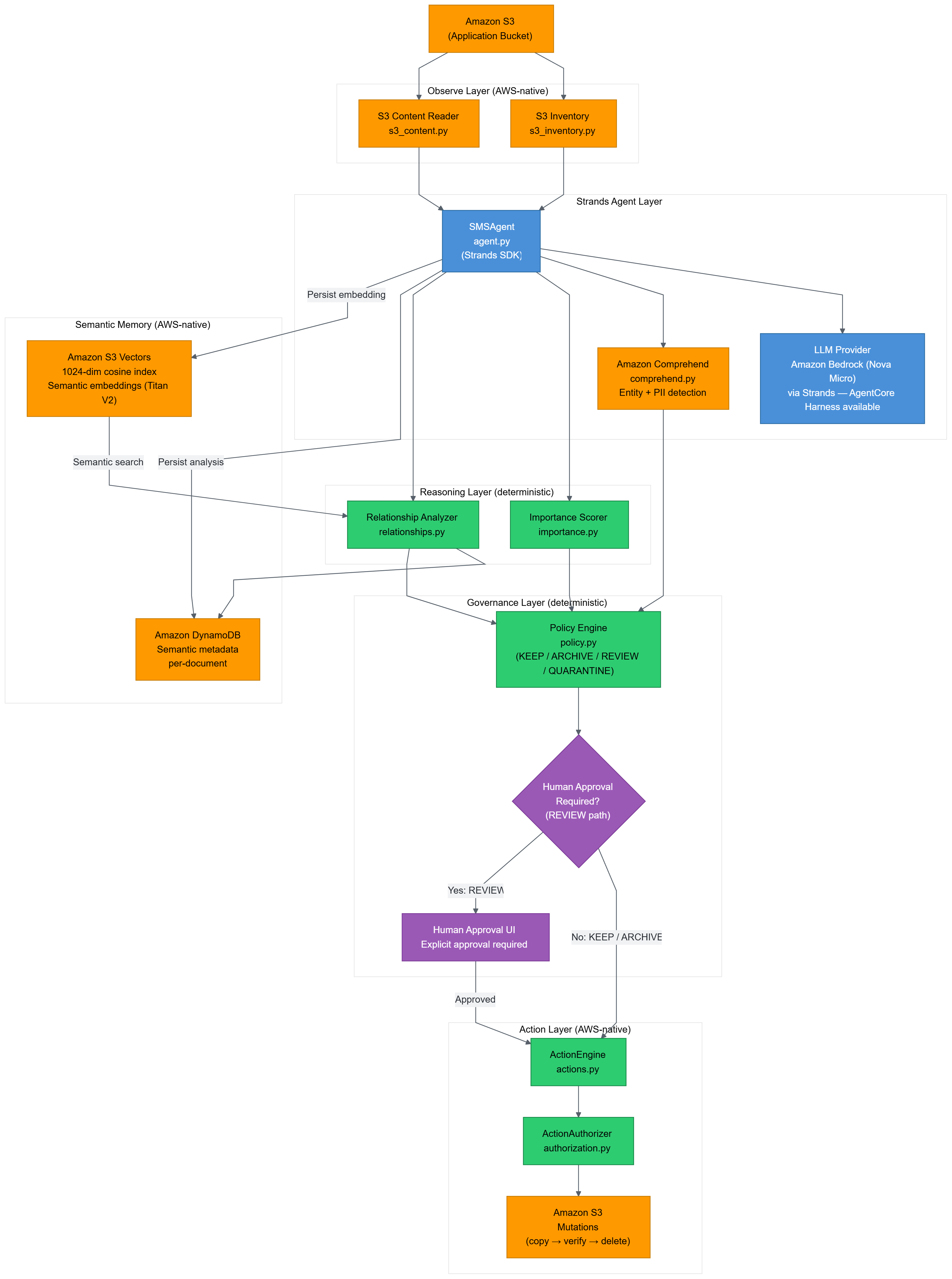
SMS Architecture Diagram
Semantic Memory Steward (SMS)
Semantic Memory Steward (SMS) turns passive Amazon S3 storage into an actively governed semantic memory system.
As S3 workspaces grow, stale documents, duplicates, sensitive records, and important operational knowledge become difficult to distinguish. SMS is built for IT administrators, data/compliance teams, and operations teams who need to understand what their documents mean and decide what should happen to them without giving an AI unrestricted authority over their data.
SMS uses the Strands Agents SDK to orchestrate semantic analysis through Amazon Bedrock Nova Micro. Each document is classified by category, sensitivity, importance, confidence, and reasoning. Amazon Comprehend independently provides entity and PII detection, grounding the semantic analysis with additional AWS-native evidence. Amazon S3 Vectors, using Titan V2 embeddings, enables semantic relationship and duplicate detection, while Amazon DynamoDB persists the resulting semantic memory so unchanged documents can reuse cached analysis on subsequent scans.
The key design principle is:
The AI understands; the deterministic policy engine decides.
SMS does not allow the LLM to directly determine or execute destructive actions. A deterministic PolicyEngine evaluates semantic analysis, relationship signals, importance, sensitivity, and risk before assigning one of four outcomes:
- KEEP — retain the document with no mutation.
- ARCHIVE — autonomously move eligible low-risk, low-value content to an archive location.
- REVIEW — halt autonomy and require an explicit human decision.
- QUARANTINE — move content to a quarantine location only after the required human approval.
When an authorized mutation occurs, the ActionEngine uses a copy → verify → delete workflow so the destination is confirmed before the source is removed. The ActionAuthorizer provides an independent safety boundary, and destructive actions cannot simply be enabled by an LLM recommendation.
SMS also maintains persistent semantic memory. Content hashes, ETags, and metadata allow rescans to recognize unchanged documents and reuse cached analysis rather than repeatedly invoking the model. Semantic relationships can identify exact duplicates as well as semantically similar documents, giving governance decisions more context than filenames or object metadata alone.
The Streamlit dashboard provides the human-facing control surface: operators can run scans, inspect semantic reasoning and Comprehend evidence, review relationship findings, see policy decisions, approve or reject actions requiring intervention, observe live activity, and understand projected storage impact.
Why it matters
Traditional storage tooling can tell you what a file is called, how large it is, and when it changed. SMS attempts to answer a more useful question:
"What does this document mean, and what should happen to it?"
This makes S3 governance more semantic, more explainable, and more safely actionable while keeping humans in control of consequential decisions.
AWS technologies
SMS is built around Amazon S3, Amazon Bedrock, Amazon Comprehend, Amazon DynamoDB, Amazon S3 Vectors, and the Strands Agents SDK. An Amazon Bedrock AgentCore Harness integration is also available and has been verified through a non-mutating smoke test.
Built With
- amazonbedrock
- amszons3
- python
- strandsagent
- streamlit

Log in or sign up for Devpost to join the conversation.