-
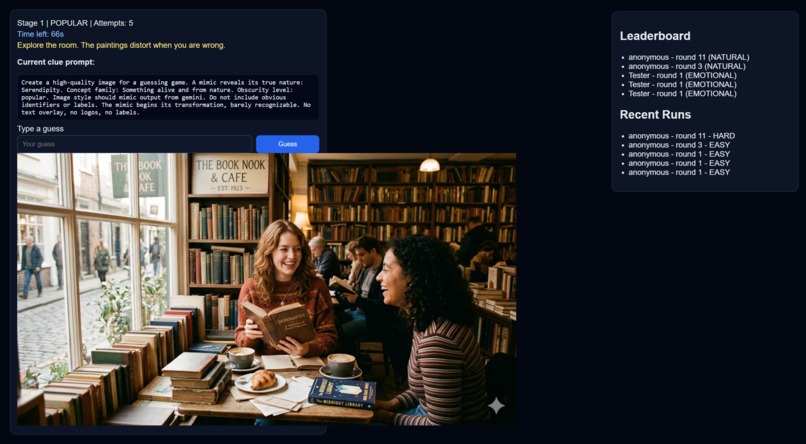
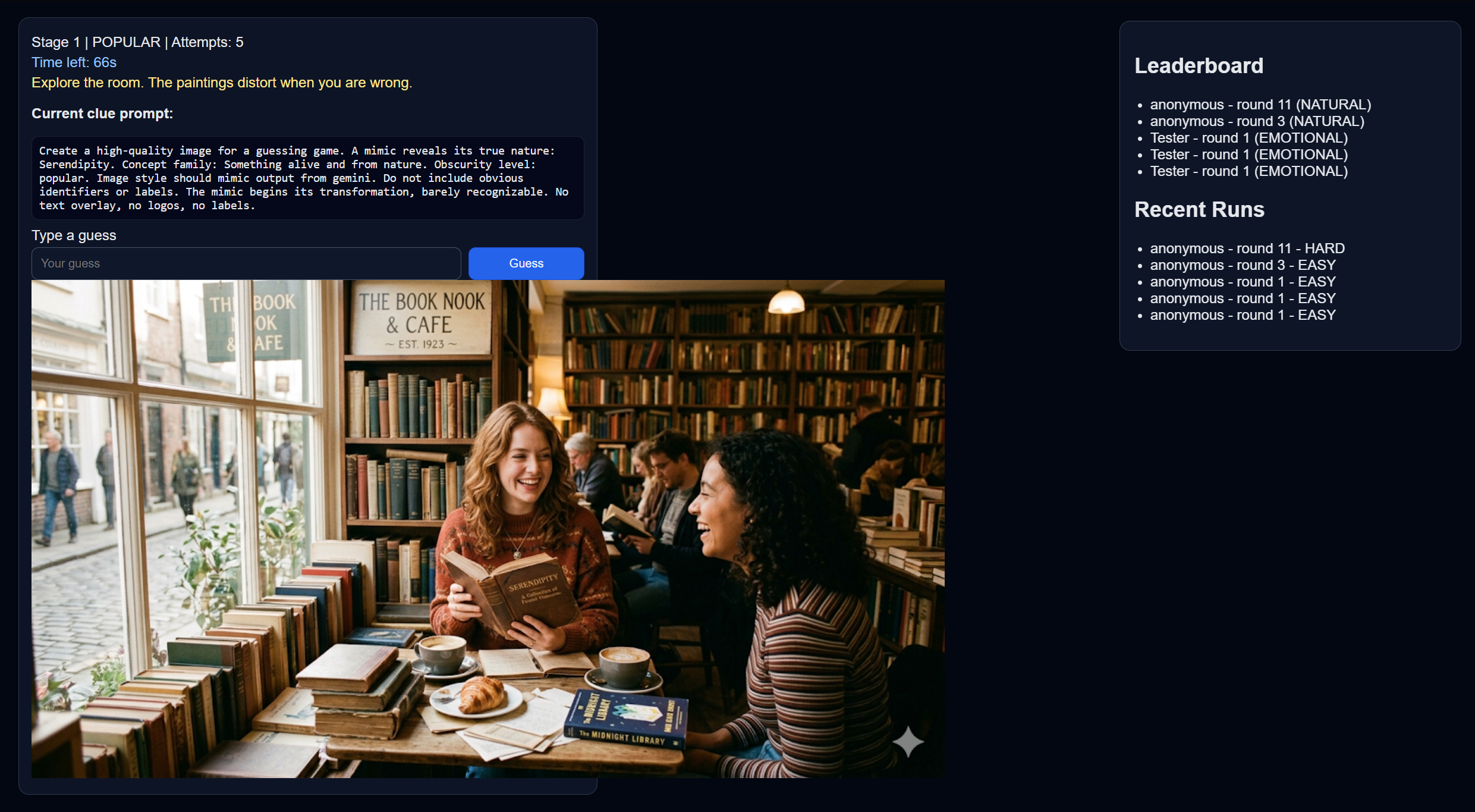
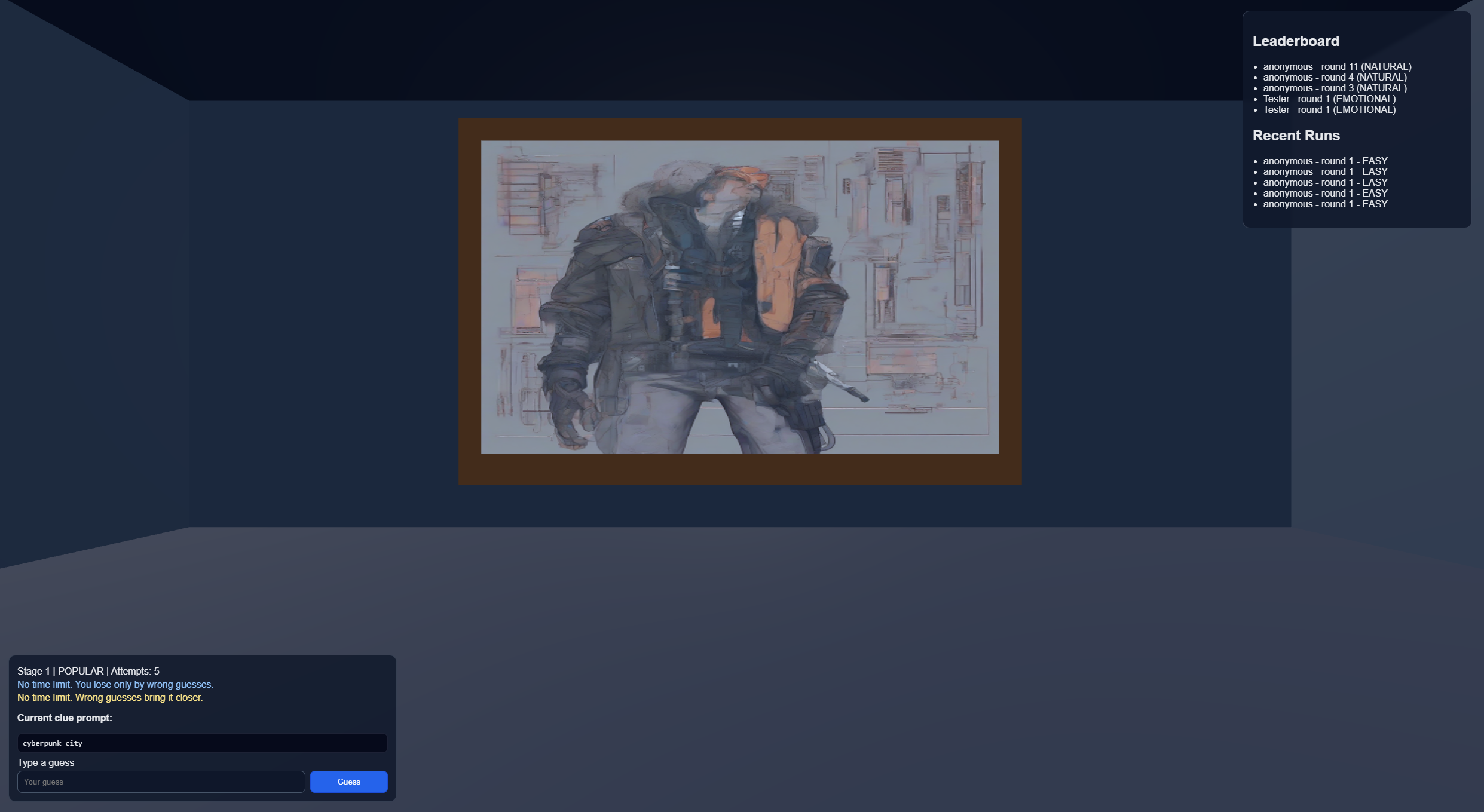
Image linked to secret word, both AI generated
-
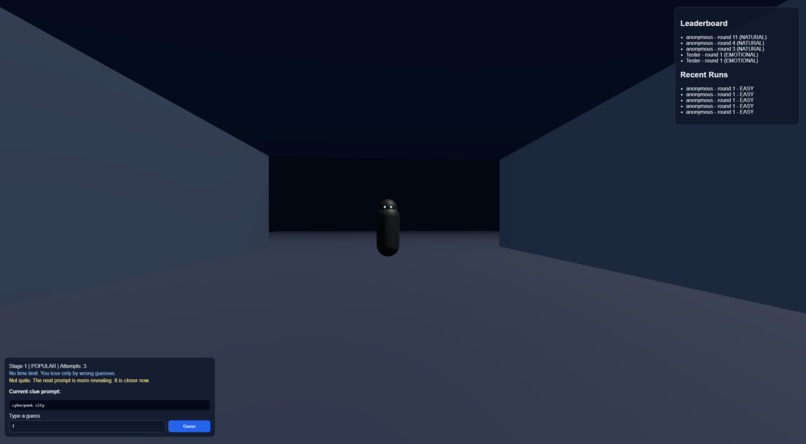
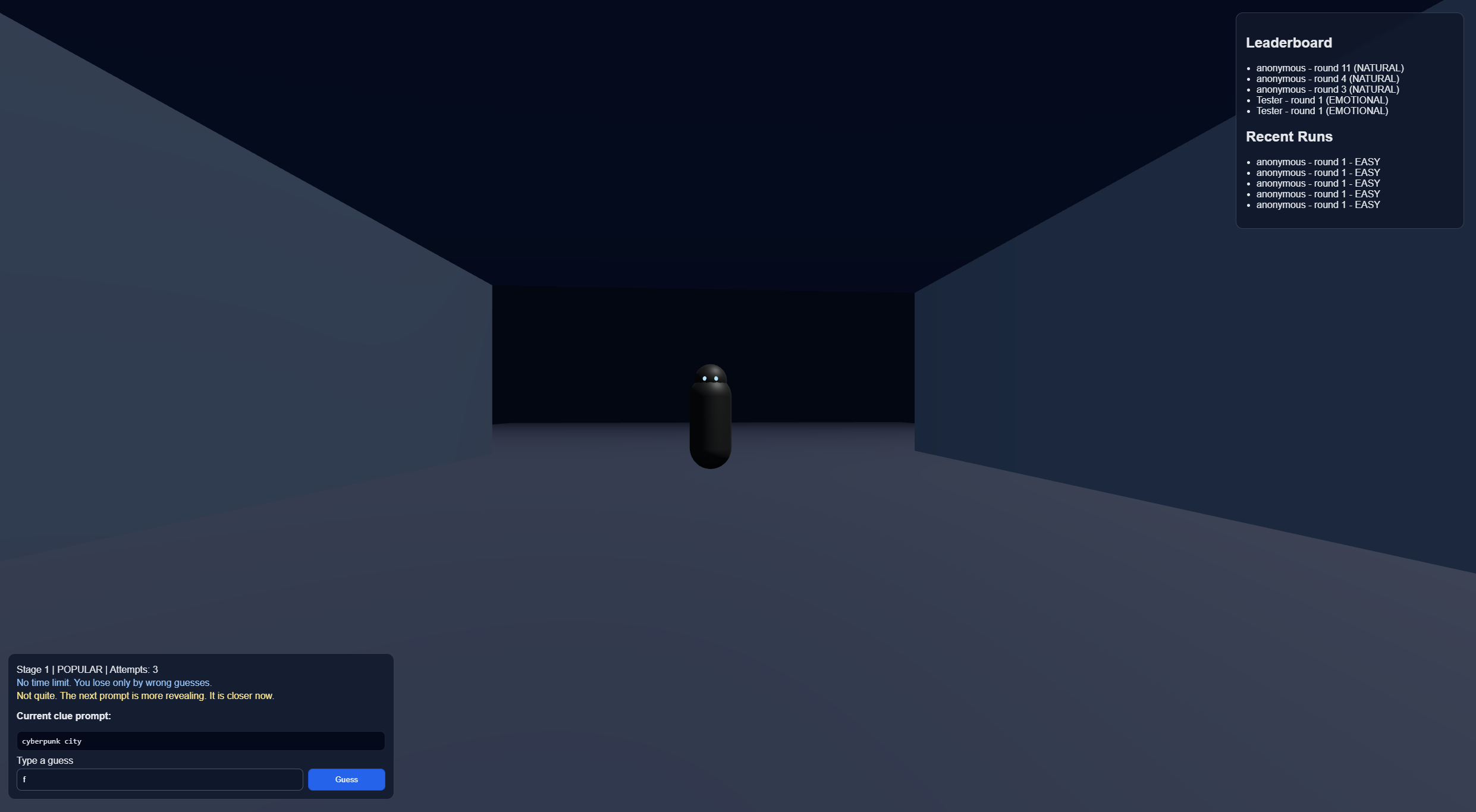
He Watches
-
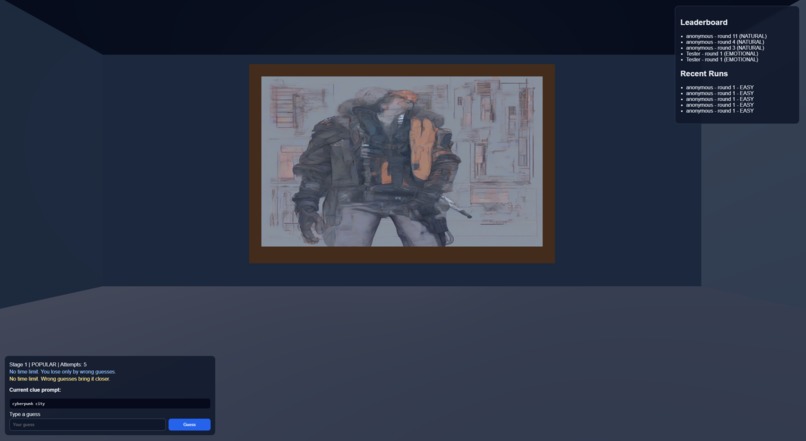
A painting appears
Inspiration
The idea started with a question that's bothered humanity for as long as we've bothered each other: How do you describe the indescribable?
We kept thinking about language and its role in the way humans communicate meaning — not just through words, but through association, intuition, and at its core, shared experience. When you hear words like "melancholy" or "thunderstorm", your brain doesn't retrieve a dictionary entry. It renders something: a color, a smell, a texture unique to your own feelings, shaped by who you were when you first encountered it. Yet miraculously — through shared cities, communities, and cultures — that meaning survives the transfer. Whoever chooses to use those words can be understood all the same. But how does meaning exist in a vacuum of emotions? What do those words mean to an AI? We wanted to know what AI thinks.
What if an AI generated the image — the feeling, the creature, the concept — and you had to reverse-engineer the word it was thinking of? That tension between visual and linguistic meaning is the heart of Semant.tech.
We were also inspired by the classic kids' game Pictionary, word-guessing puzzles like Semantle, and the growing ability of generative AI to produce strikingly evocative imagery. Combining them felt like getting one step closer to answering our question.
What it does
Semant.tech is an AI-powered word-guessing game where:
The game picks a secret word based on the current theme (e.g., "envy", "teapot", "kraken"). The AI generates a visual representation of that word — an illustration, creature, or abstract rendering. The player tries to guess the word the AI is "thinking of." The game repeats until the player fails to guess the secret word within 5 attempts.
How we built it
Ngl, like 90% vibe coded.
Challenges we ran into
Did you know you have to pay to use an API? We didn't — which led to 12 hours of suffering as we scoured the internet for any free or sufficiently sketchy trial that would let us run our program without forking over a subscription fee. Finally, we found Flux AI, which allowed us to generate images at a snail's pace, but it was worth it(not).
Accomplishments that we're proud of
We didn't hand a single penny to Gemini to use their nano banana image generation API.
There are no more than 10 lines of human-written code in our entire program.
We spent more time on Roblox than on our project.
What we learned
AI is going to replace us and there's nothing we can do about it.
What's next for Semant.tech
We've reached out to Meta to sell our proprietary software for a minimum of $8 billion. Cash. Response pending.
Built With
- copilot
- gemni
- java

Log in or sign up for Devpost to join the conversation.