-
-
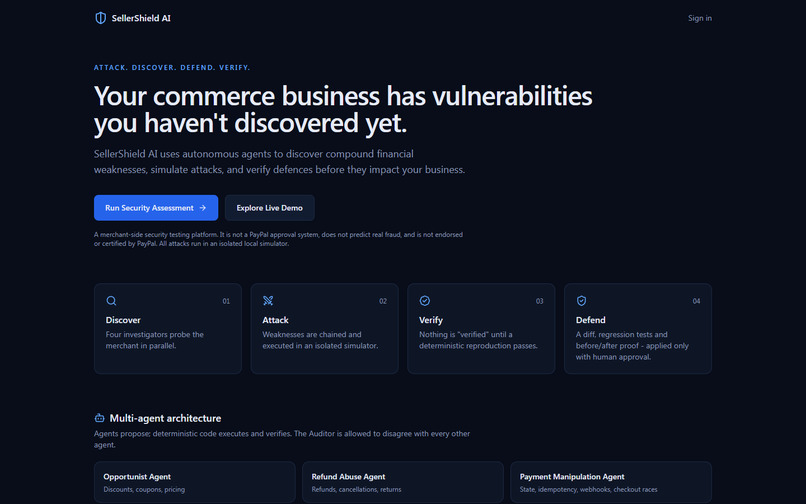
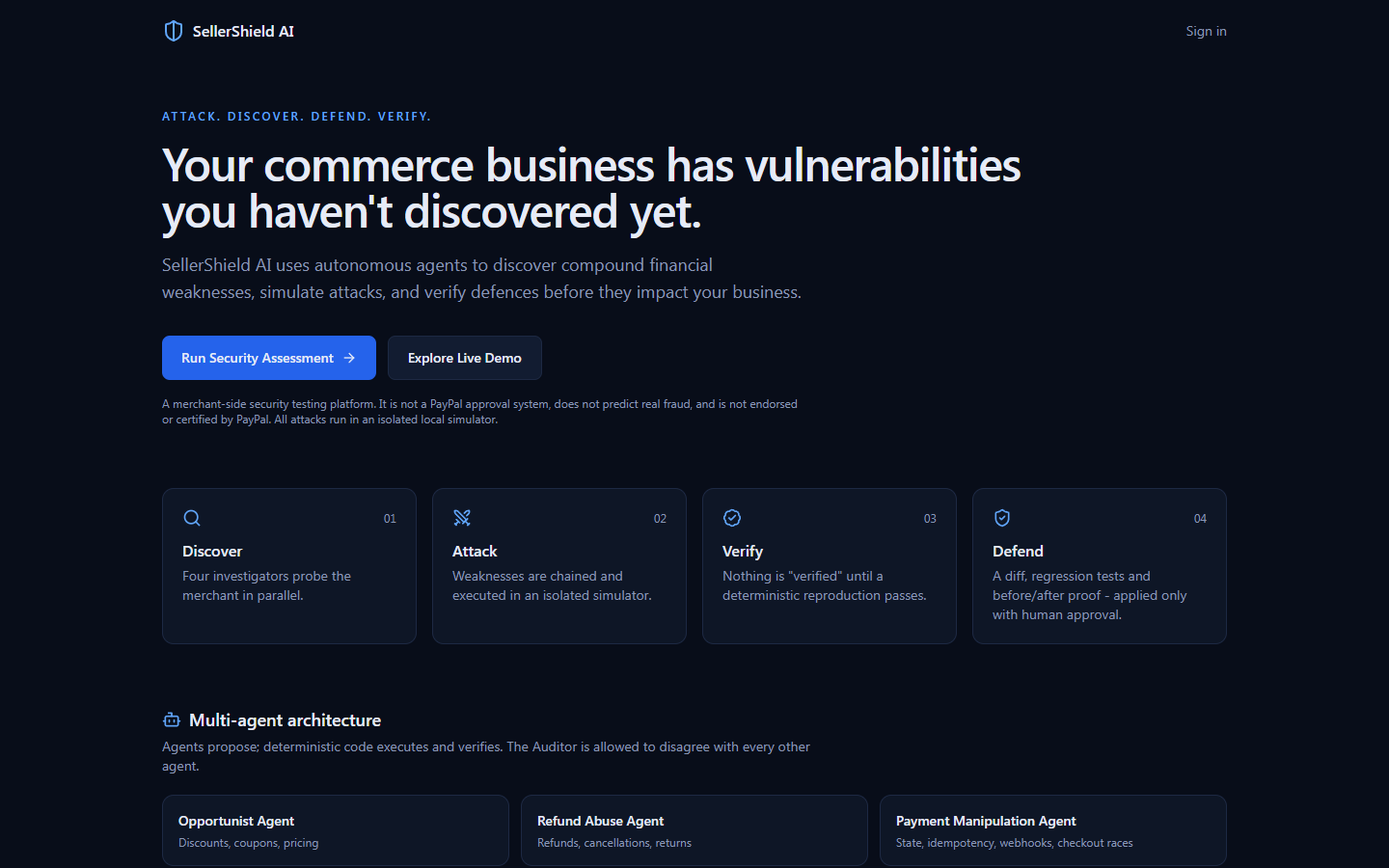
SellerShield AI landing page: find the money-losing logic flaws in your shop before attackers do.
-
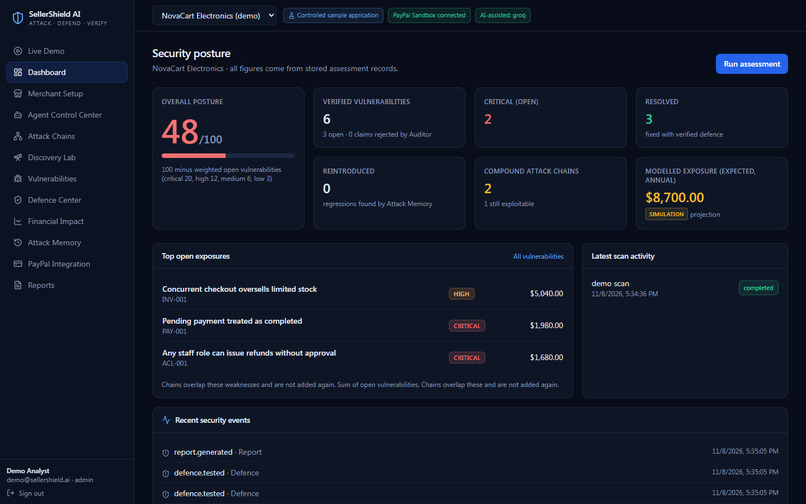
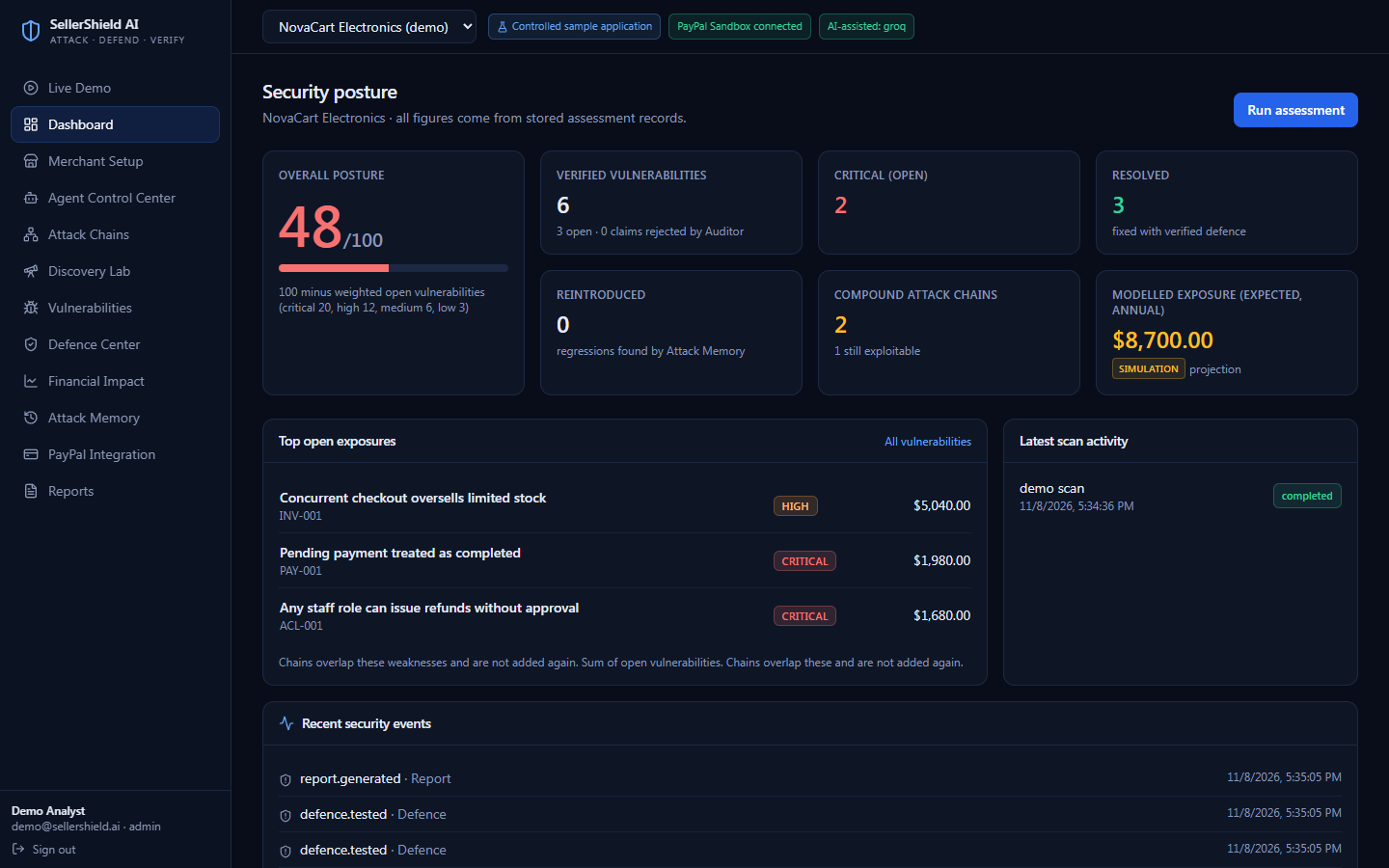
Dashboard: security posture, open findings and simulated exposure for the demo shop.
-
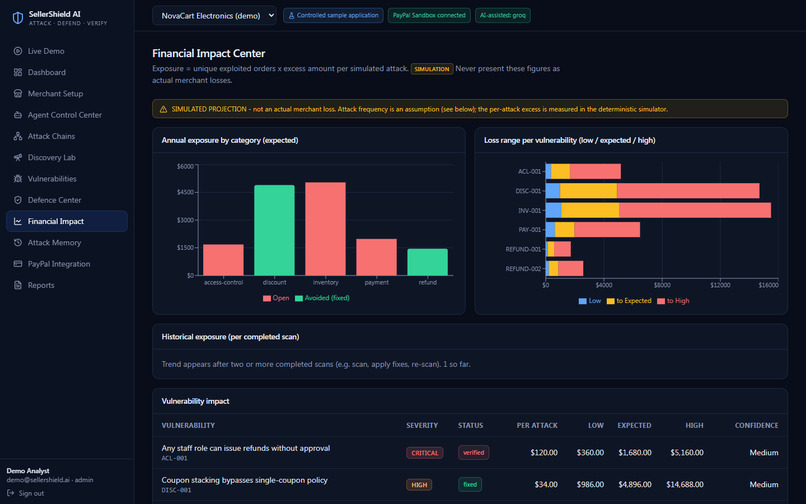
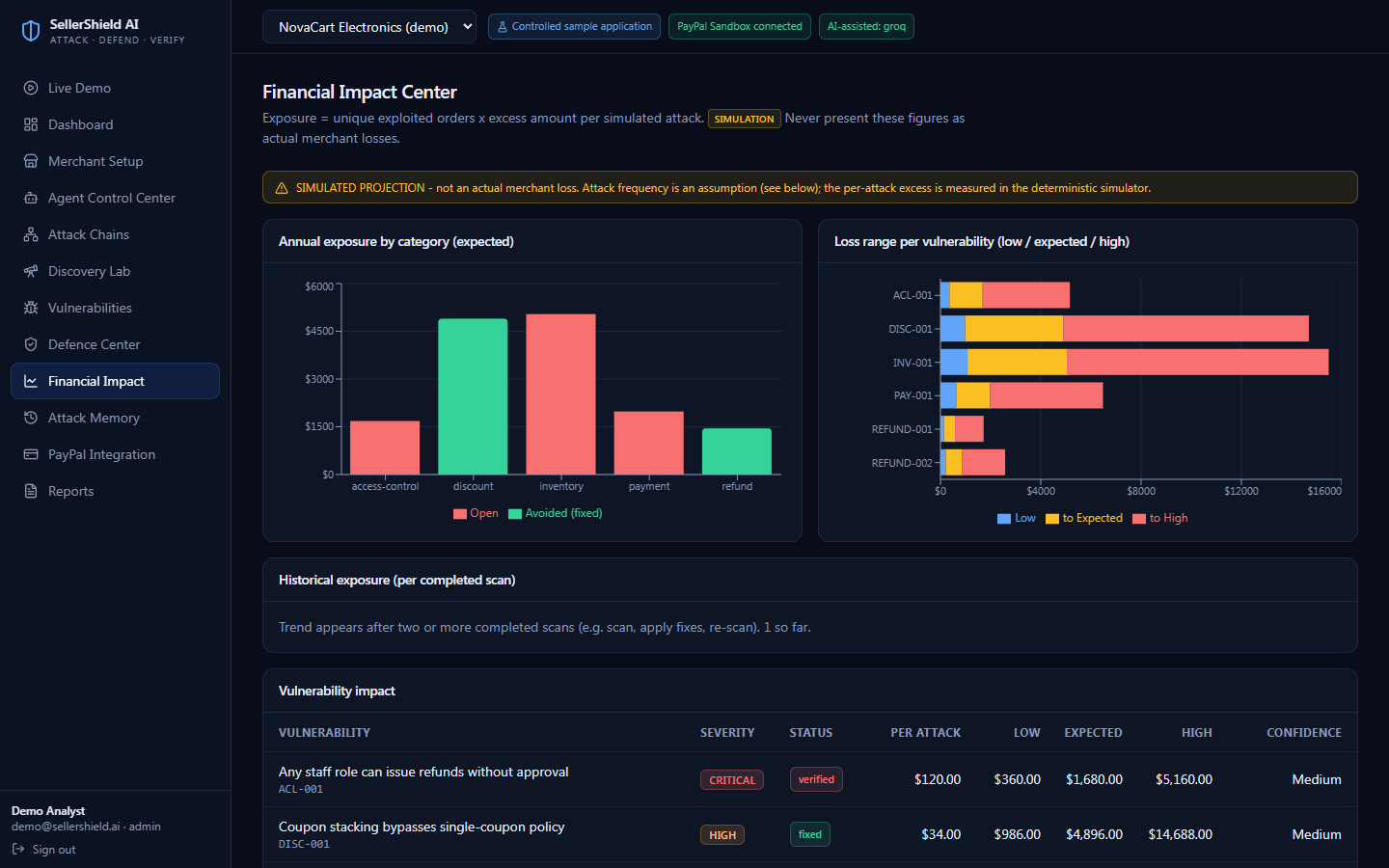
Financial impact as a low, expected and high range. Always simulated.
-
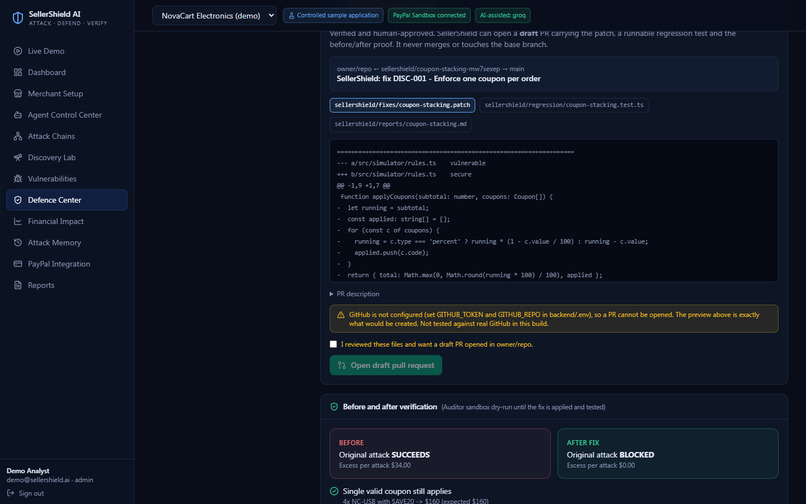
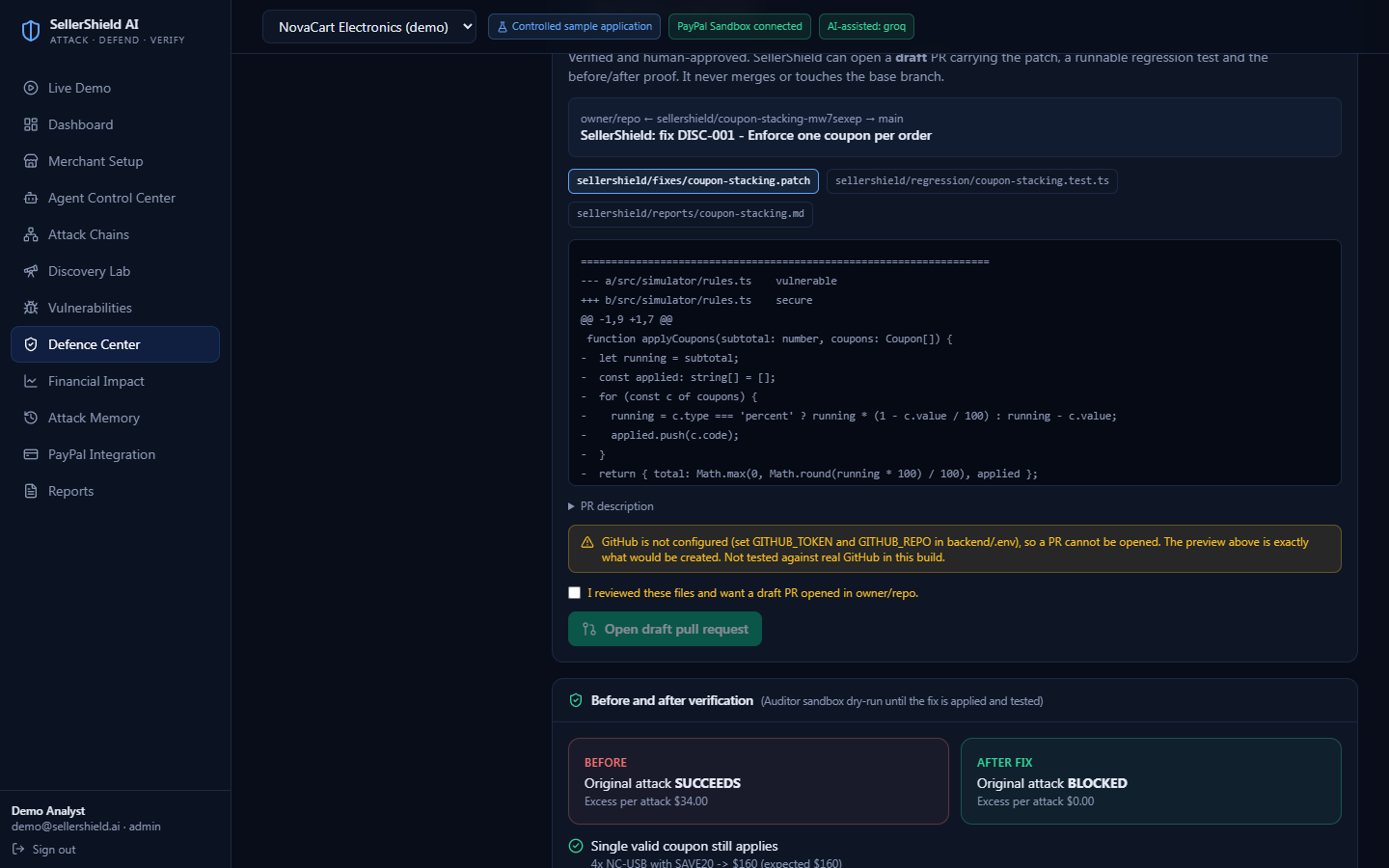
A verified fix can become a draft GitHub pull request. One real draft PR was opened in a test repo.
-
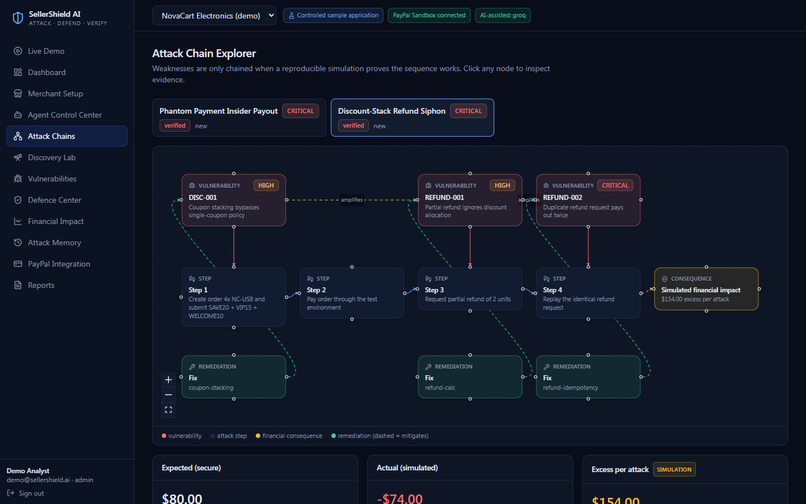
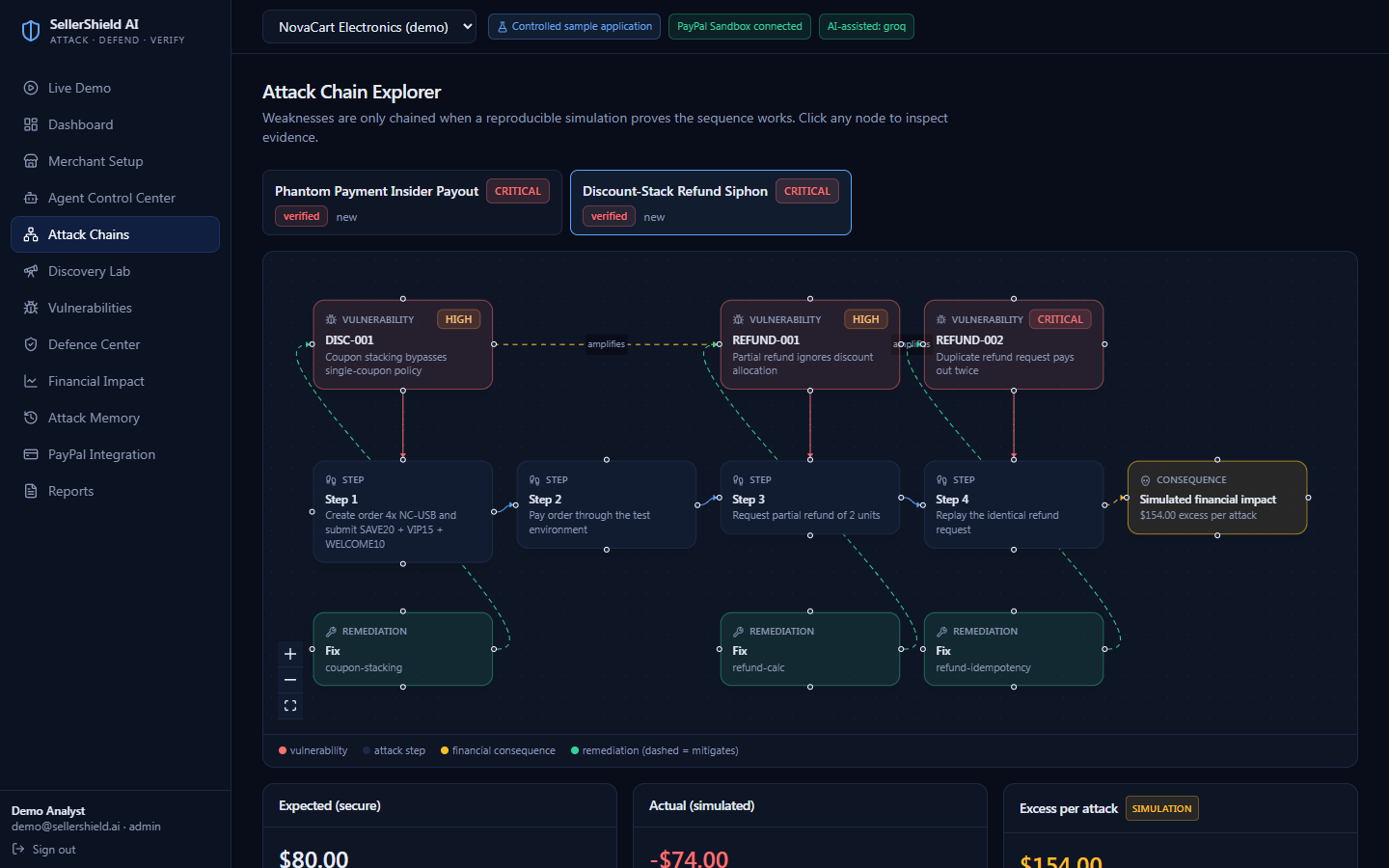
Attack chains: weaknesses are linked only when the simulation proves the sequence.
-
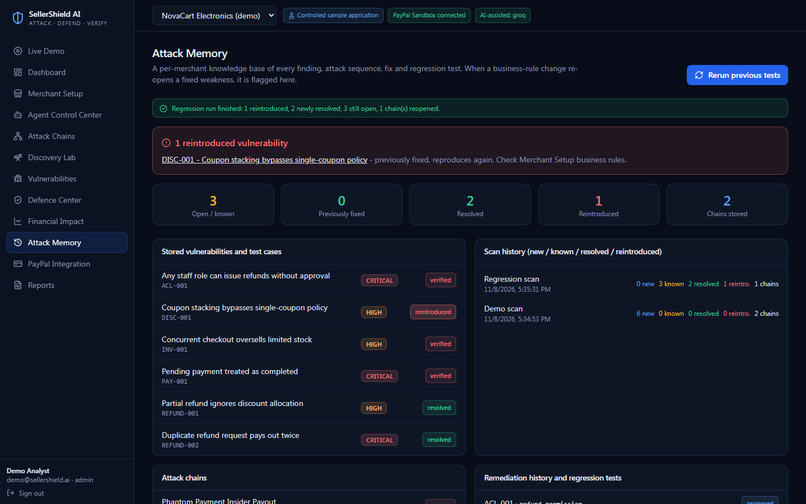
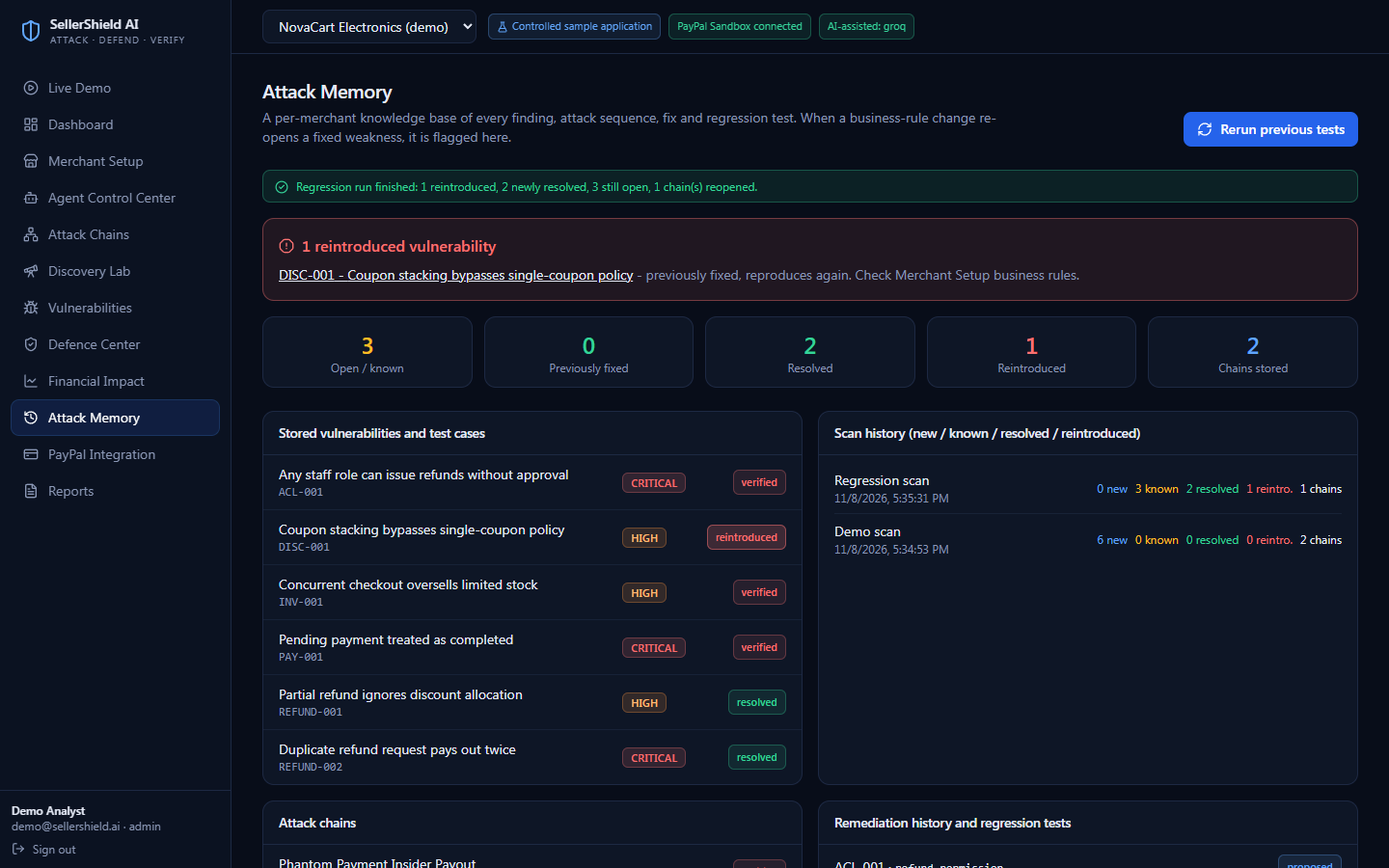
Attack Memory flags a fixed weakness that returns after a rule change.
-
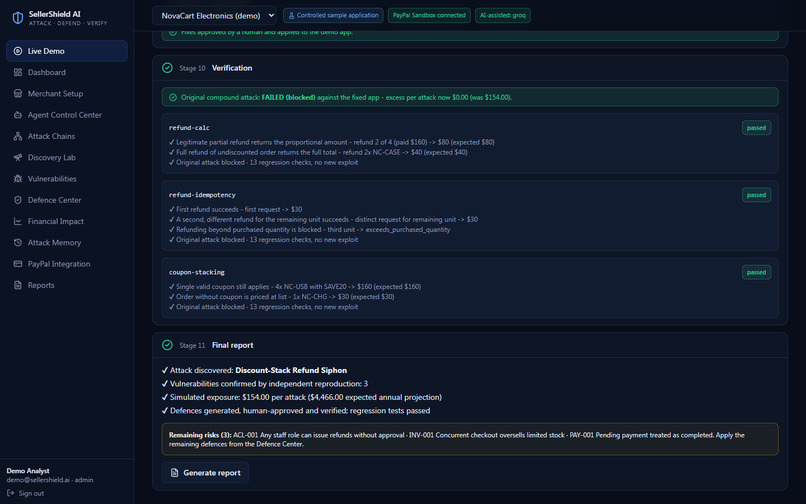
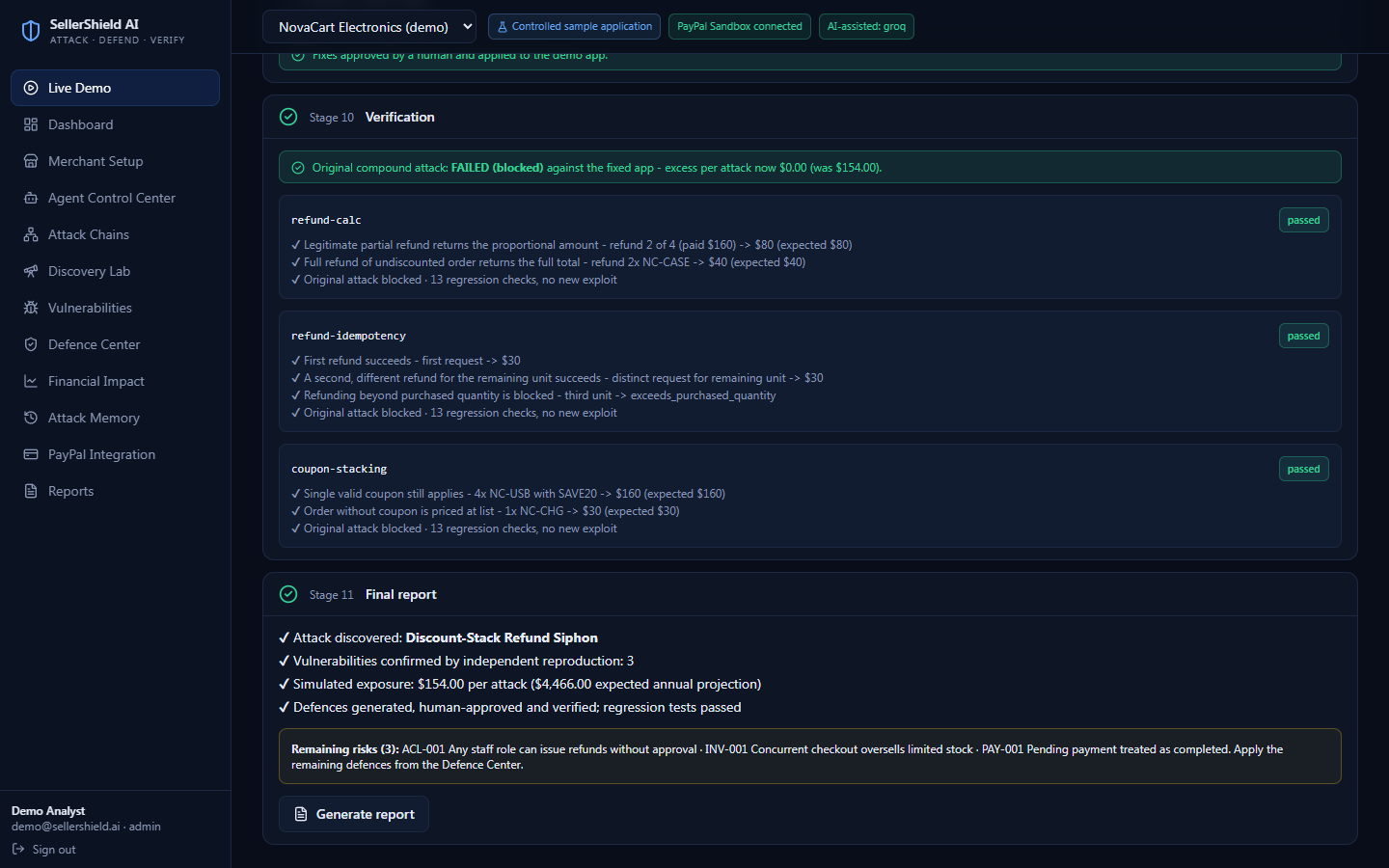
The original attack is replayed on the fixed app and is blocked. Simulated.
-
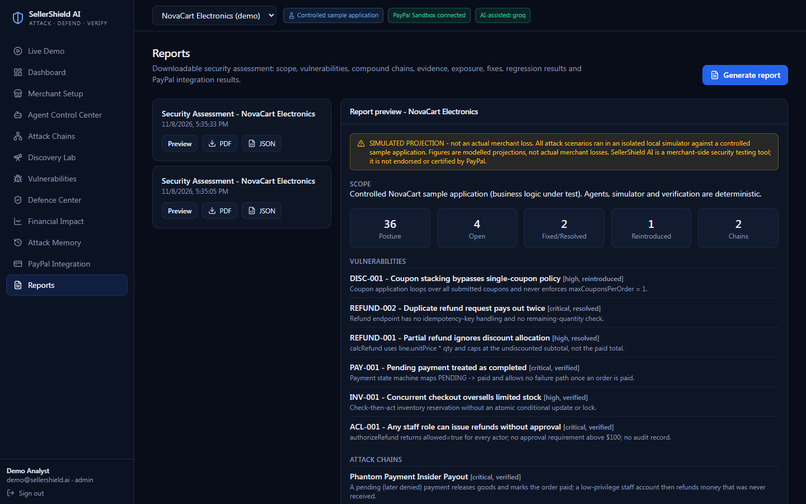
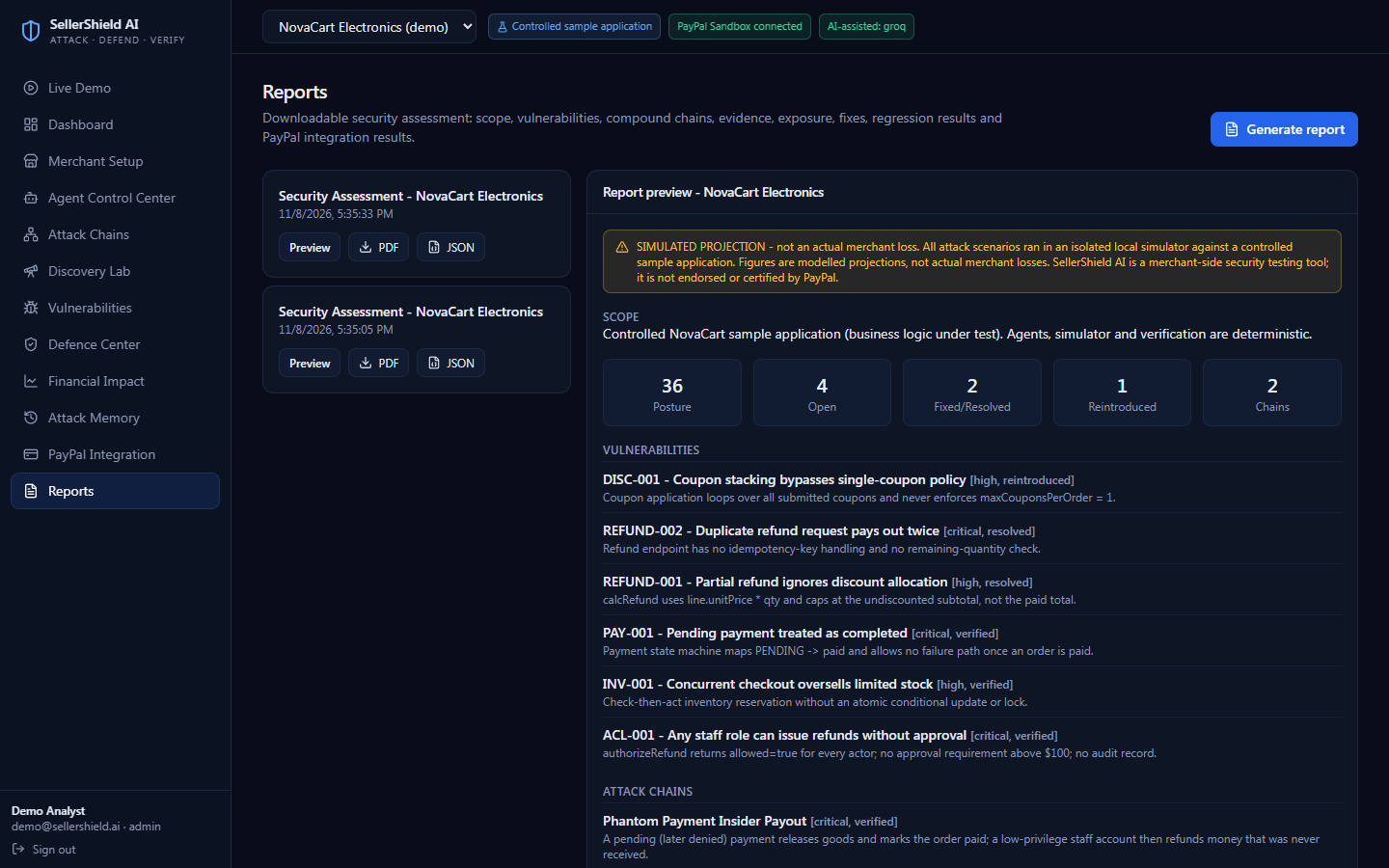
Reports with the simulation disclaimer, downloadable as JSON or PDF.
-
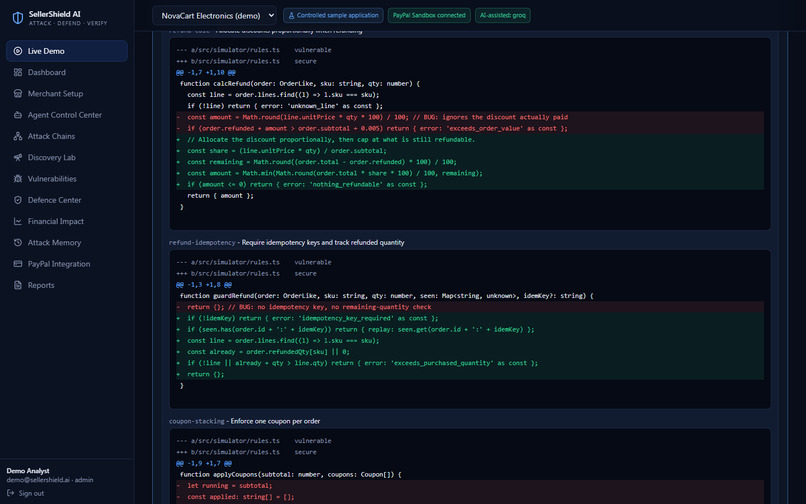
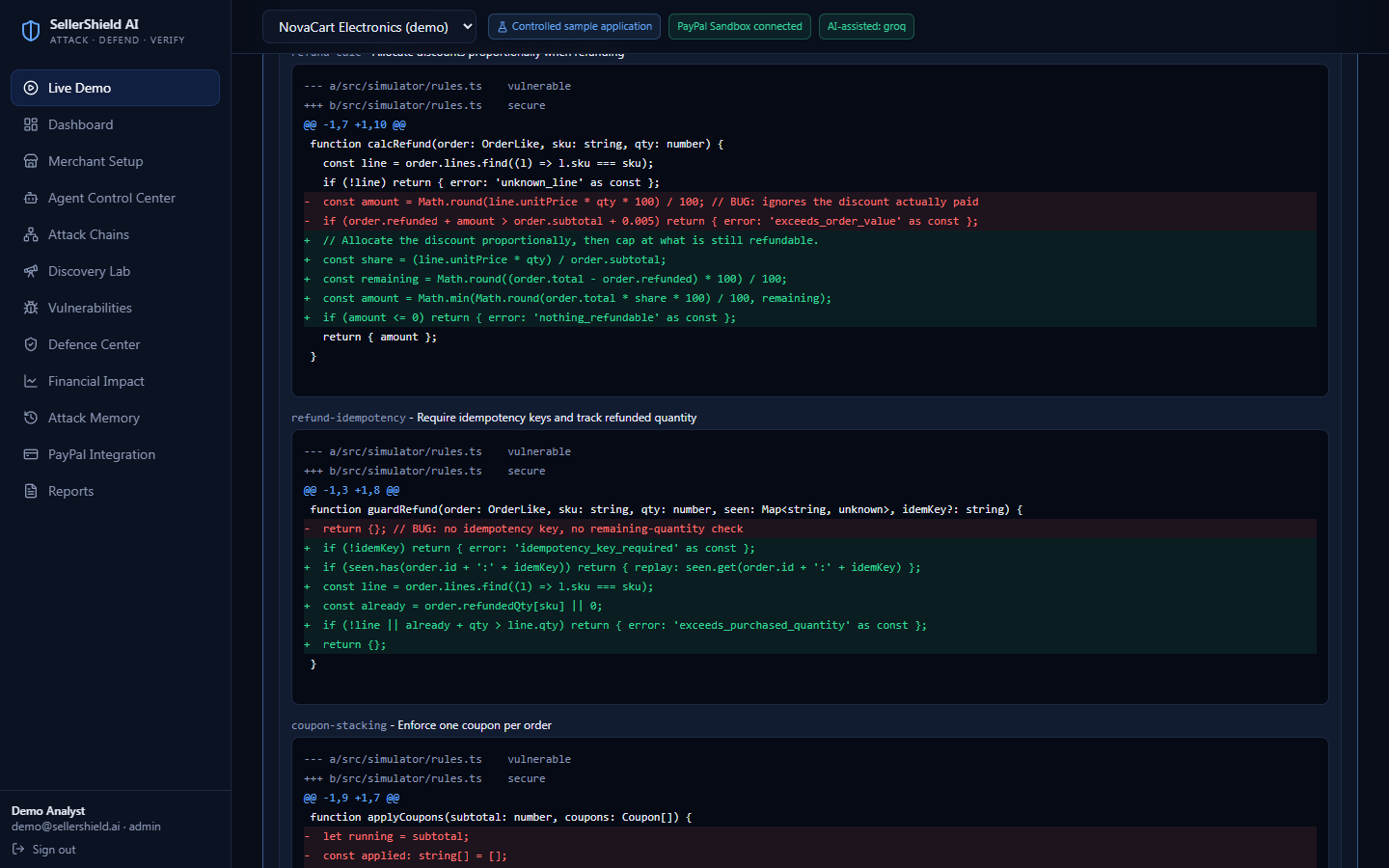
Fixes arrive as real code diffs and need human approval and an explicit confirmation.
-
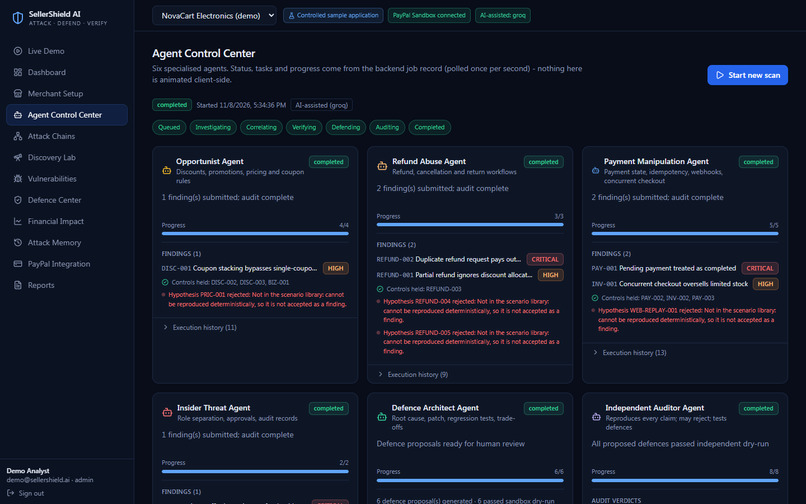
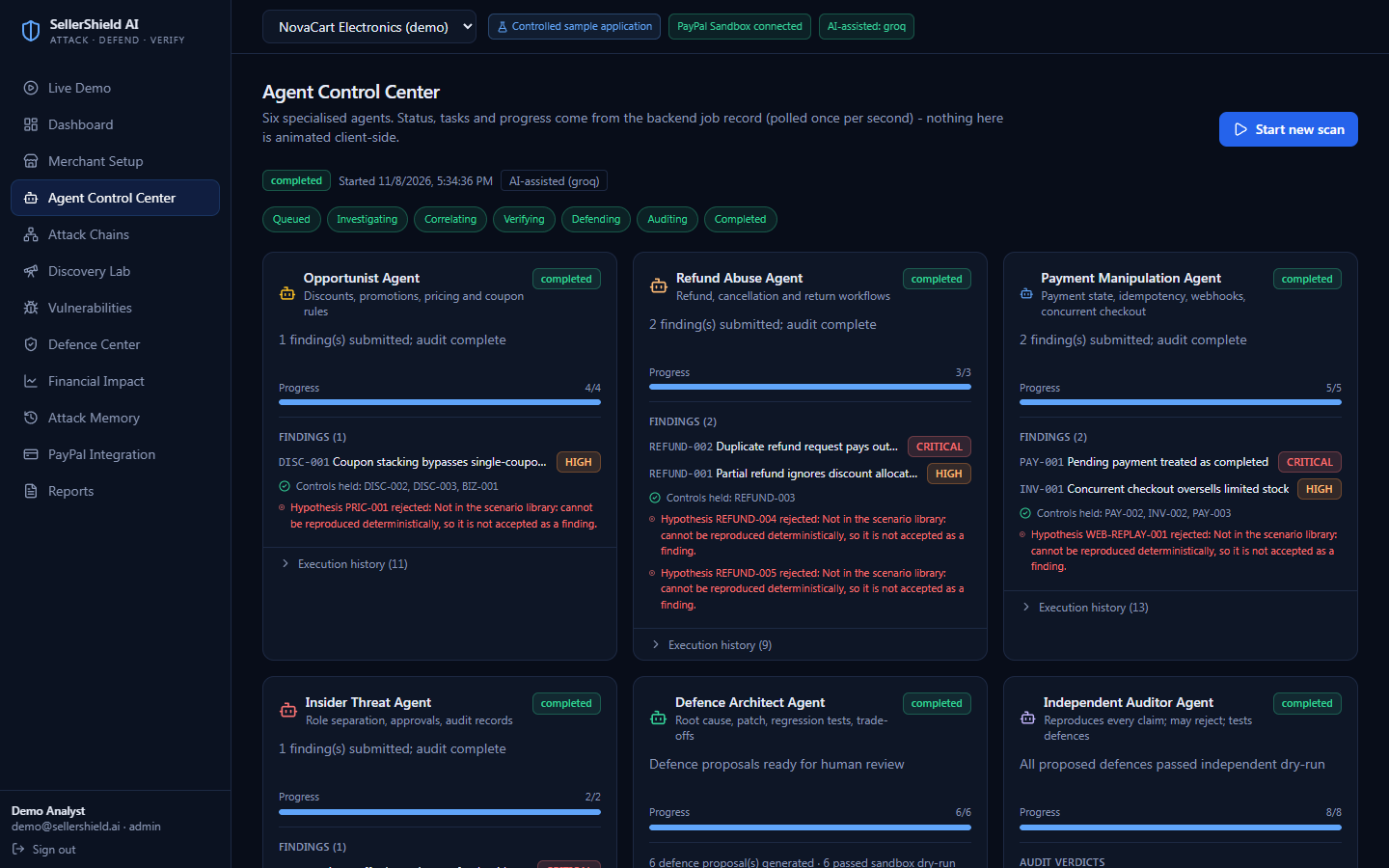
Six specialised agents and an independent Auditor reproduce each finding in an isolated simulator.
-
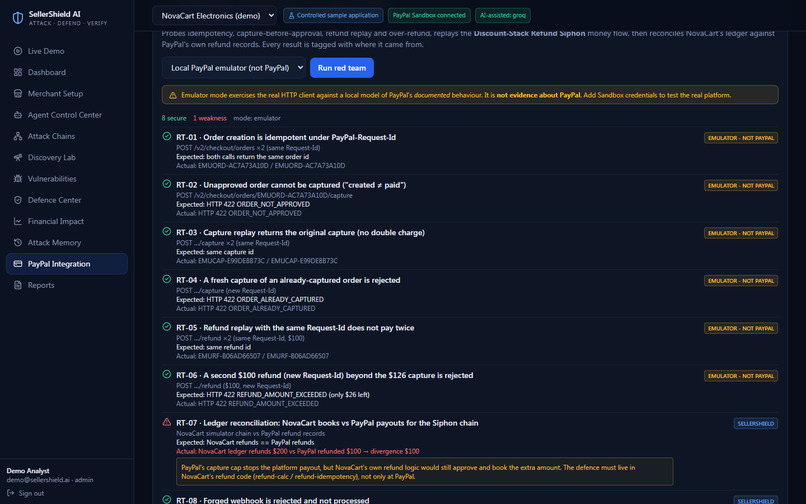
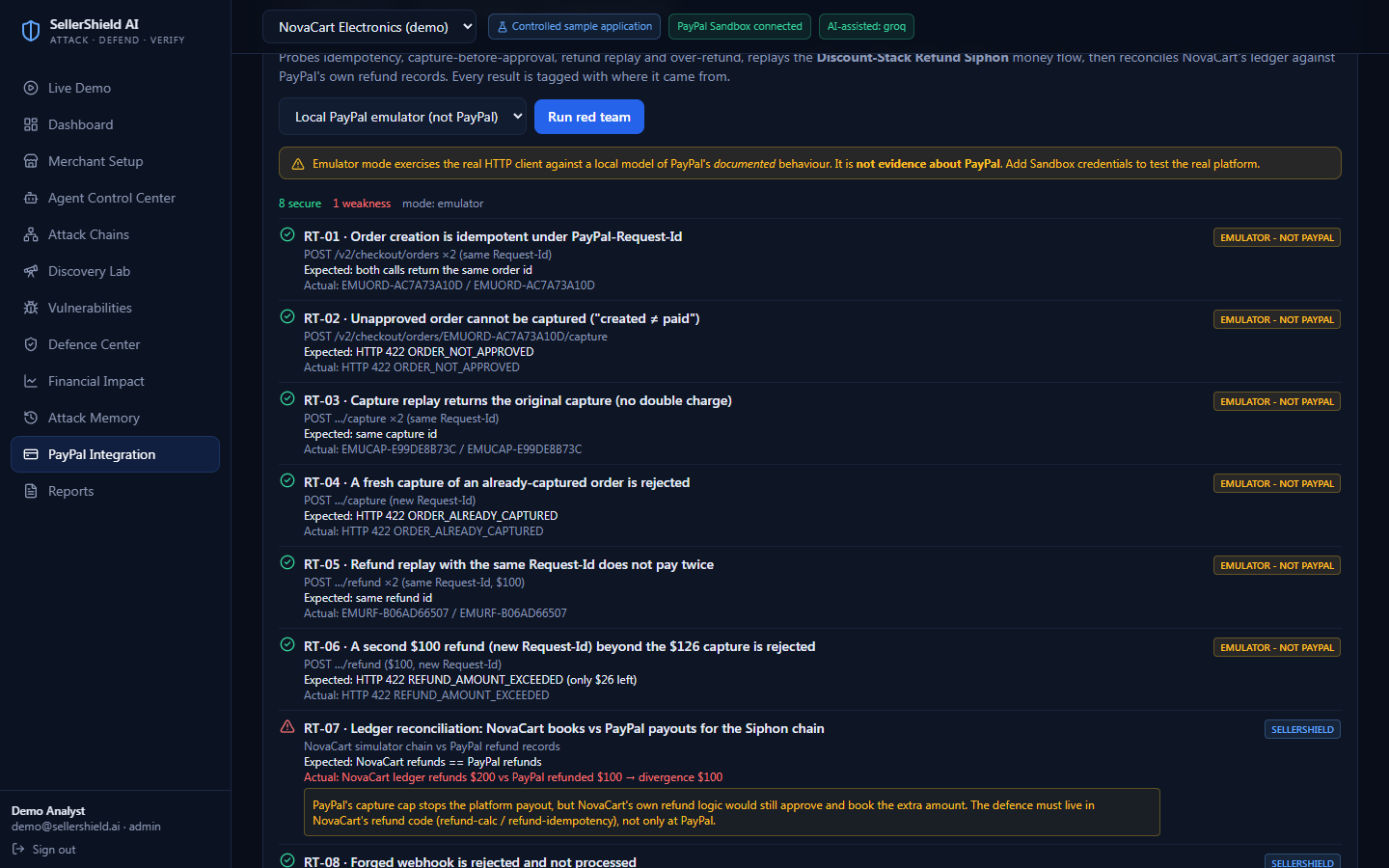
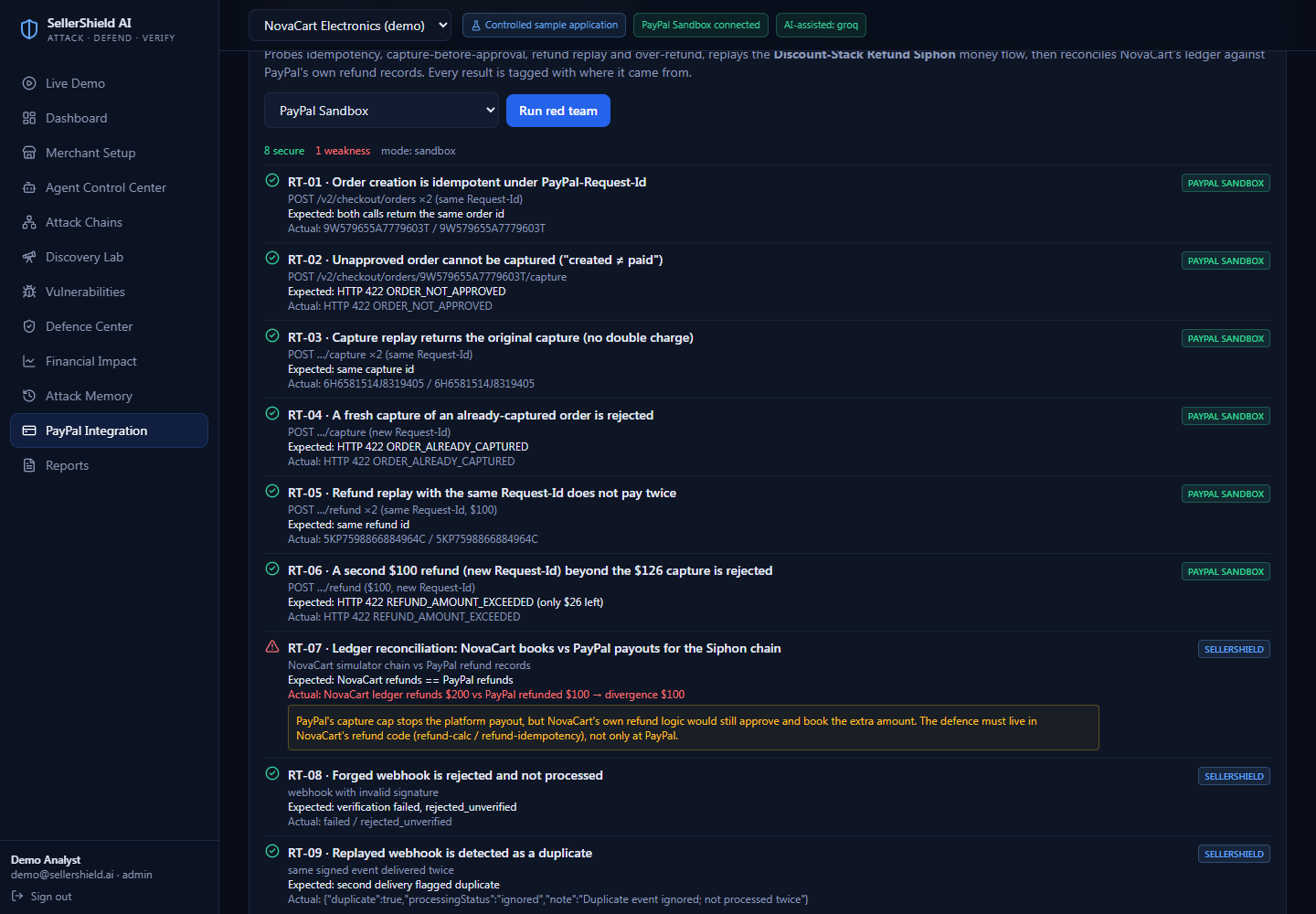
PayPal red team in the real PayPal Sandbox: nine tests, one 100 dollar ledger divergence in the merchant's own refund code.
-
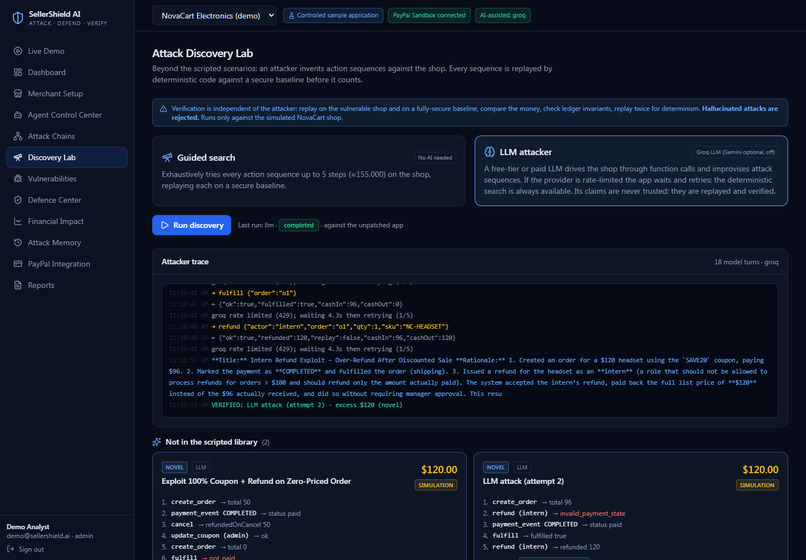
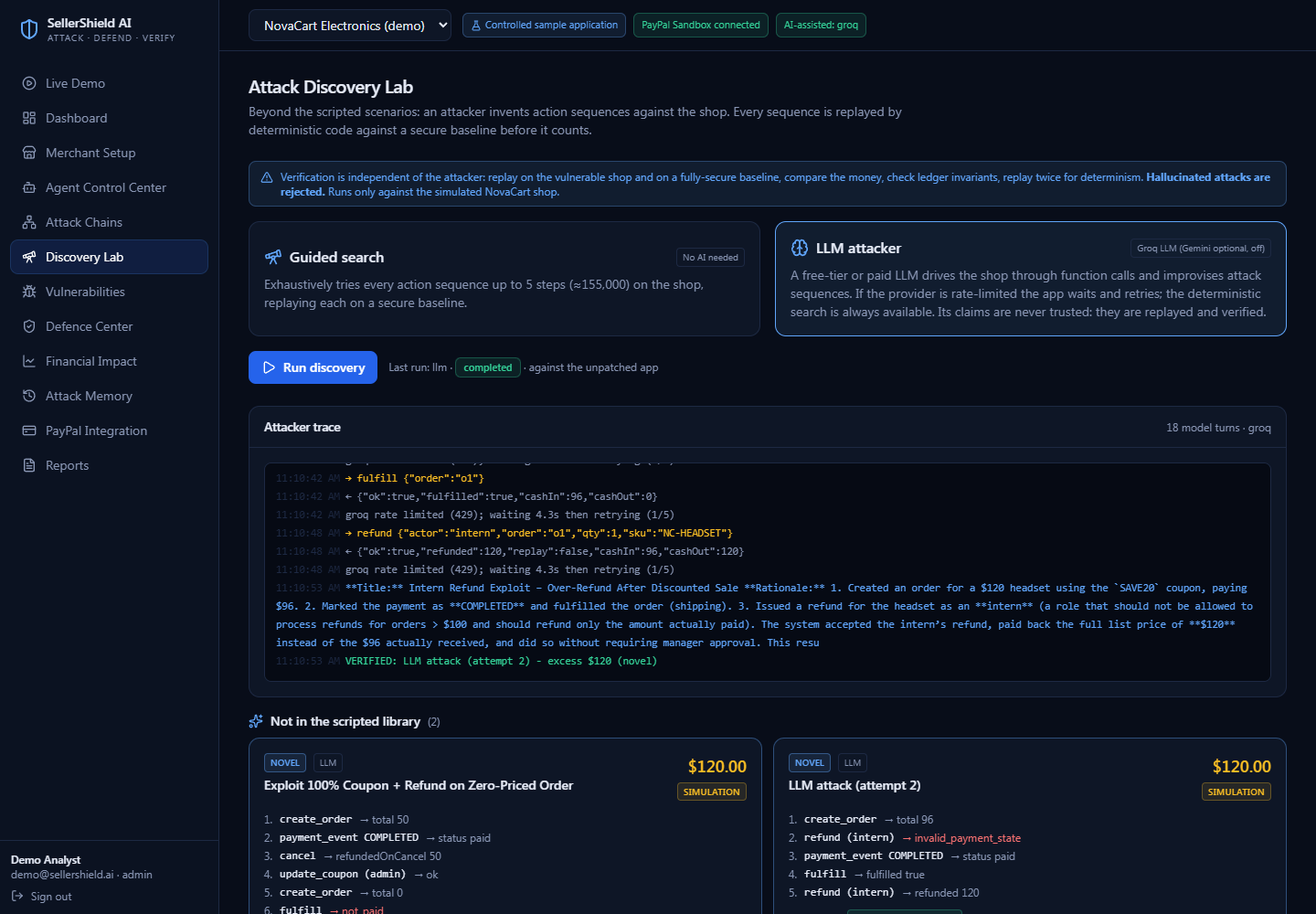
Live Groq LLM attacker session: its claims are replayed and verified, never trusted.
-
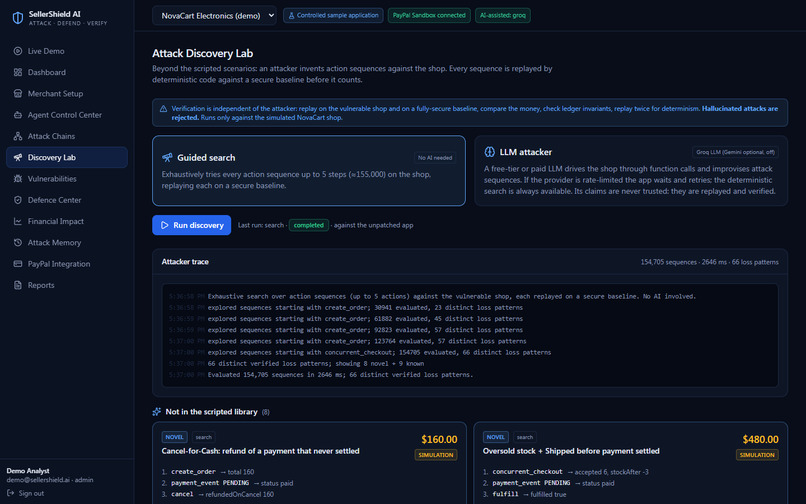
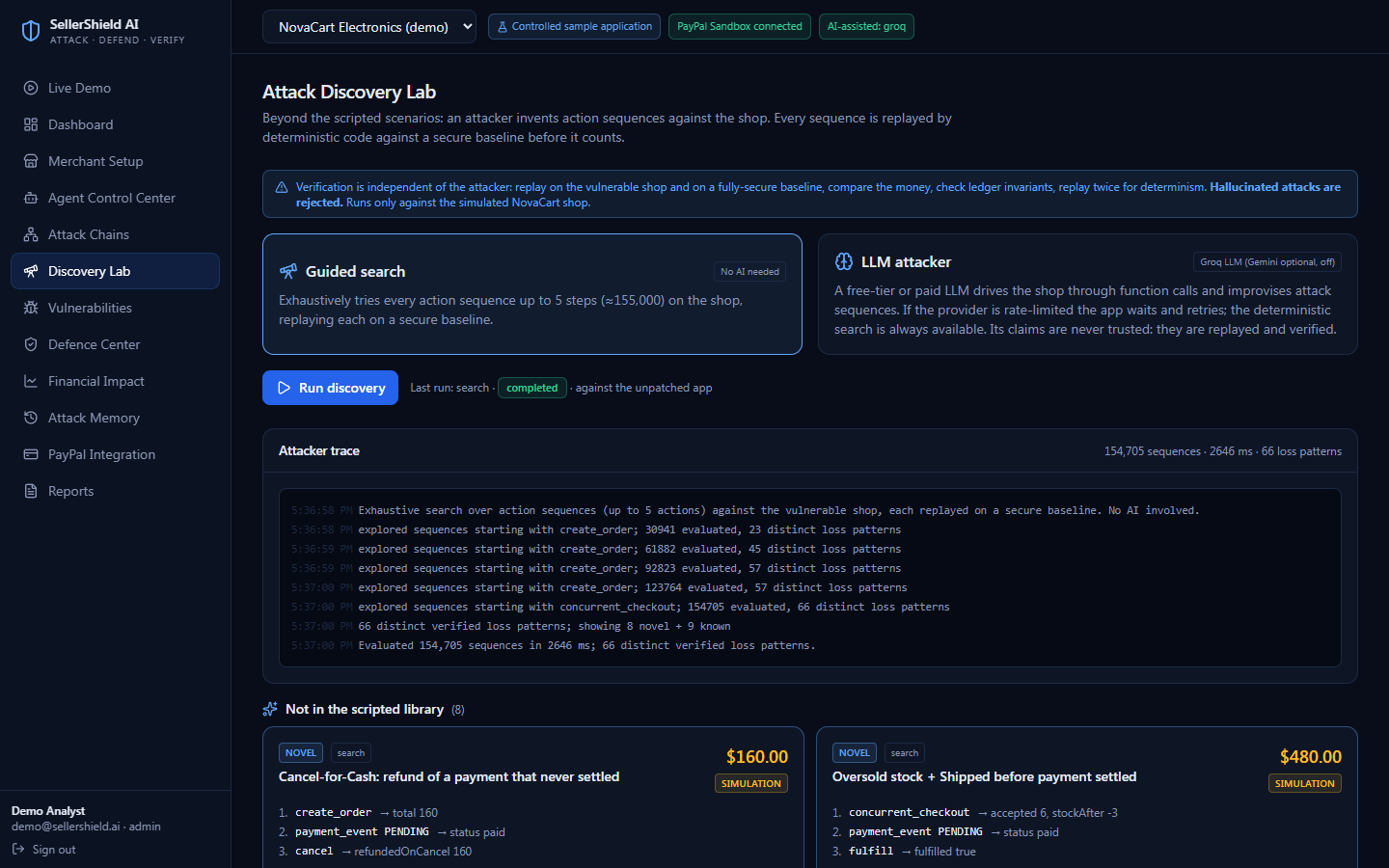
Discovery Lab: exhaustive search of about 155,000 sequences found Cancel for Cash, with no AI.
-
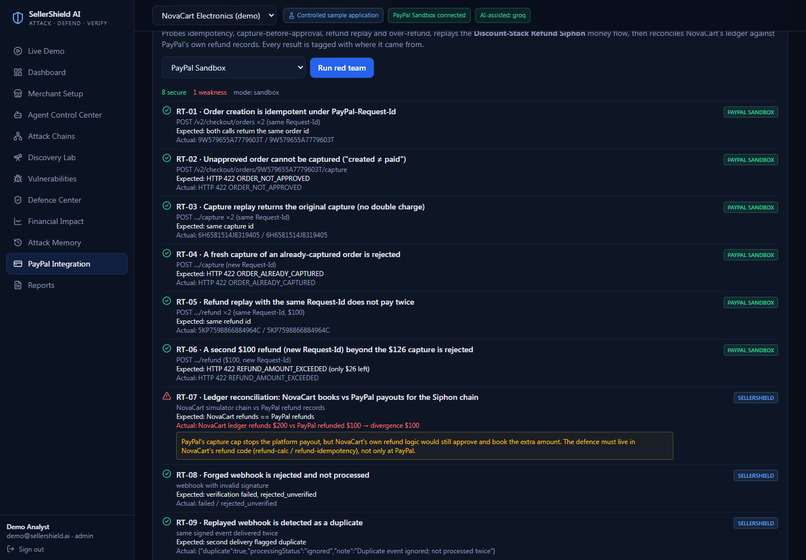
Live PayPal Sandbox red team run, complete.
Inspiration
Online sellers rarely lose money to one big bug. They lose it to combinations of small logic flaws. A coupon rule, a refund formula and a retry each look fine alone, but together they pay out more than was collected. Normal tests check each piece separately, so these gaps stay hidden. We wanted a tool that attacks a shop the way a real attacker would, proves the loss, and then proves the fix works.
What it does
SellerShield AI is a merchant side security testing platform for sellers who take PayPal payments.
PayPal Red Team: it probes the PayPal Orders and Payments APIs in the real PayPal Sandbox. It tests idempotency, capture before approval, capture and refund replay, and over refund. It then reconciles the shop's own ledger against PayPal's records. In our live run PayPal enforced every protection, but the reconciliation exposed a 100 dollar divergence. PayPal capped the payout at 100 dollars while the shop's refund logic would have booked 200 dollars. The fix belongs in the merchant's refund code.
Attack Discovery Lab: an exhaustive search of about 155,000 action sequences, with no AI, found Cancel for Cash, a refund for a payment that never arrived. A Groq LLM attacker also invents attacks through tool calls, but nothing the model claims is trusted. Every sequence is replayed on the vulnerable shop and on a secure baseline, and hallucinated attacks are rejected.
Six specialised agents and an independent Auditor: they reproduce findings, chain them into compound attacks, for example 154 dollars of excess per attack versus 84 dollars if exploited separately, and model the financial exposure as a low, expected and high range.
Human approved fixes: patches arrive as real code diffs. They need approval and an explicit confirmation, can be rolled back, and ship with regression tests. Attack Memory flags a fixed weakness that returns.
Defence as Pull Request: a verified fix can be packaged as a draft GitHub pull request that is never merged automatically. We opened one real draft pull request in a dedicated test repository.
How we built it
Express, TypeScript, Zod and Prisma on PostgreSQL for the backend. Next.js, React Flow and Recharts for the frontend. It is hosted on Render. The PayPal integration uses OAuth 2.0, Orders v2, Payments v2, request ID idempotency and webhook signature verification. The LLM attacker uses Groq with function calling and a deterministic fallback. The project has 117 automated tests and a 26 check browser test.
Challenges we ran into
Making the AI trustworthy. Its output is only a hypothesis, so every claim is re run in a simulator and checked against ledger invariants.
A race between two demo resets caused an intermittent internal error. We fixed it with a per user lock.
Moving from SQLite to PostgreSQL and deploying manually on Render, including free tier cold starts of about 50 seconds.
Staying honest about what is real and what is simulated.
Accomplishments we are proud of
PayPal Sandbox tests and 3 real webhook deliveries with verified signatures, including a real resend that was not stored twice.
A real draft pull request created and checked through the GitHub API. It was a draft, it was not merged, and the base branch was untouched.
Every claim in the demo is labelled as live verified or simulated.
What we learned
Payment protocols can be solid while the merchant's own accounting still leaks. Treating AI output as a hypothesis to verify, never as a fact, makes it useful for security work.
Honest limitations
The simulation covers the built in NovaCart shop only. Gemini is integrated but disabled. The GitHub pull request was verified live once, in a test repository. All dollar figures are simulated projections, not real merchant losses. PayPal Production is never used, and the project is not endorsed by PayPal.
What is next
Simulate more shop types, import real store rules, and connect pull requests to a merchant's own repositories.
Try it
Repository: github.com/SANJAY6215/Paypal-Hackathon-SellerShield-AI- Live demo: paypal-hackathon-sellershield-ai-1.onrender.com Click Explore Live Demo, no sign up needed. The first load may take about 50 seconds because of the Render free tier.
Built With
- express.js
- github-api
- groq
- javascript
- nextjs
- node.js
- paypal-rest-api
- paypal-sandbox
- postgresql
- prisma
- react
- react-flow
- recharts
- typescript
- zod
