-
-
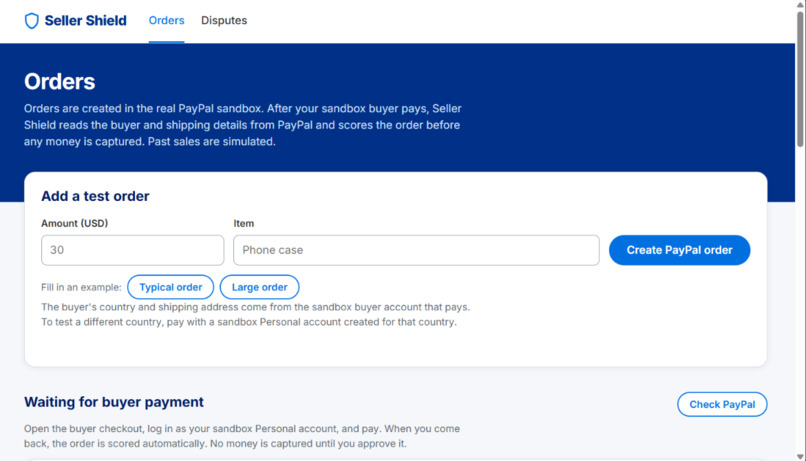
Orders PayPal Page
-
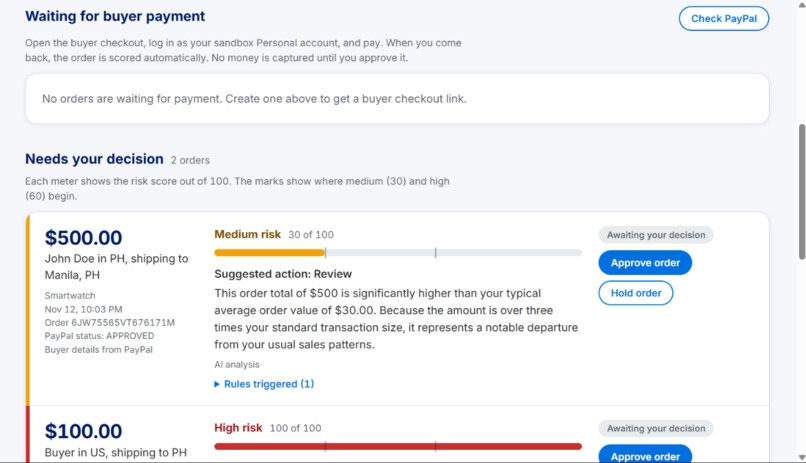
Orders 2
-
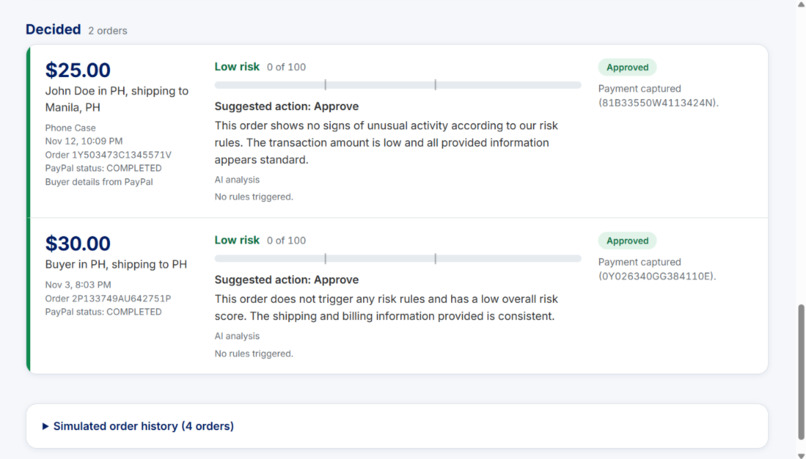
Orders 3
-
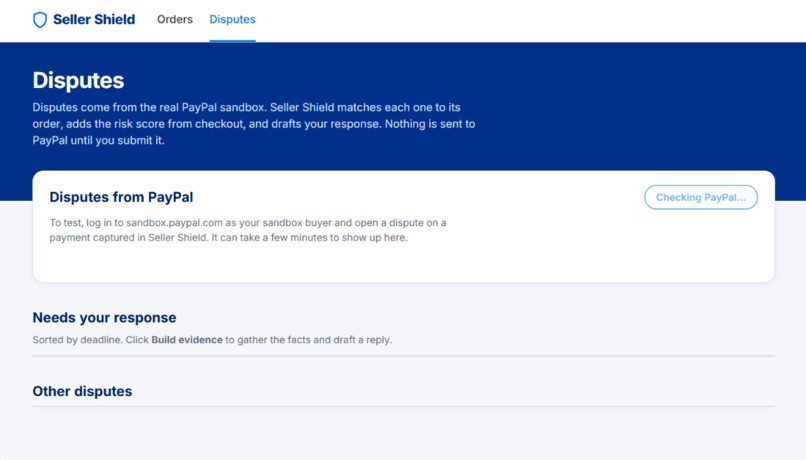
Disputes PayPal Page
-
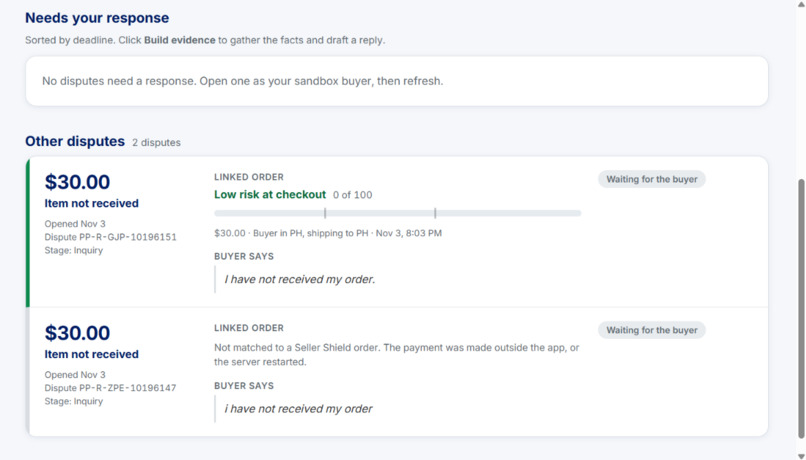
Disputes 2
-
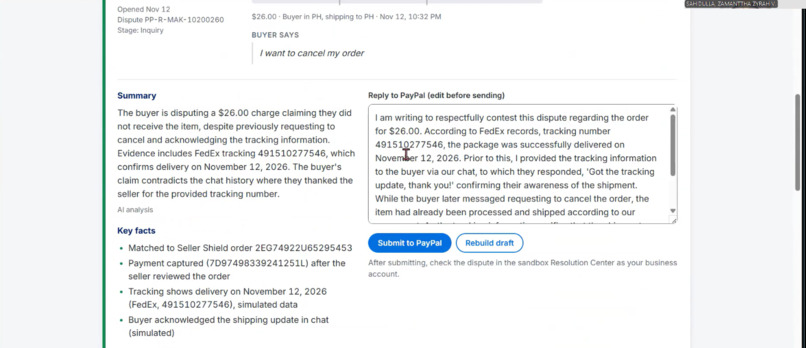
Disputes 3
Inspiration
As two computer engineers, we wanted to get involved in hackathons, to get practical experience and create something that can help. We identified that small sellers online can struggle with whether an order looks suspicious or how they should act if there is a payment dispute.
This inspired us to create Seller Shield.
Overview
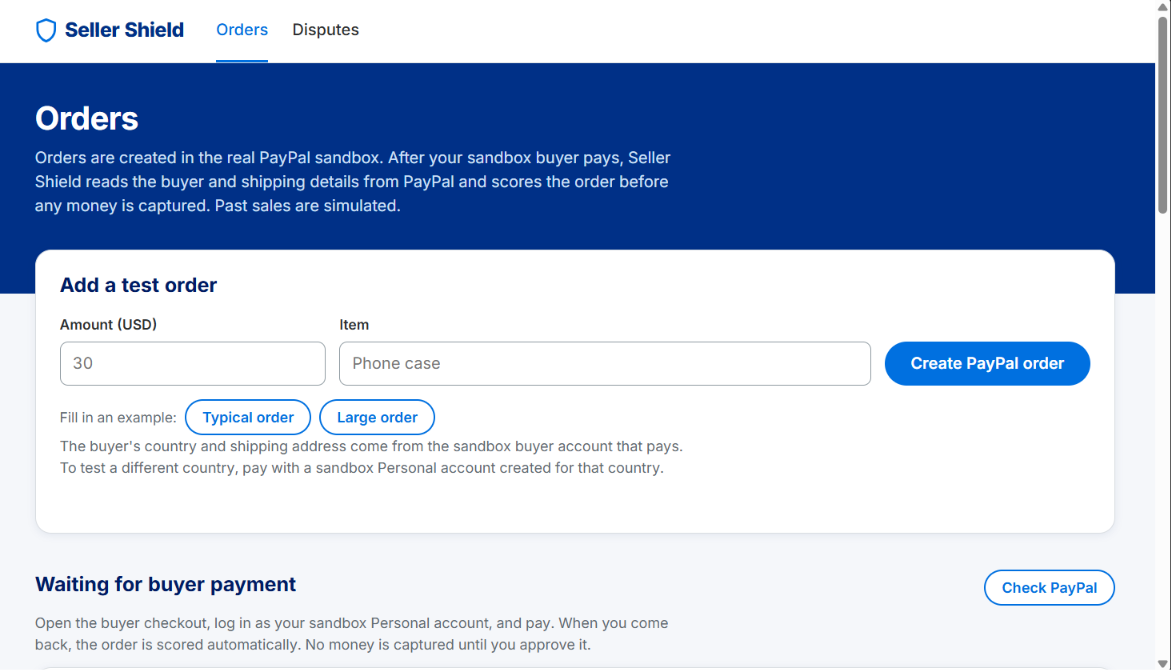
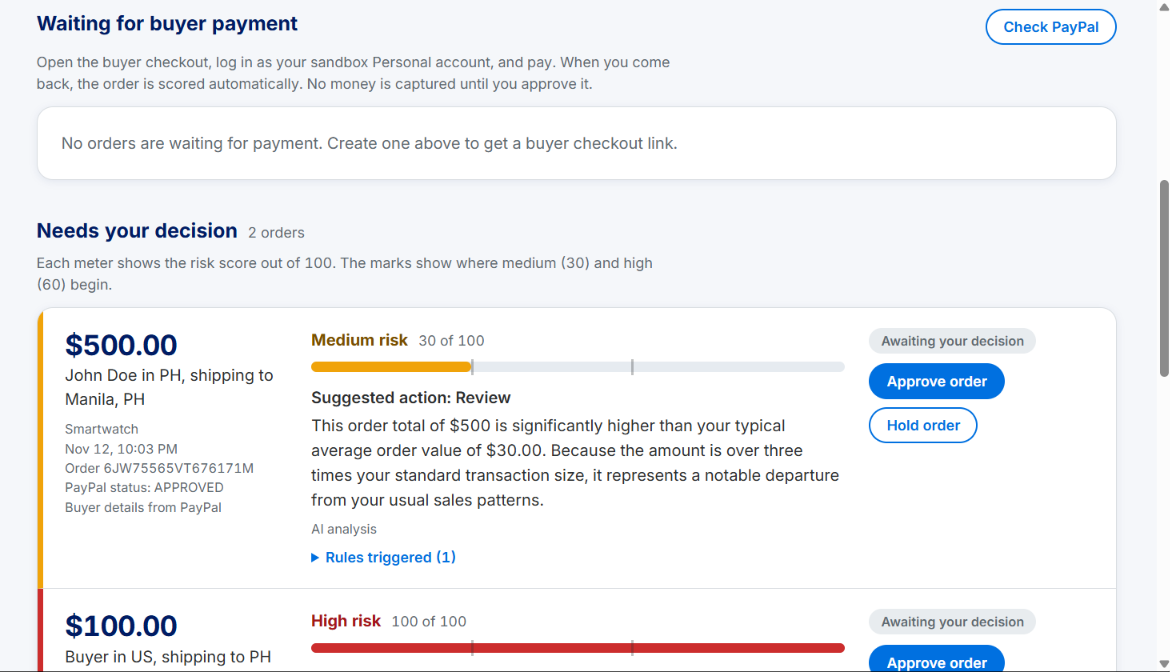
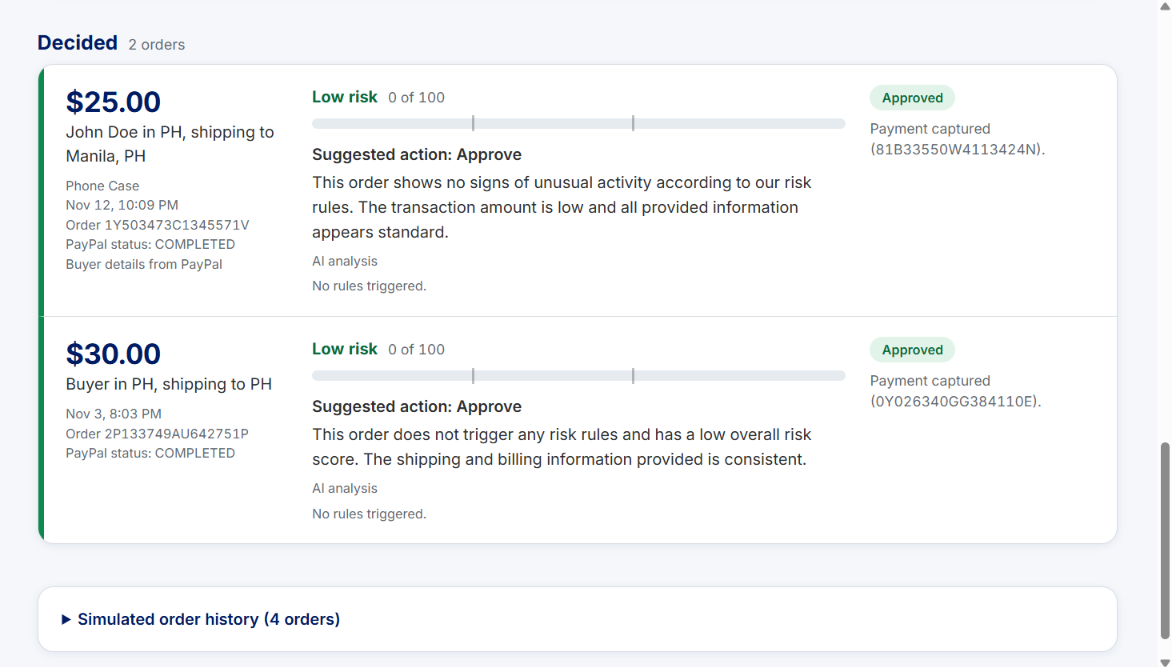
Seller Shield helps sellers to review their orders. Orders are created from the PayPal sandbox. These are scored based on explainable features such as if an order is unusually high, a new country from a buyer, or different countries for buyer and delivery. Google Gemini then takes these features and provides an explanation and recommendation for the seller to follow (approve, review or pause).
Ultimately the decision is up to the seller. If they approve the order then the payment can be captured by the app. The AI has no power to approve or capture.
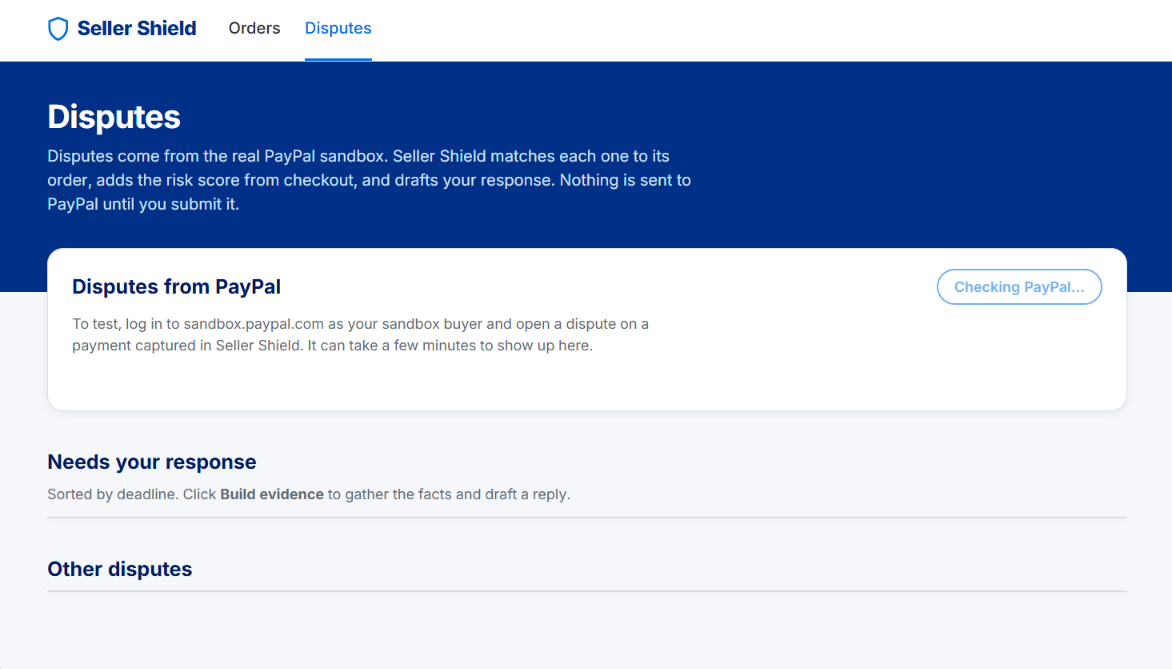
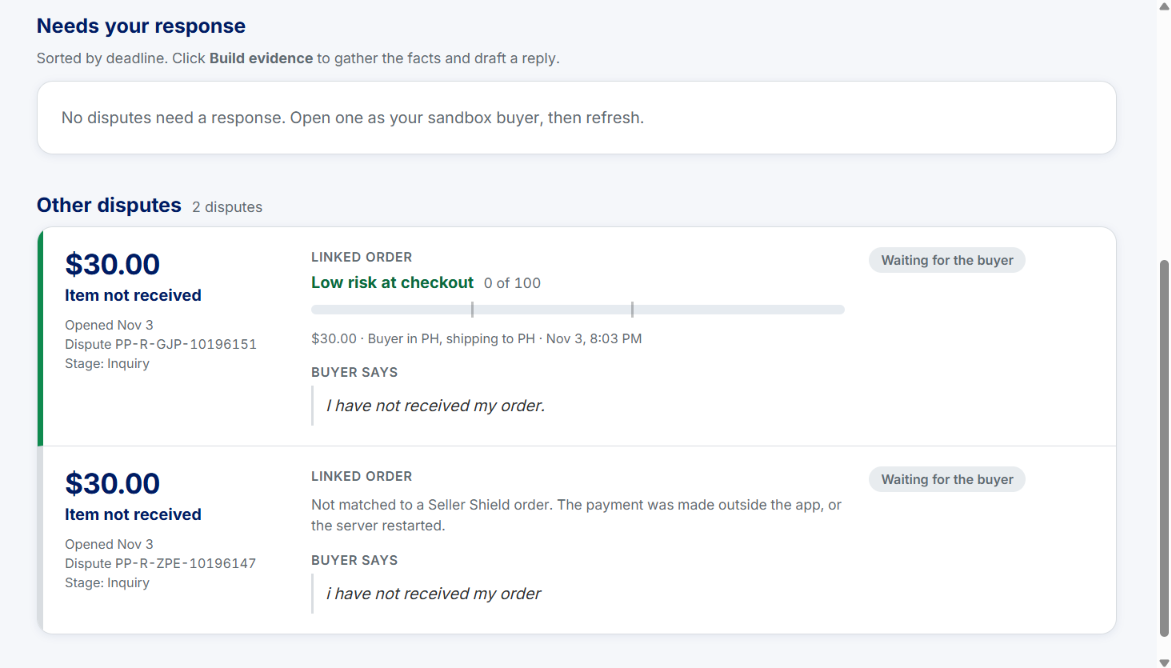
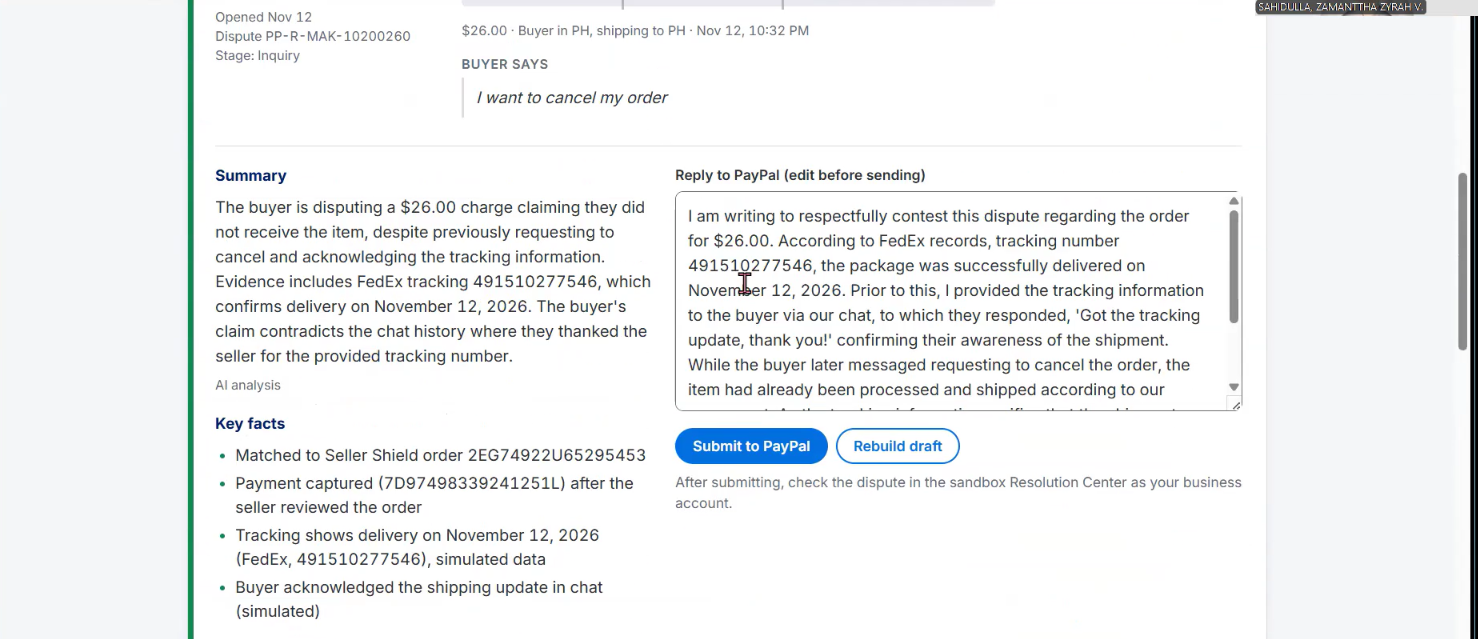
Seller Shield also allows sellers to view any disputes from the PayPal sandbox. It can also create an evidence pack containing key information, a timeline and a draft response (which can be edited). The seller will review the draft before sending. As there is no delivery or chat history from the sandbox, this has been simulated and clearly labelled.
Technology Used
We created the backend using Node.js and Express. The frontend was created using basic HTML, CSS and JavaScript. The PayPal sandbox APIs were used for payment authorisation, order creation, capturing payments and disputes. Gemini was used to provide explanations for the orders and summary and responses for disputes.
An explainable scoring system was used to determine if an order should be reviewed. This was done using a rules based system, instead of training a fraud detection model. The scoring was based on the sellers sample history and previously approved orders. The app shows what rules were used to calculate the score. If Gemini is not available then the order will still be explained using the rules based system.
Challenges
A challenge we faced was the limitations of the PayPal sandbox. Whilst we can create real payments and disputes we cannot view the whole buyers history, tracking or chat. This has been simulated for the demo.
We also had to ensure there were multiple steps taken in the order process. Firstly the buyer must approve the payment on PayPal. The order is then scored and if the seller approves it can be captured. Disputes also needed to be linked back to the order. The seller also needed to review and edit the response.
Achievements
We are proud that we have created a fully working prototype. This links the order review process with the actual order and disputes process from the PayPal sandbox. The app clearly explains why the order has received a risk score, helps the seller decide and organises the dispute response.
We’re proud that the AI is used as an assistant. The seller has full control over approving, capturing and responding to disputes.
Learning
We’ve learnt how to link a web app to external APIs. We also learnt the importance of setting limits on the AI outputs. The model should explain what it knows, not make up any extra information. Key decisions should still be made by a person.
Most importantly we’ve learnt to be clear about what our prototype actually does and what is simulated.
Future Improvements
In the future we would like to replace the simulated delivery, chat and sales history with real integrations. We would also like to store our order data in a persistent database. We would also like to test and tweak our risk rules using more realistic data. We would also like to improve the evidence process for disputes and make the app more resilient.
This is a prototype for a hackathon so does not act as a fraud detection service.
Built With
- ai
- api
- computerengineering
- css
- detection
- dispute
- dlsu
- e-commerce
- express.js
- fraud
- gcoe
- gemini
- html
- javascript
- management
- node.js
- paypal
- sandbox