-
-
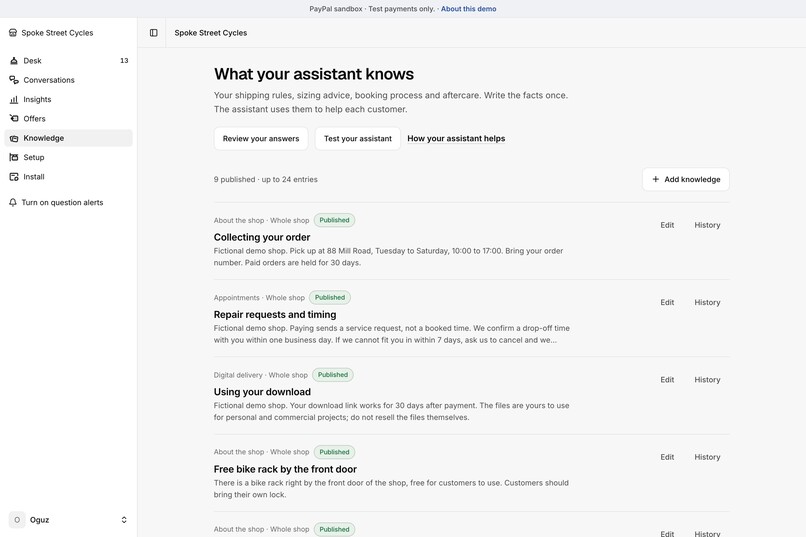
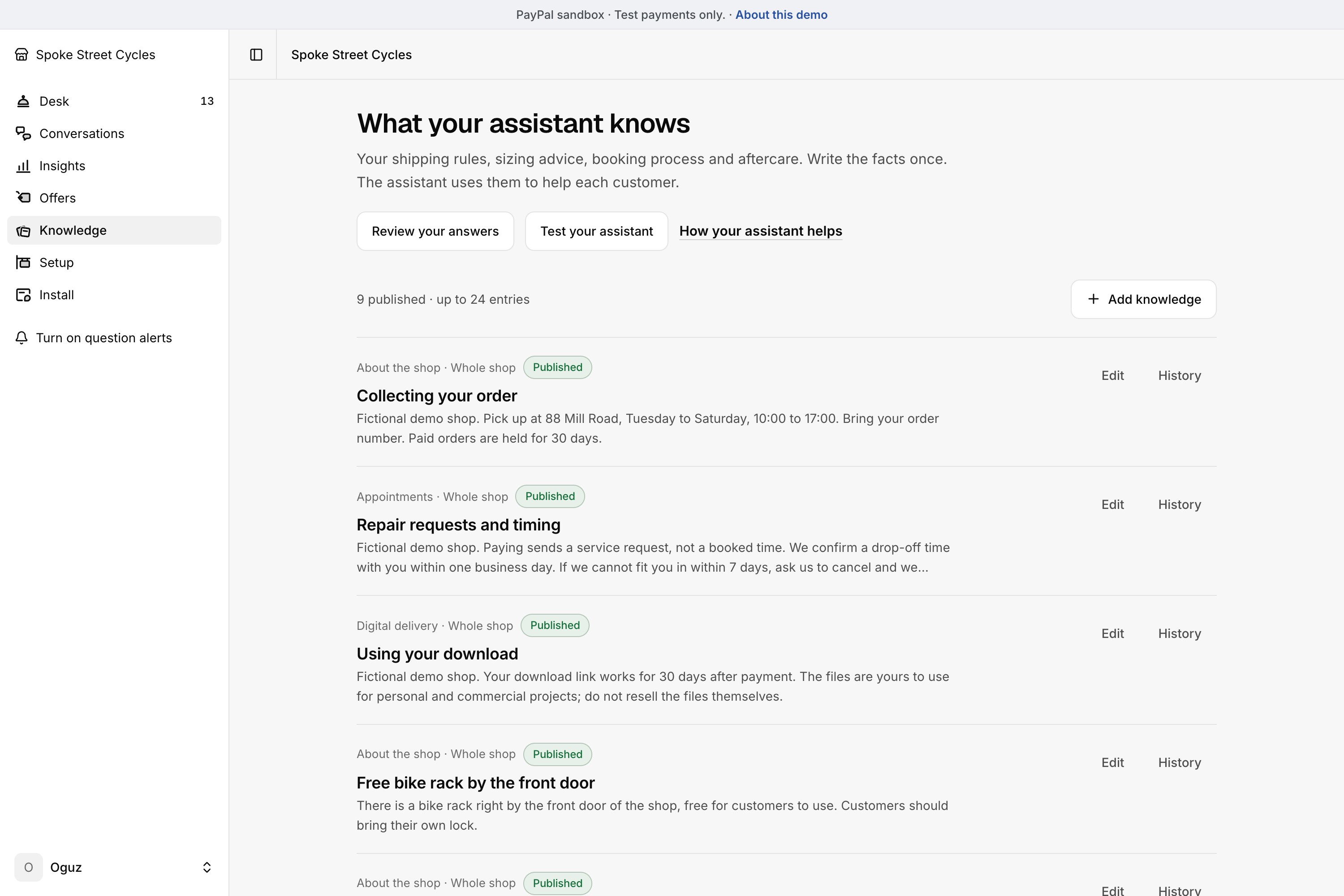
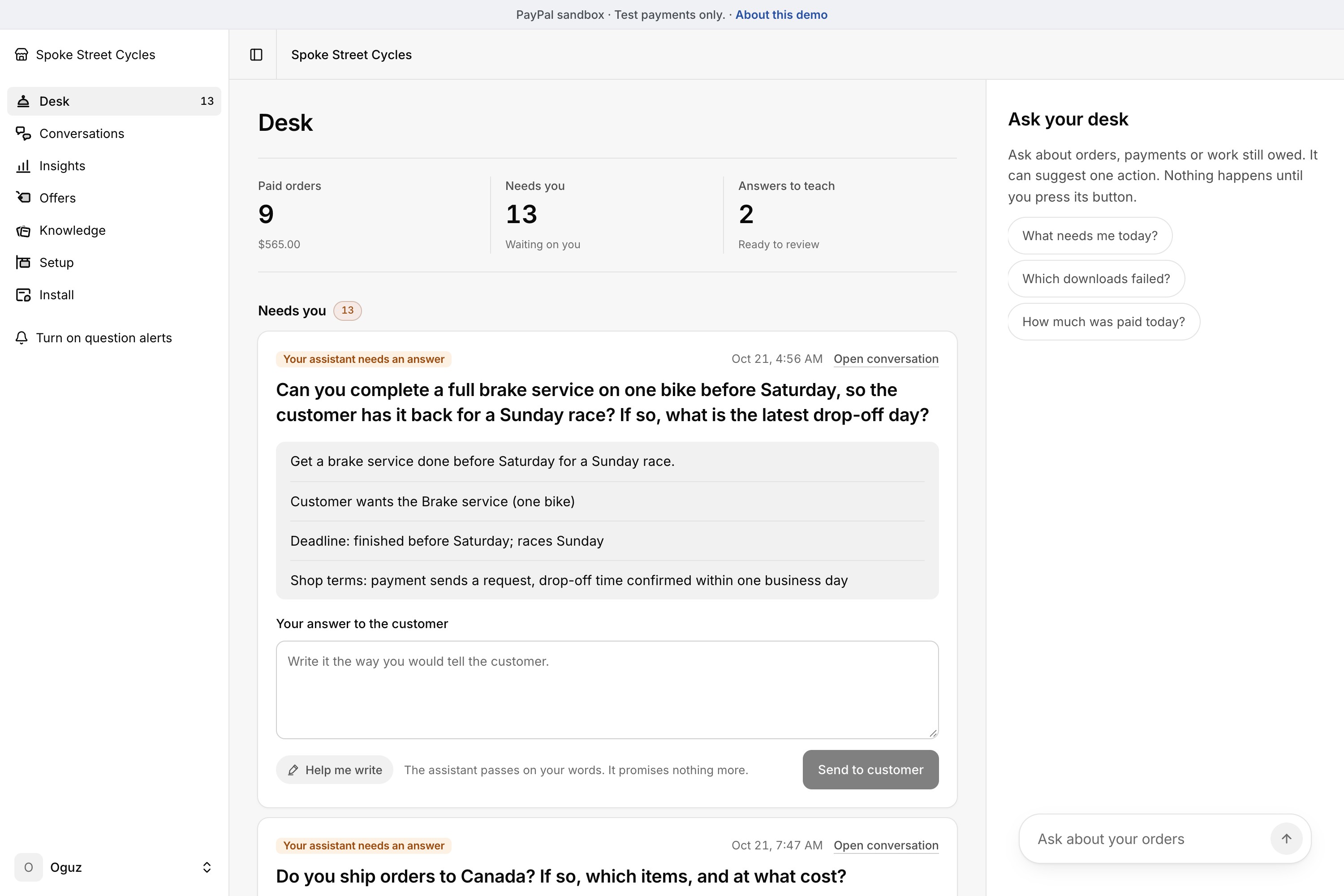
Knowledge: every fact the assistant uses, approved by the owner. Each answer the owner sends becomes a draft to approve.
-
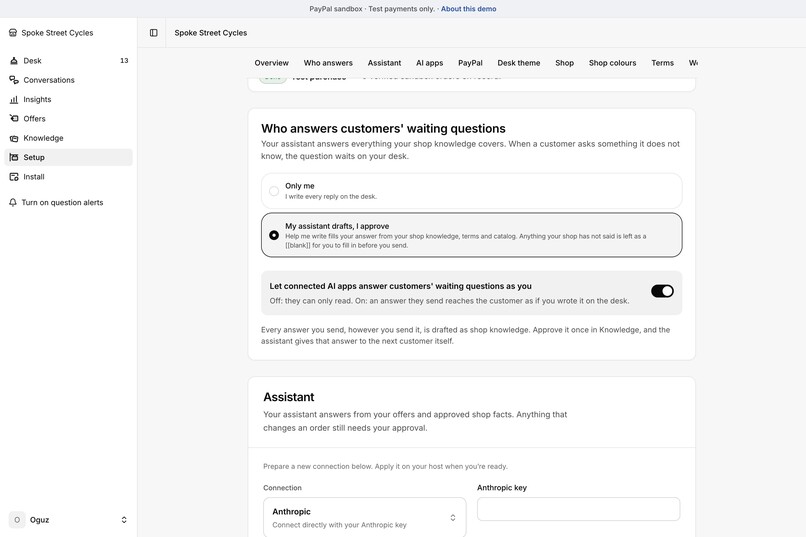
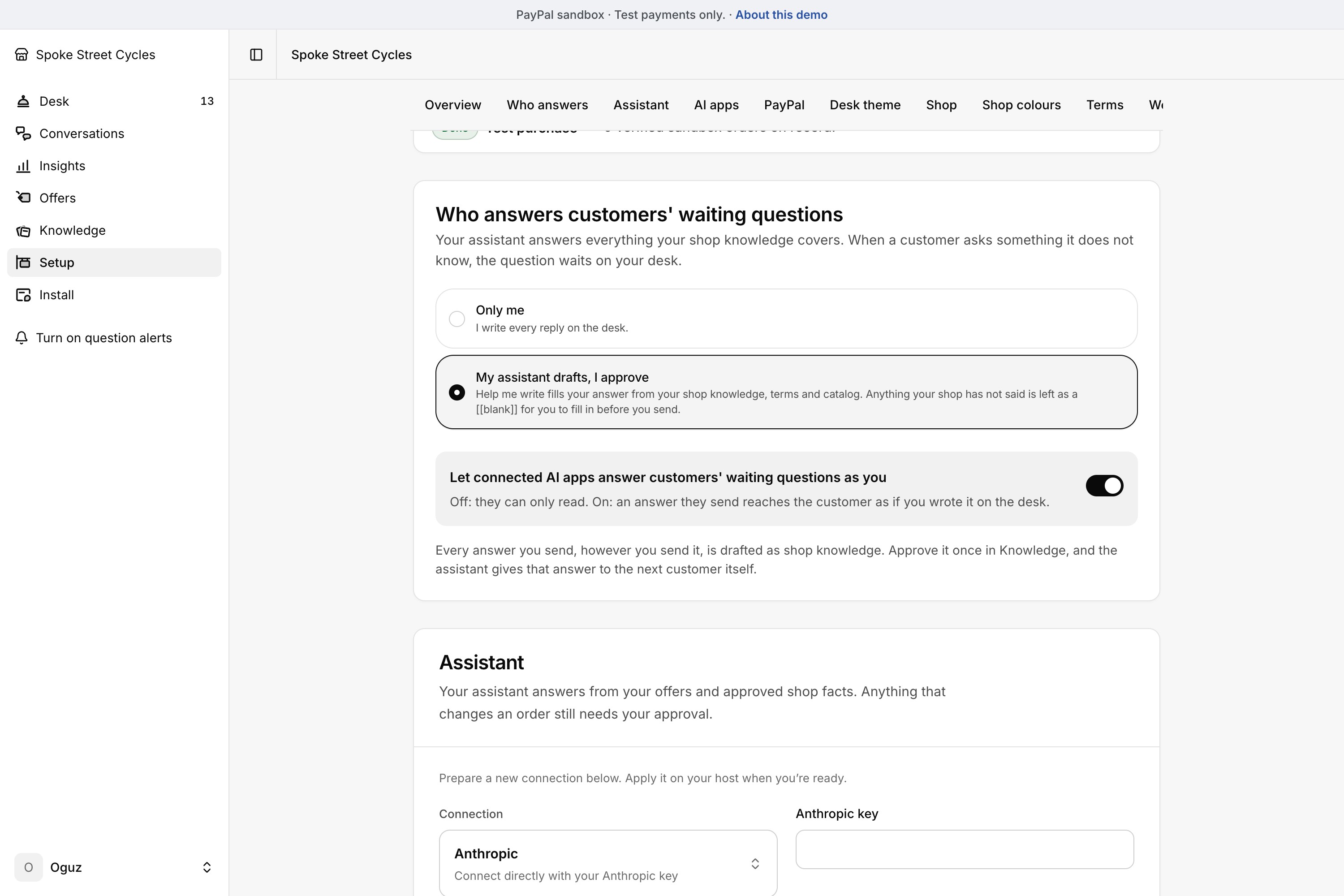
Who answers: only the owner, or the assistant drafts and the owner approves. Connected AI apps can answer too, if allowed.
-
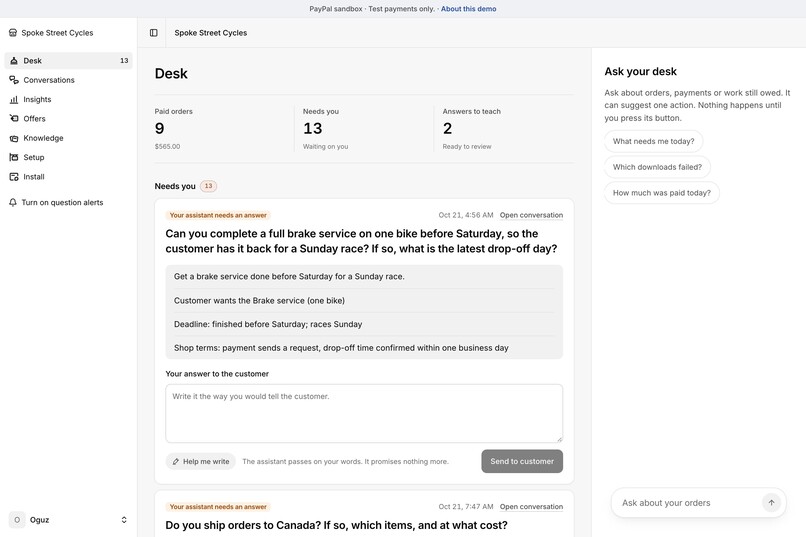
The owner's desk: paid orders, what needs the owner, and Help me write to draft the reply with blanks for missing facts.
-
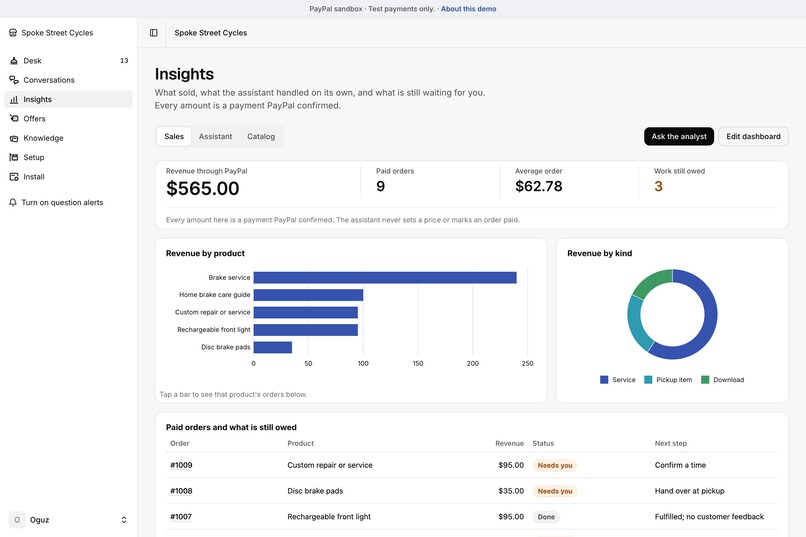
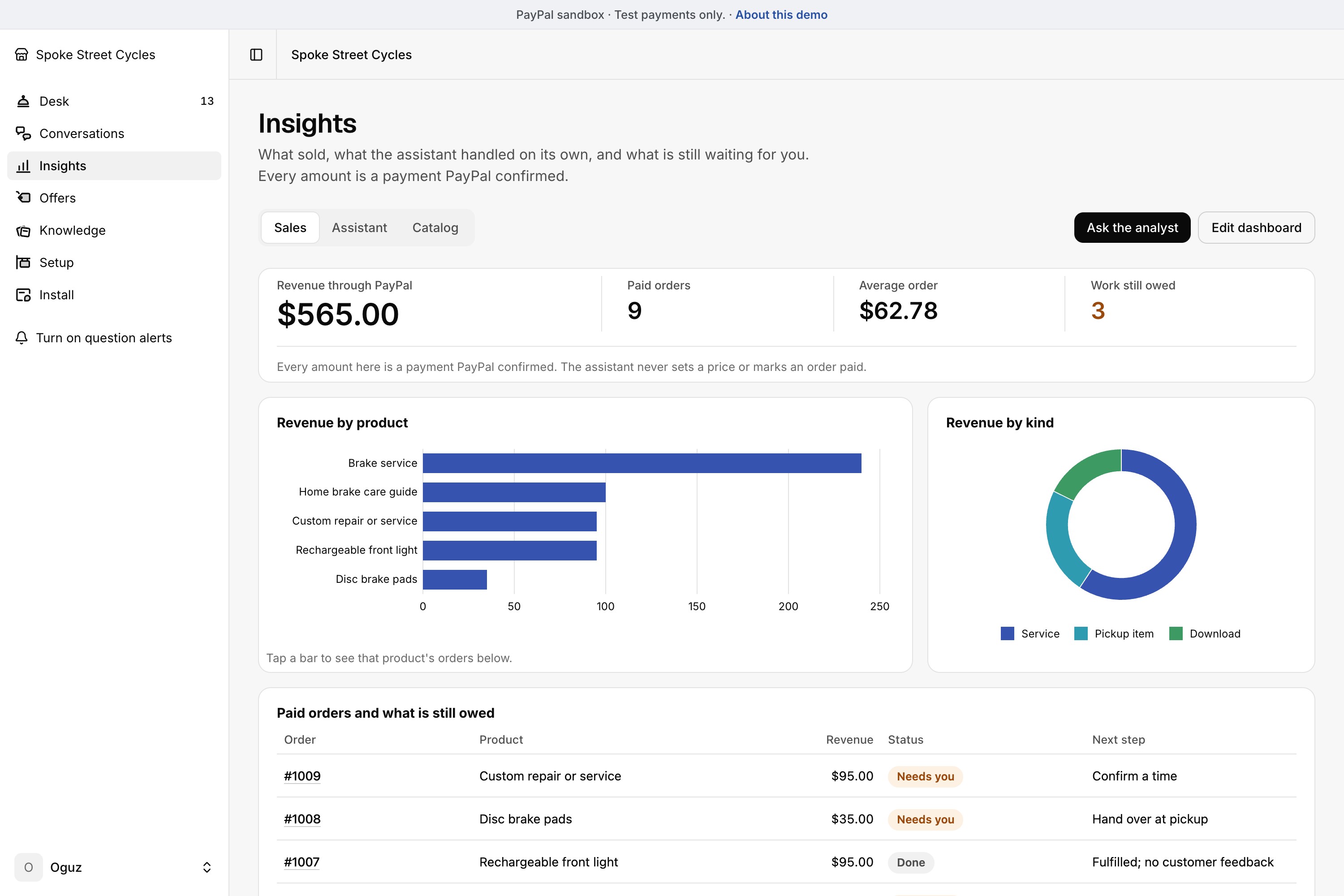
Insights on AG Studio and AG Grid: revenue through PayPal, charts that cross-filter, and an analyst that builds charts on request.
-
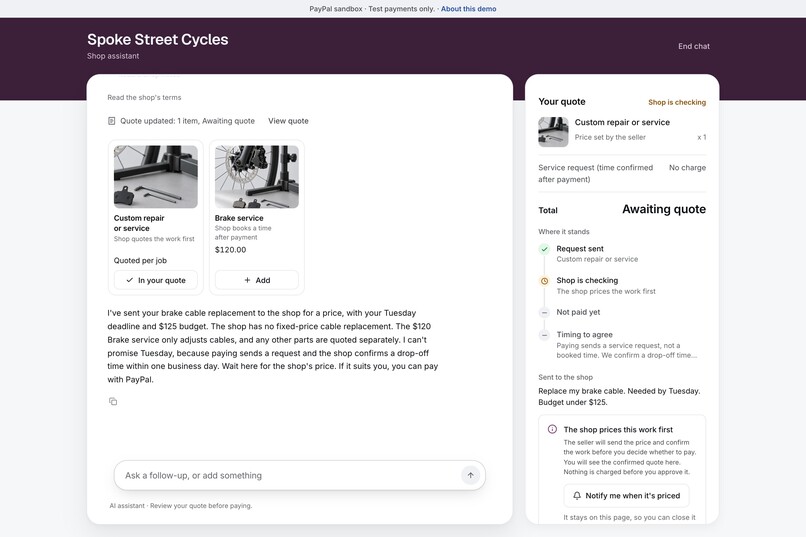
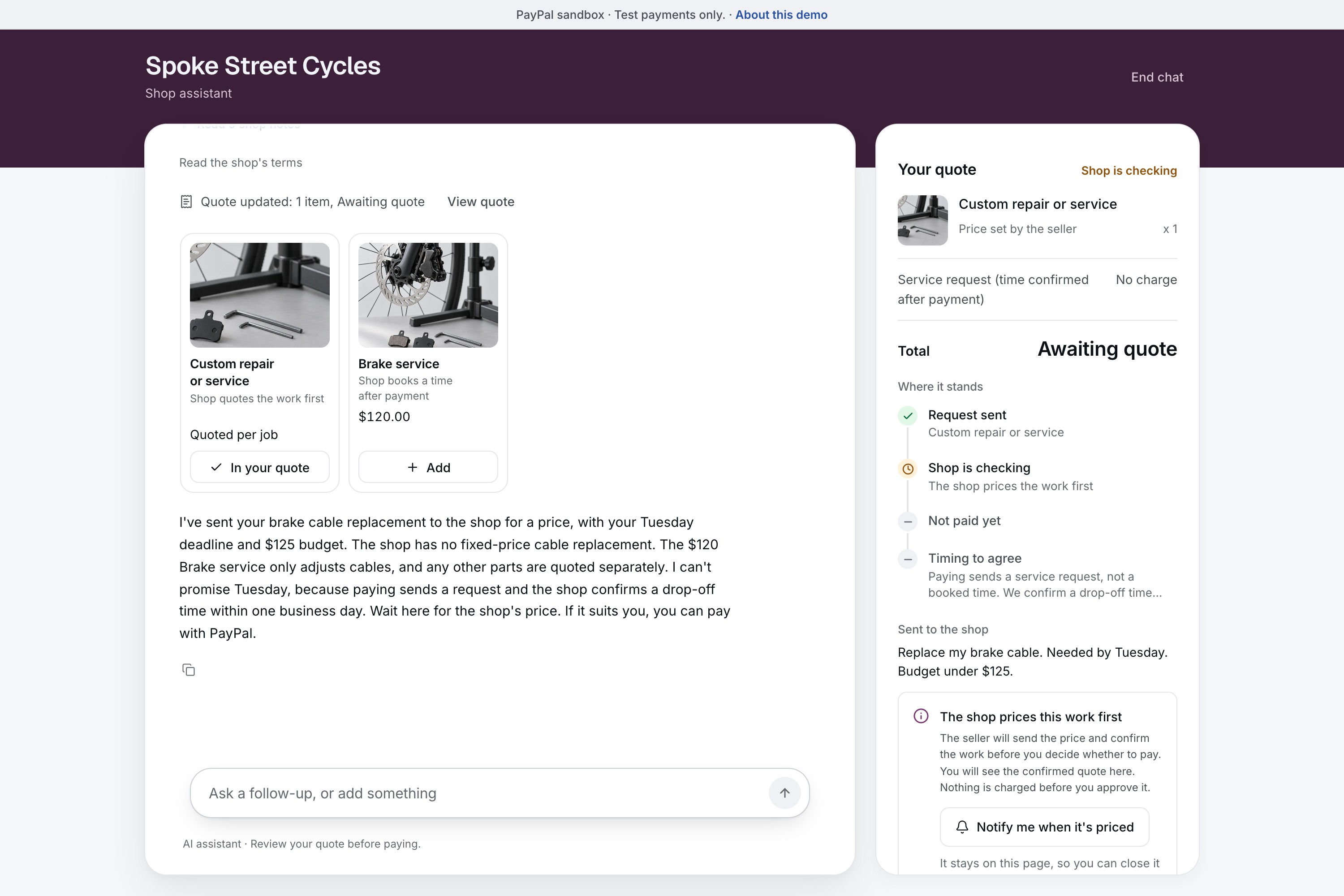
A customer asks at 9 pm in their own words. The assistant answers from the real catalog and asks the owner to price custom work.
-
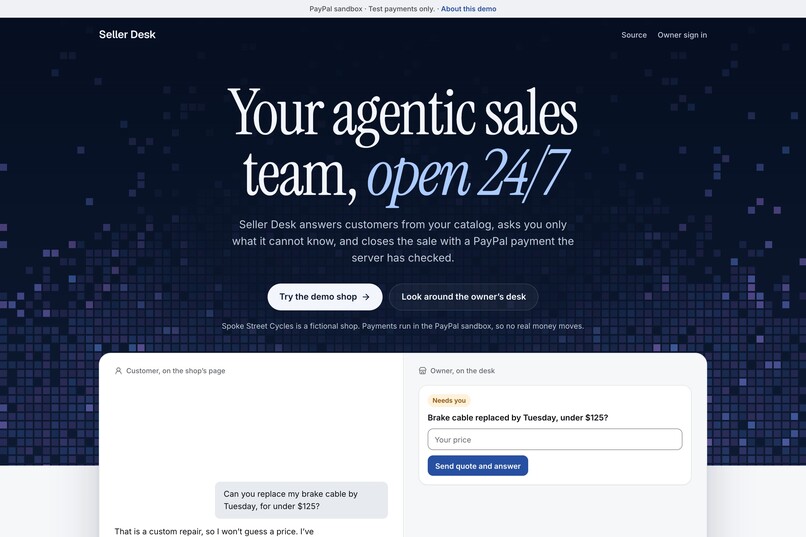
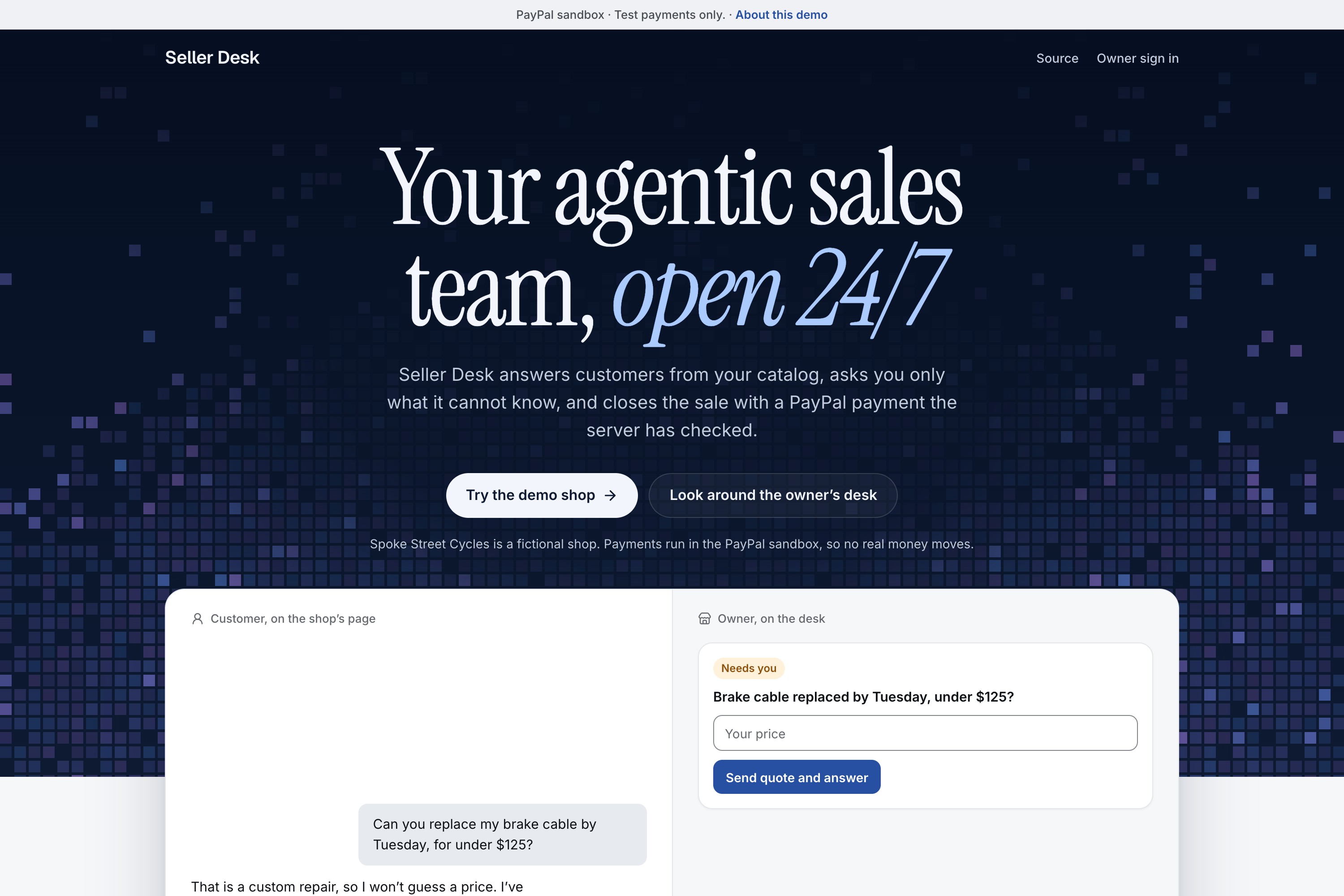
Seller Desk: the shop's own AI sales assistant, open 24/7, with PayPal checkout the server verifies.
Inspiration
A one-person bike shop gets a message at 9 pm: "Can you replace my brake cable by Tuesday for under $125?" Nobody is there to answer. By morning the customer has booked somewhere else.
Big shops have a sales team for that message, and support teams whose AI learns from every answer a human gives. An independent seller has a phone and a PayPal account. Seller Desk gives that seller both: an assistant that answers from the shop's own facts, gets better from the owner's answers, and never touches the money.
What it does
One sale, start to finish. The customer asks in their own words. The assistant answers from the shop's real catalog. It cannot price a custom repair, so it asks the owner once. The owner answers with a price, and the quote appears in the customer's chat by itself. The customer pays with PayPal. The server checks the payment with PayPal before it makes the order, and the owner's desk shows what is still owed.
The AI talks, the server decides money. Every price, total and payment status is a server record checked against PayPal. Telling the assistant "I already paid" creates nothing. A quote can be paid once; buying again makes a new quote.
It learns from the owner, with the owner's approval. When a customer asks something the shop never told it (say, whether dogs are allowed inside), the assistant hands the question to the owner instead of guessing. On the desk the owner presses "Help me write": it fills the answer from the shop's knowledge, terms and catalog, and leaves [[blanks]] for anything only the owner knows; a reply with a blank left cannot be sent. Every answer sent is drafted as shop knowledge that separates a fact for every customer from a favour for one. The owner approves the fact once, and the next customer gets the answer straight from the assistant. In Setup the owner chooses "Only me" or "My assistant drafts, I approve", and can let their own Claude or ChatGPT answer waiting questions through Seller Desk's connector.
The owner sees the business at a glance. Insights is built on AG Studio: tap a bar to filter the page, or ask the analyst for a chart and AG Studio's agents add it from the shop's own numbers. It can read and arrange; it cannot touch a price or a payment.
It fits the shop you already have: a WordPress plugin or one script tag puts the assistant on an existing site. With the assistant off, the shop still sells as a catalog with PayPal checkout.
How we built it
Built from scratch during the hackathon (first commit 20 October 2026).
- PayPal: Orders v2 server-side create, retrieve and capture, each write with a PayPal-Request-Id saved before the call. Before any order exists the server checks payee, amount and currency, then the capture status and amount. Webhooks are verified with PayPal's verify-webhook-signature. Sandbox only.
- PayPal Agent Toolkit, read-only: the owner's desk assistant reads orders, transactions, invoices and disputes. Checkout never goes through a model.
- AI: Vercel AI SDK 7 with real tool calls; the hosted demo uses Claude through the Anthropic API. Prices and payment status always come from server records.
- Learning loop: unknown questions go to the owner; a structured-output call drafts the owner's reply from shop facts with [[blanks]] for the rest; every sent answer is reviewed into a shop-knowledge draft the owner approves.
- AG Grid and AG Studio: Insights on AG Studio with AG Grid; the analyst is a Studio AI harness with our read-only tools.
- App: Next.js 16, React, Drizzle ORM, Better Auth, an MCP connector with OAuth.
- Hosting: one codebase on Cloudflare Workers with D1, or Node with PostgreSQL. CI runs the checks and the full test suite on every push.
Challenges we ran into
Making the model useful without trusting it with money: every price and payment fact is a tool result from the server. Recovering from interrupted payments so a buyer who closes PayPal or returns later still ends with exactly one order. One app on two hosts and two databases. Letting the assistant learn without letting it publish: every answer becomes a draft, a one-off favour stays private, and only the owner's approval makes a fact public.
Accomplishments that we're proud of
A customer question becomes a reviewed quote, a verified PayPal payment and the owner's next step, in one conversation. The learning loop: a question the shop could not answer becomes, after one owner answer and one approval, something the assistant answers itself. The owner's own AI apps can work on the desk safely.
What we learned
The hardest part of an AI sales assistant is not the conversation. It is deciding what the model is never allowed to decide.
What's next for Seller Desk
Email or text the customer when the owner replies after they have left, shipping and variants, calendar booking for services, and a hosted version for sellers who do not want to run their own server.
Built With
- ag-grid
- ag-studio
- anthropic
- better-auth
- claude
- cloudflare-d1
- cloudflare-workers
- drizzle-orm
- model-context-protocol
- next.js
- paypal
- paypal-agent-toolkit
- paypal-orders-api
- postgresql
- react
- typescript
- vercel-ai-sdk
- wordpress
