Inspiration
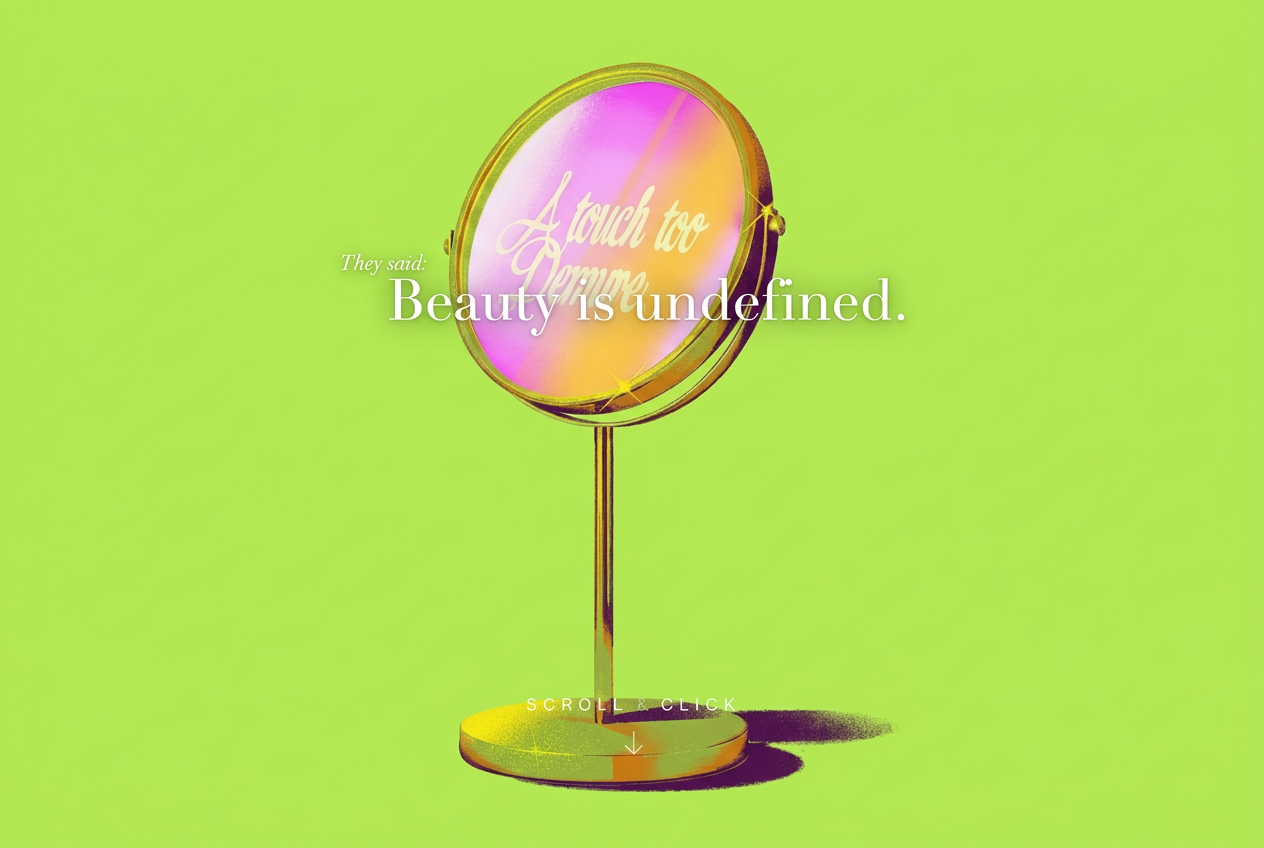
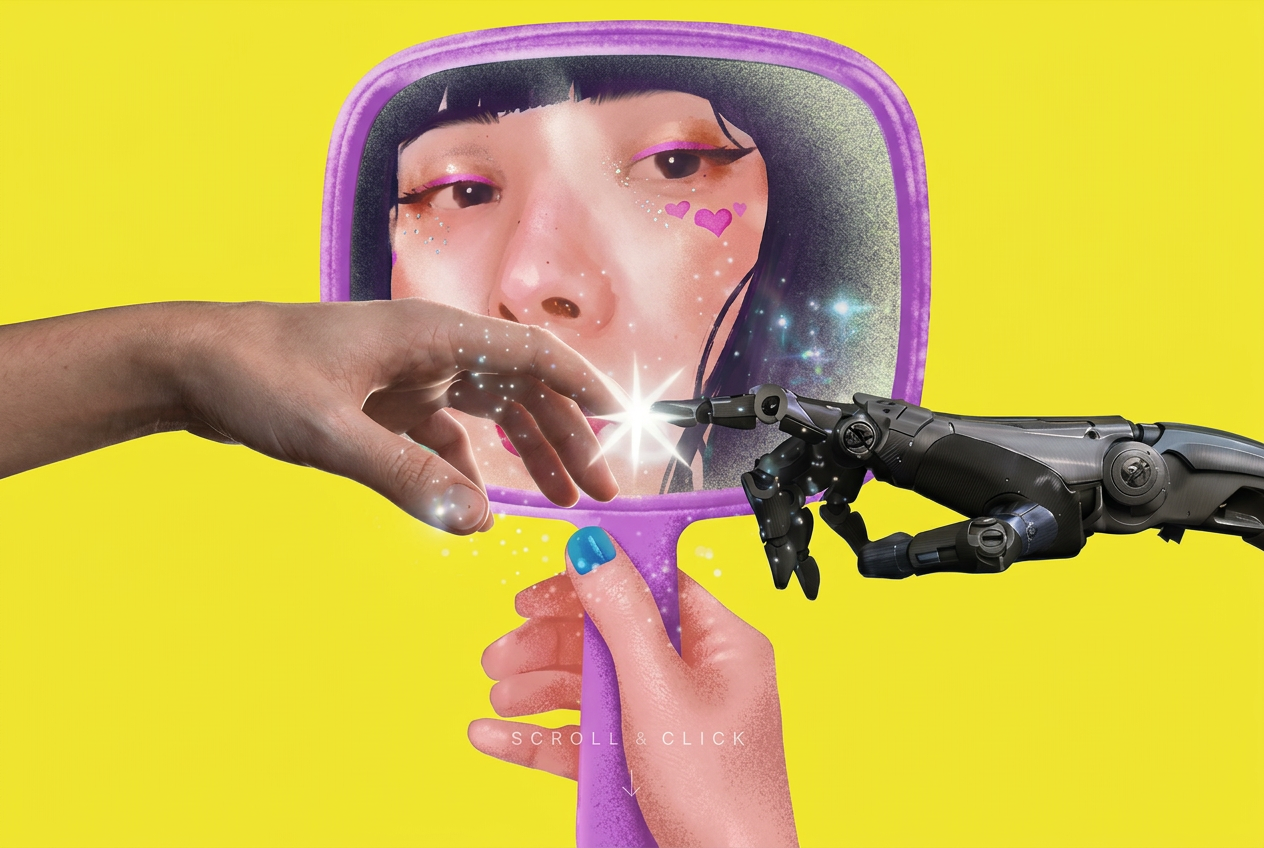
People often say beauty is undefined, but in real life, beauty still feels hard.
In the social media era, appearance anxiety has become more common and more visible. Many people compare themselves to curated online images without realizing that anxiety is already affecting them.
This project was inspired by that hidden pressure. I wanted to build something that does more than generate images — something that helps users recognize appearance anxiety, reflect on it, and gradually let go of it.
What it does
Selfverse is a web app that helps users move:
- from hidden appearance anxiety
- to self-understanding
- to reduced pressure
The product combines three parts:
- Immersive intro experience with animation and music
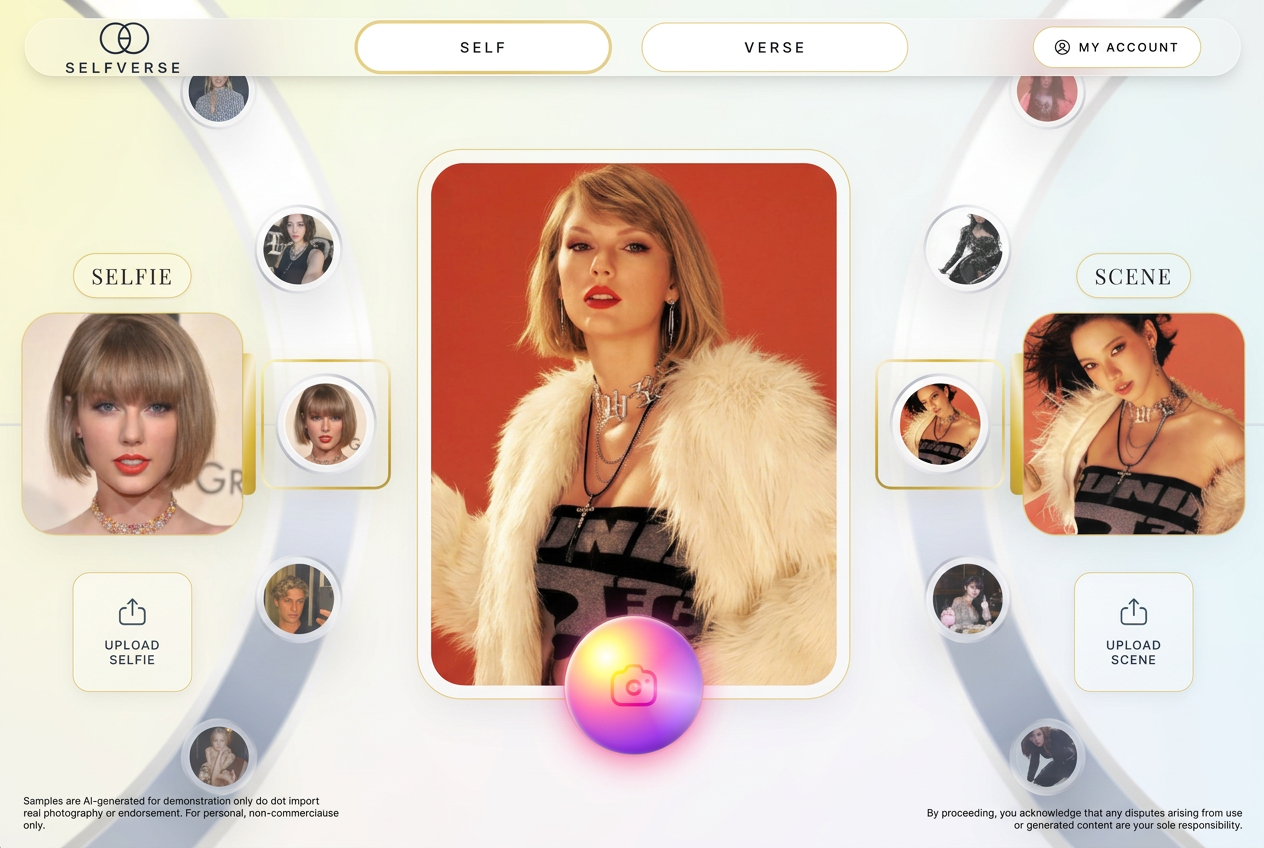
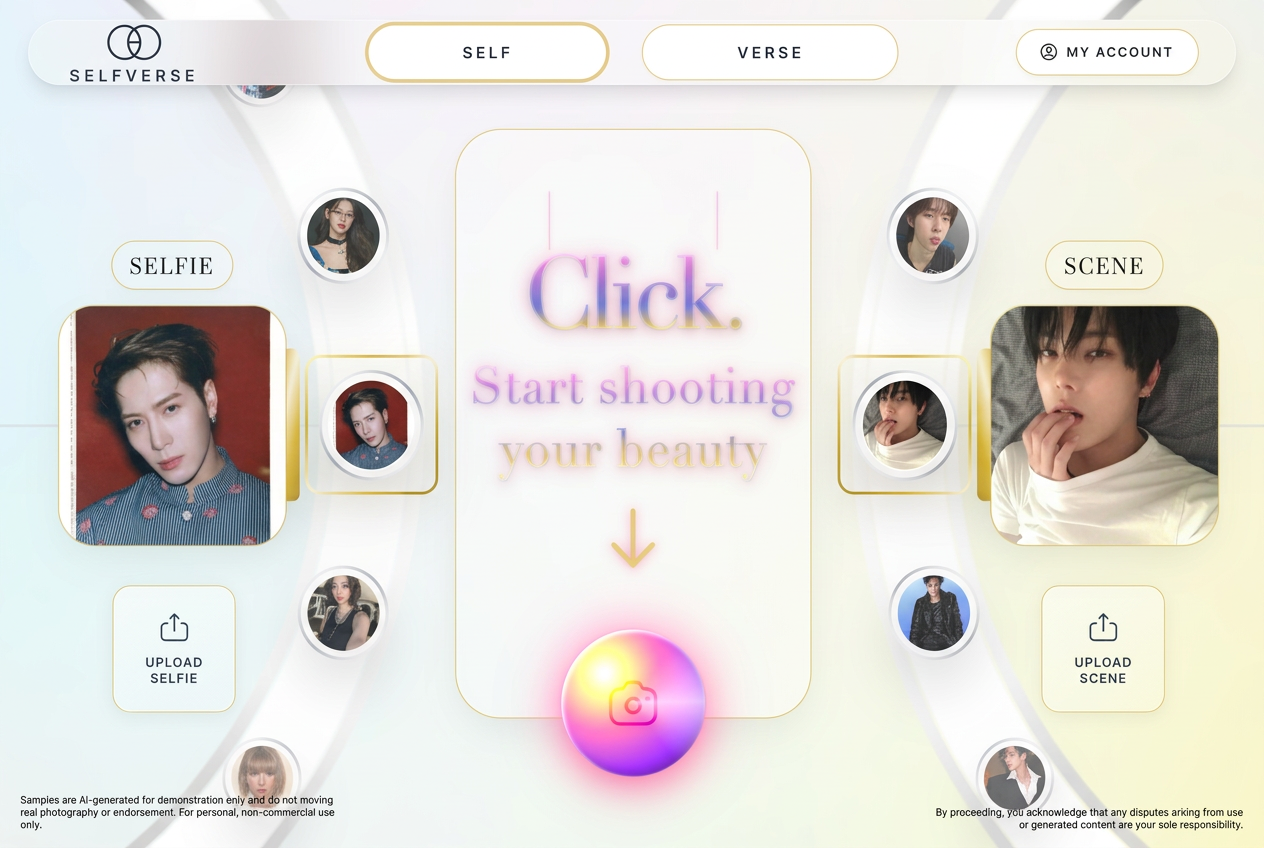
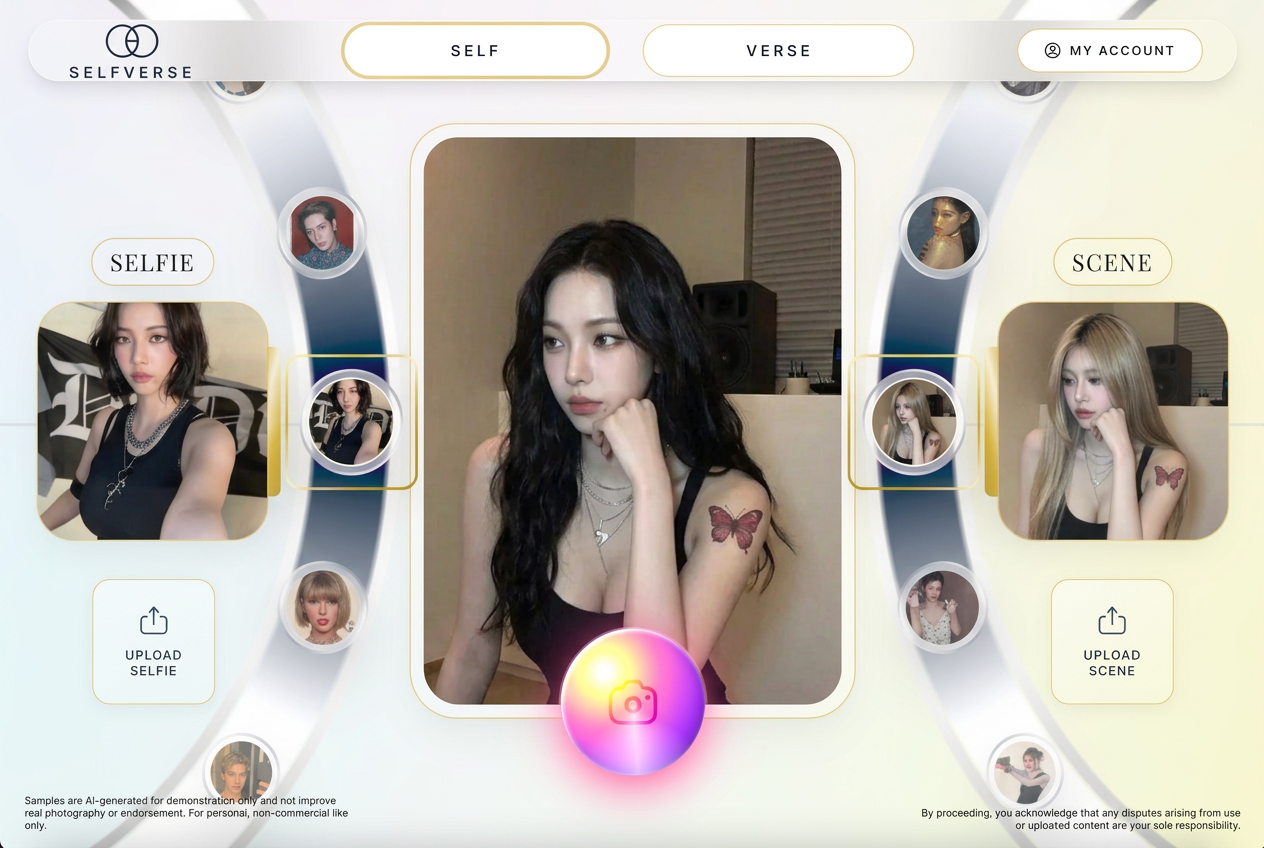
- AI image generation on the Self page
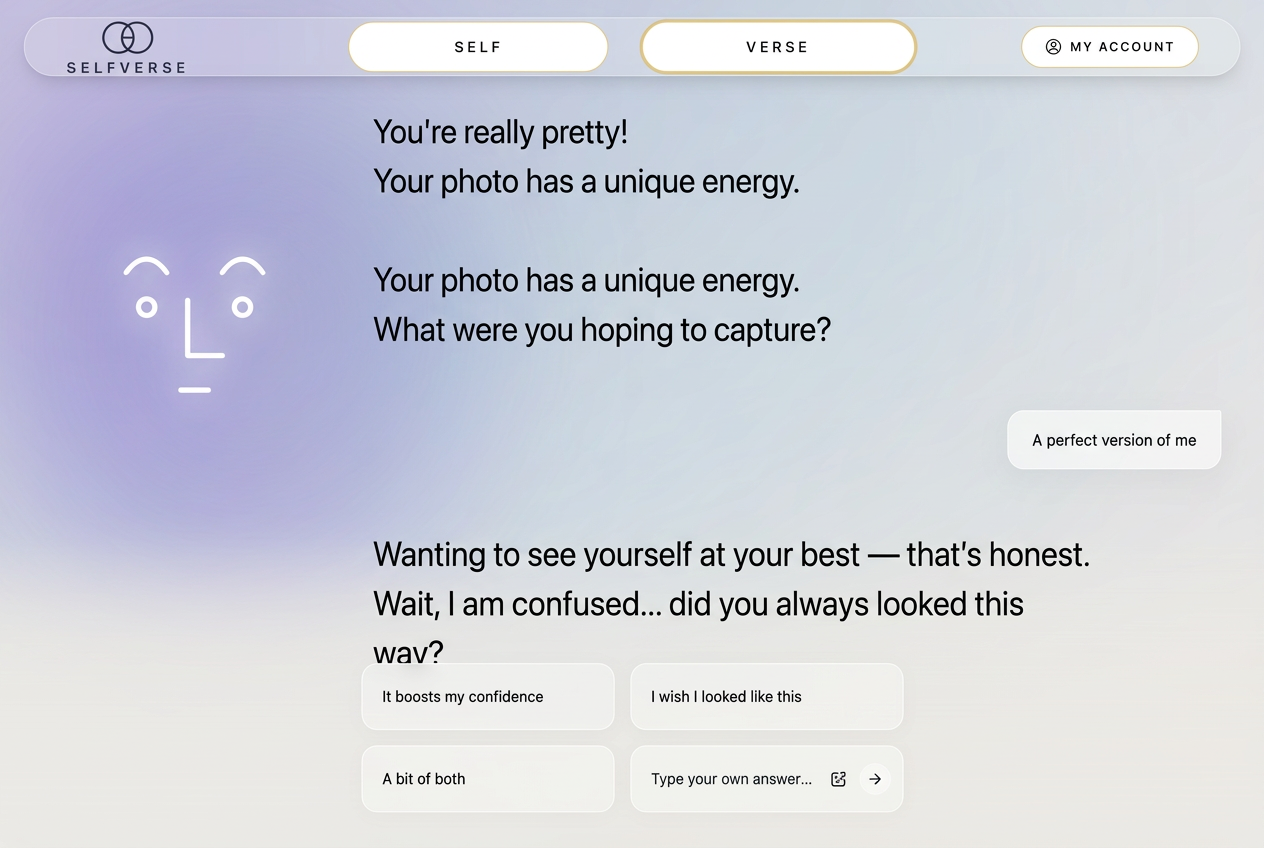
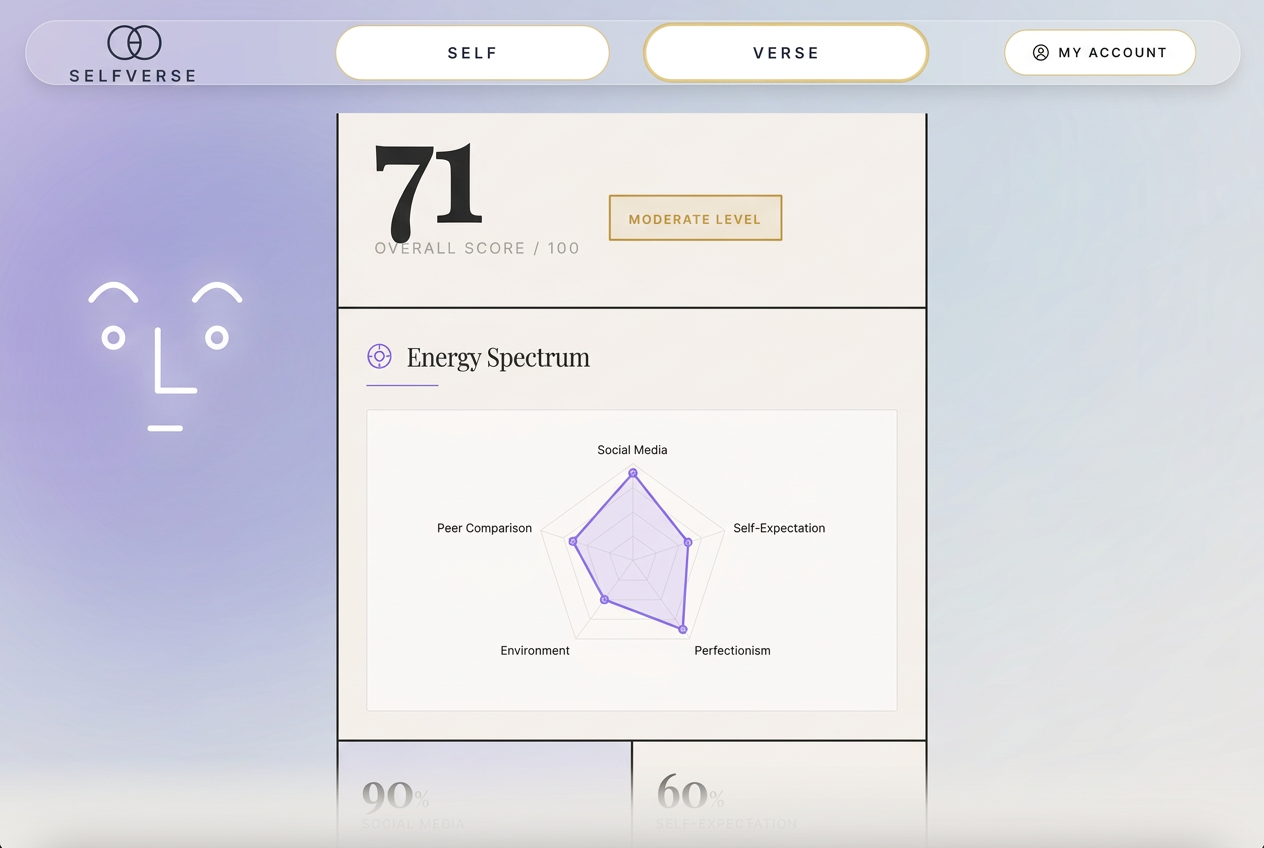
- AI reflection and reporting on the Verse page
Users can generate images, interact with an AI agent, and receive a visualized report about possible appearance-anxiety patterns, triggers, and suggestions.
So this is not just image generation — it is a guided emotional experience.
How we built it
We built Selfverse with interface design, multimodal generation, and AI conversation systems.
- NanoBanana was used for image generation
- Veo 3.1 and Seedance 2.0 were used to create the intro animation frames
- the intro was expanded into 200+ frames and turned into an interactive animation
- the Self page lets users upload a selfie and generate themselves in a selected scene
- the Verse page uses Gemini and OpenAI APIs to create a supportive AI conversation and visualized report
The system combines behavior data from the Self page with user conversation input to generate emotional insights.
Challenges
One major challenge was building the semantic slider.
The interaction was inspired by TikTok-style browsing, but AI tools could not generate it directly. To solve this, I built a physics-based slider simulation, designed a liquid-metal-style UI, and combined them into the final interaction.
Another challenge was making the AI feel supportive rather than robotic. I tuned the models to respond in a more patient, caring, and helpful way.
What makes it different
Selfverse is not just:
- an anxiety measurement tool
- an AI image-generation product
- an immersive website with animation and music
It is the fusion of all three.
Most image tools only help users create better-looking content. Most reflection tools rely on users describing emotions directly. Selfverse instead uses creative behavior as a signal, then turns that behavior into reflection, insight, and guidance.
Impact
With this web app:
- users do not need to imitate risky social-media scenarios in real life
- teenagers may feel less pressure from online beauty standards
- users can better understand the anxiety behind their own visual choices
- high-quality photos can also be generated more easily from home
Most importantly, the system helps users move from hidden anxiety to self-awareness.
Privacy and safety
Privacy is important in this project.
- uploaded data is protected
- AI conversations remain private
- generated reports are protected
- demo examples are non-commercial and privacy-safe
Future development
In the future, Selfverse could connect to more data sources, such as:
- social media APIs like X
- personal AI agents
- broader online context systems
This would help the system understand users more deeply and provide more accurate reports and guidance.
What we learned
This project taught us that building the product is not the hardest part — building something users truly care about is.
As freshmen and first-time hackathon participants, we learned a lot through iteration, technical challenges, and small breakthroughs. This project became meaningful not only because of the final result, but because of the transformation we were trying to create.


Log in or sign up for Devpost to join the conversation.