-
-
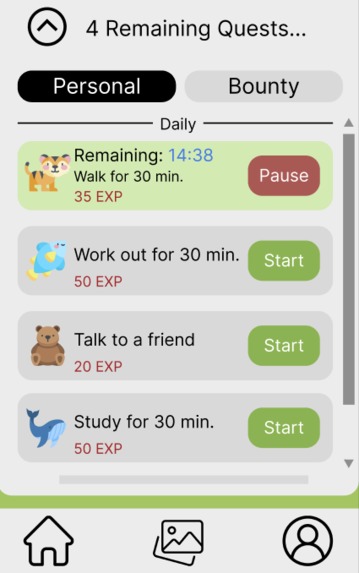
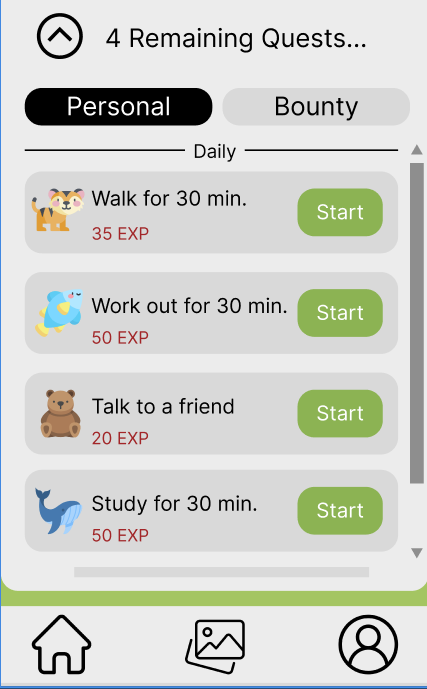
Selected Quest
-
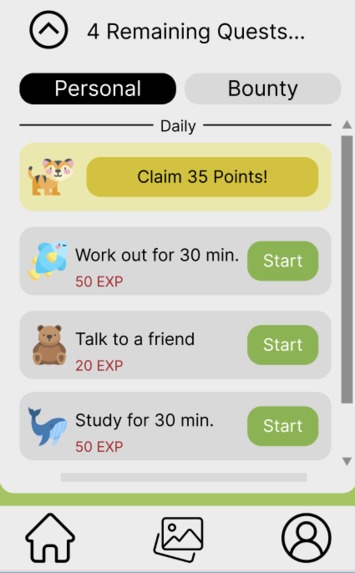
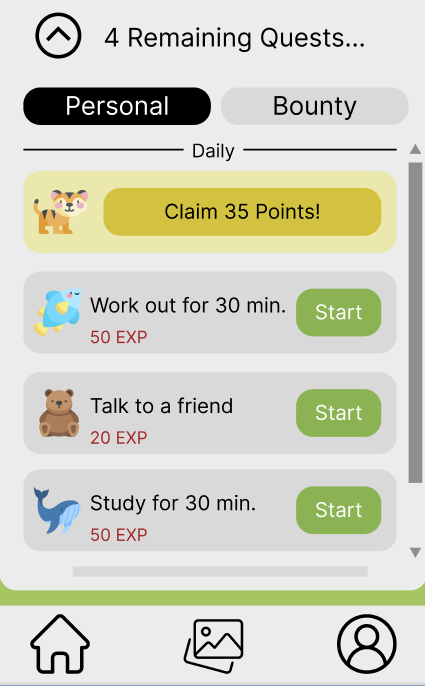
Completed Quest
-
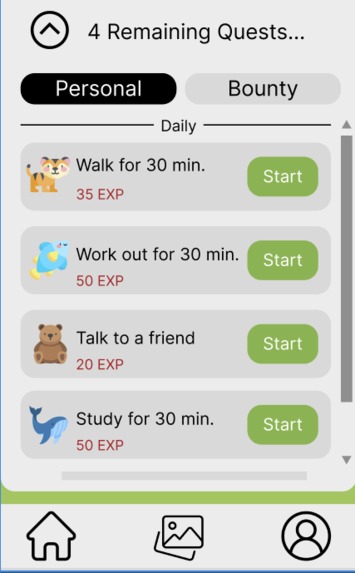
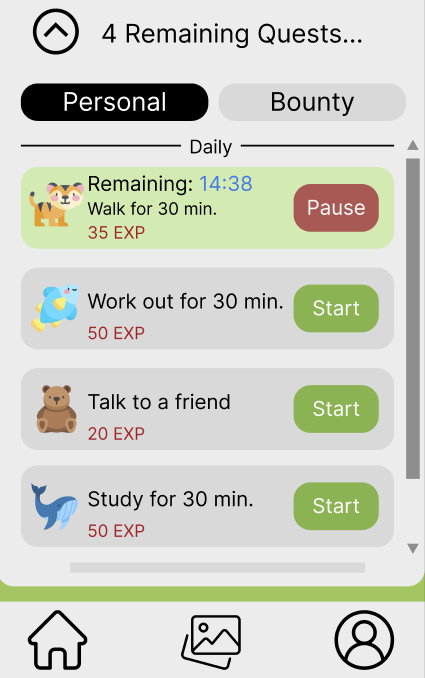
Quests Panel
-
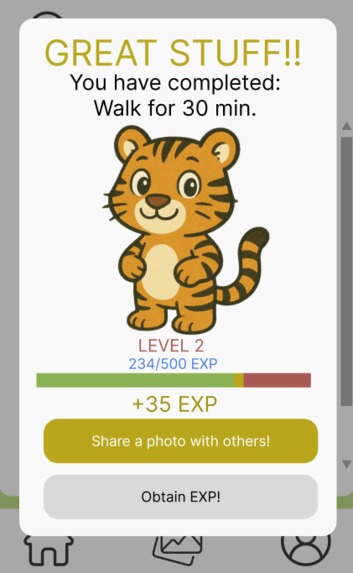
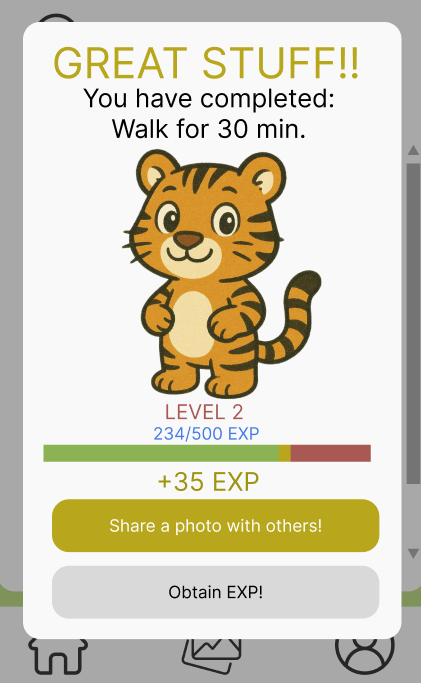
Creature XP Gain
-
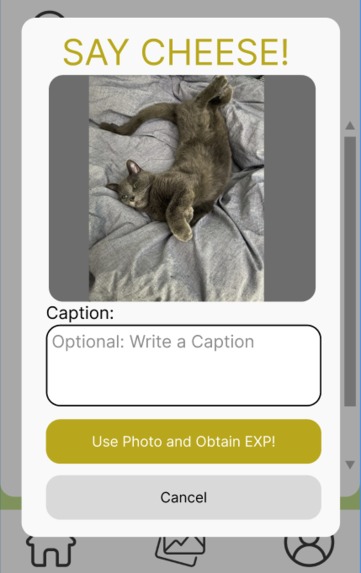
Personal Post
-
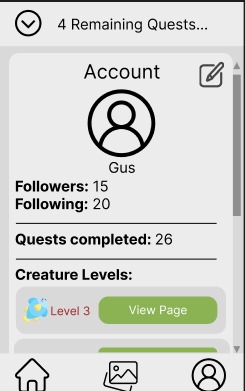
Profile Pane
-
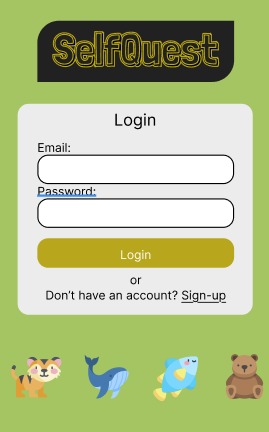
Login Pane
-
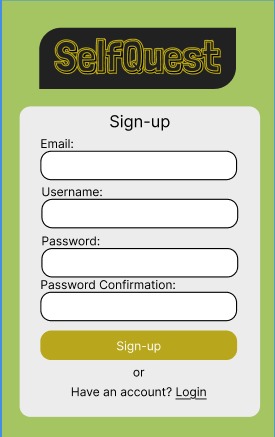
Registration Form
-
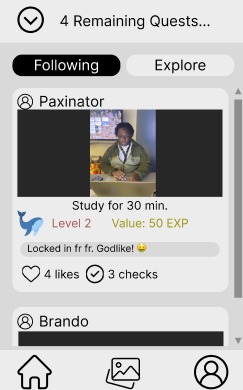
Quest Submission
-
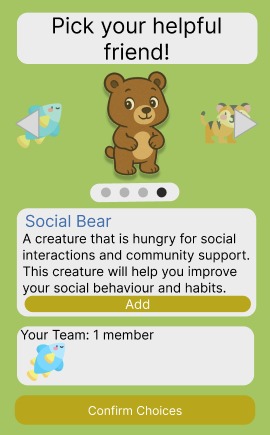
Creature Selection
Inspiration
We gained inspiration from many different topics, ideas and problems people face. Our main driving inspiration was the large amount of wasted time people experience every day due to their screen use on applications such as social media. We notice this as a real problem affecting people and communities. We wanted to make a great way to get people off their phones and talk to others or improve themselves as a way to spend their time. To tackle this problem, we came up with the idea to gamify the process of daily activities that affect the individual and their community. We gained inspiration from the strategies performed within the popular franchise Pokémon. We would have cute creatures that users would care for and tend to perform tasks. The benefit we saw from using creatures as an incentive was due to Pokémon's success and our acknowledgement of the strategy's effectiveness.
What it does
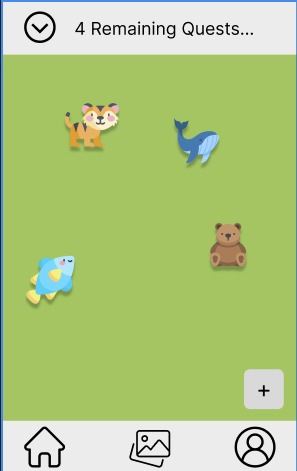
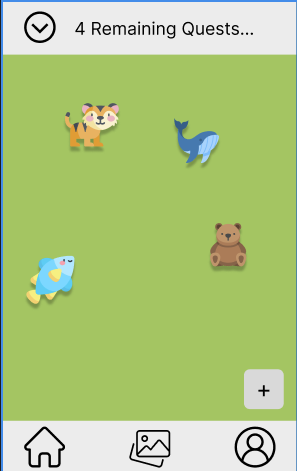
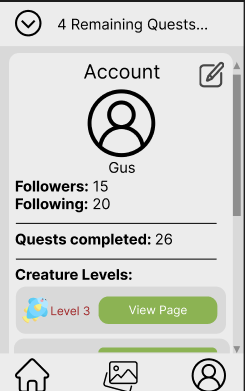
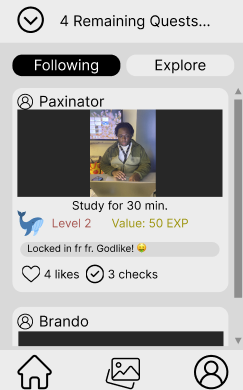
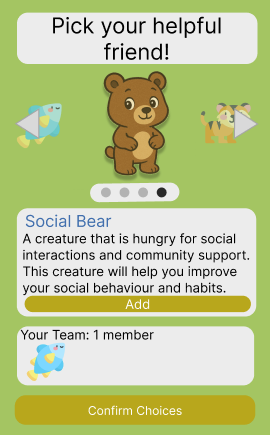
Our application is called SelfQuest, and it is focused on encouraging personal growth and community engagement through active participation in quests. In SelfQuests, users set goals for themselves by selecting creatures (such as Active Tiger, Social Bear, Muscle Fish, etc.) that represent specific traits users wish to develop.
By choosing creatures, users receive daily quests and challenges based on those traits utilizing AI as a way to keep them fresh and relevant, completing up to two quests per day for each creature. Completing quests earns EXP (experience points) for their creatures, helping them level up over time and give users a goal for their creature. There is another quest type which are the weekly bounties. These bounty quests are shared amongst followers and each quest can only be obtained by one user. The quests are much harder and longer boasting a much higher EXP reward.
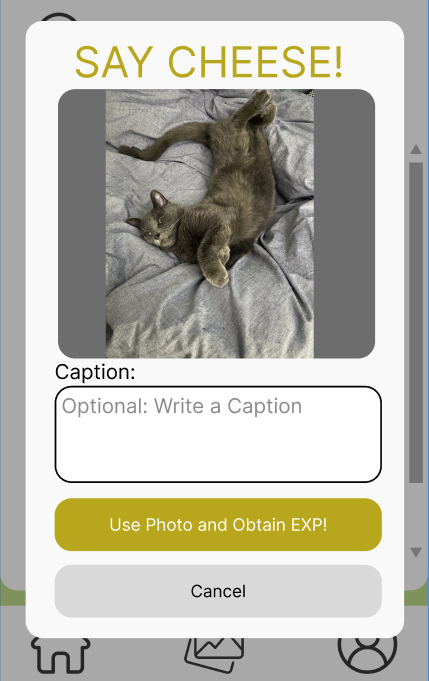
SelfQuest allows users to post images to their completed quests. Other users can support each other by giving likes and "Check" votes (peer review confirmations that a quest was completed), which grants a small EXP bonus. However, there is no comment section to avoid social media “like” uses.
How we built it
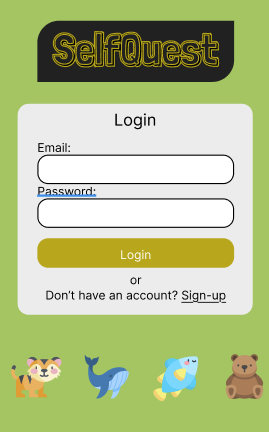
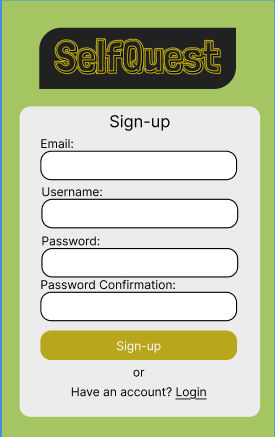
We took a great amount of time to come up with an idea. We were struggling to find one that stuck since the idea either was too general of a problem, didn’t have a convenient/feasible solution to the problem, or had a popular solution to the problem already. We were worried about the time we took toward the idea however once we found one that we all had input and ideas for the whole application became a lot more fleshed out. We immediately hopped on completing an application design utilizing Figma, deploying the backend, and creating a good MongoDB design. The Docker file configuration was problematic; however, we managed to complete it and successfully deployed it. For the development of the application, we utilized Blazor .Net for the nice Mobile experience. Later in the night we completed the Figma design and realized that our idea was a lot larger than expected. So, we shortened our scope to 24 hours and focused on the presentation of the idea. In the end, we had a complete presentation to talk about the benefits and uses of the application. As well as the full design with Figma and what we ended up within the development of the application.
Challenges we ran into
Throughout the design and development of the project, we encountered several challenges. Initially, we struggled to come up with solid ideas for problems. Many of the ideas we threw out were either too broad, difficult to implement feasibly, or the solution already existed. This led to a large amount of time spent deciding a direction causing us to be concerned about the process. Once development began, we faced some technical issues with the Docker file, which took more troubleshooting than expected. We also run into the issue that we had realized our application would be too large to complete in 24 hours.
Accomplishments that we're proud of
We would say that we were proud of the idea and design of the application. The idea is a relevant and effective solution to a problem that affects many generations of people and their communities/social life. The idea of combining creatures to create an engaging experience users will care about makes the experience effective. The application design was also well thought out and user friendly. We were also proud of the deployment of our application since we had never successfully performed that in the past.
What we learned
We leaned about connecting a MongoDB to an API. We have worked with MongoDB in python, however, have never made an application utilizing it. We would also say that configuring the Docker files and deploying successfully was a great learning experience since every time we have performed it in the past it had been successful. With the new knowledge gained, it will be much easier in the future.
What's next for SelfQuest
Our next steps are combining all the middleware to the front end to be able to implement and complete all the main functionality. With more time we can fully complete the design ideas shown in the Figma design.


Log in or sign up for Devpost to join the conversation.