-
-
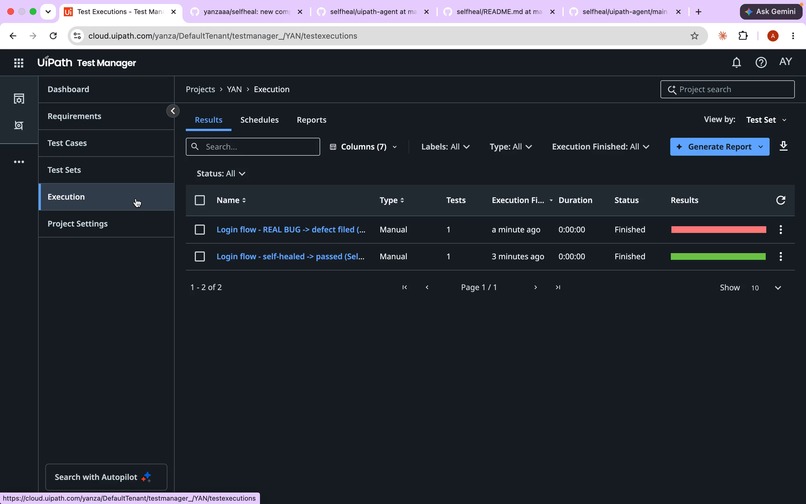
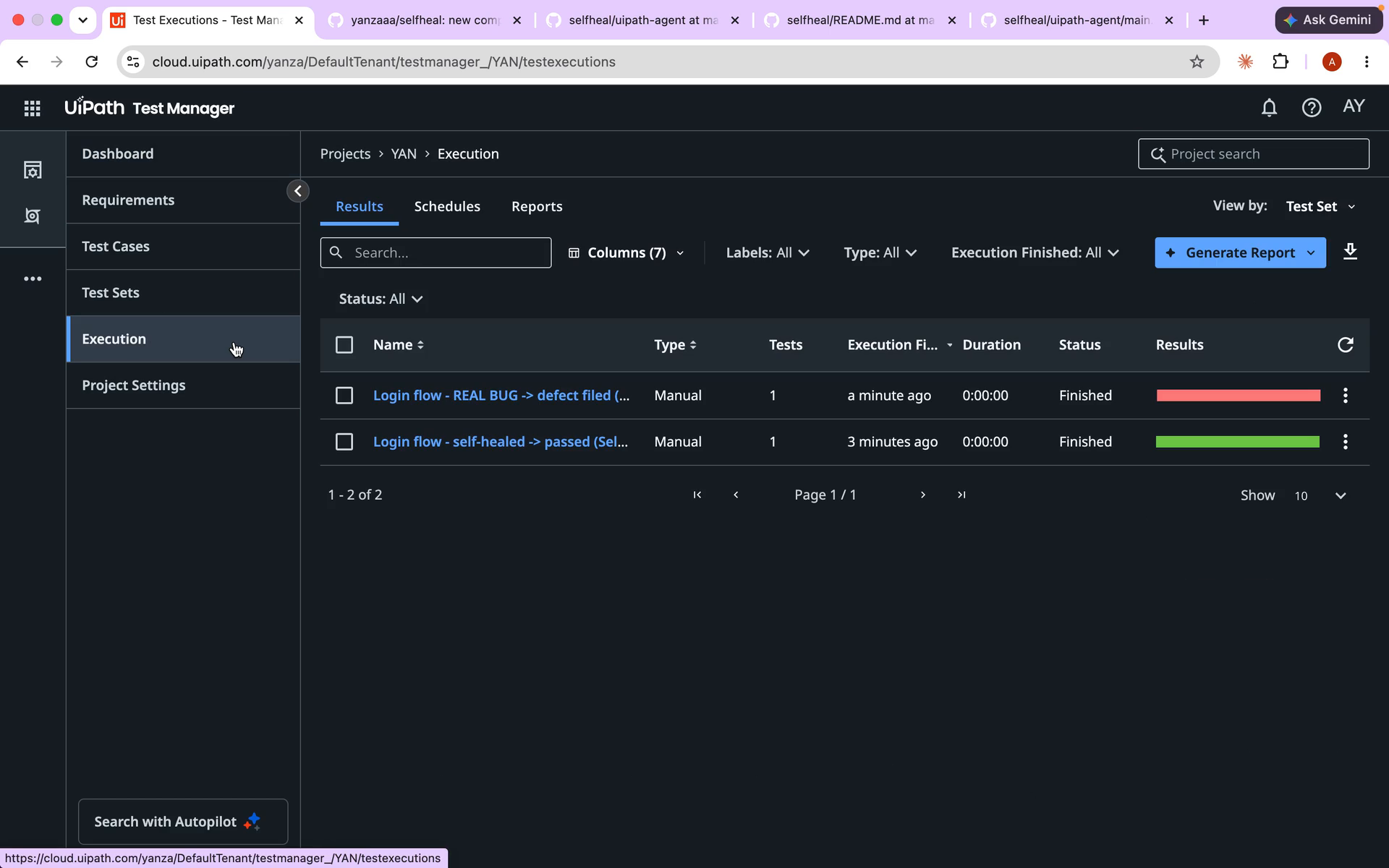
Self-documenting test runs reported to UiPath Test Manager.
-
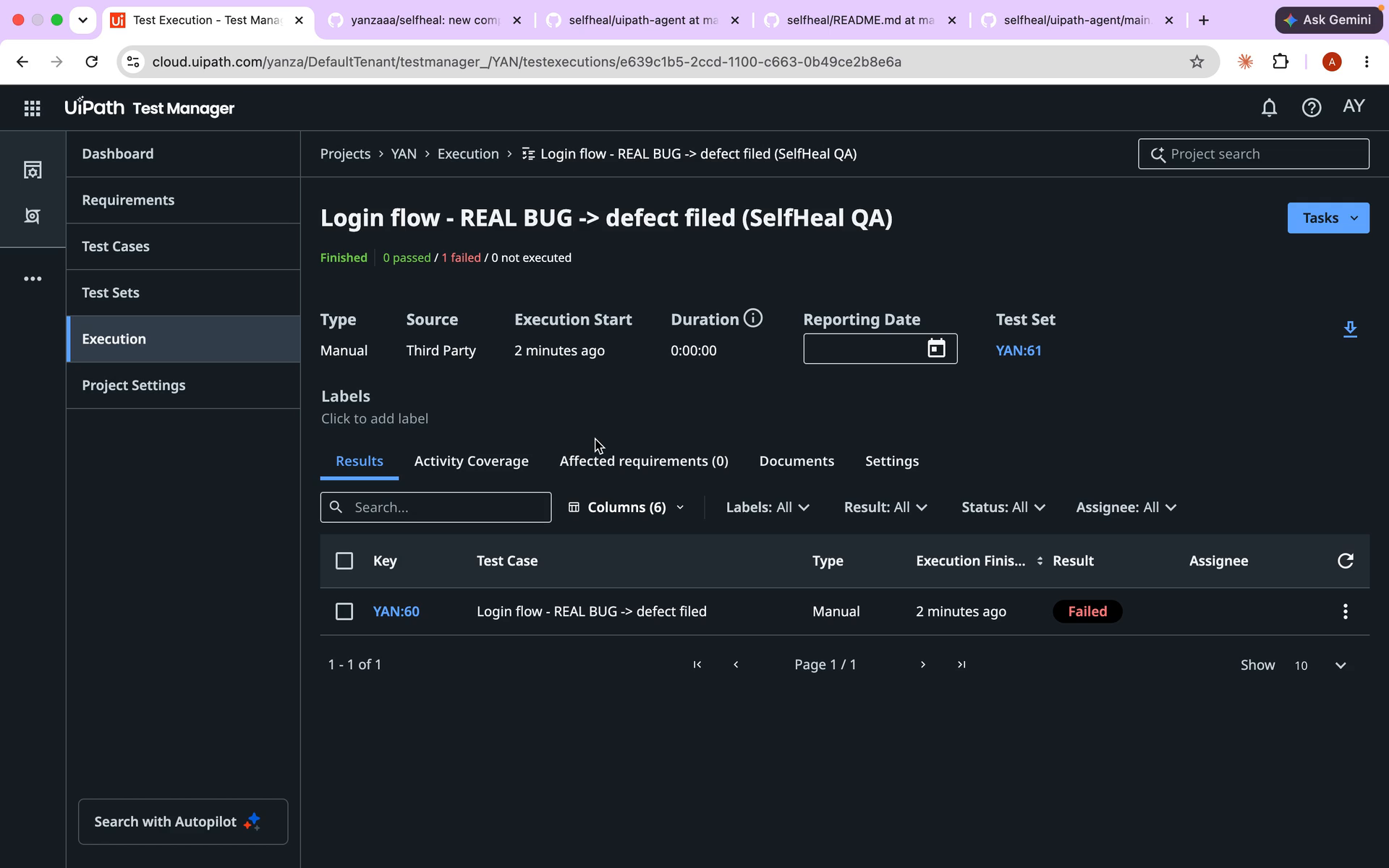
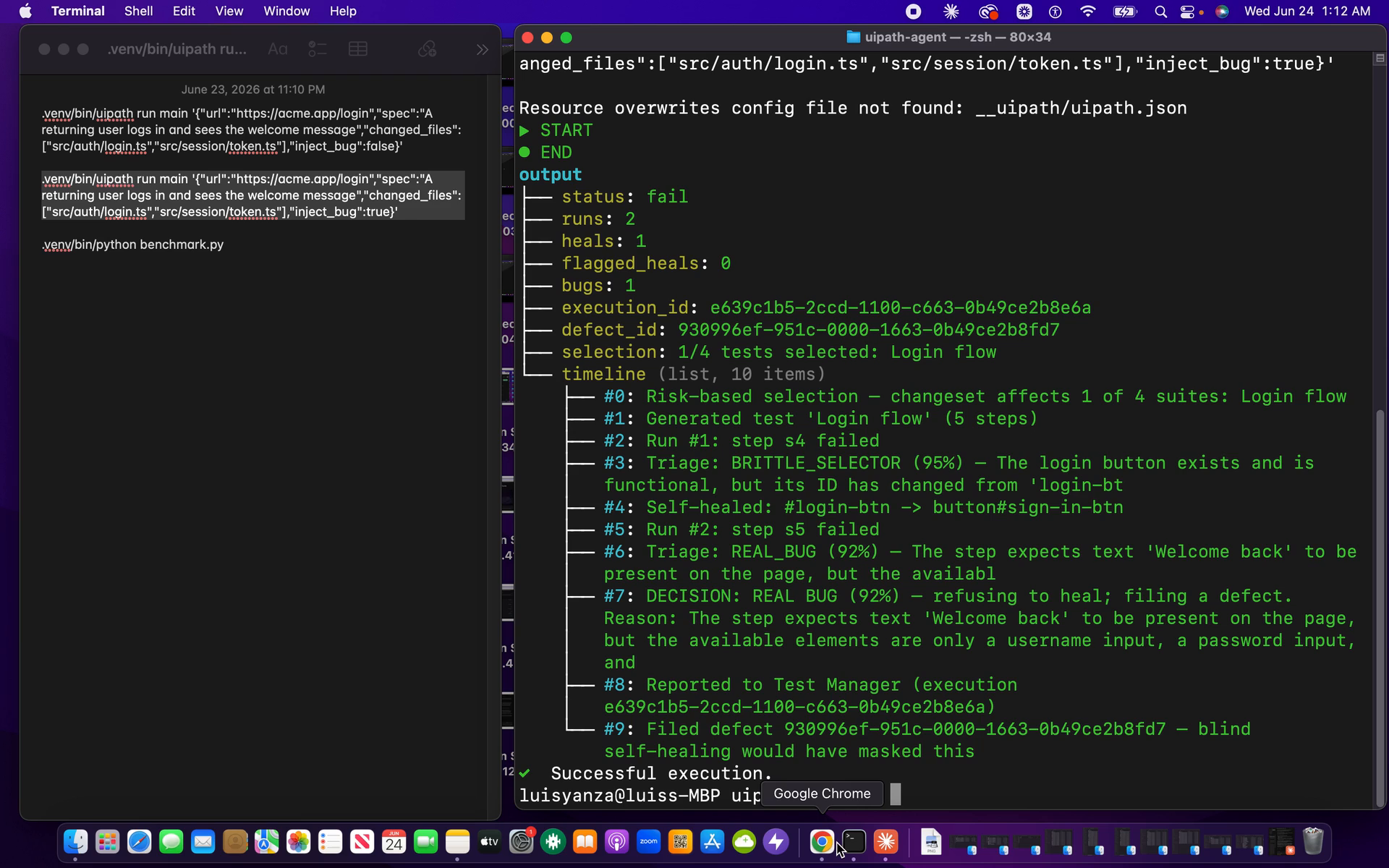
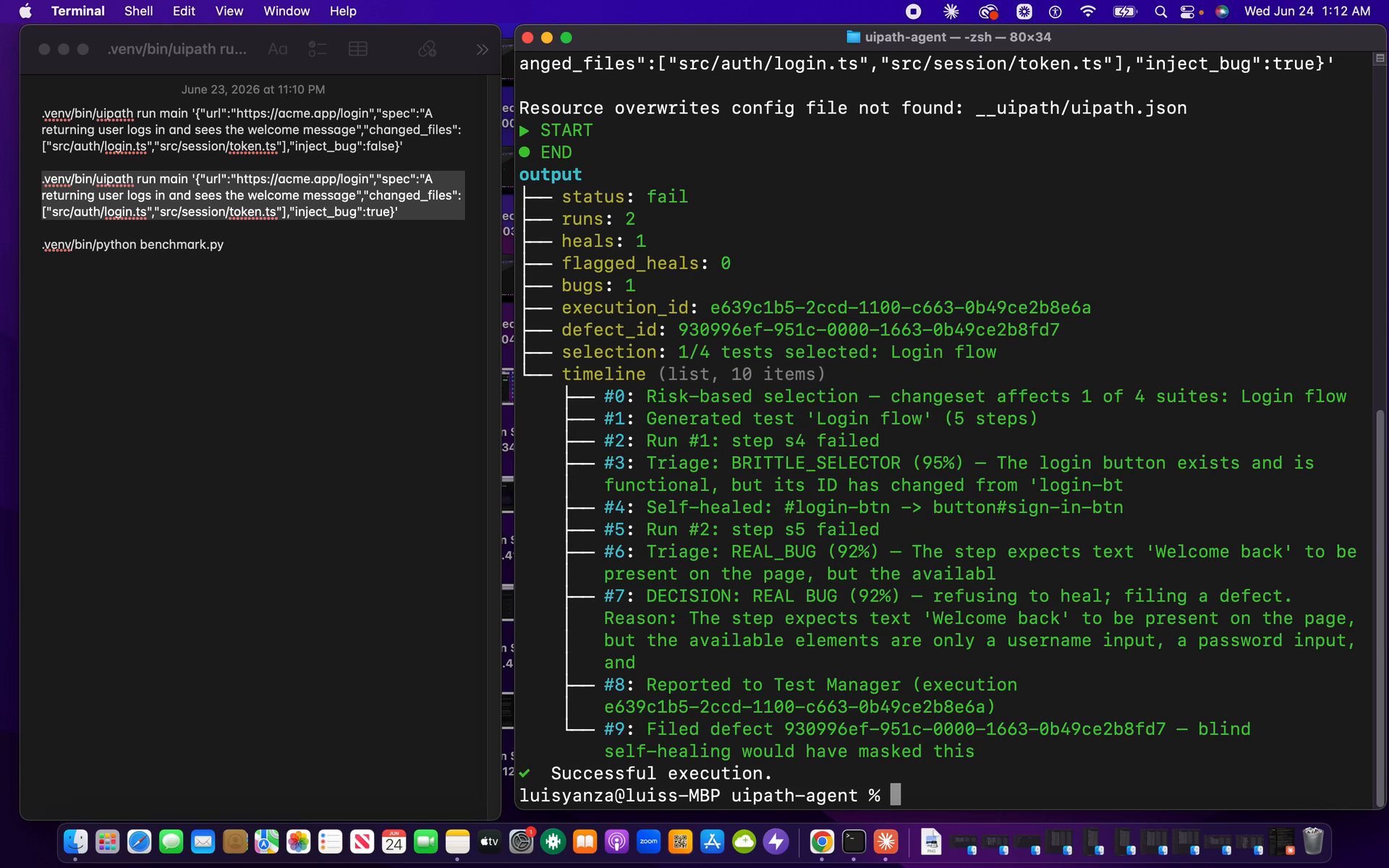
The money moment: the agent self-heals the brittle locator, then refuses to heal a real regression (REAL_BUG) and flags it as a defect.
-
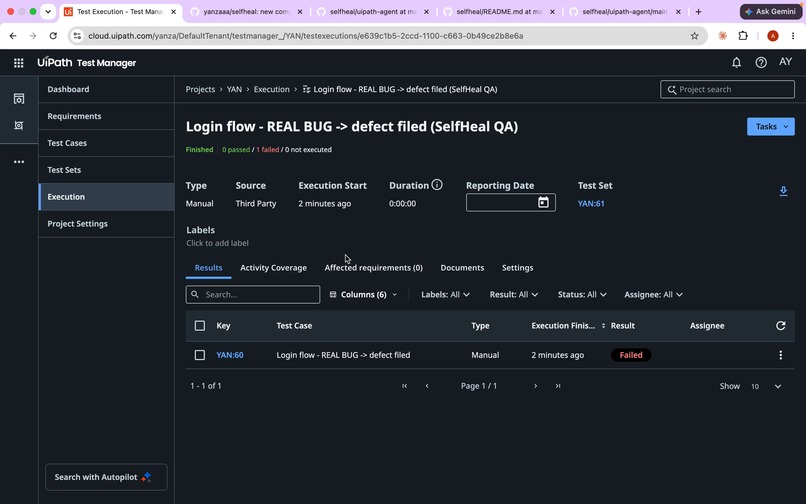
On a real bug, a defect is filed in Test Manager instead of a silent heal.
-
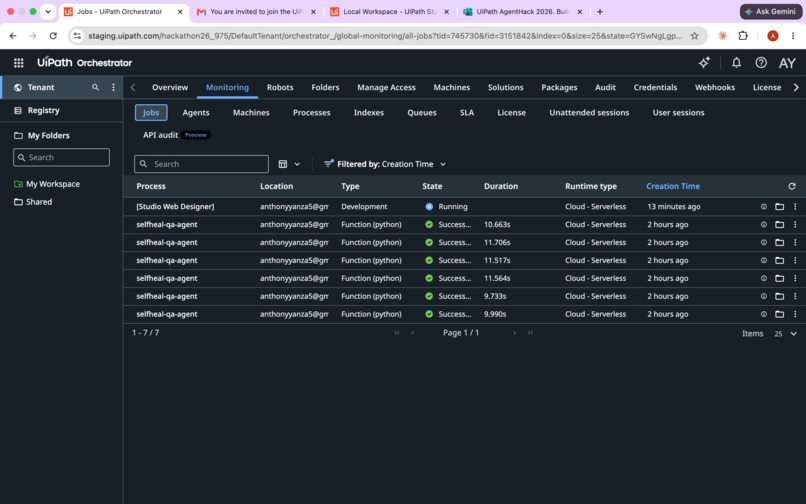
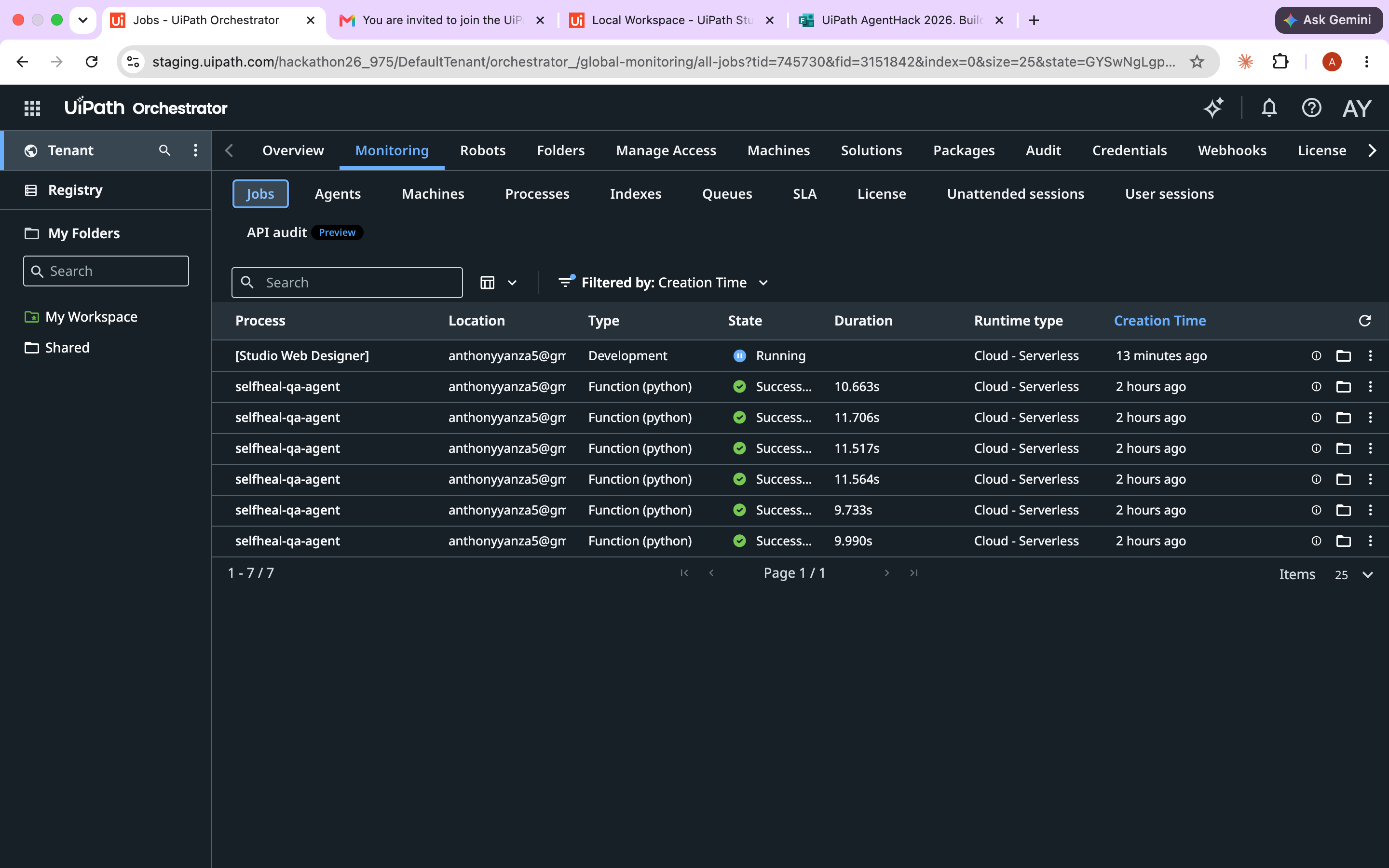
Live on the UiPath hackathon tenant (hackathon26_975): both runs complete Successfully on Cloud Serverless.
-
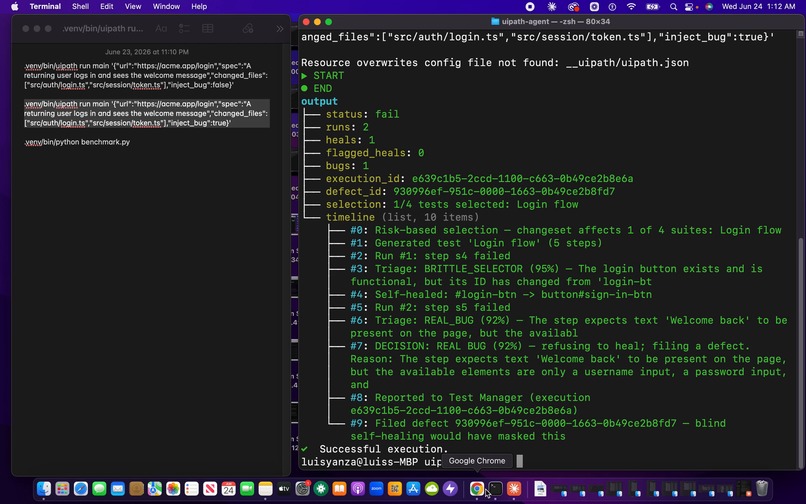
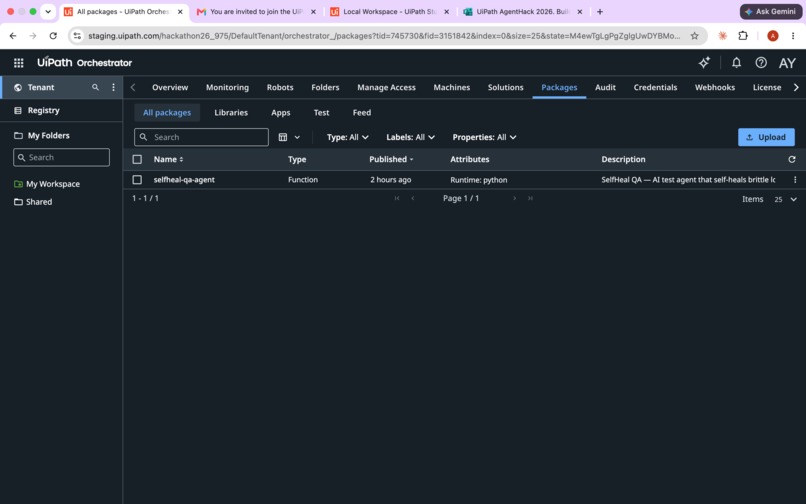
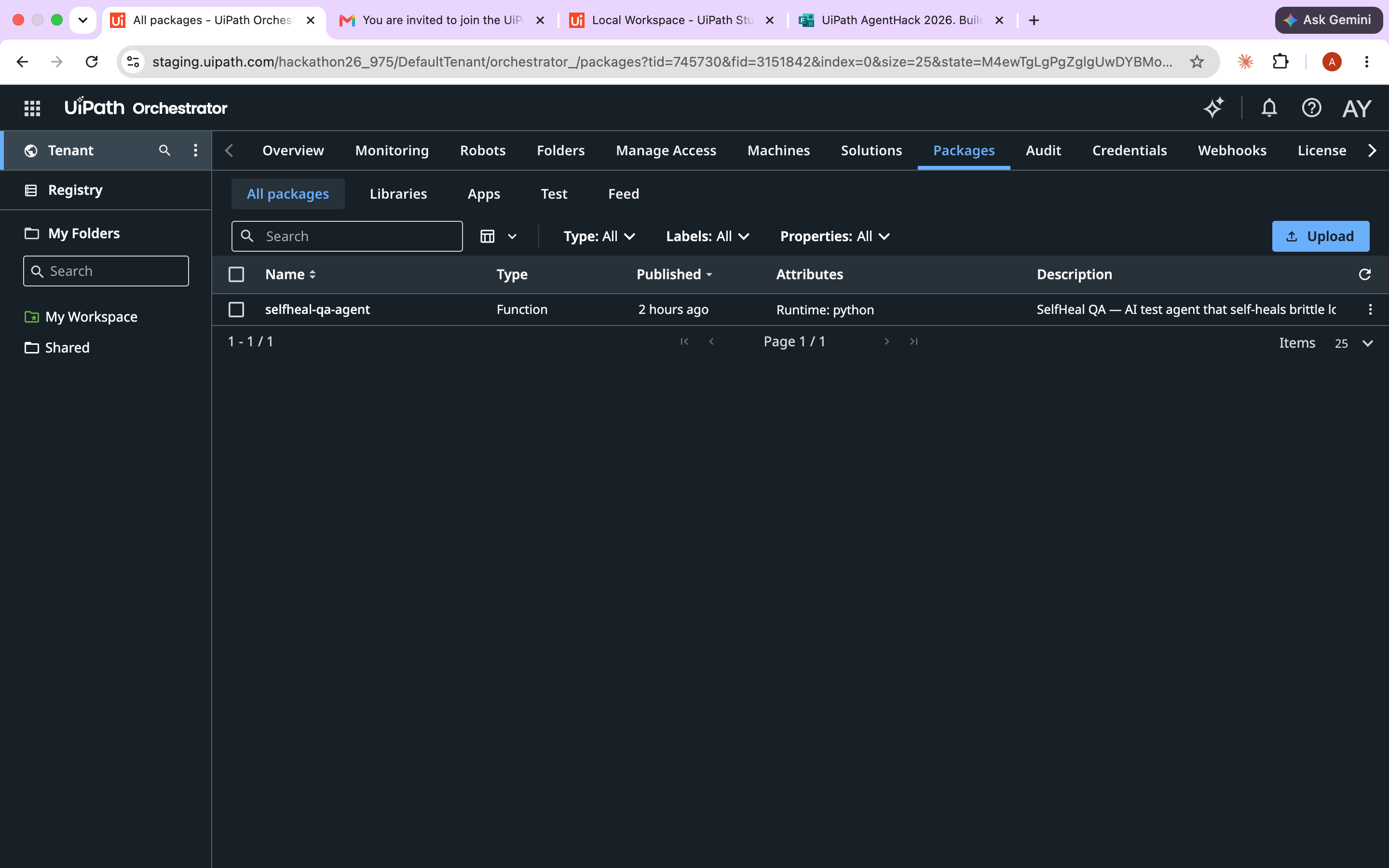
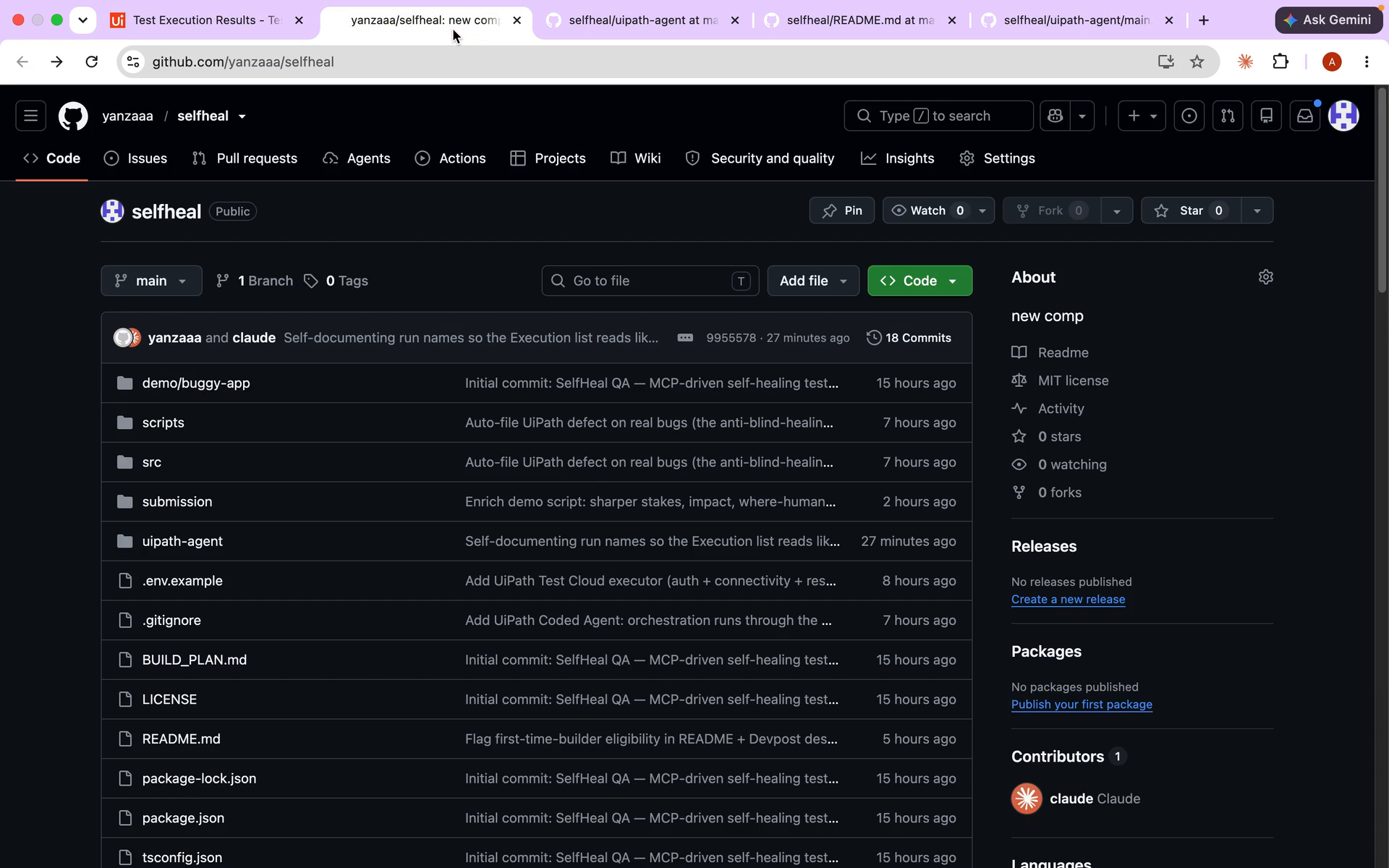
The Coded Agent published to the hackathon tenant package feed (selfheal-qa-agent v0.2.2).
-
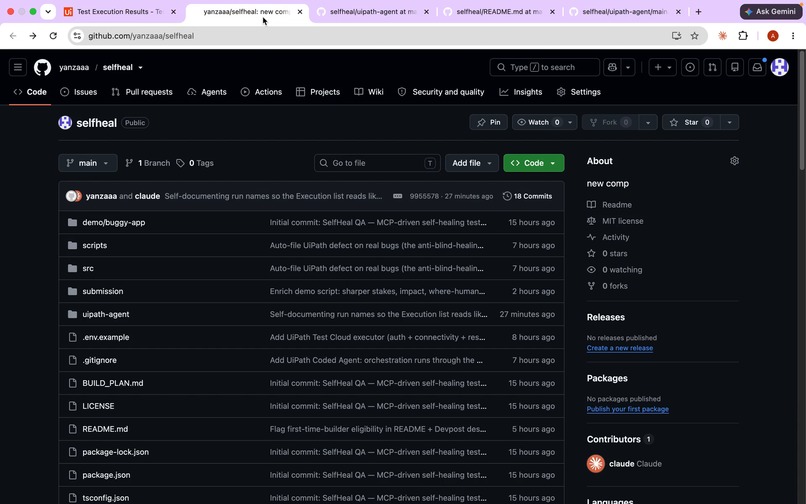
Built as a UiPath Coded Agent (Python, uipath SDK/CLI).
-
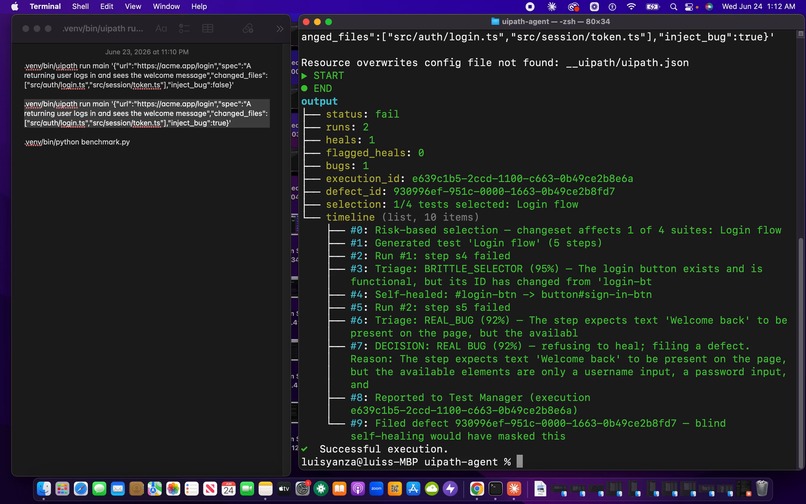
A genuinely brittle locator: self-healed #login-btn → #sign-in-btn and the test passes.
-
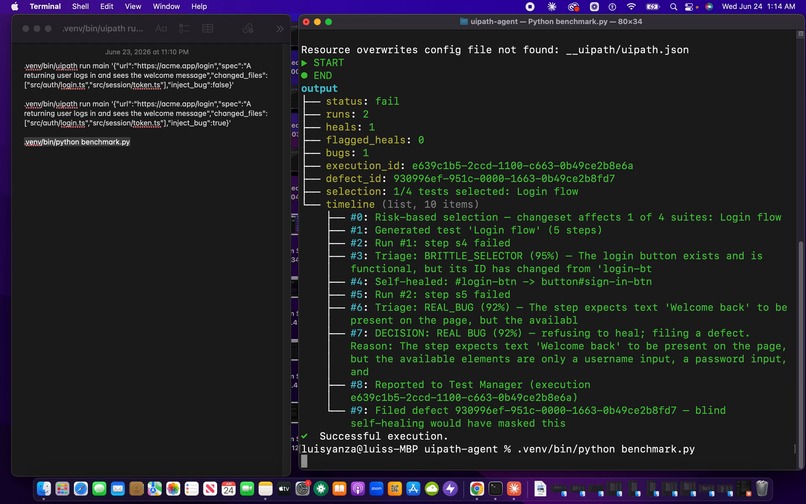
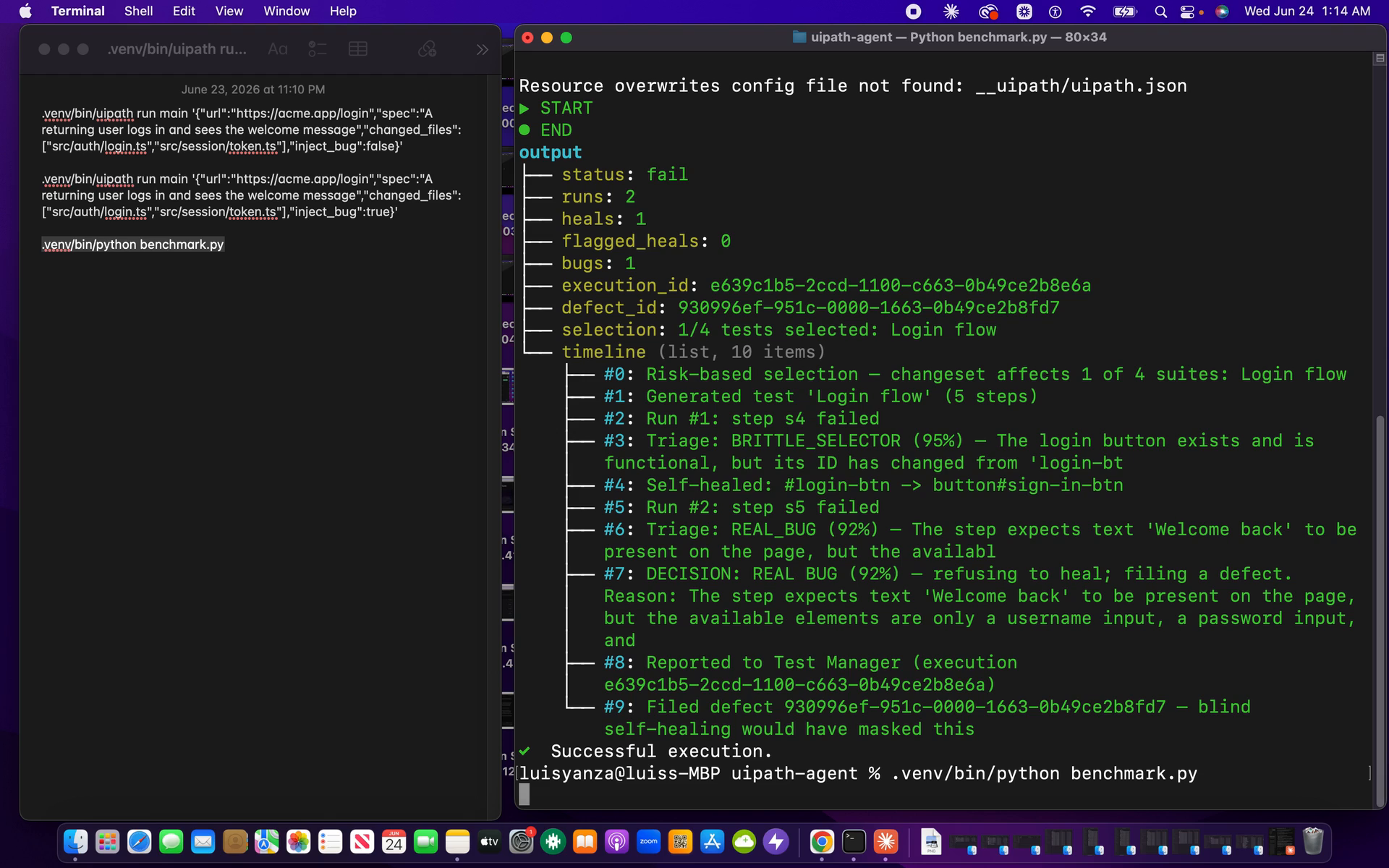
Adversarial benchmark: 0% false-negative across 16 cases, including look-alikes built to fool it.
Inspiration
Brittle UI tests are the #1 reason teams give up on test automation. Someone renames a button, the whole suite goes red overnight, and an engineer loses a morning figuring out whether anything is actually broken.
Self-healing was supposed to fix this, and it does, right up until you hit the worst problem it creates. A test that blindly heals itself can heal right past a real bug. It patches around the failure, turns green, and quietly ships the regression. You find out when a customer does.
So I wanted something past "tests that fix themselves." I wanted a testing agent that knows the difference between the locator moving and the product being broken. UiPath's Autopilot already self-heals, so I didn't try to out-heal it. I went straight at its blind spot: the over-healing that masks real bugs.
What it does
You hand SelfHeal QA a code change and a plain-English description of what should work. From there it's on its own:
- Runs only what's at risk. It maps your changed files to the suites they touch and runs just that slice, not all four.
- Writes and runs the test in a real browser, and the moment a step fails it asks the real question: flaky locator, or genuine bug?
- Brittle locator: it reads the live page, rewrites the selector, and re-runs until green. Nobody touches it.
- Real bug: it refuses to heal, and files a defect in UiPath Test Manager with its reasoning attached, so a human sees the regression instead of it getting buried.
The entire loop runs as a UiPath-coded agent deployed to Orchestrator. Restraint, knowing when not to act, is the whole point.
Validated: 0% false-negative rate across 8 real regressions, 100% triage accuracy on a 16-case adversarial benchmark including look-alikes designed to fool it.
How we built it
- A ** UiPath-coded agent** (Python, scaffolded, run, and published with the
uipathCLI) that calls UiPath Identity and Test Manager v2 REST APIs directly: select, generate, run, triage, heal or file, report. - Claude makes the bug versus brittleness triage call and proposes the new selector from the page's live elements, with a deterministic fallback if the model is unavailable.
- UiPath Test Manager is the system of record: test cases, sets, executions, logs, and the auto-filed defects.
- A Playwright executor drives a real browser for the live demo.
- Deployed to Orchestrator and verified end to end by running the published package as a serverless job, which completed
Successful. - Built start to finish with Claude Code, through UiPath for Coding Agents.
Challenges we ran into
- Scope discovery was painful.
invalid_scopeis all or nothing, so one wrong scope name fails the whole token with no hint which one. I had to probe Test Manager scopes one by one (TM.TestExecutions, plural, is required and easy to miss). - A test execution requires a test set. Posting test cases alone returned a 500, not a helpful 400.
- Cloudflare blocked the default
urllibUser-Agent (403, error 1010) on the Identity token endpoint. Coded agents using stdlib HTTP hit this immediately, and a User-Agent header fixed it. - Headless publish via client credentials kept returning 403 on a personal-workspace read until I switched to
uipath publish --tenant. - Trusting the "refuse to heal" decision was the hardest part. An agent that is confidently wrong is dangerous, so I built an adversarial benchmark to prove it.
Accomplishments that we're proud of
- A 0% false-negative rate across 8 real regressions and 100% triage accuracy on a 16-case benchmark, including adversarial look-alikes built to fool it, a real bug where the button still exists, and a harmless change dressed up as an error. The full per-case transcript is committed in the repo and regenerates on every run.
- It doesn't just say it files defects. It really writes a defect into UiPath Test Manager (with real execution and defect IDs), and the whole agent runs as a Successful serverless Orchestrator job, verified end to end.
- Built solo as my first UiPath project, scoped deliberately to prove one thing end-to-end: that restraint is more valuable than healing everything. Verified from first commit to a successful Orchestrator job, entirely with Claude Code.
What we learned
- The hard part of autonomous QA isn't the healing. It's the restraint. The most valuable thing an agent can do is know when not to act.
- UiPath coded agents and the Test Manager API are a genuinely powerful base for agentic testing once you get past scope discovery.
- You can't ask people to trust an agent's judgment on faith. Adversarial benchmarking is what turns "trust me" into a number.
What's next for SelfHeal QA
- Run it as a pre-merge check on every pull request, so brittle versus real triage happens before code lands.
- Move browser execution onto UiPath's own UI automation.
- Teach triage a third category for flaky versus environmental failures, detecting infra noise before it reaches the triage decision.
Built With
- api
- claude-code
- playwright
- python
- restapi
- typescript
- uipath
- uipath-coded-agents
- uipath-orchestrator
- uipath-test-manager


Log in or sign up for Devpost to join the conversation.