-
-
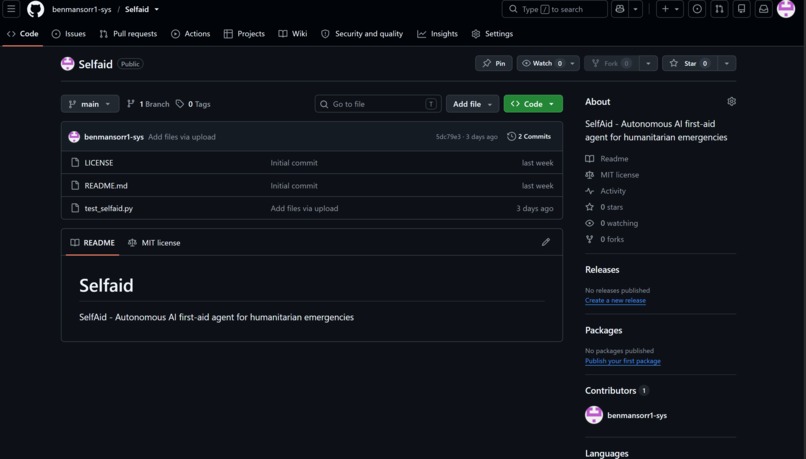
GitHub Public Repository - MIT License & Full Source Code
-
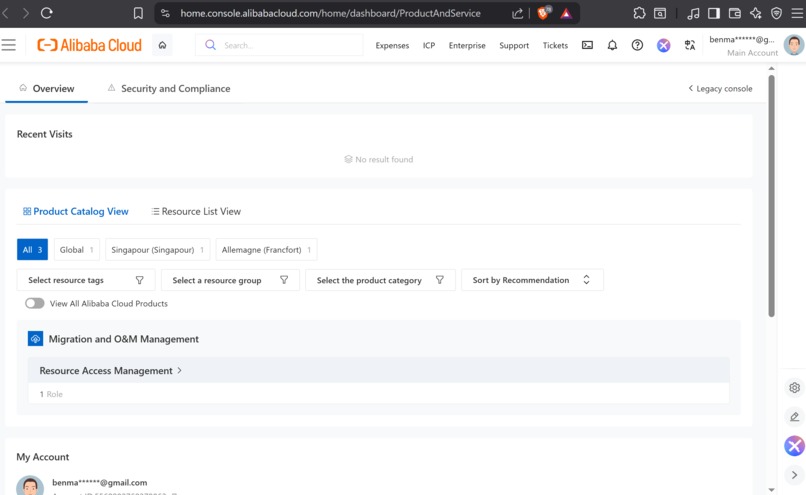
Alibaba Cloud Console - SelfAid built with Qwen Cloud API (Qwen-VL, Qwen-Audio, Qwen-Max)
-
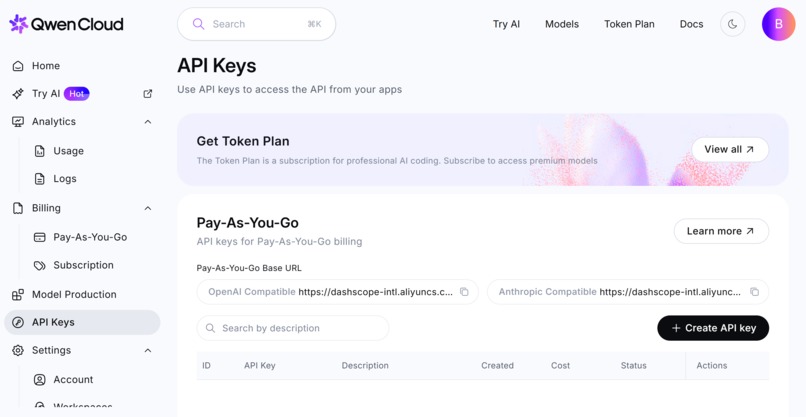
Qwen Cloud API Keys - SelfAid integrated with Qwen-VL, Qwen-Audio, and Qwen-Max via OpenAI-compatible API
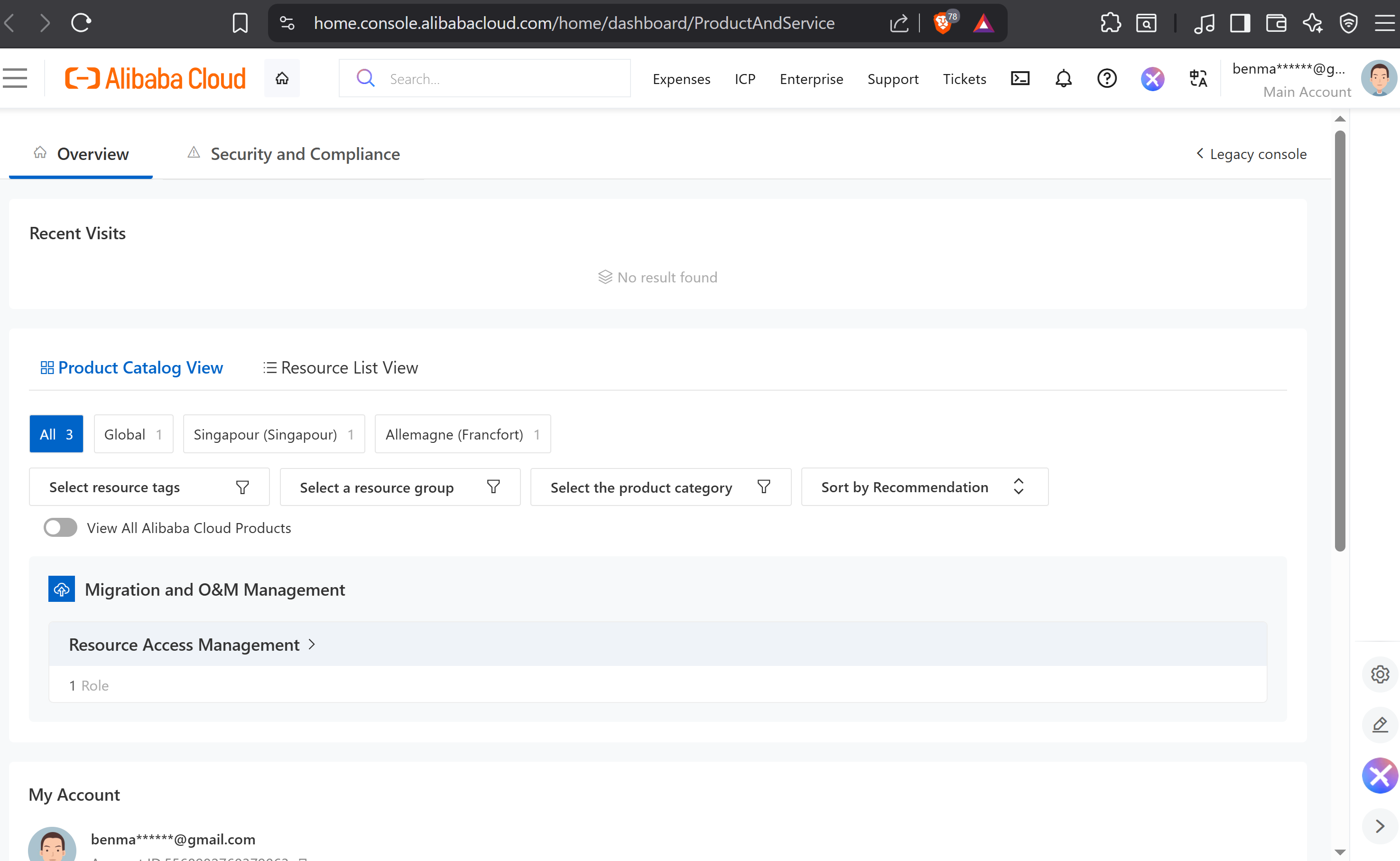
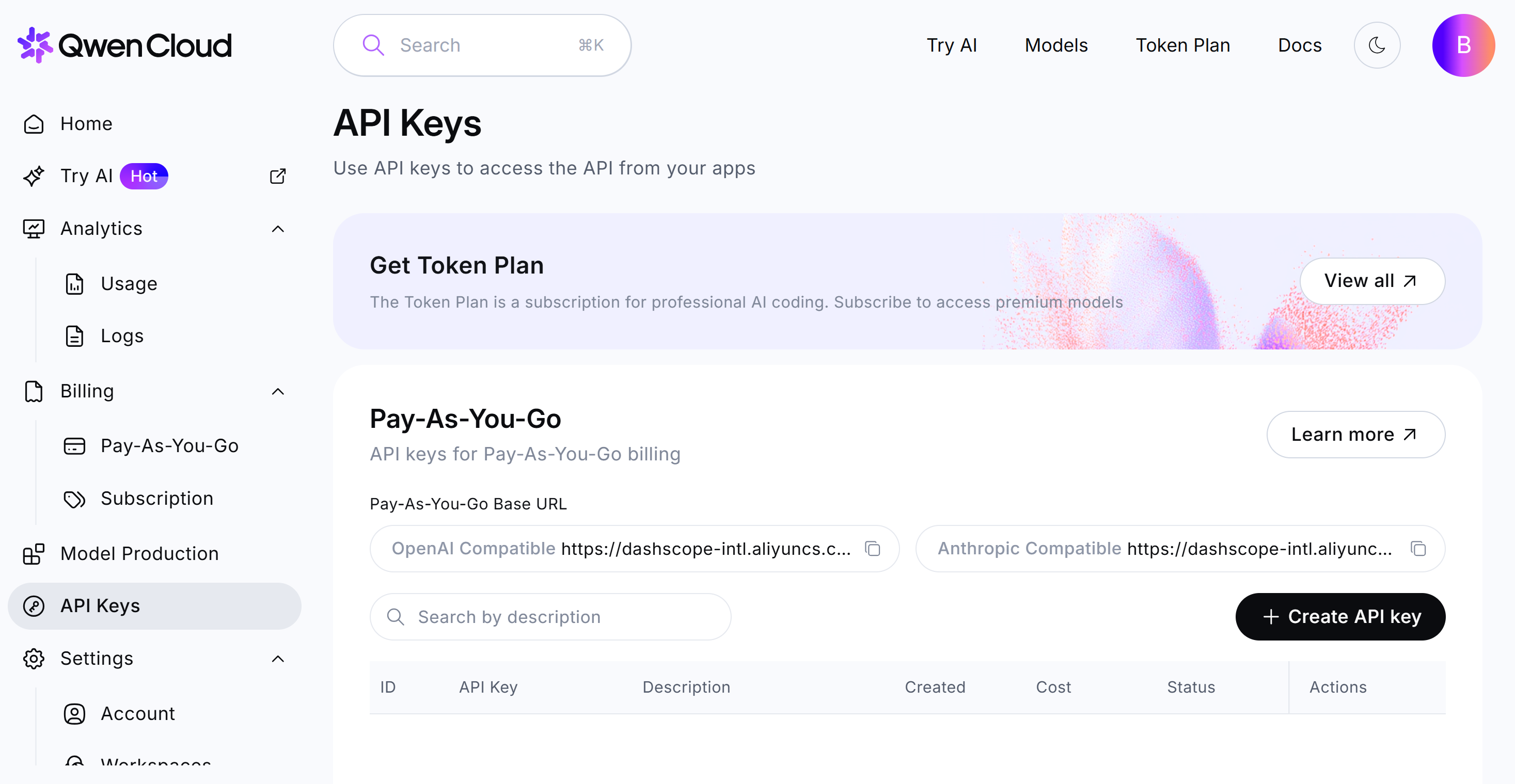
Every year, 1.3 million people die in road accidents worldwide (WHO). Millions more suffer in silence because they cannot communicate their pain: children too young to speak, illiterate adults, deaf and mute individuals, tourists in foreign countries, and people in shock after trauma. As a co-inventor with 35+ years of experience as a professional plumber and Top 33 finalist at WIPO Global Awards 2026 (among 1,600 applicants from 126 countries), I asked myself: what if any human being, regardless of language, literacy, or disability, could describe their pain and receive life-saving first-aid guidance instantly? SelfAid was born from this question. It is not just an app — it is an autonomous AI agent that carries a human responsibility. What it does SelfAid is a free, open-source humanitarian mobile application that allows ANY person to: Describe pain by touching an interactive body map (3 anatomical layers: muscle, nerve, bone) Express themselves via voice, pictograms, or image Receive immediate first-aid guidance from AI trained exclusively on WHO and Red Cross protocols Automatically call local emergency services (112, 911, 15...) with GPS coordinates Send SMS alerts to emergency contacts with a short medical report Translate in real-time between victim and rescuers Innovation: Mountain Mode (Offline Emergency) For areas without network (mountains, deserts, conflict zones), SelfAid includes a unique feature: Fall detection via smartphone accelerometer 60-second countdown with vibration alert If no response: automatic activation of SOS mode Flash LED in Morse code (SOS: ... --- ...) Loud audible alarm (up to 100 dB) Optional LoRa connectivity via external USB-C devices (e.g., Meshtastic) for long-range SOS alerts (up to 10km) Continuous attempts to send SMS even with weak signal GPS location stored and sent automatically when network returns This feature can save the lives of hikers, climbers, desert workers, and anyone in remote areas. How we built it SelfAid is built as an Autopilot Agent using Qwen Cloud AI: Qwen-VL: Analyzes injury photos in real-time (burns, wounds, fractures) Qwen-Audio: Detects panic level in voice and guides the user calmly Qwen-Max: Generates medical guidance from validated protocols RAG System: Retrieves information exclusively from WHO, Red Cross, and ICD-11 databases (zero medical hallucination) Function Calling: Autonomous actions (call 112, send SMS, share GPS) MCC Detection: Automatic language selection based on SIM card country code Hybrid architecture: Critical functions work offline via Edge AI, while advanced features leverage Qwen Cloud for maximum accuracy Challenges we ran into Medical accuracy: avoiding AI hallucination in life-critical situations (solved with RAG + WHO protocols) Universal accessibility: designing for illiterate users, deaf/mute people, and children Offline functionality: making Mountain Mode work without network Legal responsibility: positioning SelfAid as a decision-support tool, not a medical diagnosis Multi-country emergency numbers: integrating 112, 911, 15, 17, 999, etc. Accomplishments that we're proud of A truly universal interface (voice, pictograms, touch, image) Mountain Mode: a unique feature that no competitor has Zero hallucination medical guidance via RAG Autonomous Agent that acts without human intervention in emergencies 100% free, open-source, non-profit structure What we learned AI can save lives when properly constrained by validated medical protocols Accessibility is not an afterthought — it must be at the core of design Offline functionality is critical for real-world emergencies Multi-modal input (voice + image + pictograms) dramatically increases reach Sustainable Business Model ← NEW SECTION! SelfAid operates on a dual-track business model that ensures financial sustainability while maintaining its humanitarian mission: B2C - For Individuals (100% Free): The app is completely free for all individual users Open-source (MIT license) No ads, no data selling All medical data is processed locally (Edge Computing) for privacy Goal: Save as many lives as possible worldwide B2B - For Companies (Paid): SelfAid Guardian: Integration of the app into electric and autonomous vehicles Target customers: Automotive manufacturers (Tesla, BYD, Mercedes...), insurance companies, fleet operators Revenue model: Technology licensing, integration fees, annual subscriptions Goal: Fund the free B2C service and achieve financial sustainability How the model works: This model ensures: Continuity of free service for individuals Project growth and expansion Financial independence without relying on donations Achieving humanitarian impact with financial sustainability What's next for SelfAid Launch as a non-profit foundation after the hackathon Partnerships with Red Cross, WHO, and emergency services worldwide Pilot Phase: Testing Mountain Mode in real-world conditions with mountain rescue teams Launching SelfAid Guardian (B2B): Integration with electric vehicle manufacturers Expansion to smartwatches and IoT devices Training mode for learning first-aid gestures in normal situations Mesh network via Bluetooth LE for disaster zones Legal structure SelfAid will be operated by a non-profit foundation: 100% free for all individual users (B2C) Open-source (MIT license) No advertisements No data selling All medical data processed locally (Edge Computing) for privacy Clear disclaimer: "Decision-support tool — does not replace a doctor" SelfAid Guardian (B2B) will be managed as a separate commercial entity to fund the free service The team Mansour Benaissa — Project Lead & Co-Inventor Top 33 finalist at WIPO Global Awards 2026 (among 1,600 applicants from 126 countries) 35+ years of experience as a professional plumber with deep field knowledge of sanitary systems Co-inventor of a mechanical automatic shower device without electricity (patent pending) Founder of SelfAid - Humanitarian AI first-aid application Looking for: Python/AI Developer (Qwen API, Function Calling, RAG) Mobile Developer (React Native/Flutter) or UI/UX Designer Medical Advisor (optional)
Built With
- accelerometer-api
- alibaba-cloud
- edge-ai
- flash-led-api
- function-calling
- gps-api
- icd-11
- openai-compatible
- python
- qwen-audio
- qwen-cloud
- qwen-max
- qwen-vl
- rag-(retrieval-augmented-generation)
- react-native
- red-cross-protocols
- sms-api
- who-protocols

