Inspiration
With the COVID-19 pandemic, there’s been a lot of shortages in the public health resources. Hospitals have been overflowed, and unable to effectively support all patients, needing to triage their patients. We see an opportunity to help mitigate overflow and more efficiently allocate resources by assessing patients' conditions and recommending which hospital they should visit.
What it does
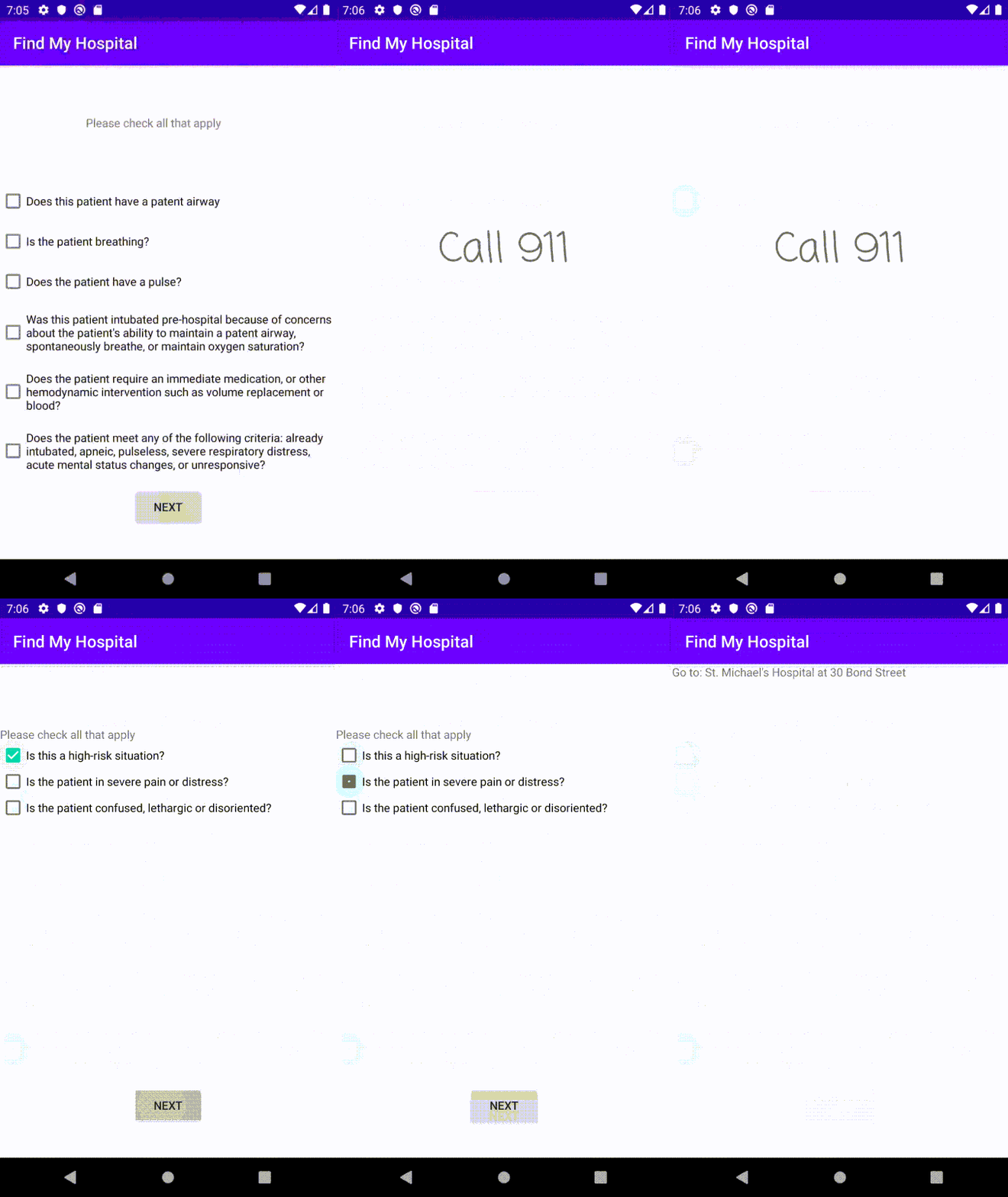
A person navigates through a set of questions in the app that aims to self-triage to assess their priority (severity of symptoms, urgency time-wise) and the pivotal resources they might need. Based on this information, it computes an estimated ESI (emergency severity index). From there, we recommend which hospital they should go visit, to try to optimize the overall allocation of resources. (more on ESI algorithm here: https://www.ahrq.gov/sites/default/files/wysiwyg/professionals/systems/hospital/esi/esialgorithmposter.pdf and https://www.ahrq.gov/professionals/systems/hospital/esi/esi2.html)
Distance: We’ve assigned values to the possible ESI values (ESI_distance) that represented the maximum distance that a hospital can be for a patient with a given ESI value (and the algorithm only considers hospitals within that radius). We’ve plugged in dummy values for now since we don’t know what a suitable transport time is for each severity.
Resources: Based on the current amount of resources in each hospital, it recommends the hospital to try and preserve available resources in each hospital (this is pivotal for emergent cases where it is more important to prioritize distance instead of resources in recommending hospitals). Right now, it prioritizes hospitals based on the most scarce resource.
How I built it
We initially wrote the code in python since it was the language we were most familiar with. But that was a bad idea because python apps are not aesthetically pleasing so we pivoted halfway through and recoded it in java (having to relearn this language overnight).
The hospital information can be continuously updated with google sheets. Our app reads off the current CSV hospital information to recommend a hospital.
Challenges I ran into
We spent a lot of time designing the algorithm’s framework so it would be very modular and easy to improve on in the future, finding the key links between the different parts of the algorithm. We had a lot of trouble trying to run the open-source code we found online since many of the diagnostic tools used multiple languages.
Python code does not port well to applications and since the shell is not a suitable UI for most people, we decided to pivot to Java and essentially learn the language overnight to code a minimal app.
Accomplishments that I'm proud of
Learning java overnight Coming up with the idea and designing
What I learned
Java & Android studio
What's next for Find My Hospital
-Better UI -Integrate Maps API to track location to compute the actual distance (or relate back to entered postal code) -Improving the decision making hospital prioritization to consider the overall resource allocation instead of just the most scarce one -Streamline the database outside of google sheets -adding information about the ER queue in real-time to help factor the wait time along with the distance to this hospital -Further improving the database of symptoms, diseases, and hospitals and resources needed. -Getting Hospitals on aboard.

Log in or sign up for Devpost to join the conversation.