Inspiration
Manual error handling, silent payload drift, and cascading service outages create immense bottlenecks in autonomous pipelines. We wanted to build a self-healing system that can autonomously patch schemas and execute deterministic recovery.
What it does
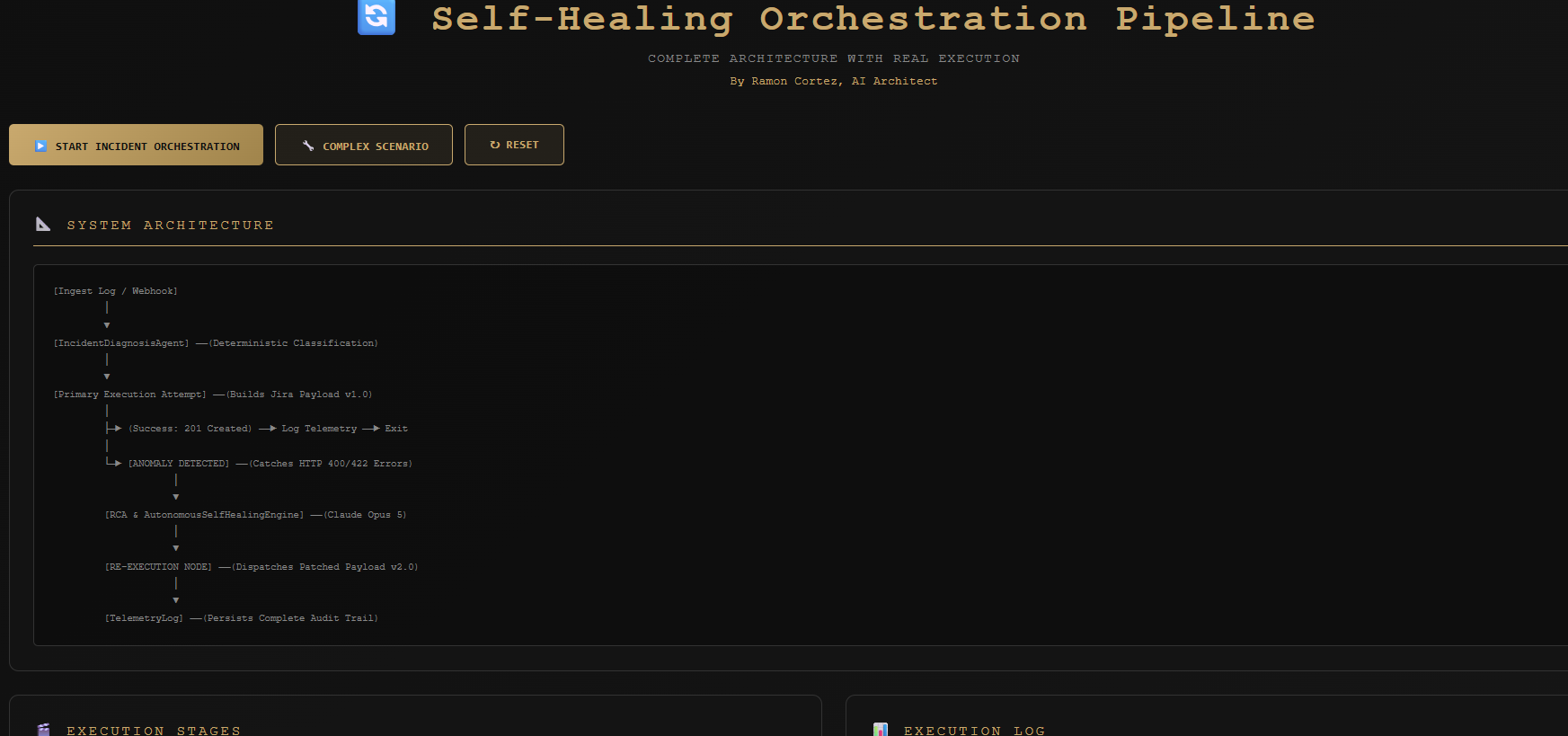
The Self-Healing Orchestration Pipeline continuously monitors multi-agent event loops, dynamically patches invalid payloads, executes deterministic error handling, and restores operations with automated SLA recovery.
How we built it
Built using a low-code architecture centered around Relevance AI for agent node execution, integrated with GitHub for version control, and deployed with interactive web interfaces hosted on Netlify.
Challenges we ran into
Designing low-latency real-time telemetry loops that can catch schema exceptions and apply hot-fixes without disrupting downstream agent communications.
Accomplishments that we're proud of
Successfully achieving automated, zero-touch SLA recovery and dynamic error isolation across complex multi-agent workflows.
What we learned
Mastering low-code self-healing architecture patterns to eliminate runtime failures and maintain strict system reliability under heavy workloads.
What's next for Self-Healing Orchestration Pipeline
Expanding the self-healing telemetry layer to support predictive anomaly detection and automated multi-channel escalation routing.nspiration
Built With
- geminiapi
- github
- netify
- relevanceai
