Inspiration
What it does
How we built itHere is the complete text for your Devpost "About the project" section. It highlights your technical architecture, your business mindset, and includes a mathematical breakdown of your ROI feature to leverage the LaTeX formatting natively.
Inspiration Debugging complex systems is not just a technical bottleneck; it is a massive financial drain for companies. With a background spanning both Information Systems and Business Administration, I realized that most current AI coding assistants only solve half the problem: they guess the code but leave the testing, compliance, and documentation entirely to the human developer.
I was inspired to bridge this gap by creating an enterprise-ready, autonomous system. I wanted to build a tool that doesn't just act as a glorified autocomplete, but operates like a Senior DevOps Engineer—identifying the bug, checking corporate constraints, empirically testing the solution in a safe environment, and immediately reporting the financial time saved to management.
How I built it The Self-Healing Code Agent is built as a robust CLI tool using Python, structured strictly around the Model-View-Controller (MVC) architecture for maximum scalability.
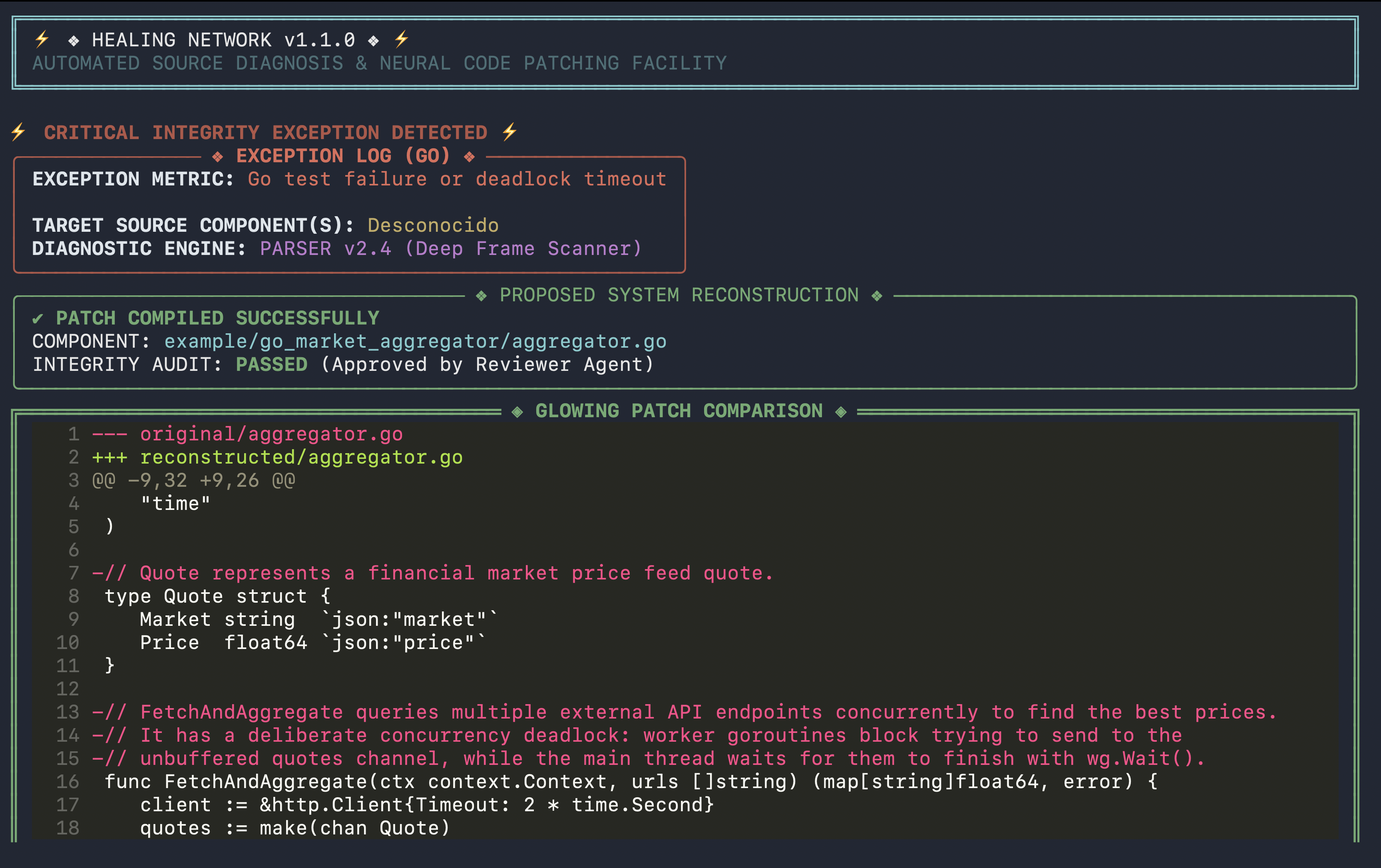
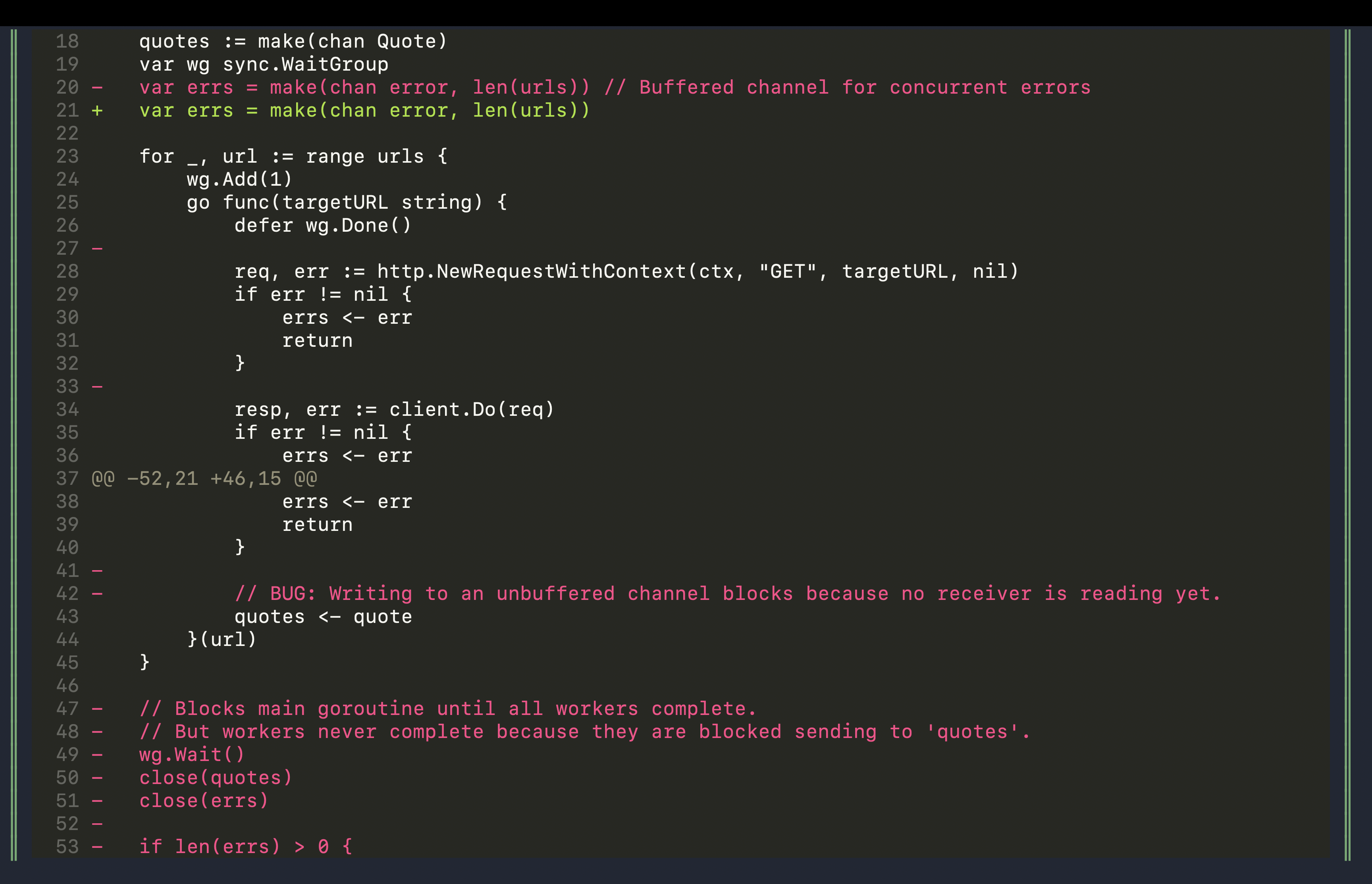
The Brains: I utilized Codex extensively to scaffold the core architecture and CLI framework, while relying on GPT-5.6 to logically reason through complex, multi-layered errors (such as goroutine deadlocks in Go).
Business Rule RAG: Before generating any code, the agent reads local architecture_rules.md files, forcing the AI to comply with strict internal corporate policies (e.g., hardcoded timeout limits).
The Sandbox: To prevent destructive hallucinations, the agent features a secure, isolated Docker sandbox. The proposed patch is executed and validated against the test suite empirically before it ever touches the user's local files.
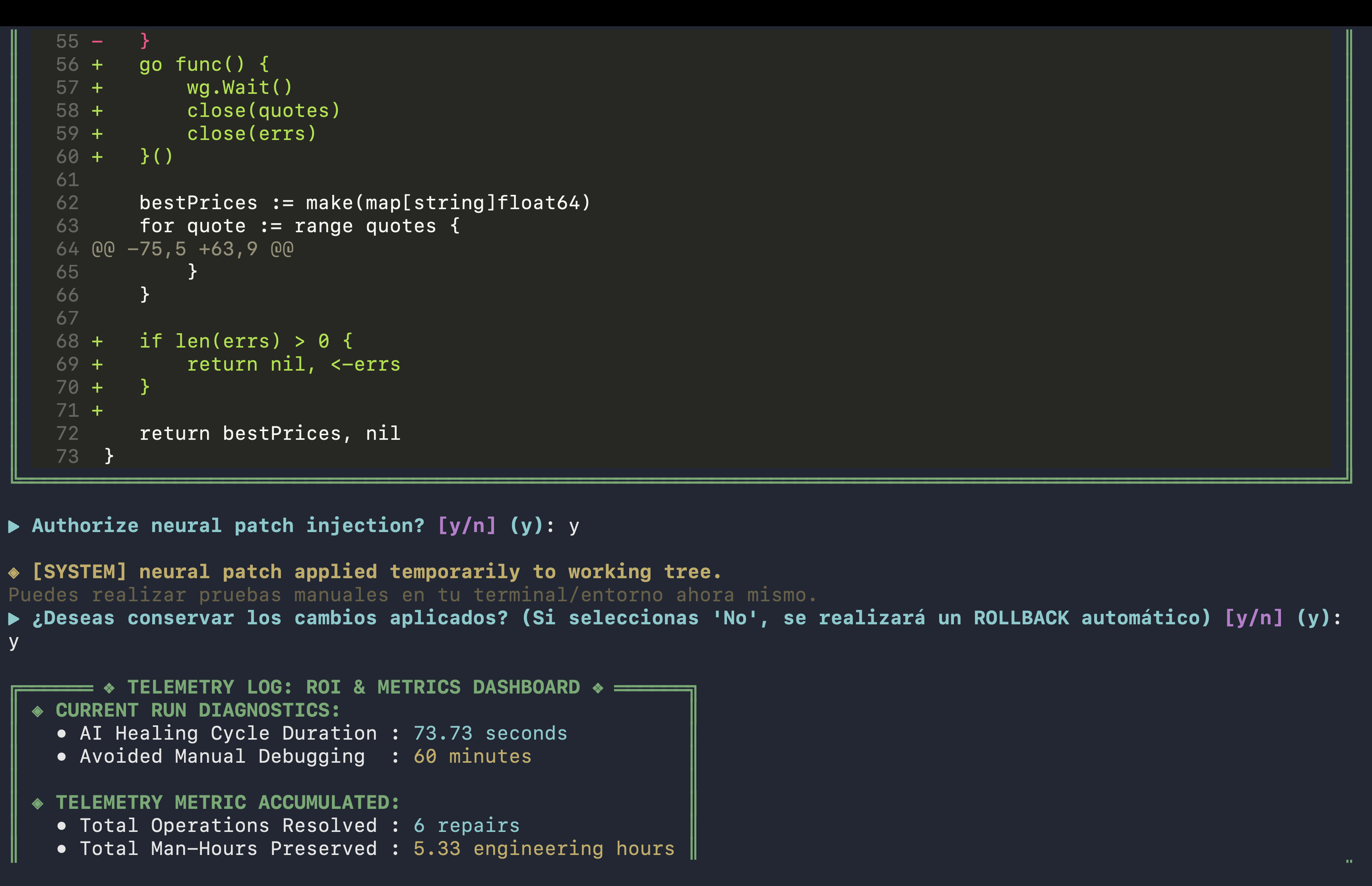
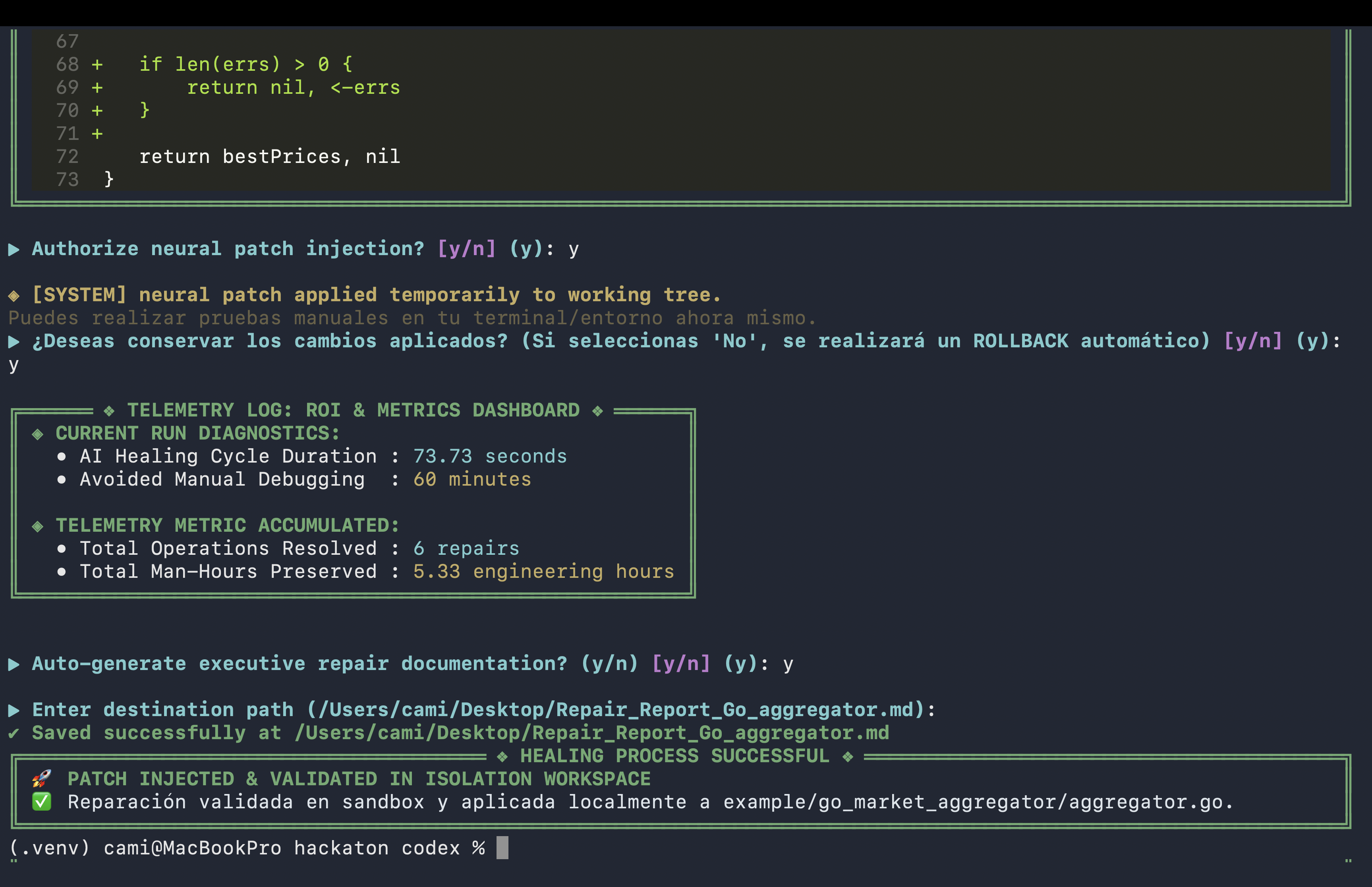
Telemetry & Antigravity: Once validated, the system calculates the Return on Investment (ROI) and executes a final protocol to automatically generate and export a Markdown executive report directly to the user's desktop for QA review.
Challenges I ran into One of the most significant challenges was dealing with the non-deterministic nature of LLMs in a strict corporate environment. An AI might suggest a fix that makes the test pass but introduces a security vulnerability or violates business rules. I overcame this by engineering a dual-agent system where a "Reviewer Agent" cross-references the RAG constraints before the code ever reaches the Docker sandbox.
Another major hurdle was the user experience. Developers live in the terminal, and I wanted the UI to be visually striking yet functional. Designing the high-contrast, Stark-themed visual diffs required careful manipulation of terminal escape sequences and precise state management within the CLI layer. Finally, ensuring the agent could seamlessly handle compiled languages like Go—specifically tracking down elusive concurrency deadlocks—required fine-tuning the system's deep frame scanner to parse complex stack traces accurately.

Log in or sign up for Devpost to join the conversation.