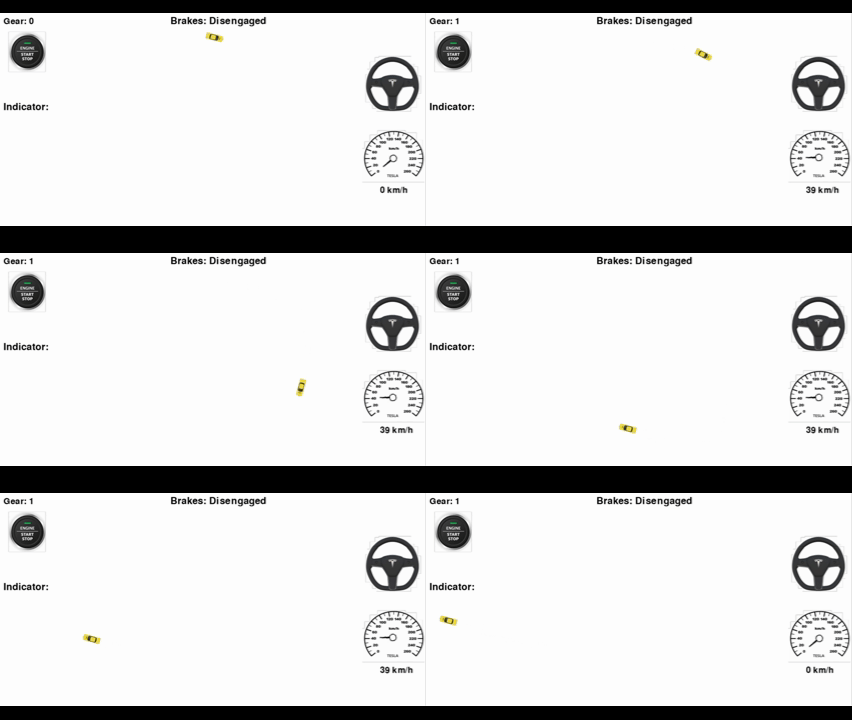
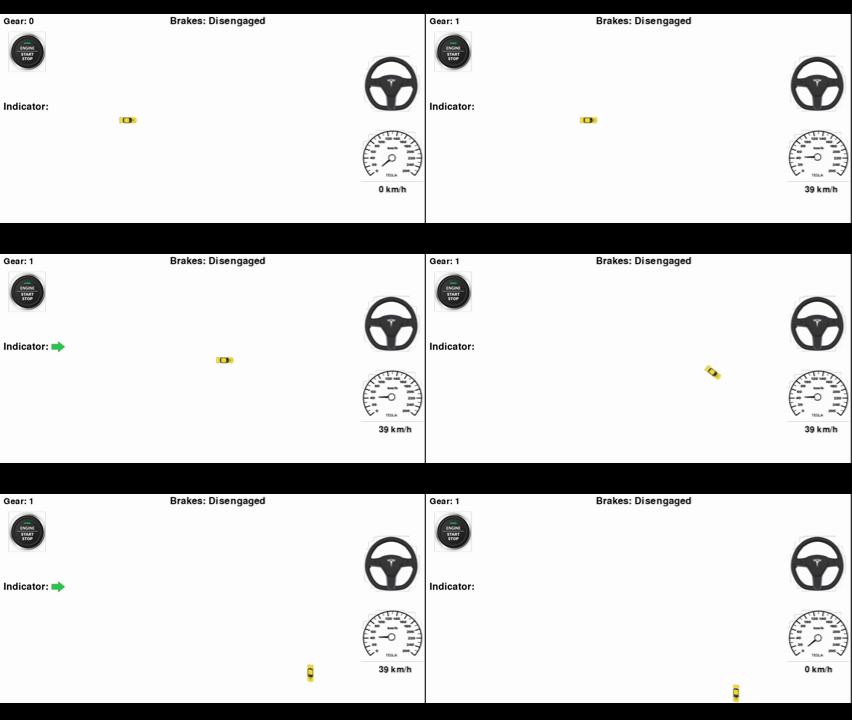
🔥 Inspiration I’ve always been fascinated by autonomous vehicles and how they make driving decisions. I wanted to explore how a self-driving system could work in a simplified 2D environment — something visual, interactive, and algorithmic. That curiosity sparked the idea of a car simulator where the vehicle could drive itself with no user input, while still behaving like a real car: taking turns, slowing down, and even using indicators.
🛠️ How I Built It The base of the simulator was built using [python, pygame, algorithm], with core driving logic designed from scratch. The autopilot system was the main focus for this hackathon. It works by:
Allowing the user to click a destination
Generating a smooth path
Activating turn indicators automatically when direction changes
Driving the car along the path with speed control
The result is a compact but fully functional driving assistant inside a 2D world.
🧠 What I Learned This project taught me a lot about:
Pathfinding and route smoothing algorithms
How to mimic real driving behaviors (like blinking before turning)
Designing systems that feel intelligent, even in a simple 2D space
The challenge of integrating user interaction with automated behavior
I also improved my skills in debugging, game logic design, and simplifying complex ideas into clean, interactive experiences.
⚠️ Challenges I Faced The biggest challenge was getting the car to follow the path smoothly without looking robotic or glitchy. Fine-tuning the indicator logic so that the car “knows” when and where to blink was also surprisingly tricky.
Another challenge was optimizing the code so that the autopilot runs efficiently, especially as paths become more complex or curved.

Log in or sign up for Devpost to join the conversation.