-
-
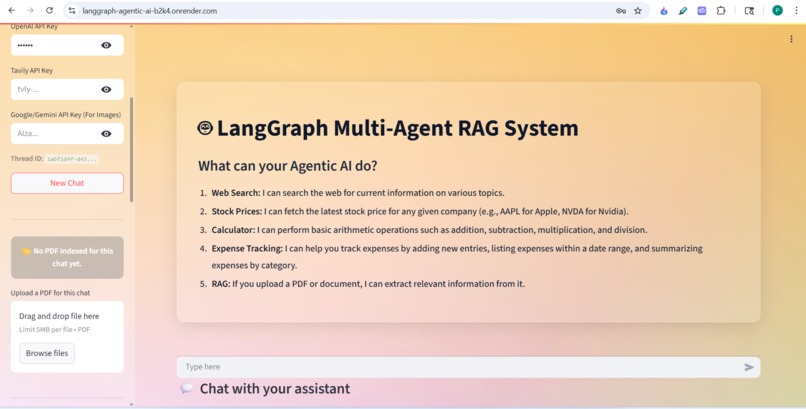
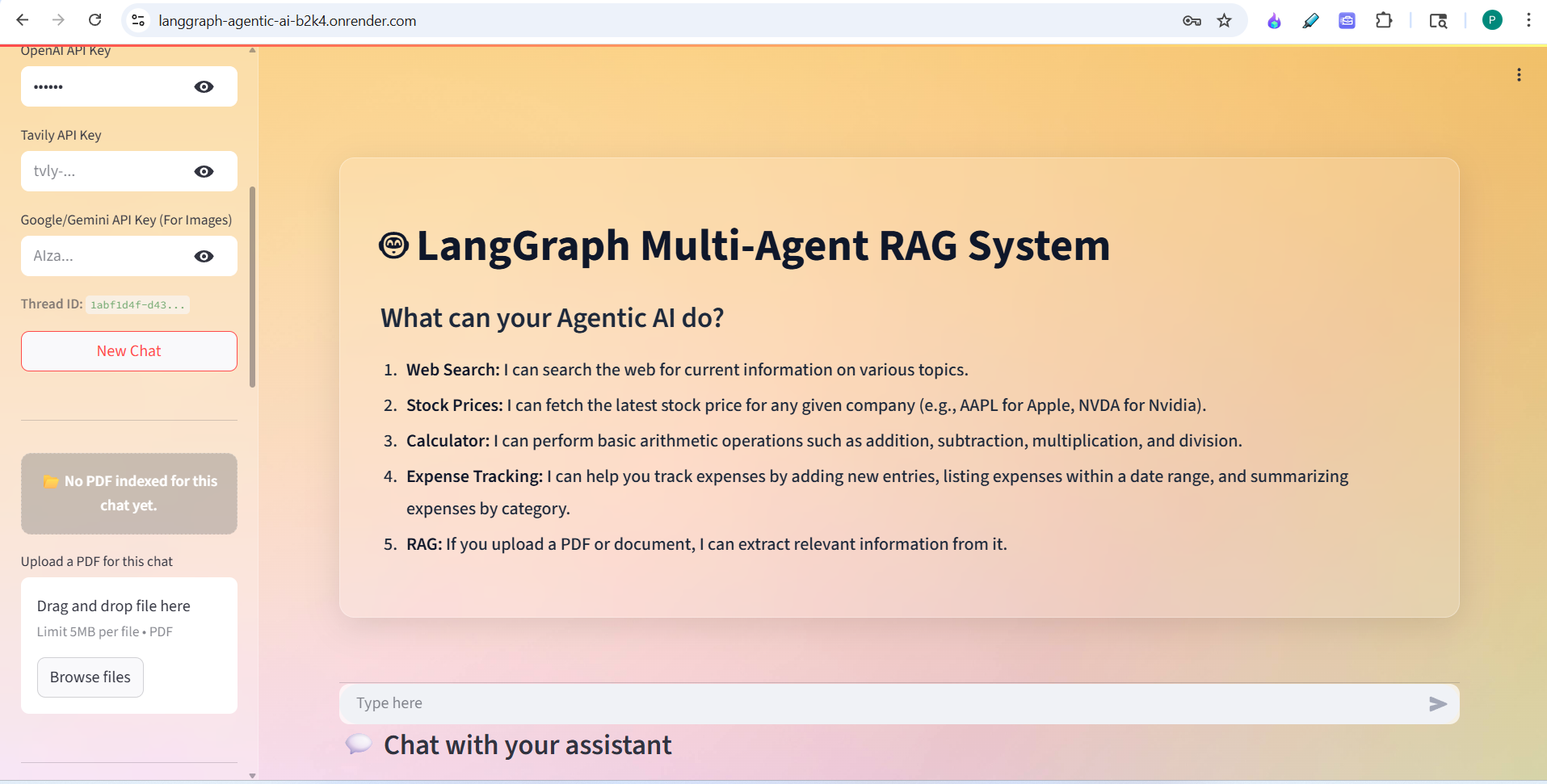
Main Page
-
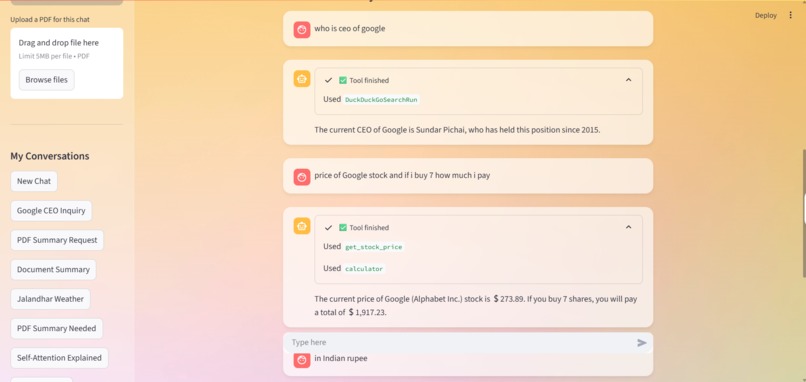
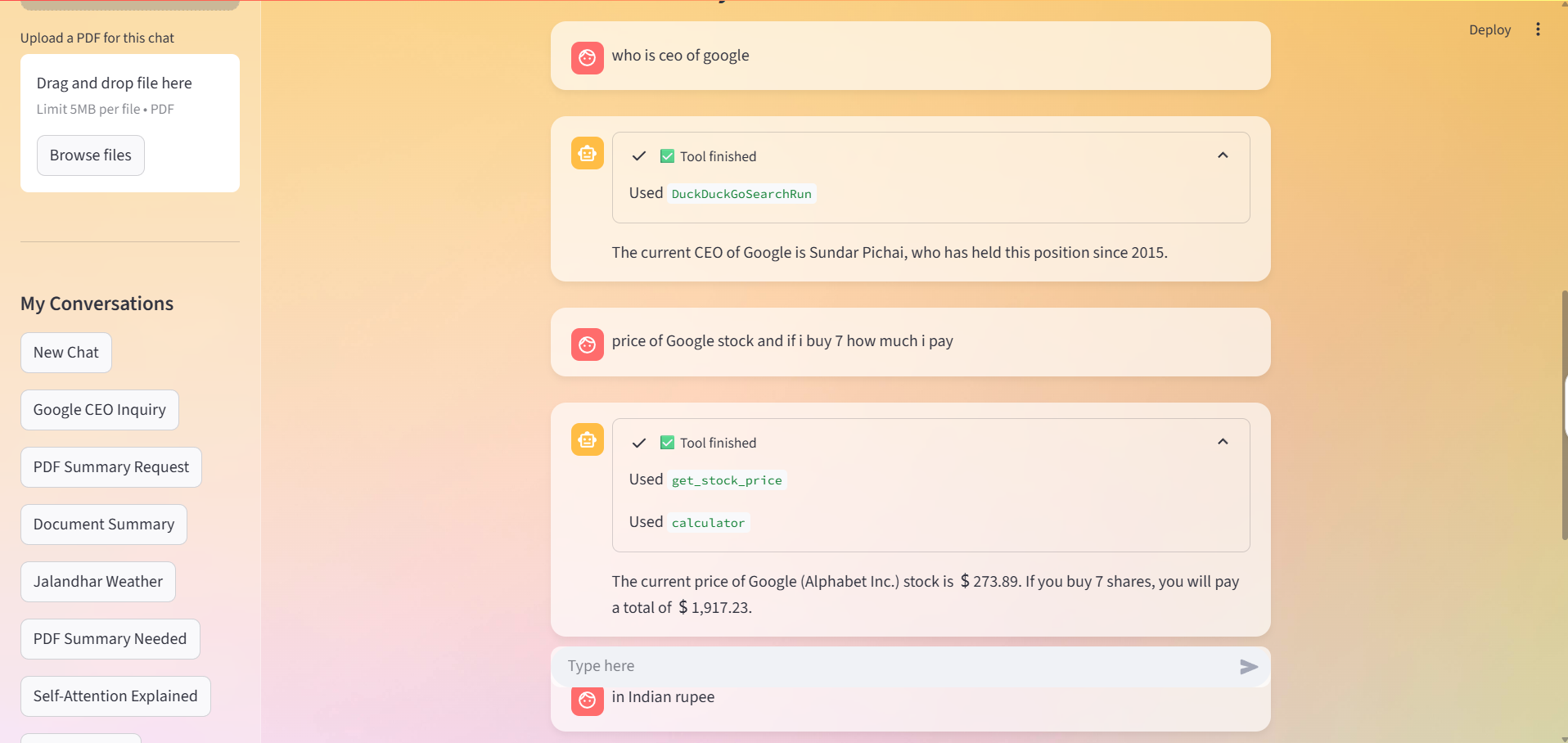
Working of Tools to fetch real data
-
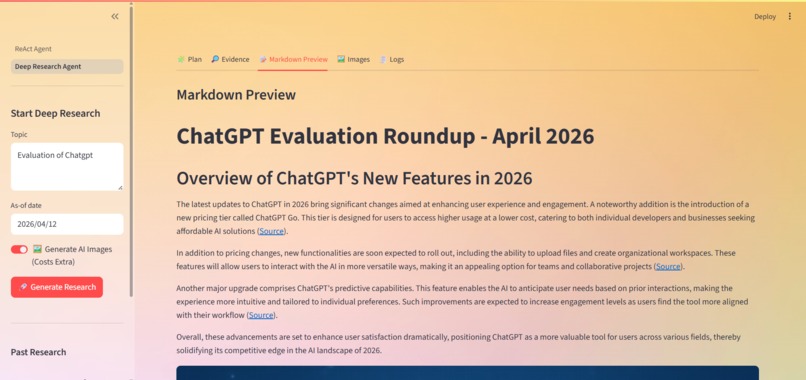
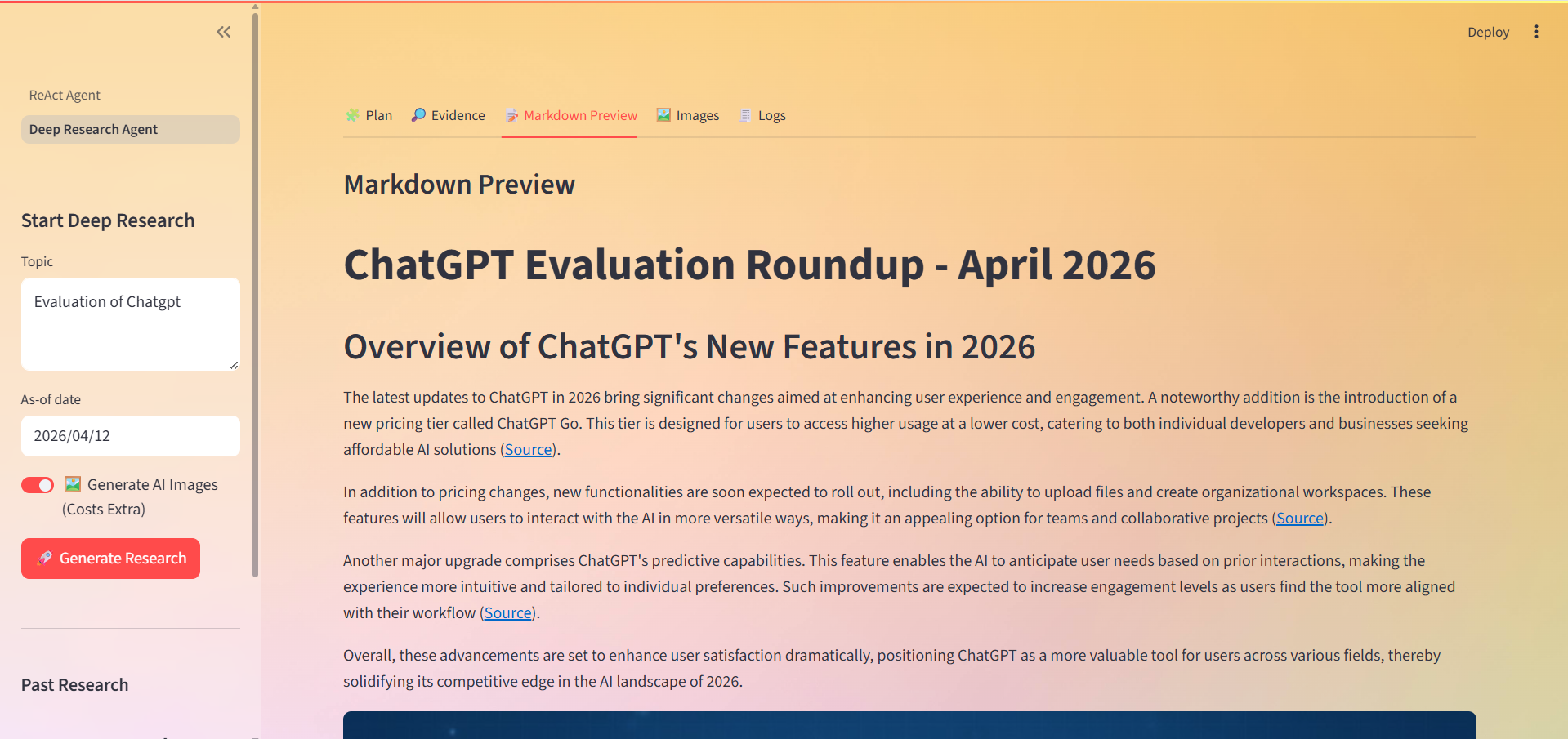
Deep Research Agent
-
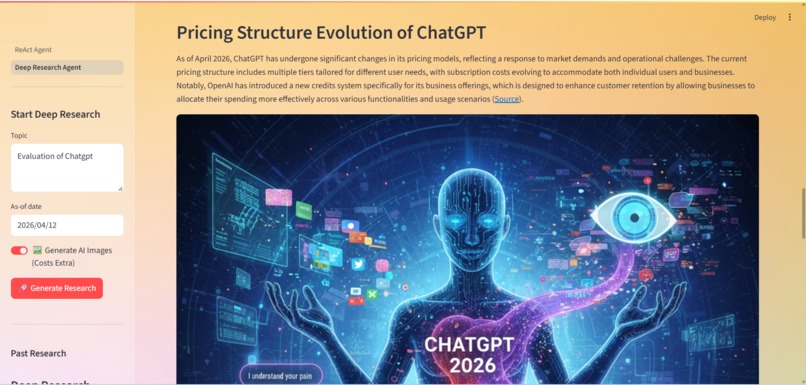
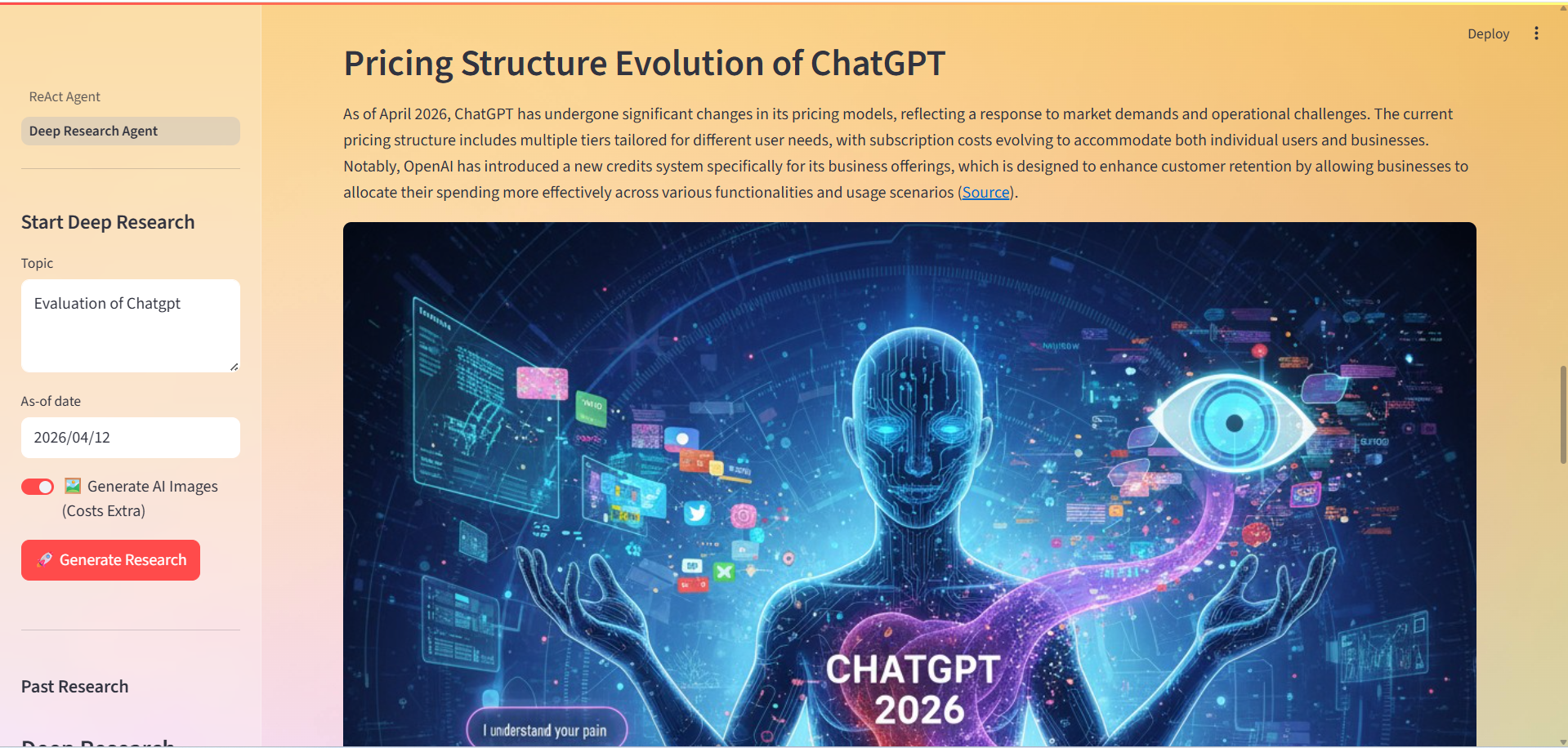
Image Generation
Inspiration
I wanted to push my AI engineering skills to their limits by building a system that goes beyond traditional chatbots. Most AI assistants fail when given incomplete or irrelevant data.
•So, I built a system that can refine its responses using CRAG, perform deep research, and fetch real-time data using tools and MCP integrations.
What it does
This project is a Self-Correcting Multi-Agent AI Research System that:
- Chats with users and persists conversations using Supabase with Short Term memory trigger after every 6 coversation
- Uses a CRAG pipeline to detect irrelevant information and rewrite queries
- Performs deep research using a dedicated research agent with parallel execution
- Integrates multiple tools: • Web search • Calculator • Stock data • Currency conversion • Weather data
- Supports image generation during deep research workflows
👉 The system continuously improves its responses by validating and refining retrieved data.
How I built it
- Built using LangGraph for multi-agent orchestration
- Implemented ReAct agent architecture for reasoning and tool usage
- Designed a CRAG (Corrective RAG) pipeline for self-correction
Built a planning + worker-based deep research agent
Tech stack: •OpenAI (LLM reasoning) •Tavily (search) •Supabase (persistent memory) •FAISS (vector retrieval) •Gemini (Image Generation)
Implemented async workflows for parallel research execution.
Challenges we ran into
- Deploying a complex multi-agent system on Render free tier with limited resources
- Managing asynchronous execution and parallel workflows
- Reducing API cost while maintaining CRAG performance
- Ensuring secure handling of API keys (in-memory, zero-trust approach)
Accomplishments that we're proud of
- Built a working multi-agent AI system with CRAG
- Successfully implemented query refinement pipeline
- Integrated multiple agents (chat + research) into one system
- Achieved working deployment under strict resource constraints
What we learned
- Designing multi-agent systems using LangGraph
- Handling state, memory, and async execution
- Building scalable RAG pipelines with evaluation loops as Subgraph
- Integrating tools, MCP and research workflows into a unified system
What's next for Self-Correcting Multi-Agent AI Research System
We plan to build a “Universal Brain” agent, capable of:
- Autonomously building and executing projects
- Running code securely in sandboxed environments
- Coordinating multiple specialized agents for complex tasks
Built With
- faiss
- langgraph
- mcp
- python
- render
- streamlit
- supabase


Log in or sign up for Devpost to join the conversation.