-
-
Logo
-
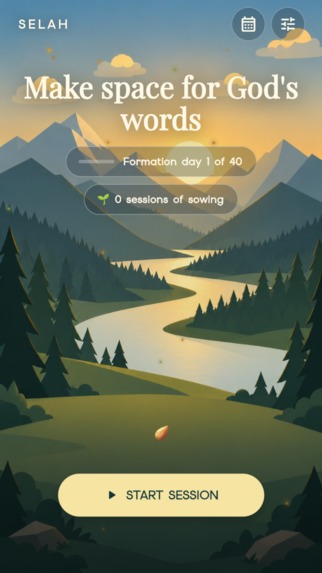
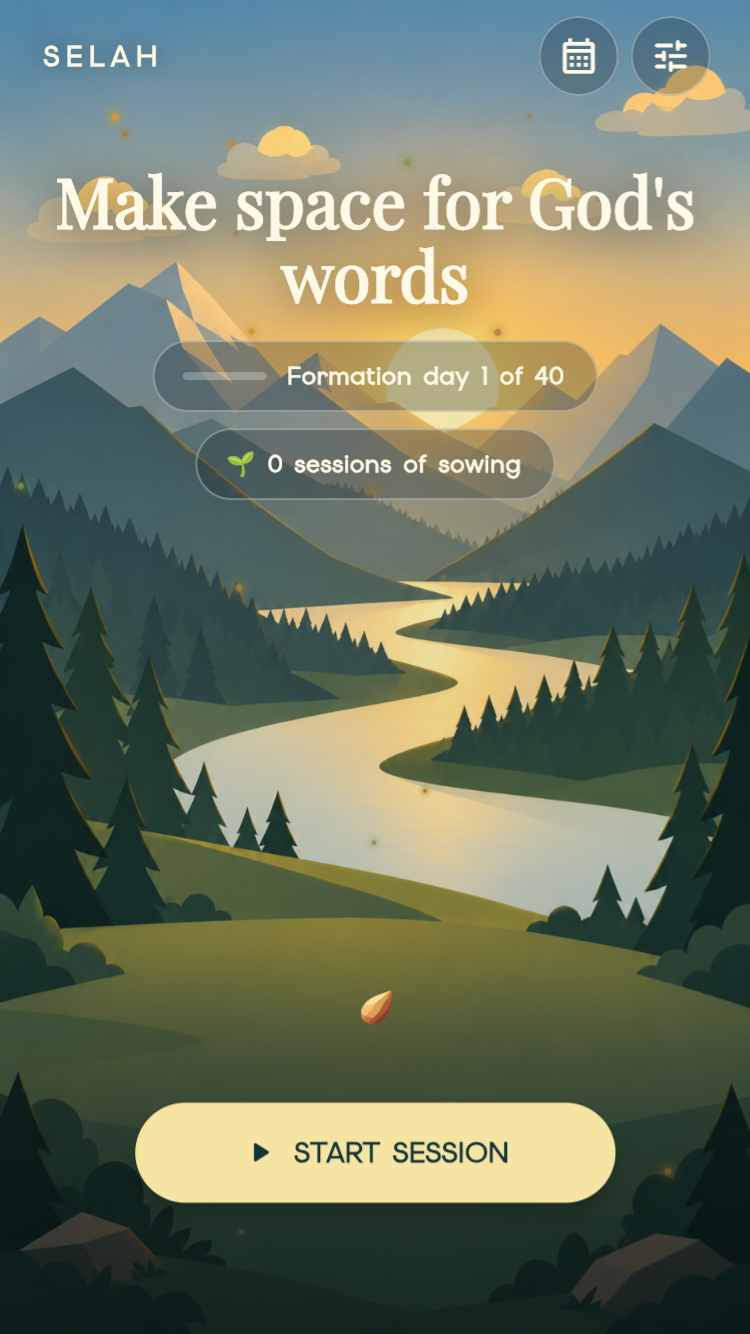
Home Screen
-
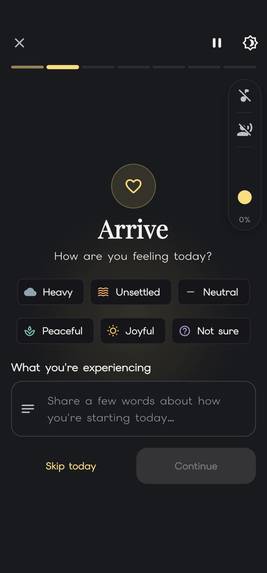
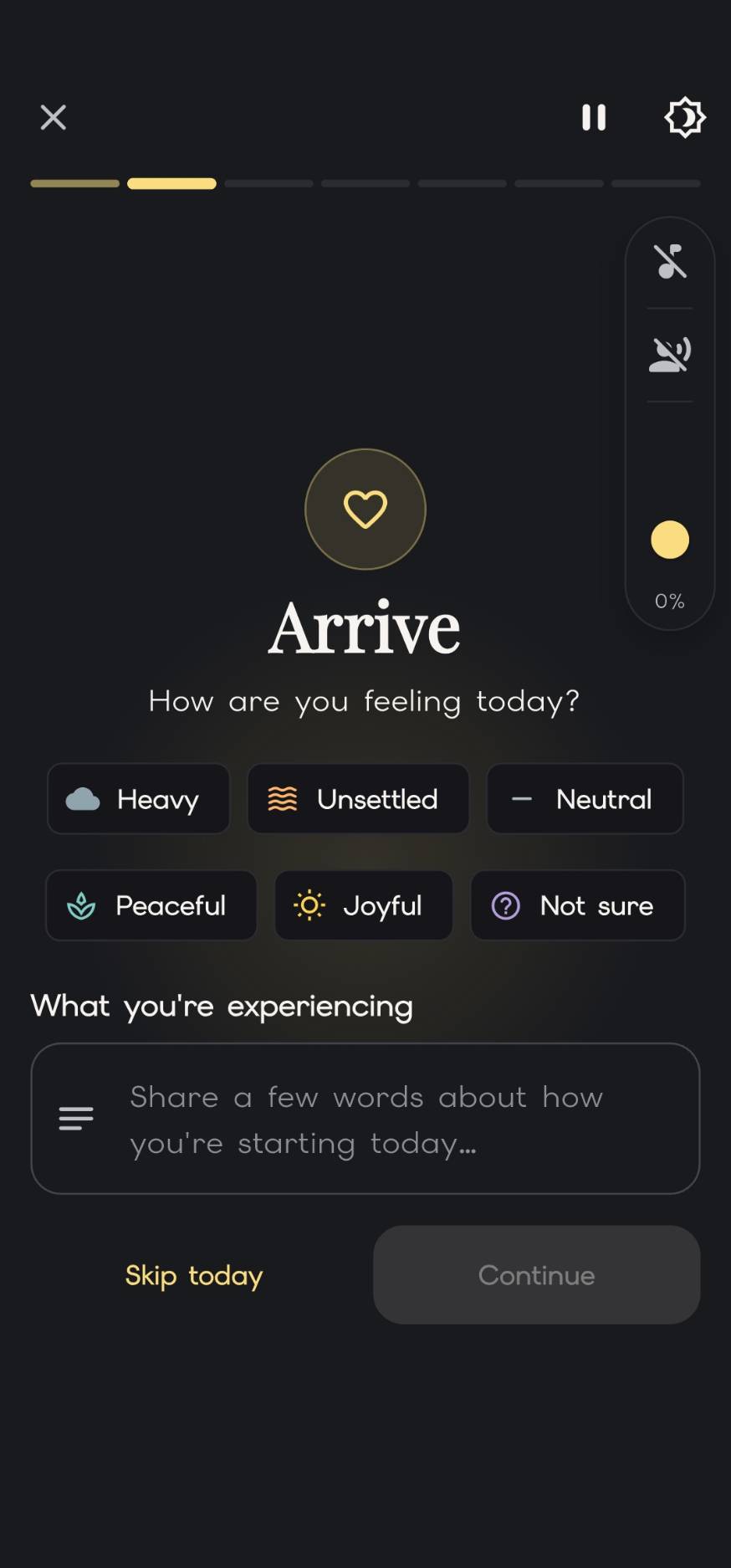
Session Phase 1
-
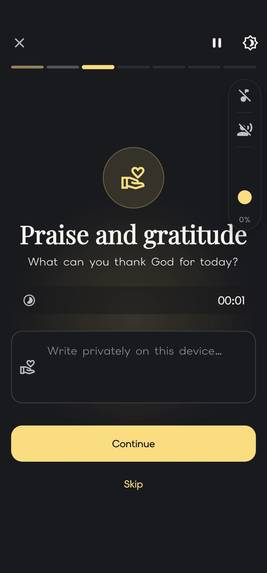
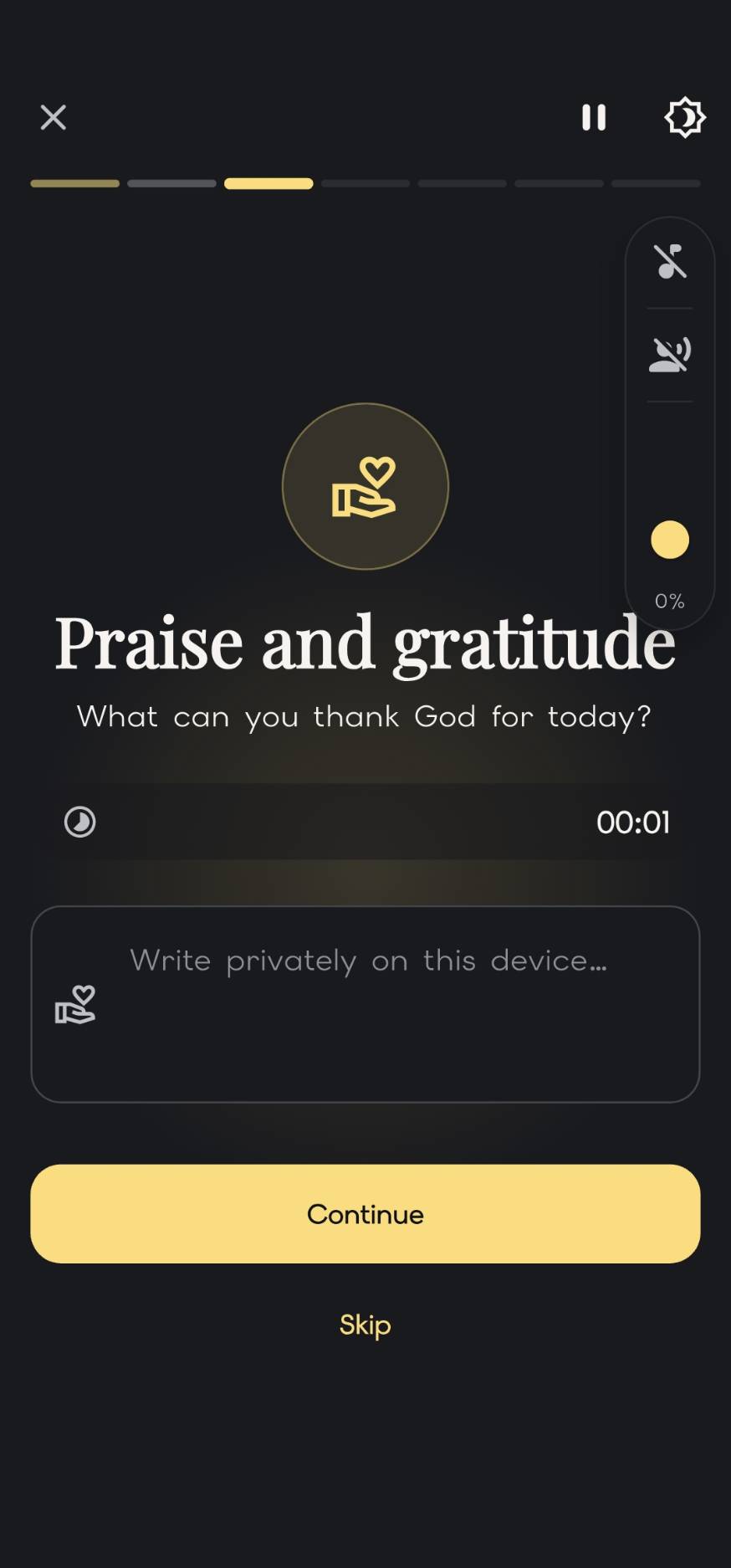
Session Phase 2
-
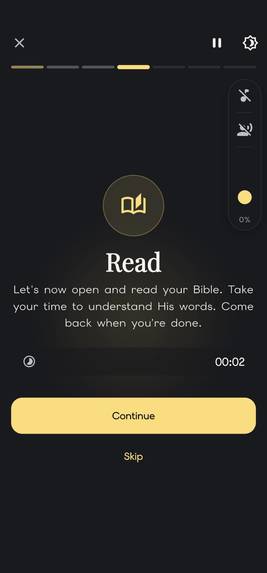
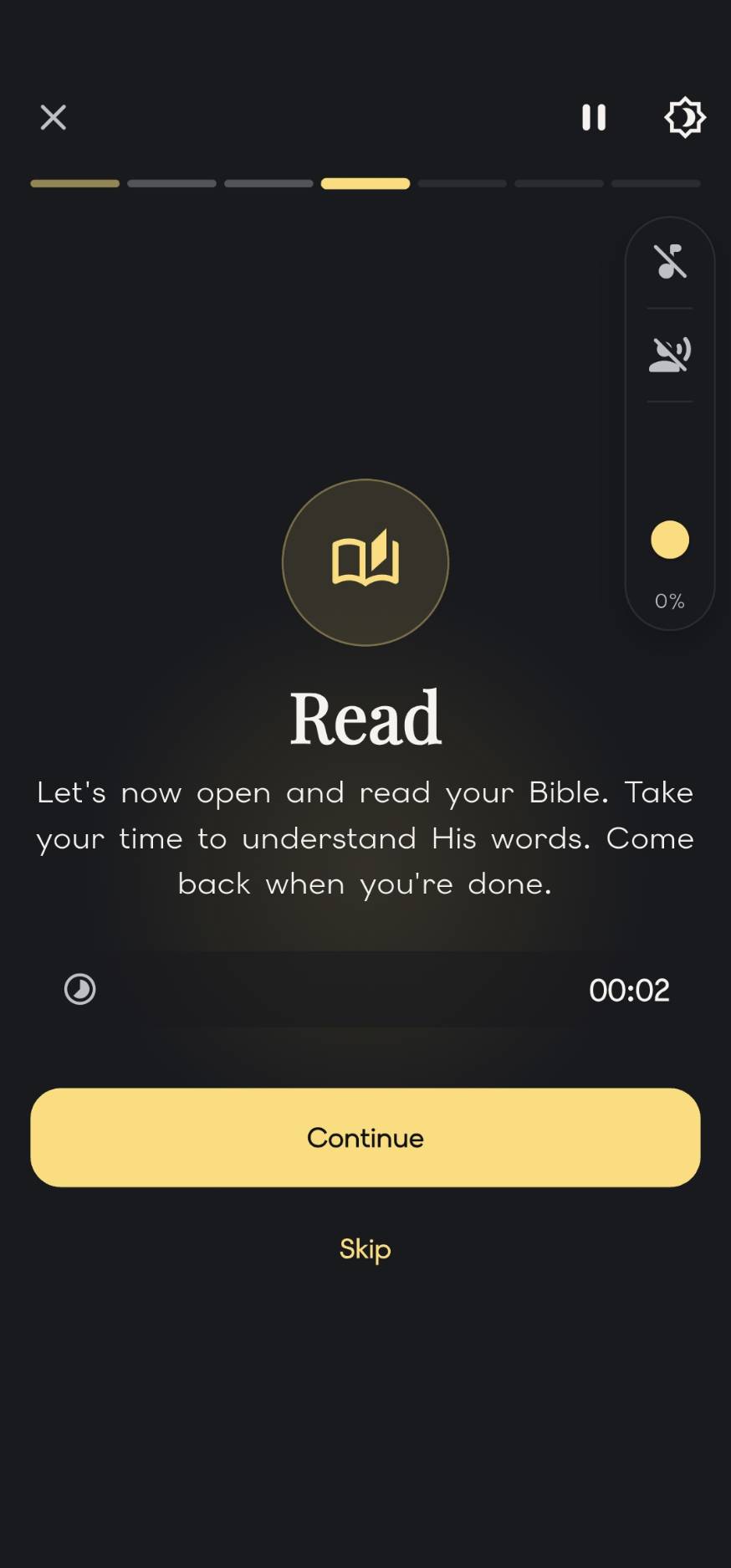
Session Phase 3
-
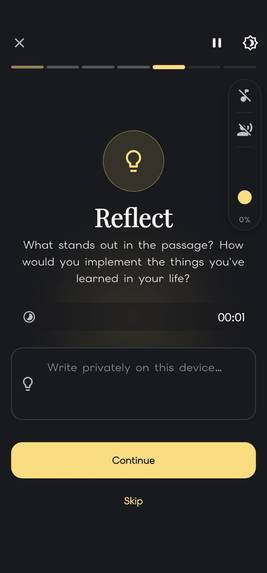
Session Phase 4
-
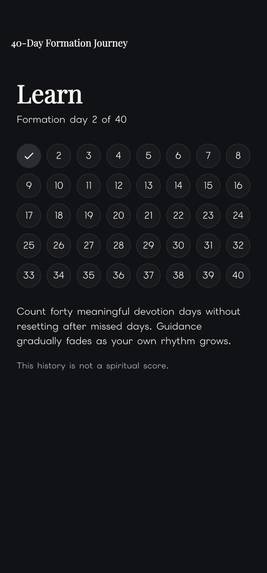
Calendar
Inspiration
Many Christians I know wanted to build a daily devotion habit, but most finds it to be difficult. Busy schedules, distractions from social media, and the lack of a platform or support can make it easy to postpone or skip that time altogether.
So that led me to a simple question: What can technology do to help someone build a devotional habit without becoming another digital distraction?
Thus Selah was created around that idea. I never wanted to replace Bible as the word of God, so instead of replacing devotion or Bible reading, Selah is designed to be a temporary guide that helps users establish a rhythm and intentionally spend time with God.
A major principle behind Selah is that the app should eventually become less necessary. For Selah, success is not measured by how dependent someone becomes on the app, but by whether they develop a devotional habit they can continue on their own.
What it does
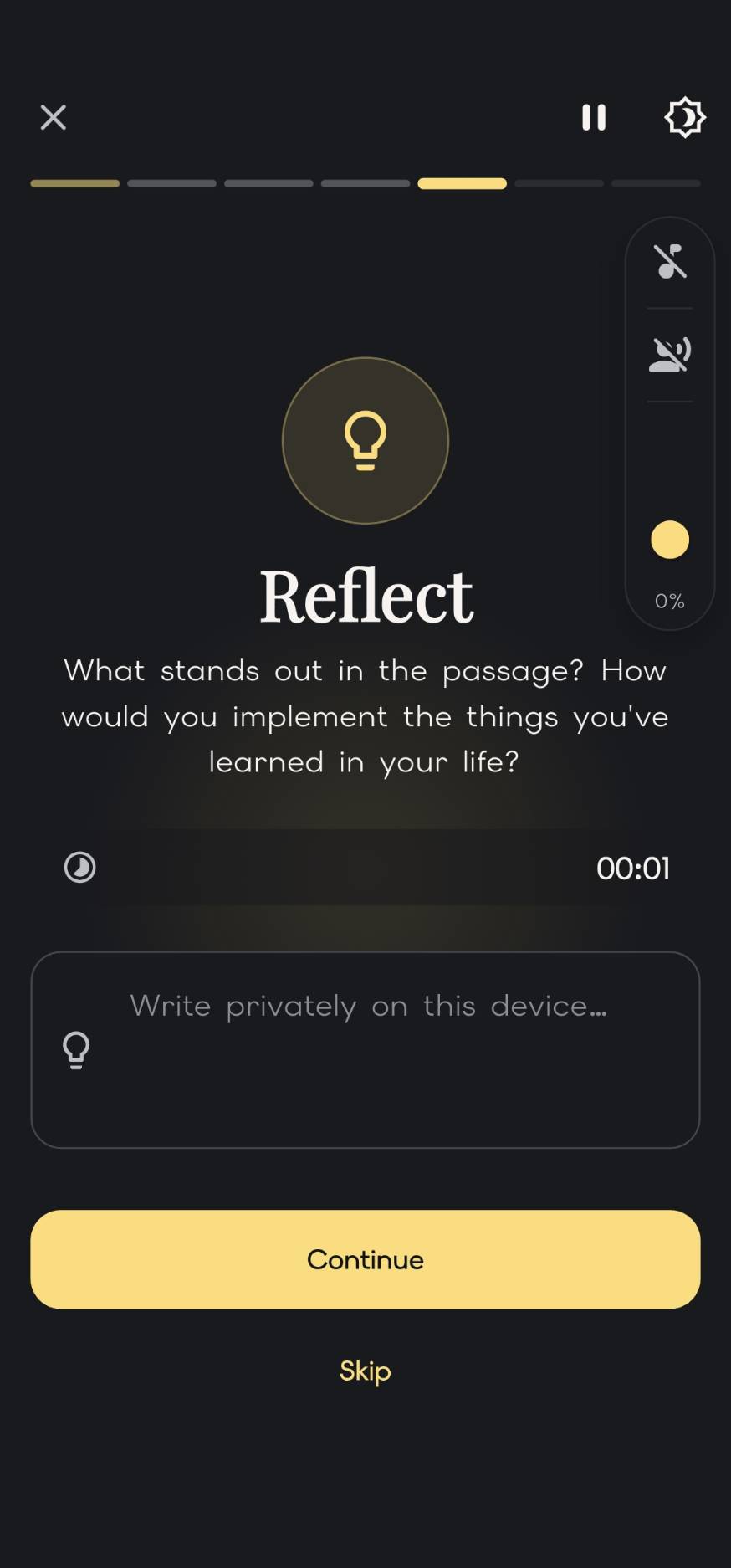
Selah currently guides users through structured devotional sessions designed to help them build a consistent spiritual habit. A session follows a simple journey as such:
Take a breathe → Arrive → Gratitude → Scripture → Reflect → Pray → Carry Forward
Before beginning, Selah asks whether the user has a Bible nearby. This is intentional as the app is never to replace the Bible. Instead, it encourages users to put the phone aside when appropriate and engage with Scripture directly, being lead with audio voice or on-screen texts.
Users can customize aspects of their sessions to better match how they already practice devotion rather than being forced into a concrete flow.
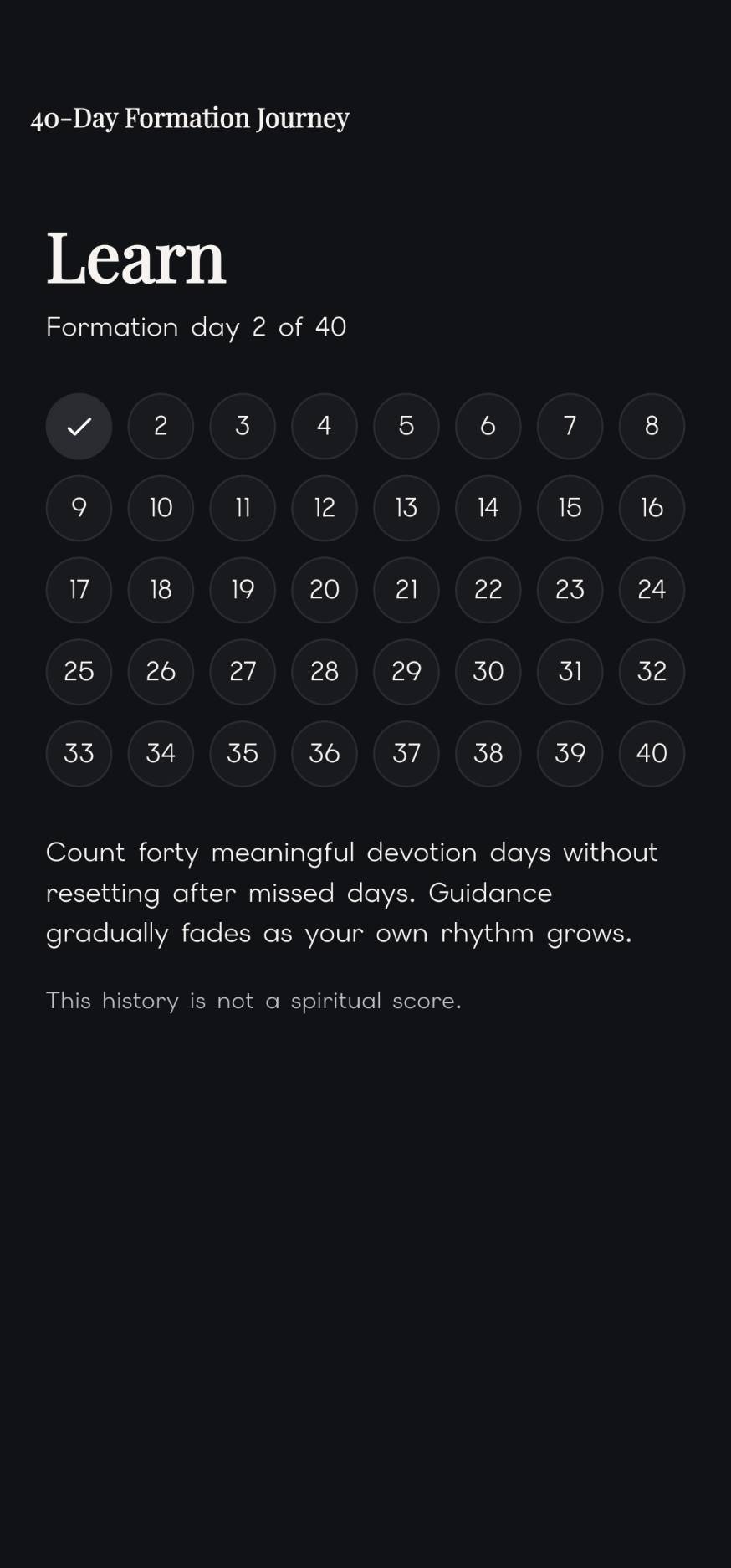
Selah also organizes this experience into a finite journey, such as 21 or 40 days. Instead of creating an endless engagement loop, the journey has an ending, a form of graduation. After completing a journey, users can continue using Selah if they find it helpful, but the goal is for the habits developed during the journey to continue beyond the app itself.
How we built it
Selah is built with Flutter, allowing the project to share a single codebase across platforms and making future expansion to iOS more practical.
I wanted the experience to feel calm and immersive rather than like a traditional productivity app. The interface therefore uses a minimal visual language, restrained interactions, ambient elements, and subtle animations to help create a slower environment for reflection.
I also experimented with Rive to create lightweight interactive animations and visual progression throughout a user's journey.
Another important technical decision was designing the core devotional experience to work offline. A devotional session should not depend on a reliable internet connection, and reducing unnecessary network interactions also supports Selah's goal of creating a more focused, distraction-free experience.
Throughout development, I used the project as an opportunity to experiment with Flutter architecture, local persistence, animations, audio, state management, and cross-platform application design.
Challenges we ran into
The hardest challenge was not technical, it was designing the devotional experience itself.
Devotion is deeply personal. Some people spend most of their time reading Scripture, others journal extensively, while others focus on prayer, reflection, worship, or silence. Creating one rigid sequence would inevitably work well for some people and poorly for others.
Instead of trying to define the "correct" way to have devotion, I designed Selah around a structured but customizable framework. The app provides enough guidance to help someone establish a routine while still allowing the experience to adapt to personal habits.
Another challenge was creating the atmosphere I wanted without overwhelming the interface.
Animation plays an important role in making Selah feel alive and immersive, but too much animation would become distracting, which is exactly the opposite of the project's purpose. This required experimenting with animation timing, transitions, and technologies such as Rive while learning how to balance visual feedback with stillness.
The offline-first approach also influenced several architectural decisions because the core session experience needed to remain reliable without depending on cloud services.
Accomplishments that we're proud of
I'm most proud that Selah developed into more than a collection of devotional features. It now has a clear product philosophy: Technology should support the habit, not become the habit.
Instead of optimizing primarily for screen time, endless engagement, or keeping users inside the application, Selah encourages users to step away from the screen, open a physical Bible, reflect, pray, and eventually become less dependent on the app itself.
I'm also proud of building the project across several disciplines: product design, Flutter development, interaction design, animation, offline architecture, and user experience, while continuously questioning whether each feature actually supports the purpose of the application.
What we learned
The biggest lesson was that designing for human habits is very different from simply implementing features.
Devotional practices are highly personal, so flexibility matters. I learned to think less about creating a perfect universal workflow and more about creating a framework that provides structure without taking control away from the user.
I also learned that restraint is part of product design. Not every application needs infinite content, aggressive notifications, complicated gamification, or an endless engagement loop.
For Selah, intentionally deciding what not to build became just as important as deciding what to build.
On the technical side, the project gave me practical experience with Flutter application architecture, offline-first design, animation workflows with Rive, state management, and designing interactions around a focused mobile experience.
What's next for Selah
The next major step is bringing Selah to iOS so the experience can reach users across both major mobile platforms.
After release, I want to move from assumptions to evidence by studying how people actually use Selah. In particular, I want to understand where users stop during a journey, which parts of a session they find valuable, how different session configurations are used, and whether completing a Selah journey actually helps users establish a more consistent devotional routine.
User feedback will be especially important because devotion is so personal. Rather than simply adding more features, future development will focus on identifying where Selah genuinely helps and where the application should become simpler, more flexible, or get out of the user's way.
Ultimately, I want Selah to succeed at something unusual for an app: help users build a habit that can continue even when they no longer need the app.
Built With
- dart
- drift
- flutter
- offline
- rive
- riverpod

Log in or sign up for Devpost to join the conversation.