-
-
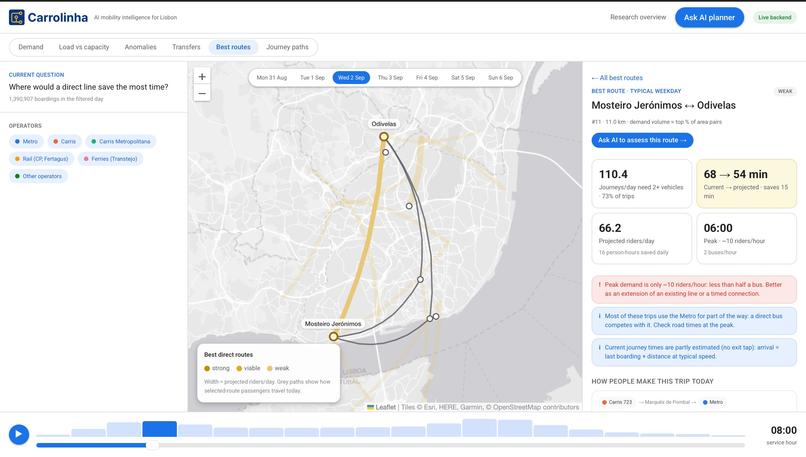
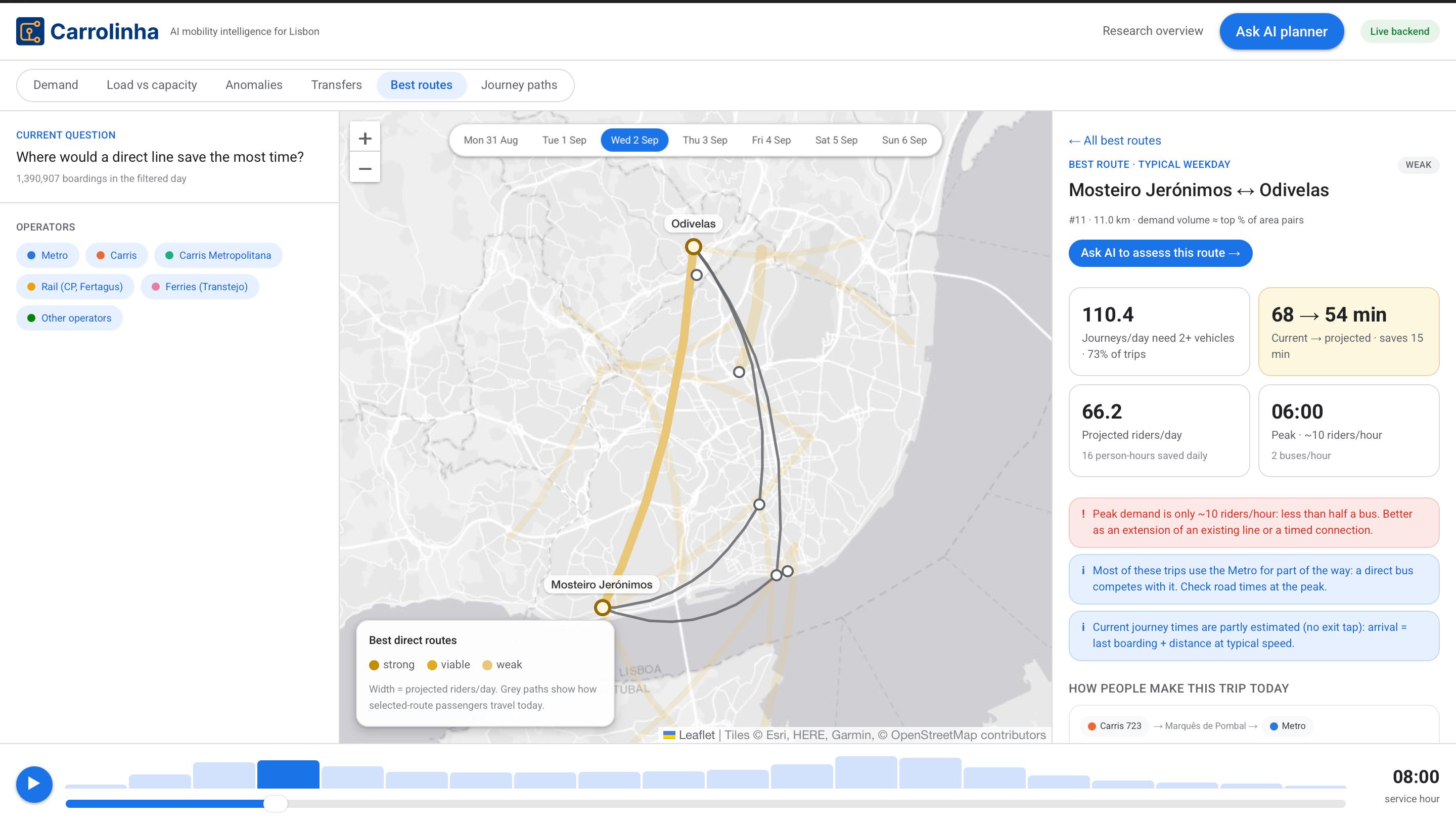
An image of the golden line solution, that shortens longer routes based on data
-
-
-
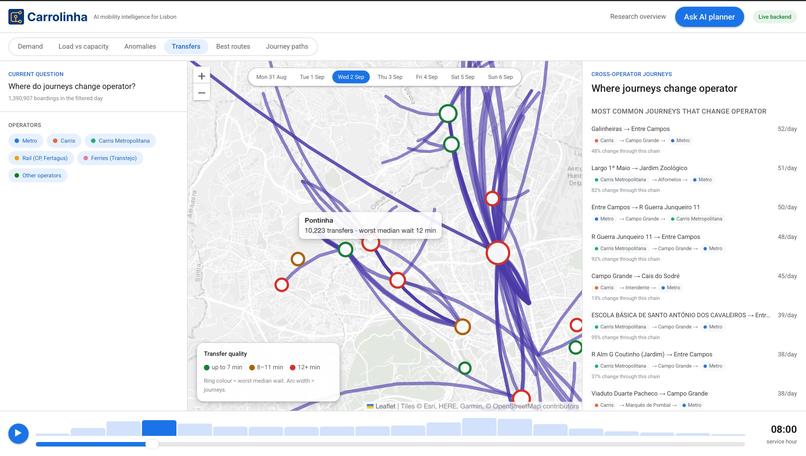
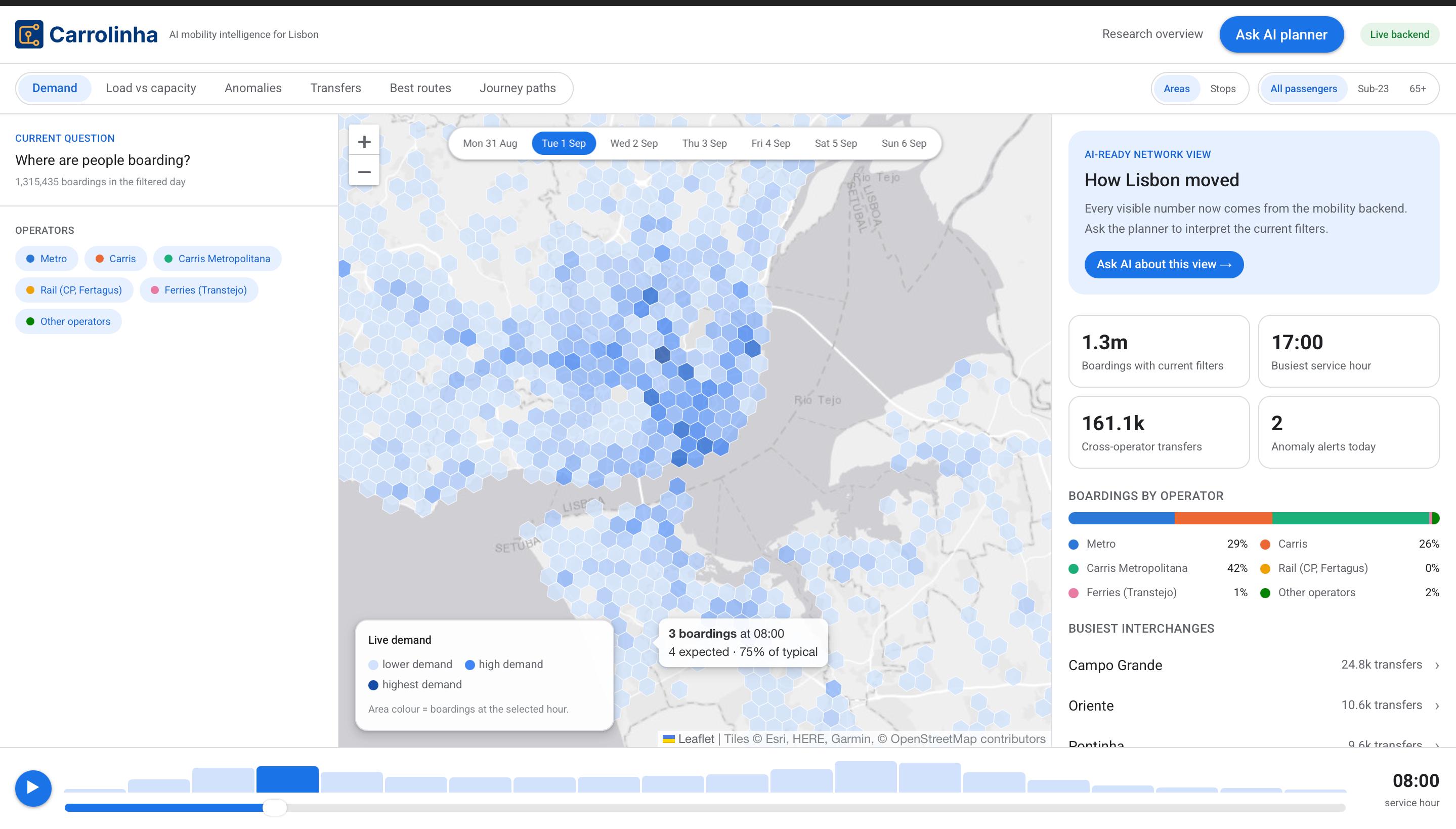
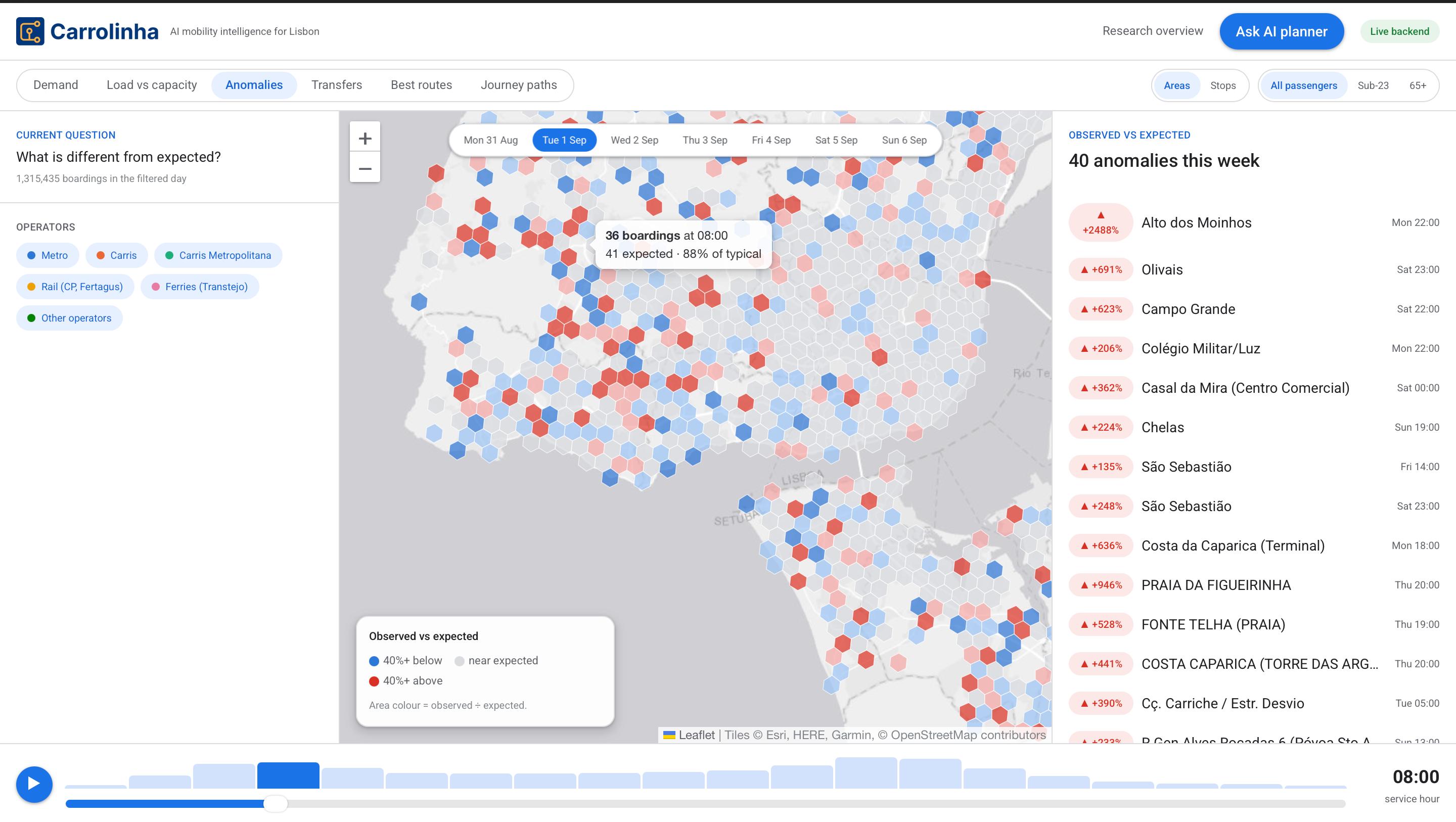
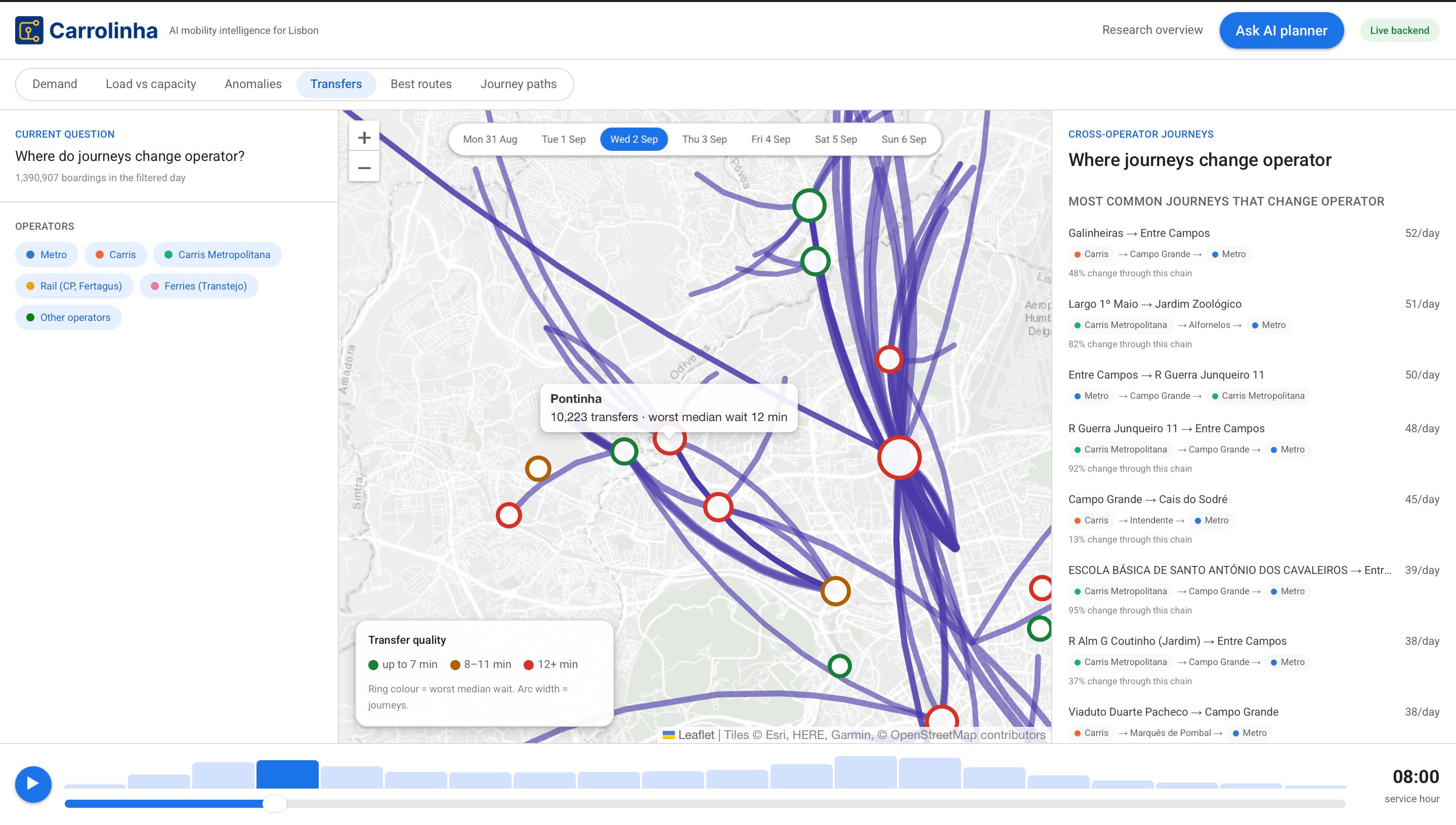
A view of the routes people navigated through and passenger demand.
Inspiration:
As newcomers to Lisbon, our daily commutes depend heavily on route suggestions from Google Maps or Apple Maps. One of our team members, Sylvia, lives in Almada, and her commute is frequently disrupted by transport delays -- a full bus means waiting for the next one, and by the time she reaches her connecting service, it has often already left. To avoid being late, she ends up leaving home hours earlier than necessary or she just succumbs to being late. This experience inspired us to build Carrolinha: a platform that gives transport planners clear, time- and location-calibrated insight into passenger demand, so services can be planned around how people actually move.
What it does:
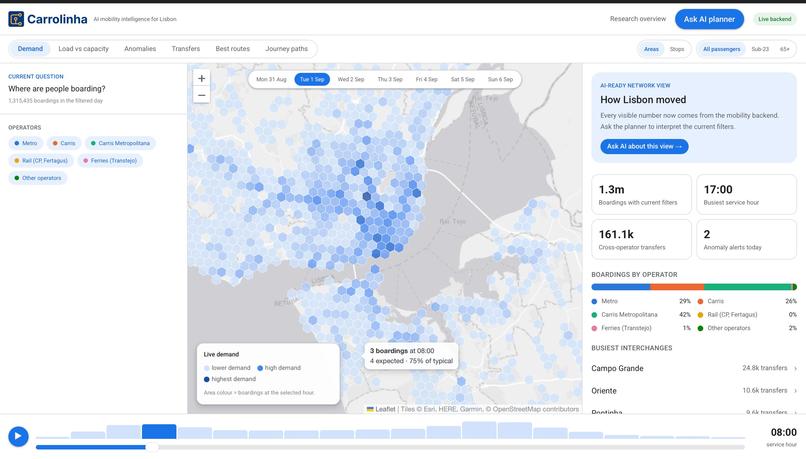
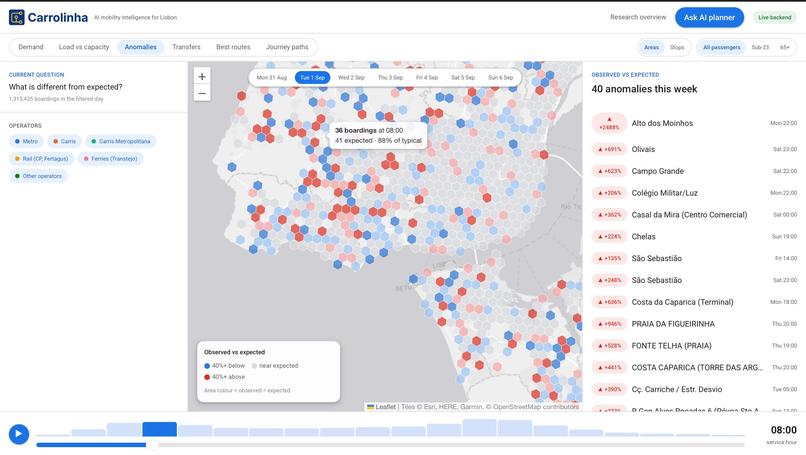
Carrolinha goes beyond simply showing which lines, routes, or stops see the most passenger activity at a given hour. It compares real-time demand against available service capacity, analyzes journey flow for specific passenger volumes, and applies predictive analysis to help transport planners identify where route extensions or added capacity may be needed.
How we built it:
We aggregated the given raw transport data into structured, analysis-ready data points, then stored them in DuckDB, an analytical SQL database. DuckDB connects to a lightweight FastAPI backend, which exposes a set of APIs consumed by a React frontend. We also used several GIS and data visualization libraries to bring the insights to life on the dashboard.
Challenges we ran into:
- The sheer volume of raw data made analysis time-intensive.
- Working within tight time constraints to turn that analysis into actionable insight.
Accomplishments that we're proud of
- Building a functional, intuitive data visualization dashboard.
- Gaining a much deeper understanding of how Lisbon's urban transport system operates.
- Identifying how other transport solutions and stakeholders could benefit from this dashboard
What we learned:
- The value of close collaboration and asking the right questions early.
- Meaningful growth in data analysis skills across the team.
What's next for SEFIK
- Possible continued iteration and refinement of the platform.
- Deeper research into how urban transportation shapes quality of life for Lisbon residents.
Built With
- ai
- duckdb
- fastapi
- python
- react-native


Log in or sign up for Devpost to join the conversation.