Inspiration. If you've ever looked at your garbage, then towards the three ambiguous garbage bins of potential waste, then back to your garbage, this project is for you. We noticed that no one REALLY knows what goes where in terms of recyclables, compostables, and landfillables; we wanted to remedy that. By spreading accessible knowledge about where you should throw away your waste, we hope to allow for greater ecological awareness.
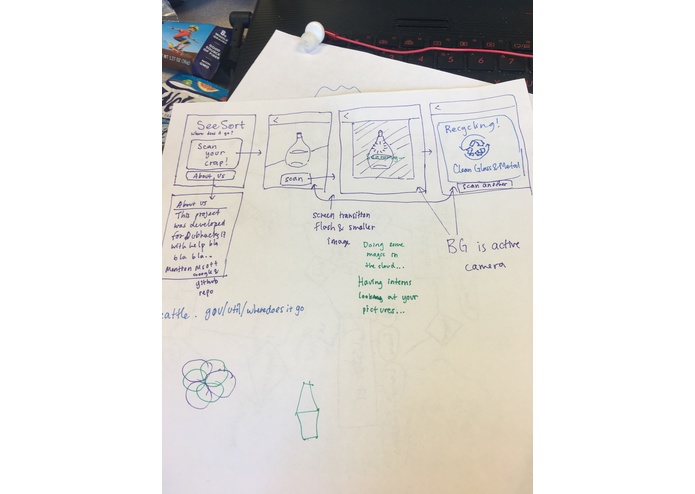
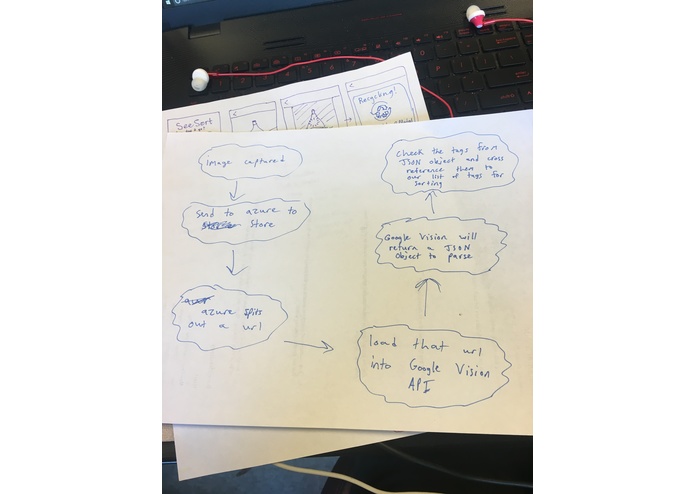
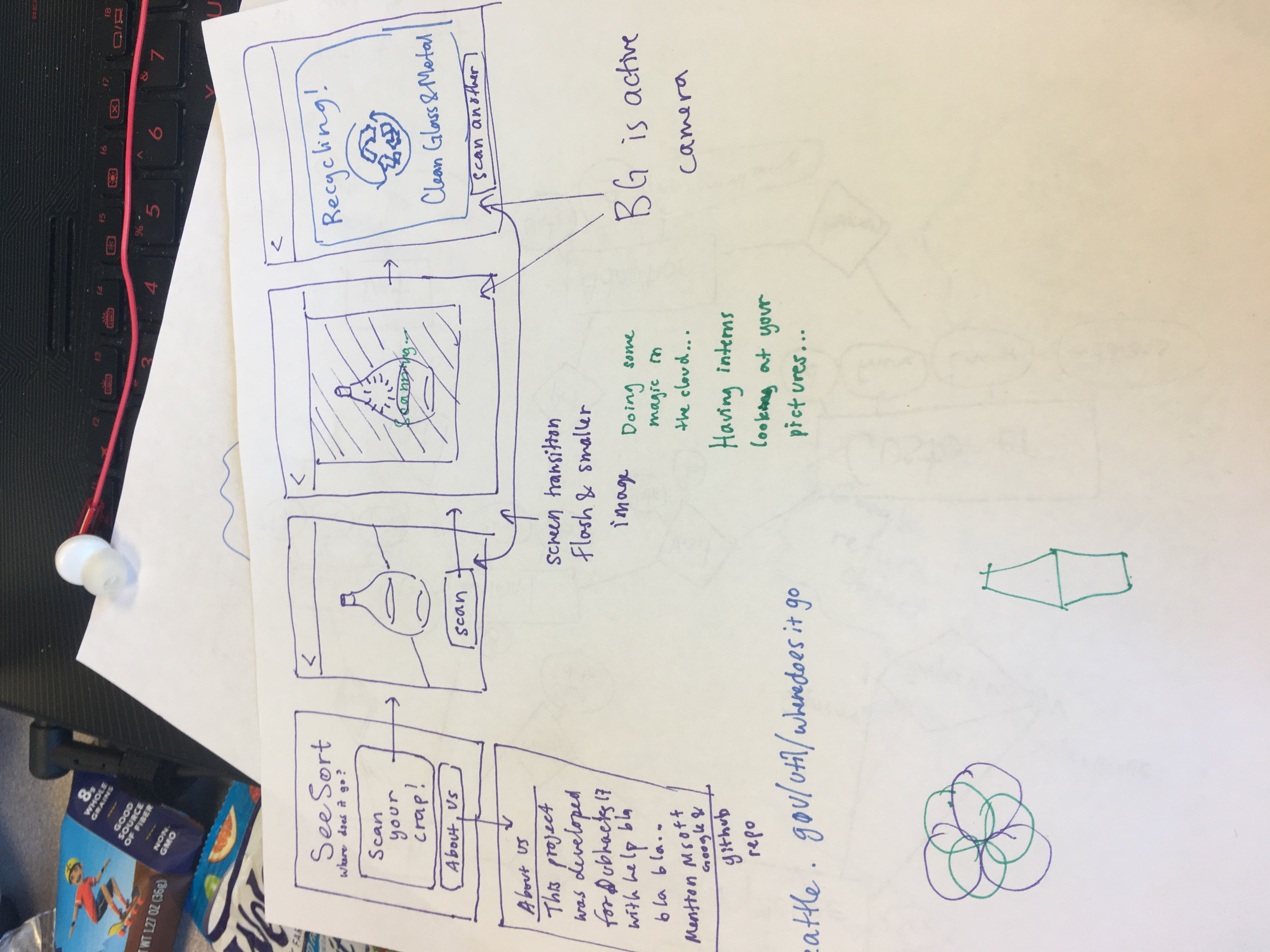
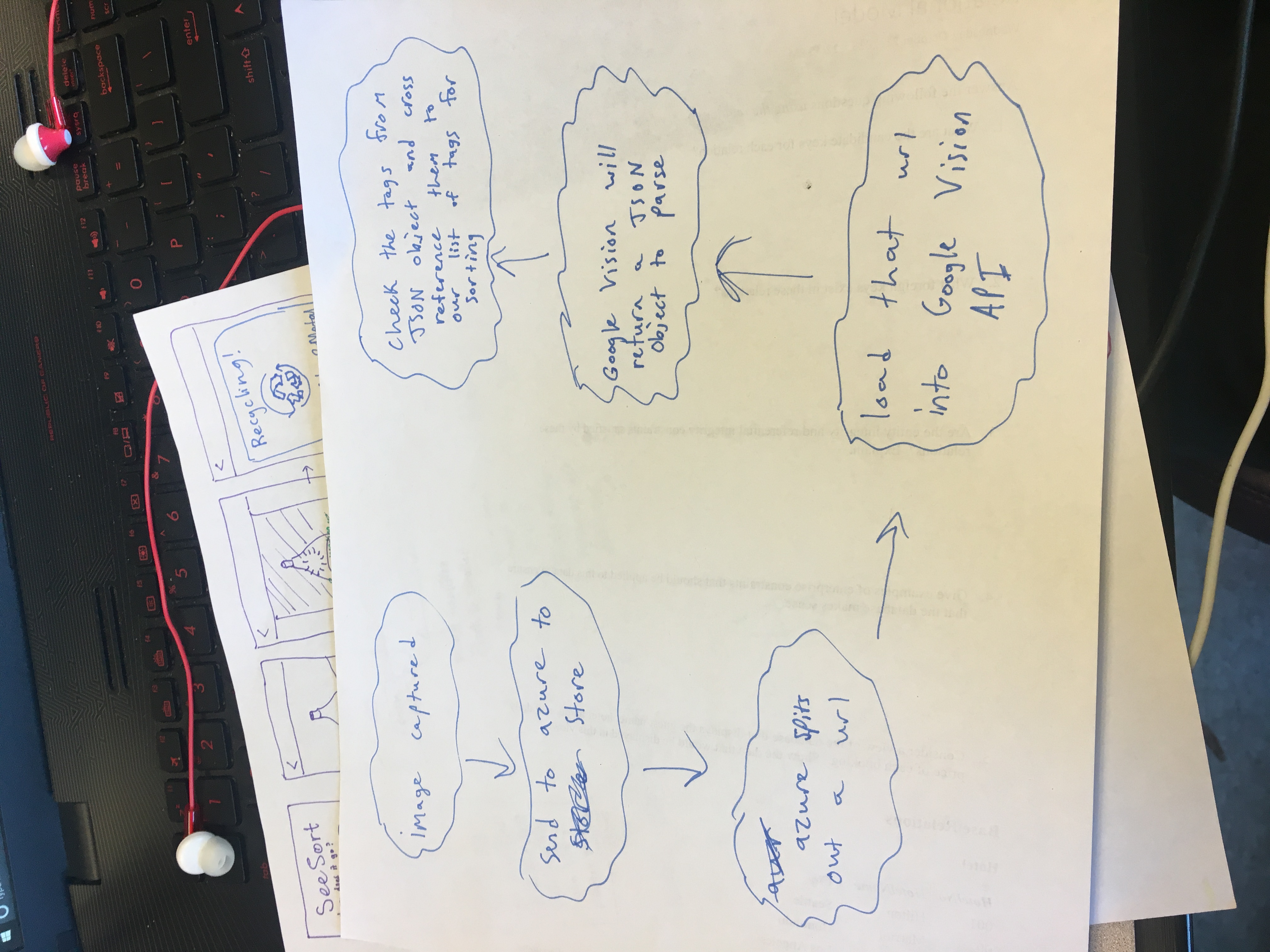
What it does. SeeSort allows a user to take a picture of a piece of trash that he/she/they want to throw away. Behind the scenes, the app runs that picture through the Microsoft Vision API, which generates a series of tags that apply to that picture. We cross-reference that with our own tags that relate to either recycling, compost, or trash. The app then tells the user what the appropriate trash bin for their specific piece of garbage is.
How we built it. We used Android Studio to create a simple app and we tried to use the Microsoft Vision API to run image recognition.
Challenges we ran into. We started off by trying to use the Google Vision API, until we realized that it was not supported for Android Studio and thus would be of no use. We pivoted to Microsoft Vision, but we ran into problems with their documentation (or lack thereof, in some places). It seems to be the case that Android Studio doesn't play well with certain APIs.
Accomplishments that we're proud of. None of us had had extensive experience using Android Studio, so we are all extremely proud of the work we put into learning it on the fly.
What we learned. We learned that working with APIs can be very tough. We also learned how to effectively use GitHub and Git, after many hours of tinkering with bash command/Android Studio selection options. Our greatest lesson from this hackathon was likely one of time management; we spent much too much time on some trivial things when we could have been focusing on bigger picture goals for the app.
What's next for SeeSort. We would hope that something similar to SeeSort is implemented in either the Microsoft or Google Vision APIs, eventually making its way into the standard camera app just as the QR code reader has in the recent iOS updates. It seems as though it is absolutely imperative in this day and age of environmental consciousness and the dreaded "bin decision."


Log in or sign up for Devpost to join the conversation.