Inspiration
Industrial Operational Technology (OT) environments are increasingly automated but remain highly vulnerable to cyberattacks. High-profile incidents in pipelines, water treatment, and energy systems highlight that legacy industrial protocols were never designed for modern connectivity. We were inspired to create a solution that extends zero-trust security principles to autonomous agents, combining cryptography, AI reasoning, and behavioral analytics to protect critical infrastructure in real time.
What it does
SeerSecure is a Zero-Trust Agentic Framework that enforces security for industrial agents operating in OT environments. Every command or request is authenticated, authorized, and monitored. AI-powered agents detect anomalies, analyze threats, and autonomously respond to attacks such as brute-force attempts, privilege escalation, or suspicious network activity. It ensures continuous protection without interrupting operational processes.
How we built it
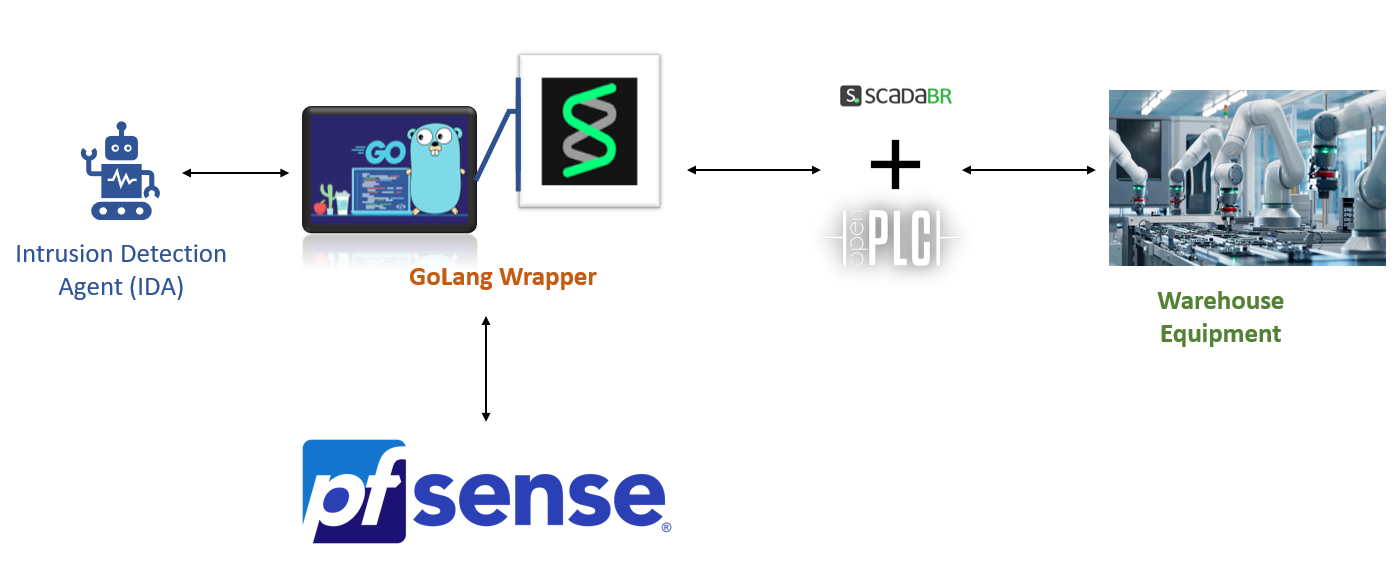
We implemented a GoLang Zero-Trust Wrapper that integrates with the Python-based Strands Agents SDK. The system uses Ed25519/AES-256-GCM cryptography, RBAC, rate limiting, audit logging, and TLS for secure communication. An Intelligent Detection Agent (IDA) powered by AWS Bedrock LLMs provides real-time behavioral analytics and threat reasoning. The architecture is deployed in a simulated SCADA warehouse using OpenPLC, ScadaBR, pfSense firewalls, and Docker Compose for realistic orchestration.
Challenges we ran into
Ensuring real-time zero-trust enforcement without introducing latency
Integrating AI reasoning for context-aware threat detection
Coordinating multiple autonomous agents while maintaining operational continuity
Handling heterogeneous legacy OT devices with limited computational resources
Accomplishments that we're proud of
Successfully implemented a cryptography-first zero-trust gateway for autonomous agents. A GoLang extension of Python-Based Strands Agents SDK which lays the foundation of zero trust principles.
Real-time detection and mitigation of simulated attacks
Integration of AI-driven behavioral analytics and LLM reasoning for adaptive security
Developed a reproducible SCADA testbed for experimentation and validation
What we learned
We gained practical experience in combining zero-trust security, autonomous agents, and AI reasoning for OT systems. We learned how to balance security with operational requirements, handle latency-sensitive environments, and implement multi-agent coordination in critical industrial workflows. And how GoLang provides a great flexibility to build concurrent systems.
What's next for SeerSecure
We plan to expand the framework to real-world industrial deployments, integrate additional AI reasoning capabilities, extend support for more industrial protocols, and develop automated policy tuning for adaptive, self-healing OT security infrastructures.


Log in or sign up for Devpost to join the conversation.