-
-
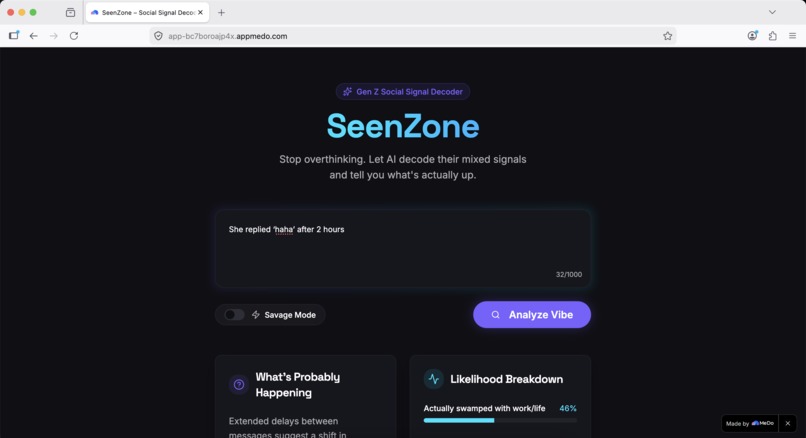
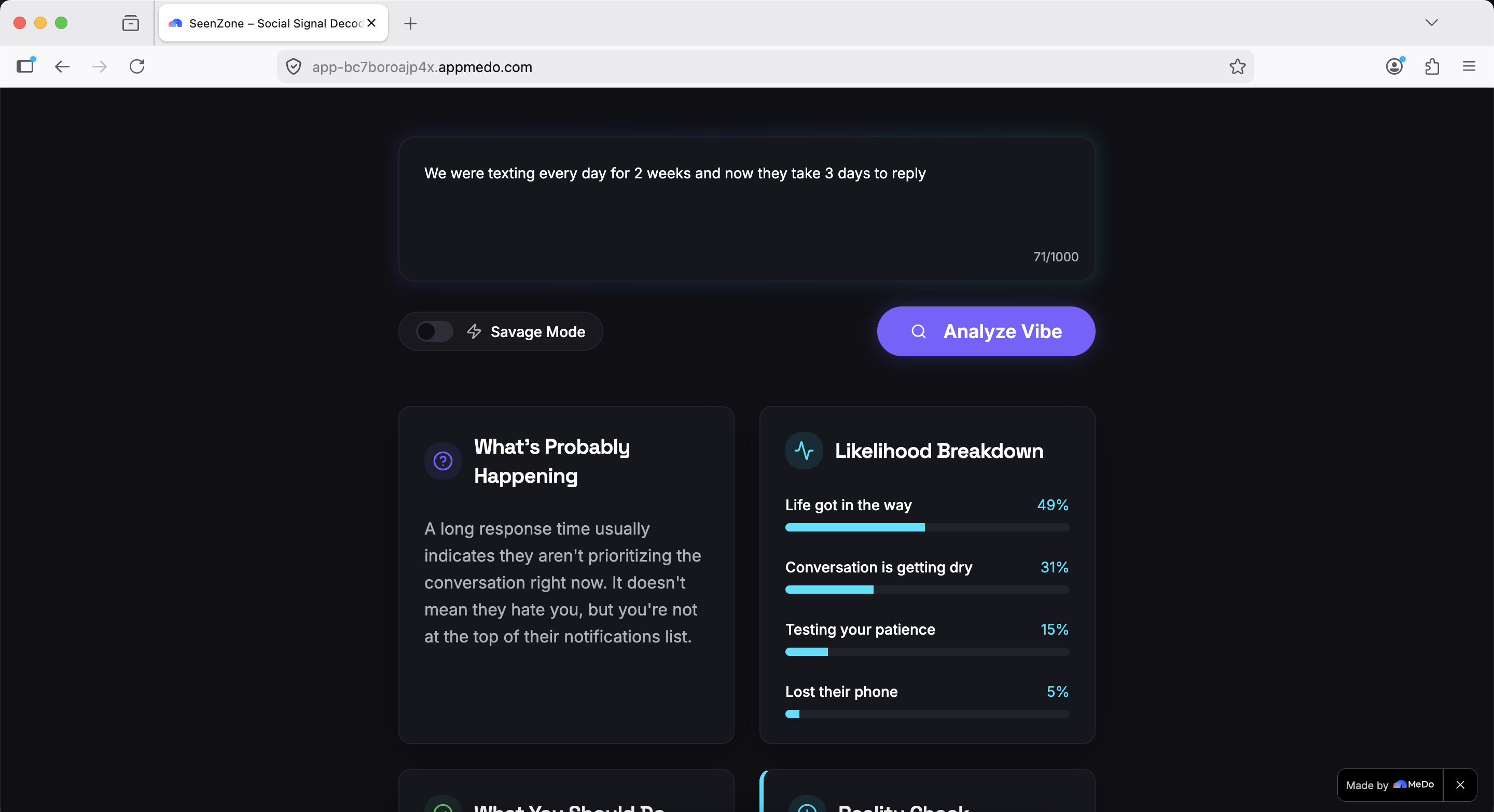
Four cards. Real answers. Faster than your brain can spiral.
-
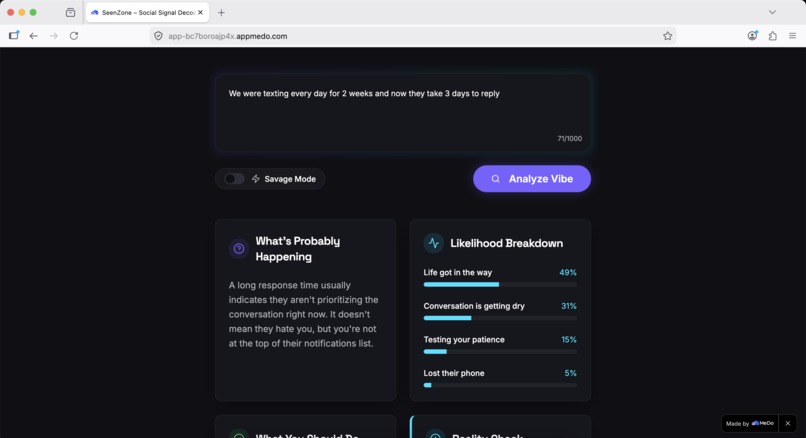
Dark. Minimal. Built for the generation that can smell bad design from a mile away.
What inspired me
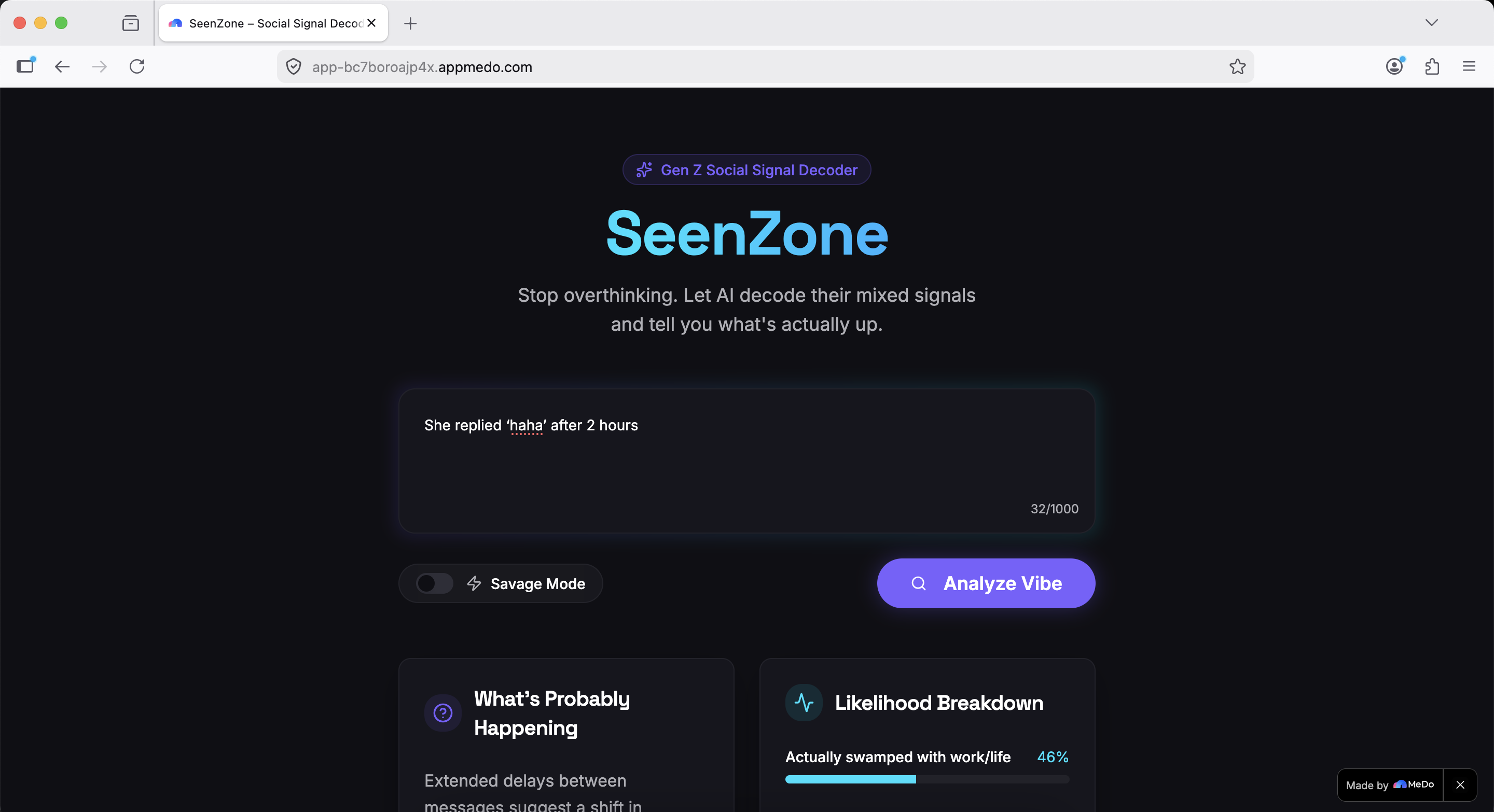
I was staring at a "seen" notification for 45 minutes trying to figure out if I was being ghosted or if my friend was just busy. I googled it. Nothing useful came up — just Reddit threads full of people equally confused. That was the moment. Every Gen Z person has been in that spiral, and nobody built a tool that actually addresses it without being cringe or overly therapeutic.
How I built it
I built SeenZone entirely using MeDo — no coding required. I started by describing the concept in plain language: a social signal decoder that feels like a smart, honest friend rather than a therapist. MeDo translated that into a fully functional mobile-first web app in one conversation.
The process looked like this:
- I described the problem and the tone I wanted
- MeDo generated the full app structure with 4 AI-powered analysis cards
- I iterated on the Savage Mode toggle — just said "make it more blunt" and MeDo rebuilt that entire response layer
- One-click deploy to a public URL
The most impressive thing MeDo built was the Savage Mode personality — it genuinely feels like a different voice, not just slightly different words.
What I learned
- You don't need to know how to code to ship a real product
- Tone is a design constraint, just like color or layout
- The best app ideas are hiding inside your most relatable bad days
Challenges
The hardest part was getting the Likelihood Breakdown percentages to always total exactly 100%. It took a few iterations with MeDo to get the AI prompt tight enough that the math stayed consistent across different inputs.
The second challenge was nailing the line between "honest" and "mean" in Savage Mode — too soft and the toggle feels pointless, too harsh and it stops being funny. MeDo helped me test and tune that balance quickly.
Built With
- ai
- anthropic
- api
- claude
- css
- html
- javascript
- medo
- space

Log in or sign up for Devpost to join the conversation.