Inspiration
This project started from a simple observation: even in close relationships, conversations do not always lead to true understanding.
We use words to express our thoughts and feelings, yet much of what we mean is not contained in the words themselves. Tone, rhythm, pauses, hesitation, and silence all carry emotional signals. These subtle cues shape how a message is perceived, but they are difficult to consciously notice in the moment.
Conversations sometimes feel like looking through frosted glass — the words are clear, but the deeper meaning behind them is blurred. Misunderstandings and emotional hurt often happen not because people intend to harm each other, but because they fail to sense what lies beneath the words.
This led to the idea of Lens, a speculative tool that helps people perceive the hidden emotional signals within conversation.
What I Learned
Through exploring research on communication and emotional perception, I learned that much of human communication happens beyond explicit language.
Elements such as vocal tone, speech rhythm, pauses, interruptions, and silence often carry emotional information that listeners interpret subconsciously.
However, during real-time conversations, people are usually focused on responding rather than perceiving these subtle cues. This gap between what is said and what is perceived can easily lead to misunderstanding, especially in close relationships where emotional stakes are high.
This project explores the possibility of augmenting human perception — not by recording the literal content of speech, but by sensing the patterns and emotional dynamics of conversation.
How I Built the Project
Lens is designed as an ambient conversational sensing tool.
Rather than recording what people say, it focuses on sensing how something is said.
The system detects conversational signals such as:
- vocal tone
- speech rhythm
- pauses
- intensity
- overlap between speakers
- moments of silence
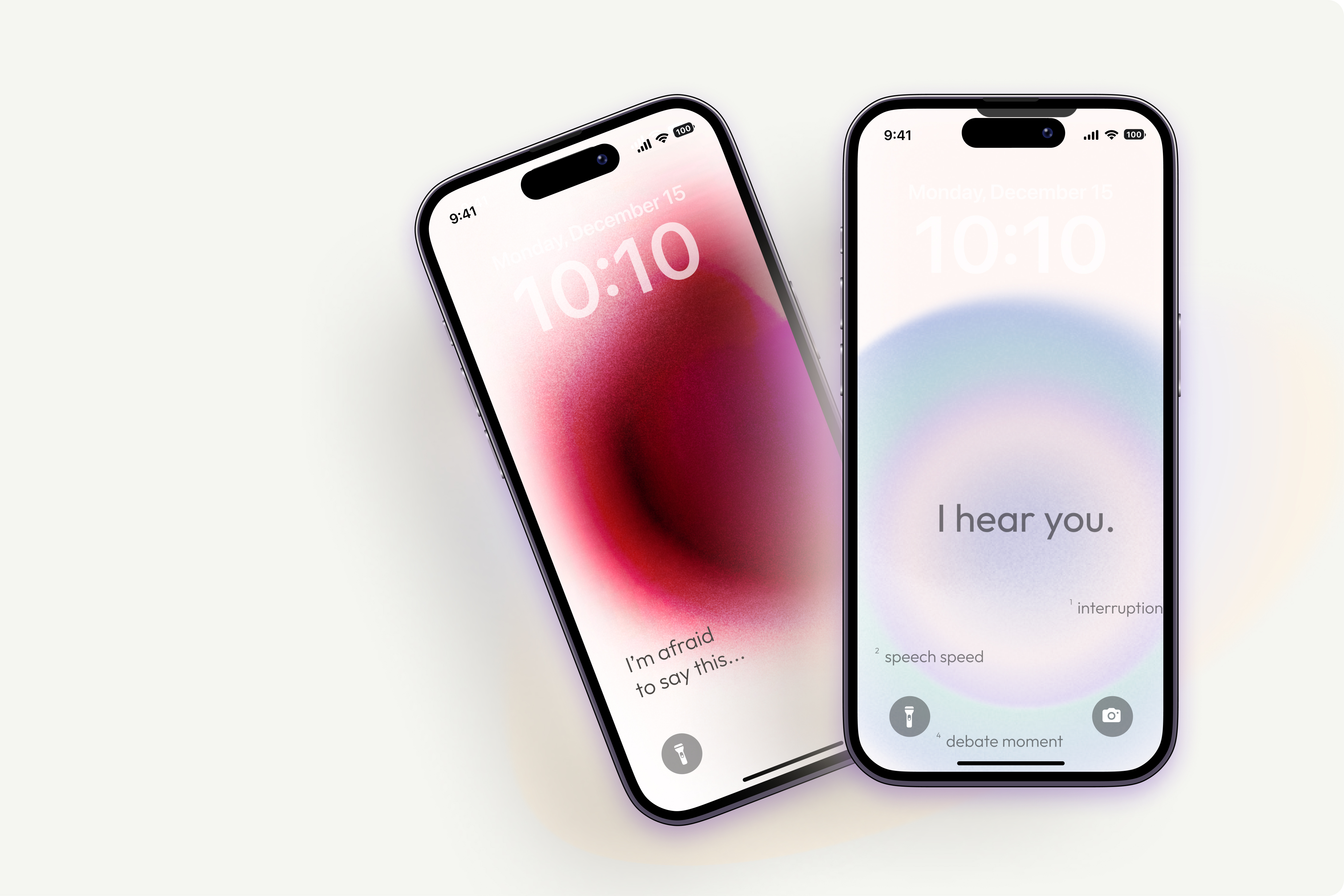
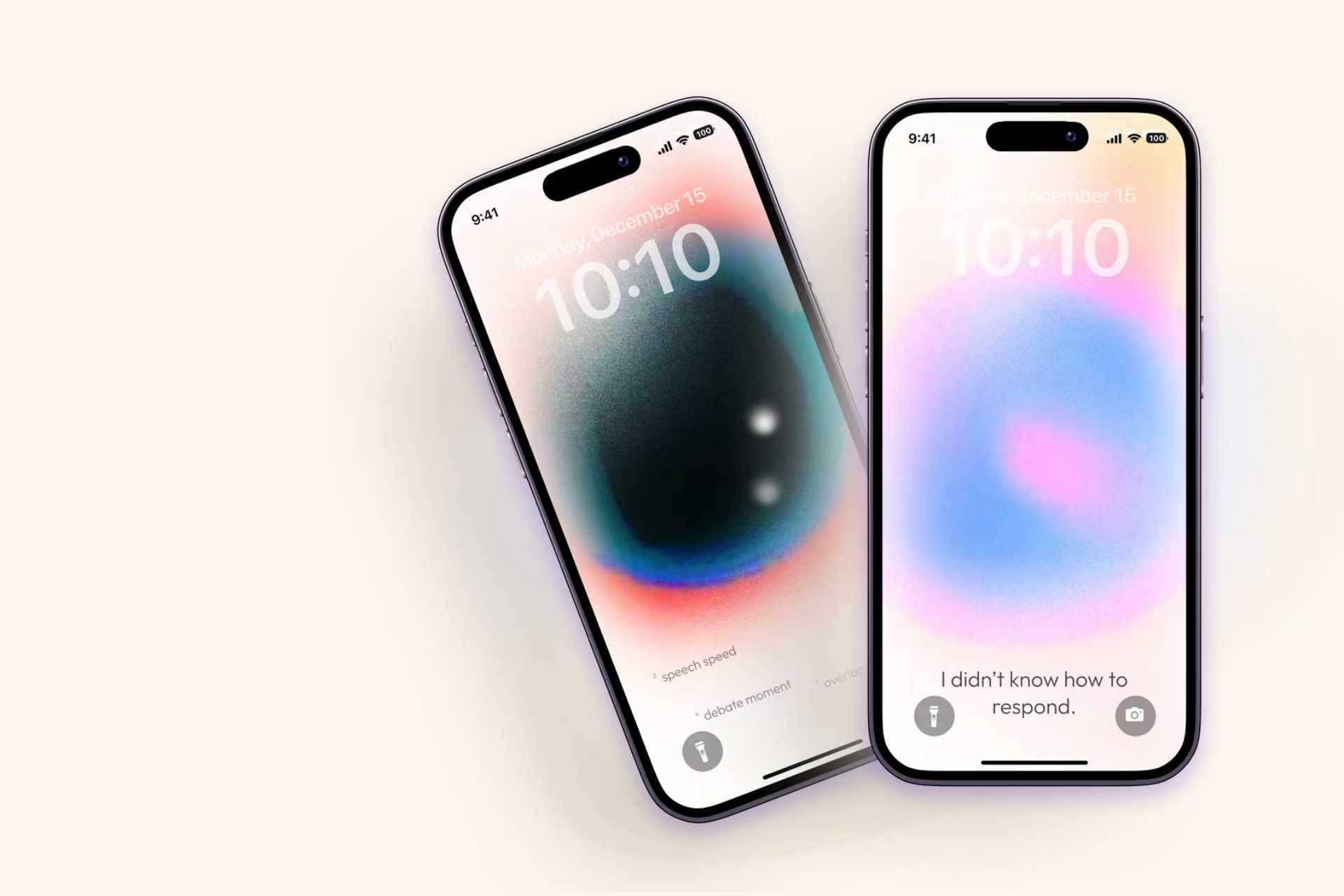
These signals are translated into a continuously morphing visual form — a softly shifting halo that represents the emotional dynamics of the conversation.
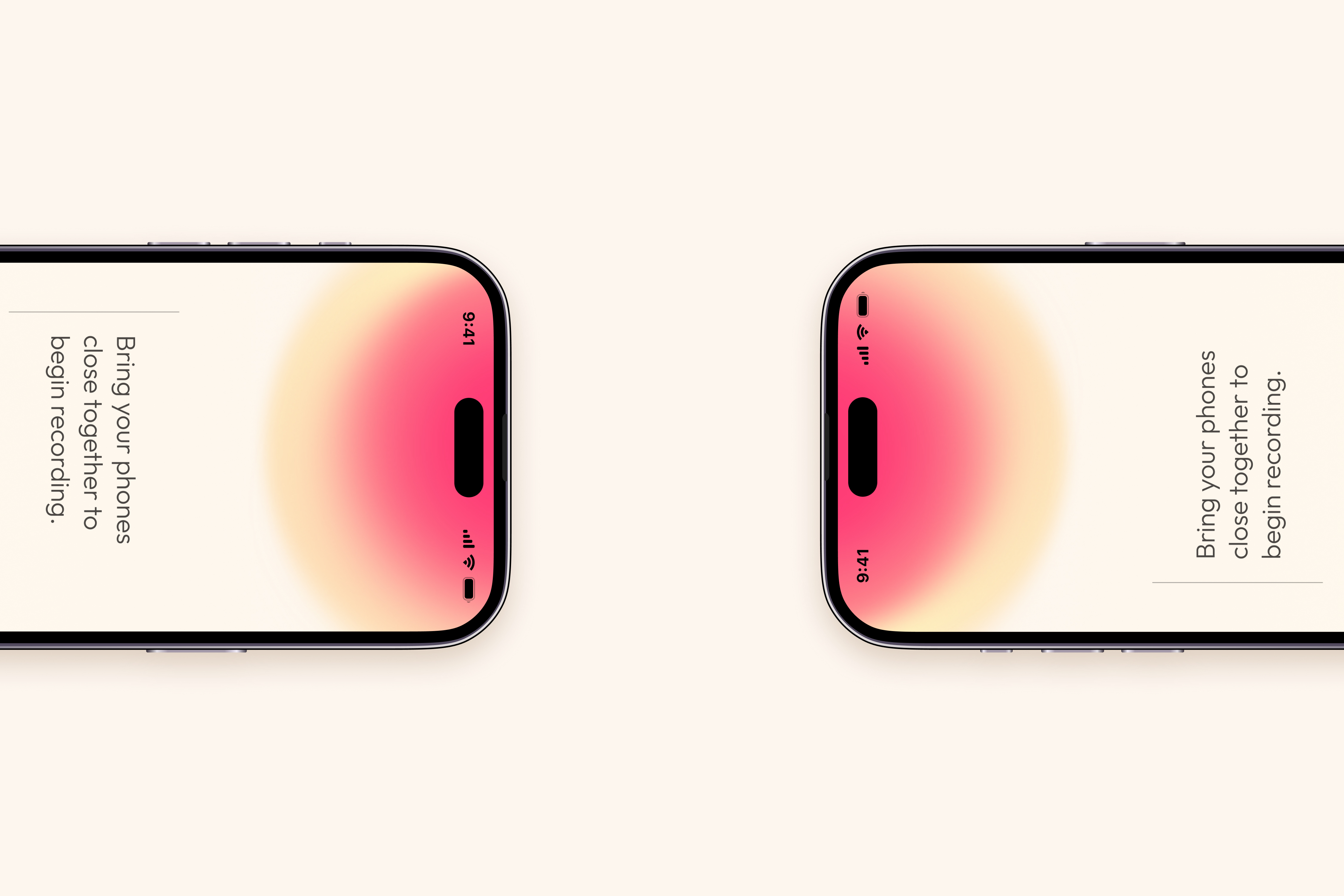
During a conversation, two phones are placed close together to activate the sensing mode. As people talk, the visual form responds in real time, helping participants become more aware of the emotional signals beneath their words.
The goal is not to analyze or judge the conversation, but to create a perceptual lens that gently reveals hidden emotional layers.
Challenges
One challenge in designing this project was balancing emotional sensitivity with privacy. Conversations are deeply personal, so the system was intentionally designed not to record or store verbal content. Instead, it only senses patterns of speech and interaction.
Another challenge was designing feedback that remains subtle and supportive rather than distracting or intrusive. The visual language needed to communicate emotional shifts without interrupting the natural flow of conversation.
Finally, translating something as complex and intangible as emotional perception into a simple interface required careful design decisions. The goal was to keep the experience minimal while still conveying meaningful signals.
Built With
- figma
- figmake
- flow
- nanobanna


Log in or sign up for Devpost to join the conversation.