-
-

SeekerEats Logo
-
-
-
-
-

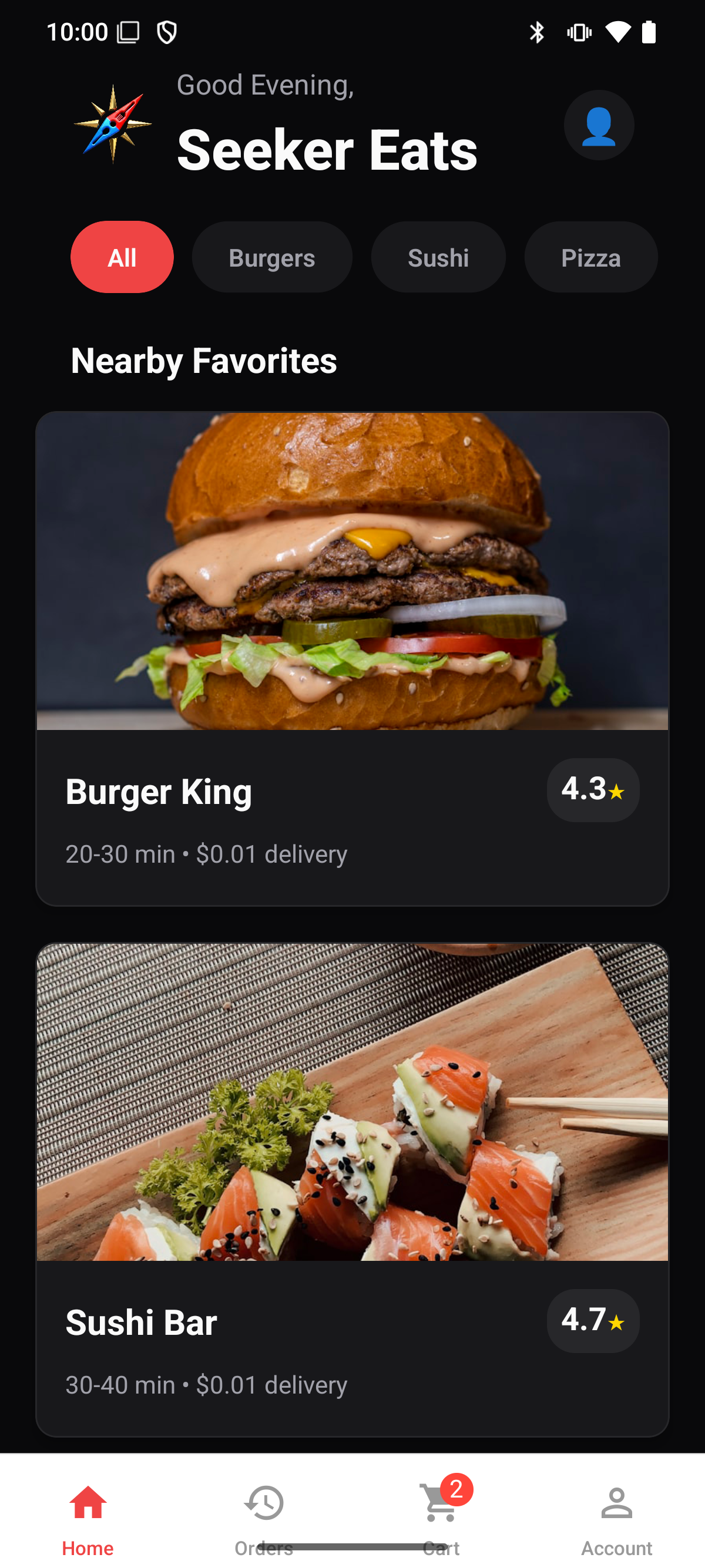
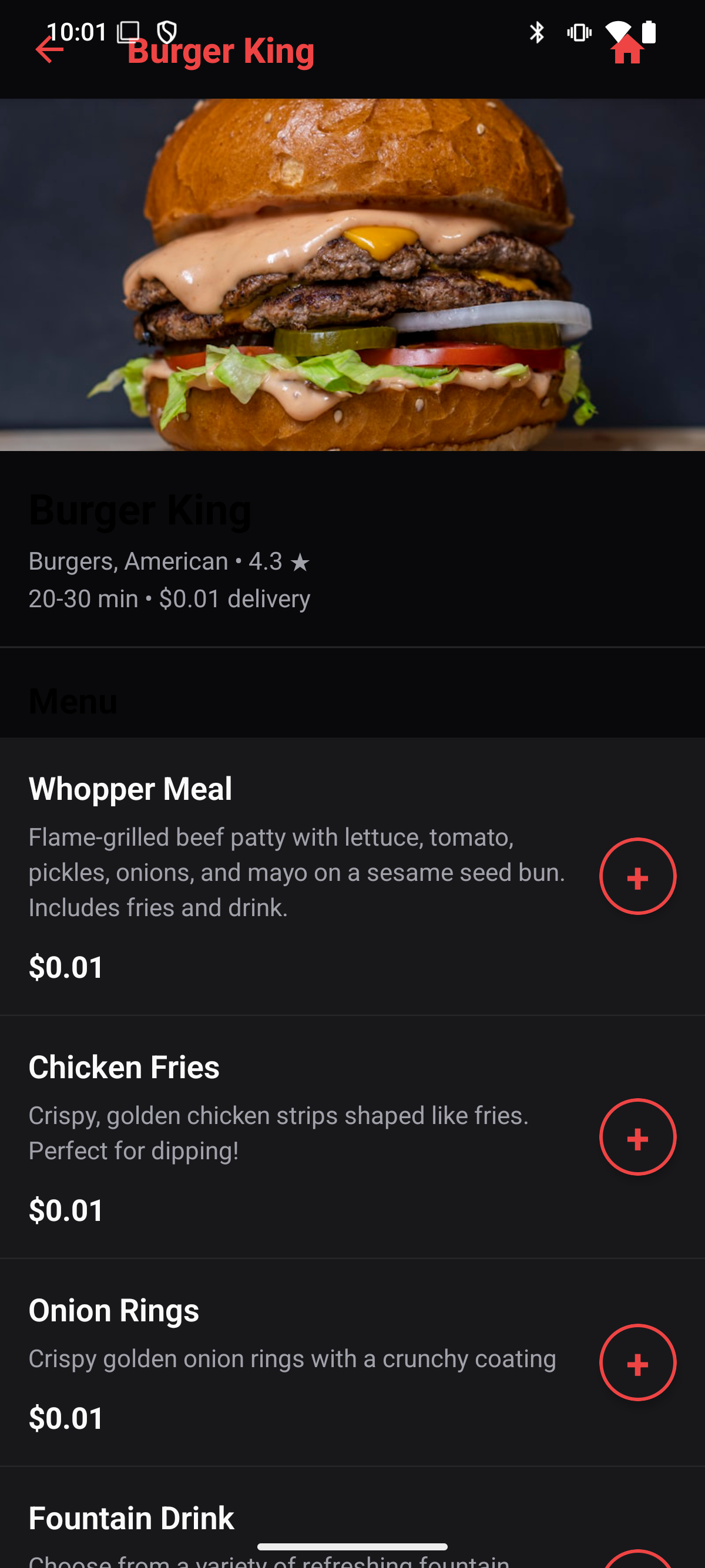
Inspiration
We were inspired by how fast-food applications like Taco Bell or McDonald's leverage DoorDash for delivery.
What it does
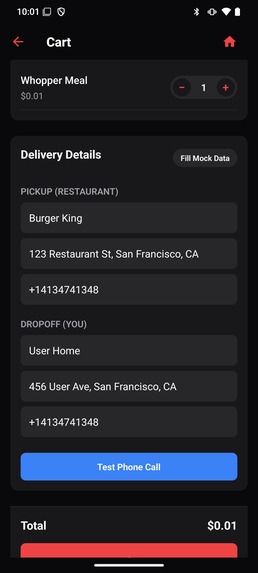
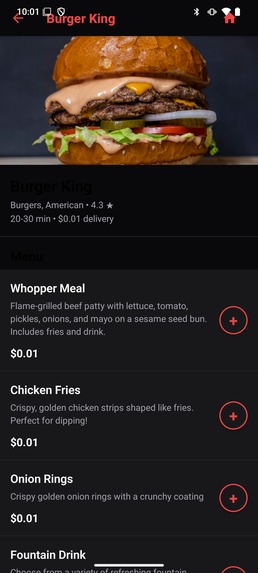
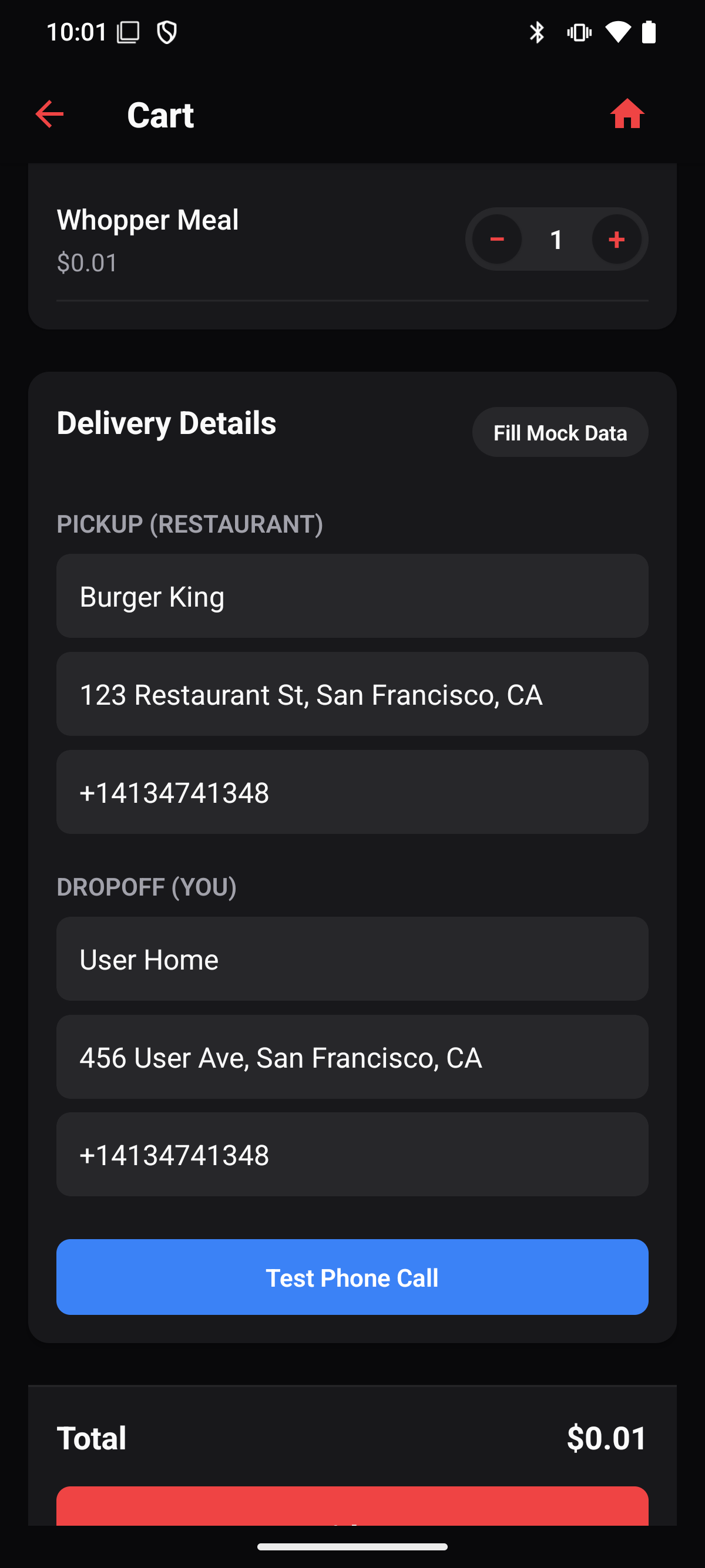
SeekerEats interfaces with Door Dash Drive API to simulate food orders. Additionally, it leverages Twilio to execute phone calls to restaurants and place orders as a secondary method.
How we built it
We built SeekerEats by studying the food delivery business models and seeing where is the best place to wedge our business. Then, we put together a simple architecture pattern in which modularize everything by creating an API relay service that interfaces with Door Dash, Twilio, Helius, and others. This allows us to add/drop features quickly.
Challenges we ran into
Door Dash Drive production access is gated, which is a hard blocker. So we came up with using Twilio to make the order directly to a restaurant.
Accomplishments that we're proud of
As both of us are alumni of the Solana Mobile Hackathon earlier this year, we are proud that we were able to put these skills to use once again and in less than a week, we have an MVP running on a Seeker device. Not only that, but the project is actually live on a development server via Railway
What we learned
We learned a lot about Dev Ops. The better you organize, the less back tracking you have to do. This is something we are constantly improving, but it is key to how we were able to build this in a week.
What's next for SeekerEats
Testing with live orders. We are going to find a restaurant willing to work with us so we can begin testing with live data.
Built With
- android-studio
- doordash
- github
- node.js
- privy
- railway
- react-native
- solana
- twilio
- typescript
- usdc

Log in or sign up for Devpost to join the conversation.