SEEK — From Data to Prevention
Inspiration
SEEK was inspired by something deeply personal.
Every member of our team has had a relative who suffered from one health condition or another — diabetes, hypertension, hormonal disorders, or medication complications. In many of these cases, the condition was not caused by a single catastrophic event, but by everyday decisions made without enough information.
We saw loved ones:
- Eat meals that silently worsened chronic conditions
- Combine medications without knowing interaction risks
- Use skincare products that aggravated hormonal imbalances
- Rely on generic internet advice instead of personalized guidance
The pattern was clear:
The issue wasn’t negligence — it was lack of accessible, personalized interpretation.
Health information exists.
Ingredient lists exist.
Drug warnings exist.
But they are not translated into what it means for you.
We asked ourselves:
What if AI could interpret everyday health decisions before they become medical problems?
That question inspired SEEK — an AI-powered preventive health partner that transforms raw data into personalized health intelligence.
What it does
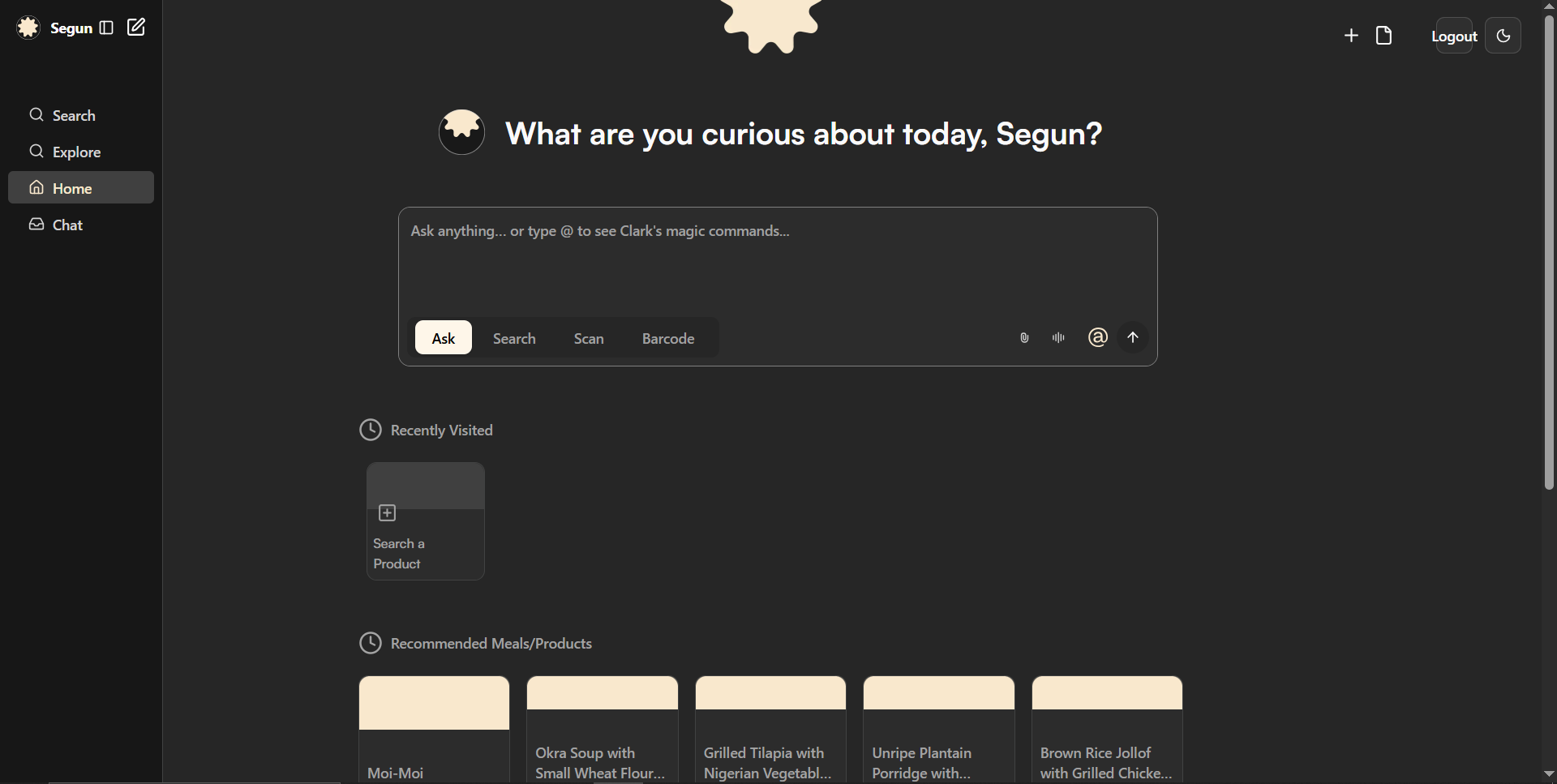
SEEK is an AI health companion that connects food, drugs, skincare, and lifestyle data into one personalized preventive system.
Personalized Meal Intelligence
Based on a user’s:
- Health conditions
- Allergies
- Goals
- Preferences
SEEK provides for each meal:
- Recommended calorie intake
- Digestive load score
- Nutritional breakdown
- Key vitamins and minerals
- Energy sustainability insights
- Health impact explanation
- AI-generated health rating
Instead of showing only calories, SEEK explains how a meal affects your body and your goals.
Drug & Skincare Scanner
Users can scan barcodes or ingredient lists to receive:
- Active ingredient breakdown
- Drug-to-drug interaction detection
- Herbal compatibility alerts
- Hormonal disruptor warnings
- Long-term organ impact insights
- Personalized compatibility scoring
We designed a simplified preventive scoring model:
[ Risk\ Score = \sum (Ingredient\ Impact \times Personal\ Condition\ Weight) ]
This allows SEEK to transform complex ingredient lists into clear preventive signals:
🟢 Safe
🟡 Moderate Risk
🔴 High Risk
Personalized AI Health Chatbot
SEEK includes a conversational AI trained on:
- User profile data
- Scan history
- Meal patterns
- Health goals
Users can ask:
- “Is this safe with my medication?”
- “Why am I bloated?”
- “What should I eat tomorrow?”
Responses are personalized — not generic internet advice.
WhatsApp Accessibility
To increase accessibility, SEEK integrates a WhatsApp bot, allowing users to:
- Send ingredient text
- Ask health questions
- Get quick preventive insights
This ensures SEEK can function beyond a traditional app environment.
How we built it
Tech Stack
- Frontend: Next.js + TypeScript
- Backend: Express.js
- Database: PostgreSQL
- AI Engine: Gemini
- OCR + Barcode Processing: Ingredient extraction pipeline
- WhatsApp Integration: Messaging API
Architecture Overview
- User Profile Layer — Stores health conditions, goals, allergies, and preferences.
- Ingredient Processing Layer — Extracts and standardizes ingredient data from scans.
- Risk Engine — Applies weighted health logic to compute compatibility scores.
- AI Explanation Layer — Converts structured outputs into understandable preventive insights.
We designed the system to be modular, allowing food, drugs, and skincare analysis to share the same core risk interpretation engine.
Challenges we ran into
1️⃣ Ingredient Standardization
Ingredients appear under multiple names and chemical variations (e.g., “Sucrose” vs “Cane Sugar”).
We had to normalize and classify them consistently to ensure accurate analysis.
2️⃣ Avoiding Medical Misinformation
We had to carefully frame SEEK as a preventive support tool — not a diagnostic system.
This required precise prompt engineering and validation layers to avoid overclaiming.
3️⃣ Personalization Depth
AI models often default to generic advice.
To solve this, we injected structured user profile data into every risk computation and explanation, ensuring contextual responses.
4️⃣ Balancing Complexity and Simplicity
Behind the scenes, SEEK runs multi-factor risk calculations.
But the user interface had to remain intuitive and clear.
We simplified outputs into color-coded risk indicators without losing depth.
Accomplishments that we're proud of
- Successfully unified food, drug, and skincare analysis into one preventive system.
- Built a working risk-scoring model that adapts to individual health profiles.
- Integrated WhatsApp for accessibility beyond app users.
- Designed a modular AI architecture that can scale into broader preventive healthcare.
- Created a solution that moves beyond tracking — into interpretation and prevention.
Most importantly, we built something that could realistically prevent harmful health decisions.
What we learned
- Prevention is more powerful than treatment.
- Data alone is overwhelming — interpretation creates value.
- Personalization significantly increases trust in AI systems.
- Health technology must balance intelligence with clarity.
- Accessibility is as important as innovation.
We also learned that AI is most impactful when it augments everyday decisions — not just clinical environments.
What's next for SEEK
- AI-generated skincare and medication routines
- Long-term health trend forecasting dashboards
- Family health profiles (multi-user support)
- Wearable device integration
- Expanded drug interaction databases
- Advanced preventive health reports
Our long-term vision is to position SEEK as a full AI Health Operating System — transforming prevention from a concept into a daily habit.
Healthcare shouldn’t start at the hospital.
It should start at the moment of decision.

Log in or sign up for Devpost to join the conversation.