-
-
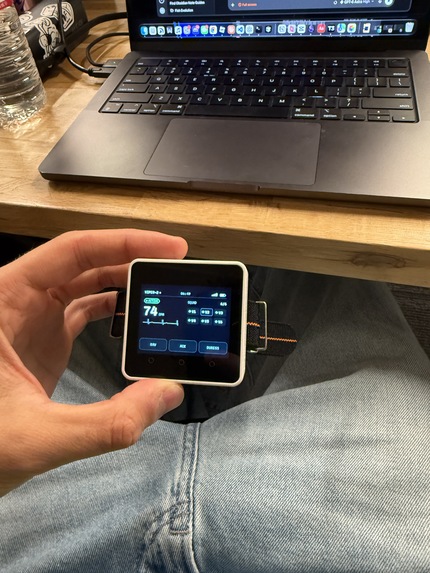
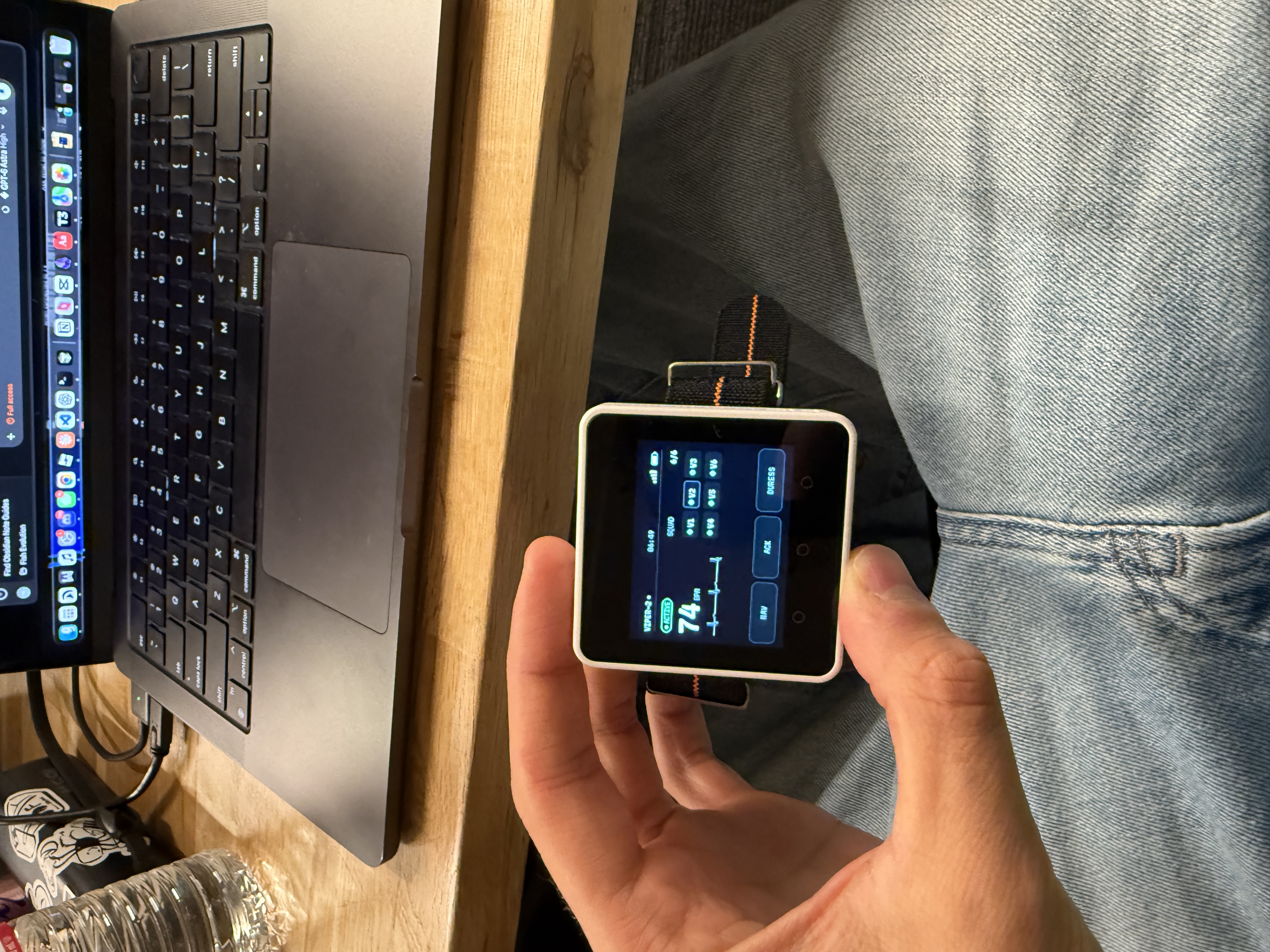
Phase 0 at VexoHacks: our ESP32-based M5Stack Core2 mounted on a band, running SEEK. Displayed squad and vitals are simulated.
-
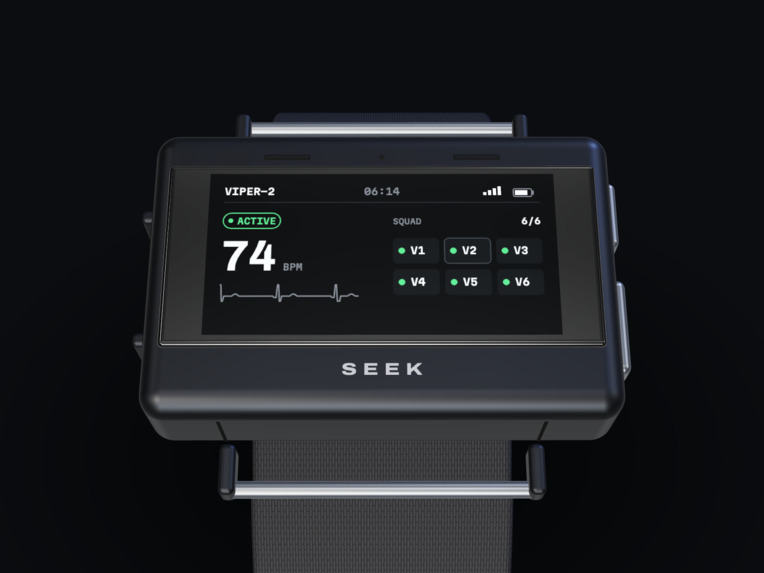
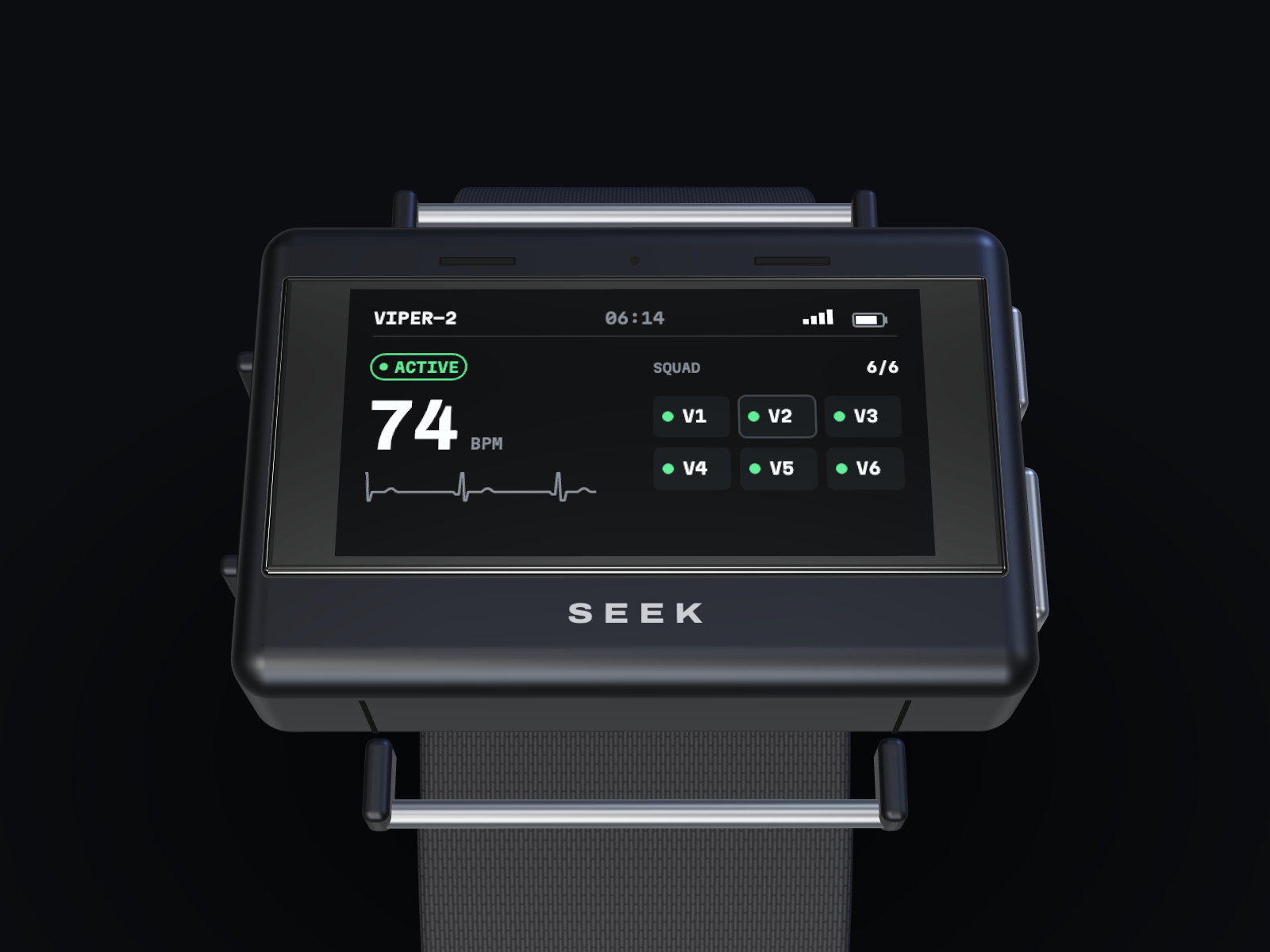
SEEK concept watch face: a direct view of the proposed squad and vital-sign display. Rendered design.
-
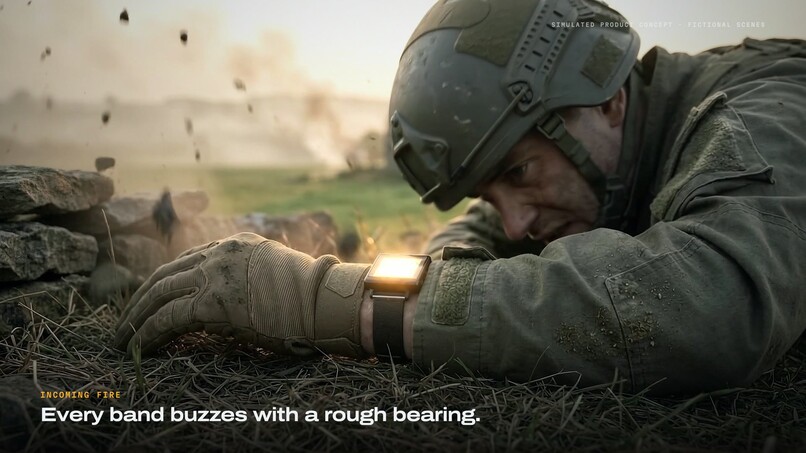
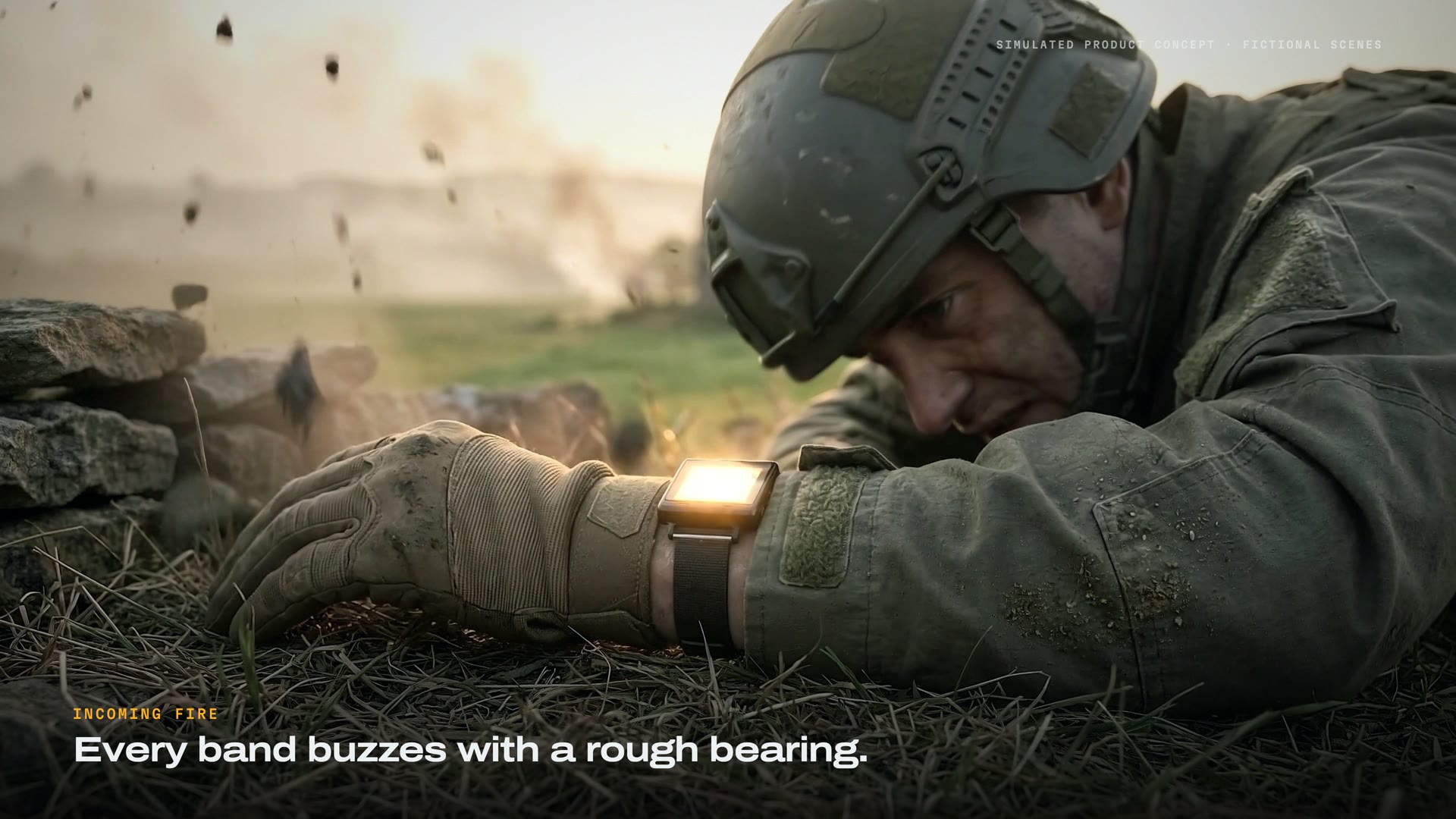
SEEK in Action: our concept film. AI-generated fictional scenes illustrate the longer-term vision.
-
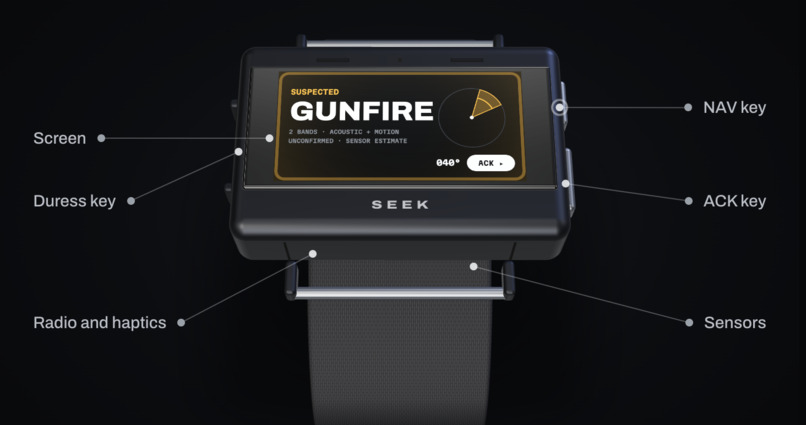
Actual 320 x 240 LCD readback from the M5Stack Core2 demo. Squad and vital-sign values are simulated.
We’re Seek, an AI-powered tactical wristband connecting soldiers, squads, and command centers through a two-way intelligence network.
The US military can see a missile the moment it launches. Satellites see it. Radar sees it. The command center sees it. The one person who doesn’t is the soldier it’s about to hit.
When detection systems pick up artillery or a missile, they calculate where it will land. Seek takes that impact point, finds every soldier inside the danger zone, and fires a haptic alert to their wrists. A mortar gives you about twenty seconds. Seek spends none of them on a radio call, and it tells each soldier where to move to avoid getting hit.
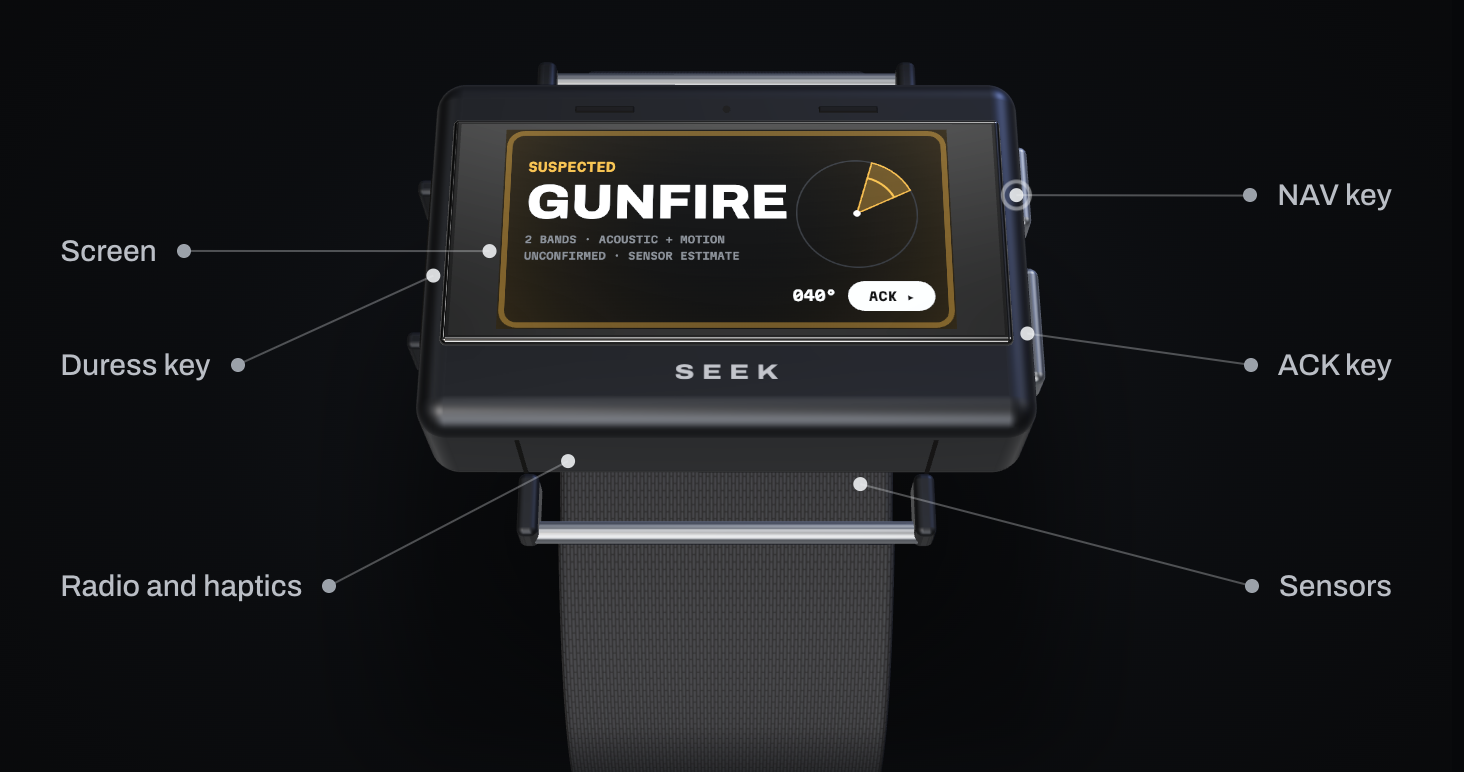
It works in a firefight too. When a shot is fired at the squad, every band hears it. Seek compares the instant each wrist heard it, locates the shooter, and pulses that direction to the whole squad before anyone has to shout it.
And if one of them is hit, command knows right away. Every band tracks vital signs and location, so Seek’s AI flags the casualty the moment it happens: who is down, where they are, and how critical.
You’ve already seen the future vision of the product. We want to take this much further. We’re applying for government contracts, looking for investors, and finding people to test this in the field. Join our journey. Welcome to Seek.
When someone cannot call for help, who knows to go looking?
A soldier goes down. The radio stays silent. Everyone else is trying to understand what just happened.
SEEK began with that gap: the time between an emergency happening and someone knowing a teammate needs help. We want a wrist-worn safety system that makes the person visible, gets an alert noticed, and records an acknowledgement.
At VexoHacks, we built Phase 0: an ESP32-based M5Stack Core2 mounted on a band, making the central interaction tangible. A loud bang can trigger a real wrist alert. The device vibrates, sounds an alarm, speaks, and listens for an acknowledgement. Hold the screen, ask a question, and hear an AI-generated answer through the device.
Every soldier accounted for. Every second matters.
Phase 0: hear it, feel it, acknowledge it
Our hackathon build demonstrates SEEK's interaction loop on real hardware, with simulated squad data:
- Notice an event. The Core2's microphone detects a loud sound. A phone remote can also stage an incident for a repeatable demo.
- Make it hard to miss. The device shows an alert, vibrates, and plays a siren with a spoken message.
- Close the loop. Say "copy," tap the alert, or press ACK. The remote shows whether the alert reached the device, was spoken, and was acknowledged.
- Ask without digging through menus. Hold the screen and ask about the simulated squad. Deepgram transcribes the question, MiniMax produces a short answer, and Deepgram speaks it back through the Core2.
The device also has NAV, ACK and DURESS touch controls, a delayed-event timer, and gyro-based wrist-turn tracking. The phone remote lets us demonstrate the experience with one person wearing the device and another controlling the scenario.
Real on the hardware: microphone input, loud-sound triggering, screen, touch controls, haptics, siren and gyro readings. Real through a USB-connected laptop: speech recognition, speech generation and AI question answering. Simulated: squad members, vitals, positions, mesh networking and incident bearing. One microphone cannot determine the direction of a sound; our demo stages that bearing from the phone.
The vision beyond Phase 0
The longer-term SEEK concept connects the person on the ground with the people responsible for their safety: urgent warnings delivered to the wrist, silent acknowledgements sent back, and a shared view of who may need help. Our film and interactive site explore that future. Phase 0 tests the human interaction at its center.
Watch the vision, then try the demo
Watch SEEK in Action, our 84-second concept film.
The film tells the larger story: an incident, a teammate who needs help, and a team trying to bring everyone home. It uses AI-generated scenes and rendered product visuals to illustrate the intended experience. It is a concept film, not footage of a deployed system.
Explore the interactive SEEK concept or open the hardware demo remote. The remote needs our connected Core2 and laptop to be online; the website's simulator can be explored independently.
How we built it
This is Phase 0: a physical, band-mounted demonstrator of the alert-and-acknowledgement interaction.
The Core2 runs Arduino C++ firmware built with PlatformIO and M5Unified. Its 320 x 240 touch display presents compact, high-contrast screens designed for a glance at the wrist. Its microphone, vibration motor, speaker and inertial sensor supply the physical interaction.
A Python bridge connects the device over USB serial and serves the HTML/CSS/JavaScript phone remote. It connects to Deepgram for speech-to-text and text-to-speech, and to MiniMax for questions about the staged squad. API credentials stay on the laptop rather than in the firmware or public browser page.
The broader concept includes an interactive 3D band, a fictional squad-and-command simulation, and the film. Those concept materials predate the hackathon. The event-day work focused on the Core2 hardware demonstration and its voice/AI interaction, reusing the existing visual design.
What fought back
The venue network and the device could not talk. The available network was 5 GHz; the ESP32 radio supports 2.4 GHz. We moved the internet connection to the laptop and carried the device's data over USB.
The microphone and speaker share a hardware pin. The band has to speak and listen in turns. We built the alert flow around that constraint: announce, listen, acknowledge.
A noisy room is not a clean sensor lab. Handling noise and loud conversation can trigger a simple threshold. We made the loud-sound trigger explicit and adjustable. A clap-triggered demonstration is not validated gunfire detection.
A wrist is a tiny interface. We kept the important actions direct: see the alert, feel it, acknowledge it, or ask out loud. The AI interaction had to fit that physical experience.
What we are proud of
We connected a physical input to a physical response, then added a spoken acknowledgement and an AI conversation on the same device. The result lets someone experience the idea on real hardware instead of only watching a screen animation.
We also built a coherent way to explain the ambition: the film shows why it matters, the interactive site shows the proposed system, and the Core2 makes the central interaction tangible.
What we learned
The most useful AI wearable interaction may be a short answer at the exact moment someone cannot use a phone. Speech and haptics can carry that interaction, but the small hardware details decide whether it works. Connectivity, audio turn-taking and acknowledgement mattered as much as the model.
We also learned to separate a convincing demo from evidence of reliability. SEEK is a concept with a staged hardware demo. It is not a field-ready safety device, a medical device, or a validated incident-detection system.
What comes next
Our next step is a controlled training-safety prototype: test real alert delivery and acknowledgements between devices, measure false alarms and missed events, and evaluate speech usability in noise. Actual location, sensing and networking need their own engineering and validation before any field deployment.
We plan to start with training organizations, where alert delivery, usability and acknowledgement can be tested under controlled conditions before tackling the demands of field use.
The goal remains simple: when someone cannot speak for themselves, their team should know to check on them.
Built by Remiel Shirazi and Yasir White.


