-
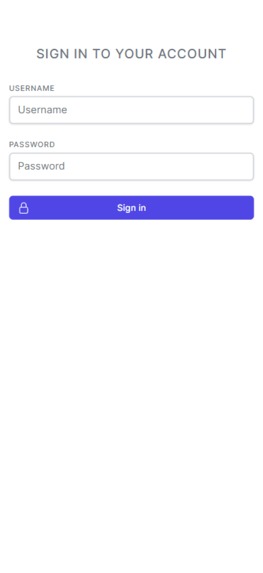
Auth page
-
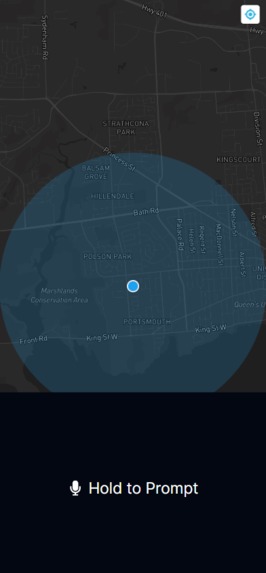
Prompt the AI with a voice message and whatever your front camera is facing.
Inspiration
The inspiration for Seegull came from a simple yet profound realization: in a world brimming with visual information, those who cannot see are often left at a significant disadvantage. Observing a close friend navigate daily challenges with visual impairment sparked a desire to harness technology in a way that could offer a semblance of sight, enhancing autonomy and confidence for the visually impaired community.
What it does
Seegull is a groundbreaking web platform that employs AI to enable blind and visually impaired individuals to "see" their surroundings. Using a camera and AI voice assistance, Seegull interprets visual data and communicates this information in real-time, providing descriptions, directions, and alerts to help users navigate their environment safely and independently.
How we built it
We built Seegull by integrating the GPT-4 text, and vision API with a user-friendly web interface developed using Next.js and styled with Tailwind CSS. The core technology relies on computer vision to analyze images from the user's camera, coupled with natural language processing (NLP) to convert these visual inputs into descriptive audio feedback, utilizing ElevenLabs for text-to-speech to ensure the feedback is natural and accessible. To bolster security, especially for user authentication and data protection, we incorporated Bayun Systems, leveraging its robust encryption and security protocols. Mapbox enhances our platform by providing precise map displays and location tracking, essential for real-world navigation.
Challenges we ran into
One of the main challenges was ensuring real-time performance while maintaining accuracy in object recognition and spatial descriptions. Balancing the computational demands of AI processing with the need for a responsive and accessible user experience required innovative solutions and optimizations. Additionally, designing an intuitive UI that caters to non-visual interaction posed its own set of design and usability challenges.
What we learned
Throughout this project, we learned the immense potential of AI to solve real-world problems and the importance of user-centered design, especially when creating solutions for individuals with disabilities. The iterative process of building, testing, and refining Seegull taught us valuable lessons in perseverance, teamwork, and the power of technology to drive positive change.
What's next for Seegull
Looking ahead, we plan to expand Seegull capabilities, including more languages and regional dialects to serve a global audience. We're exploring partnerships with organizations serving the visually impaired to refine our technology further and increase its accessibility. Additionally, we aim to incorporate more advanced AI features, such as predictive navigation and personalized setting adjustments, to make Seegull even more intuitive and helpful for our users.
Built With
- bayun
- elevenlab
- gpt
- mapbox
- nextjs
- prisma
- tailwind
- trpc
- typescript

Log in or sign up for Devpost to join the conversation.