-
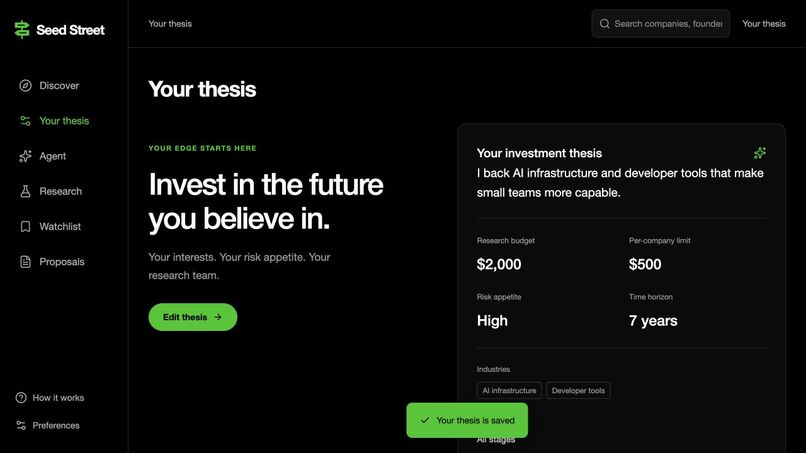
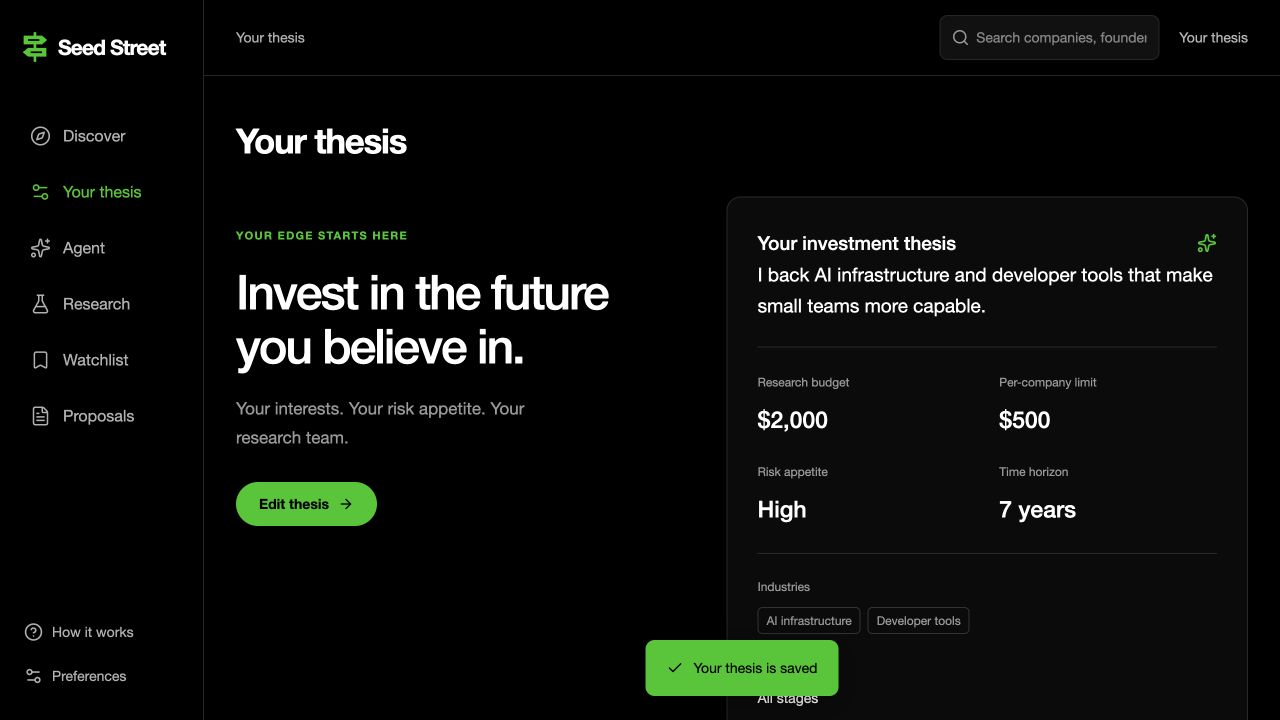
Your thesis, your AI research team. One workspace from startup discovery to a sourced memo and proposal.
-
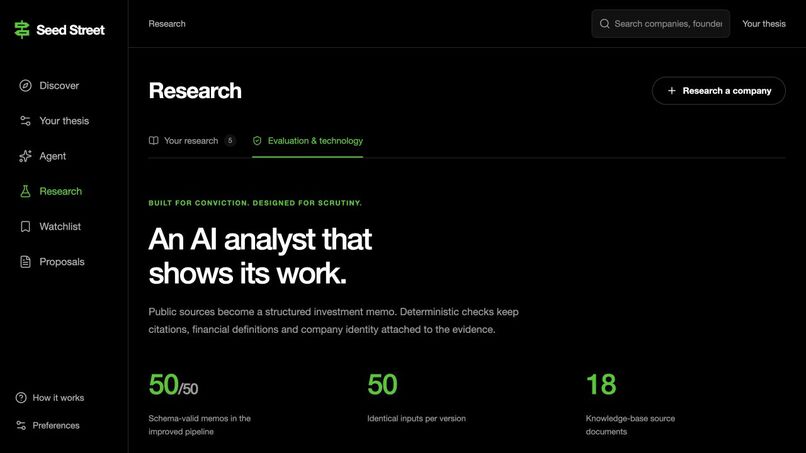
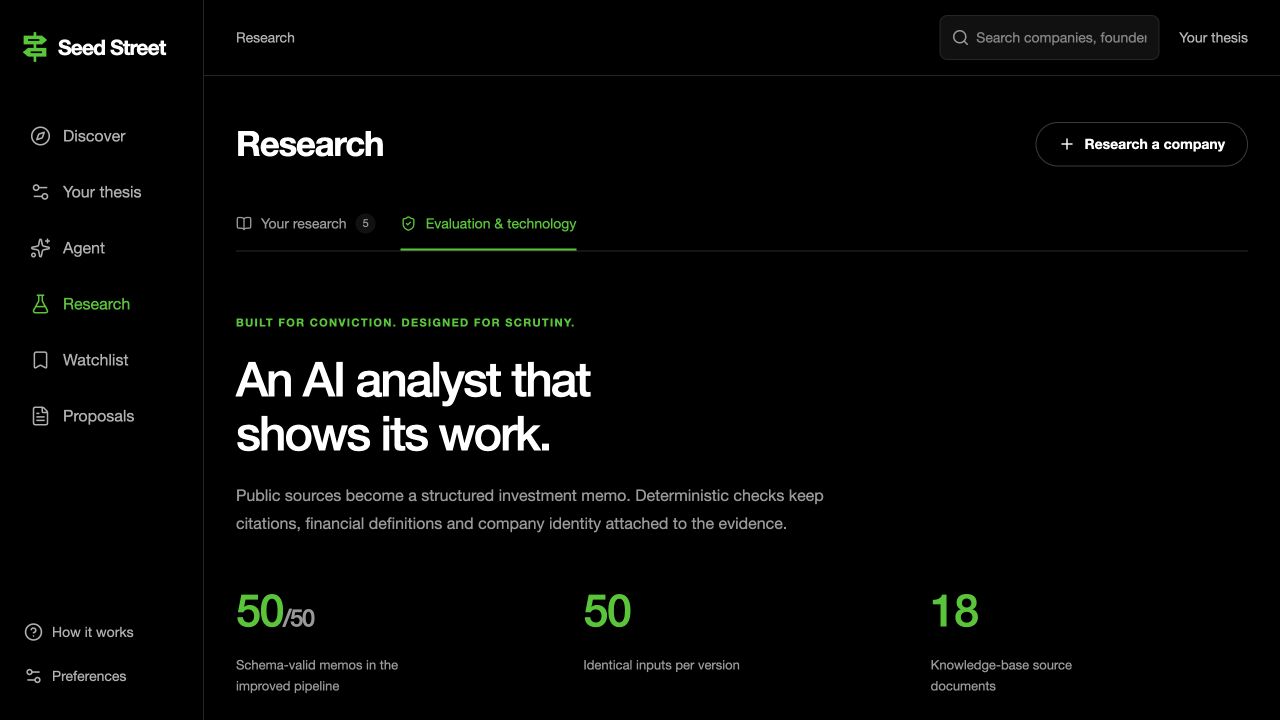
An AI analyst that shows its work: saved Nicrron experiments, PRISM tracing and a transparent evaluation methodology.
-
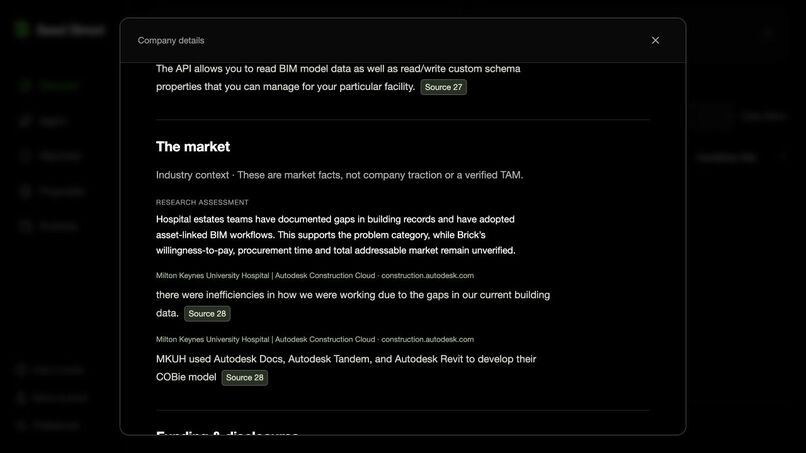
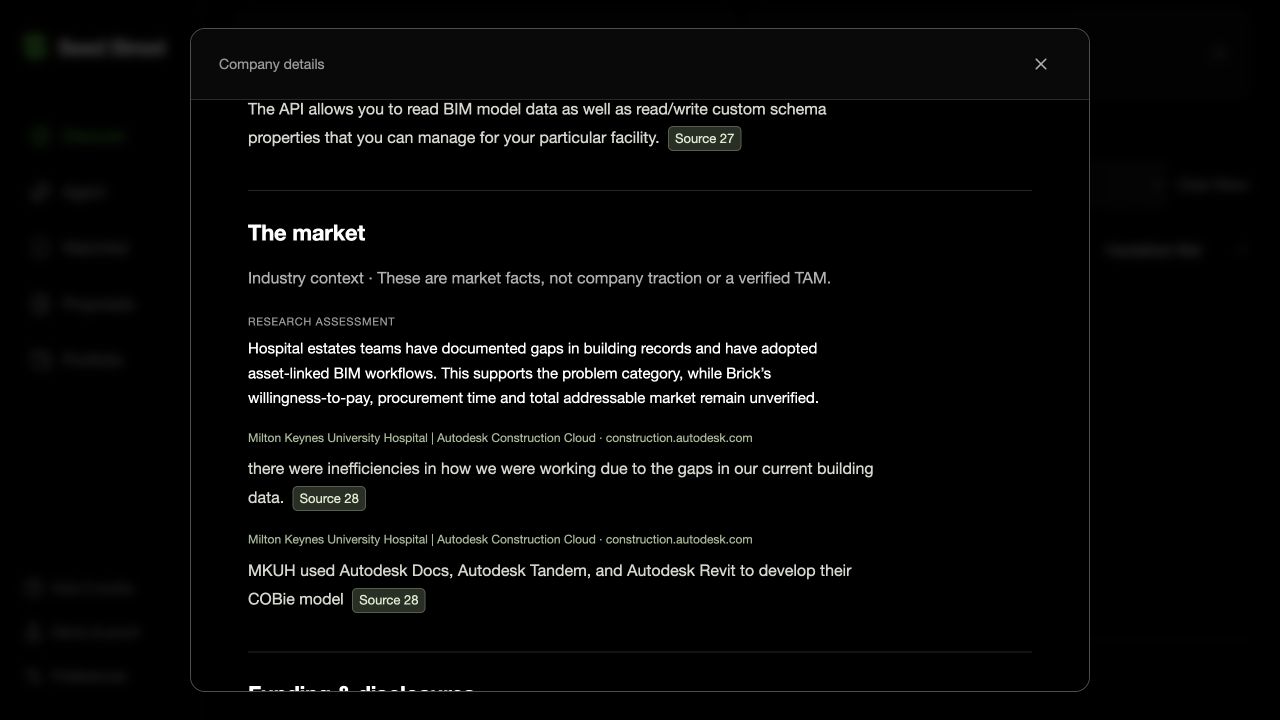
Go beyond the pitch: market research grounded in original sources, dated evidence and product context.
-
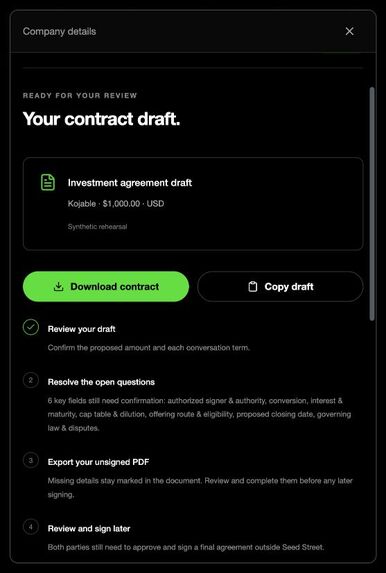
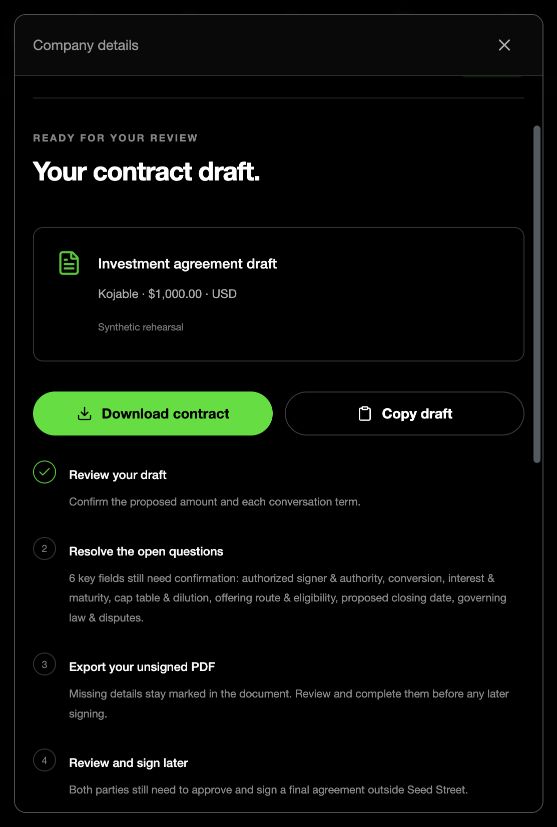
Turn an investor proposal into an editable, unsigned contract draft ready to download as a PDF.
-
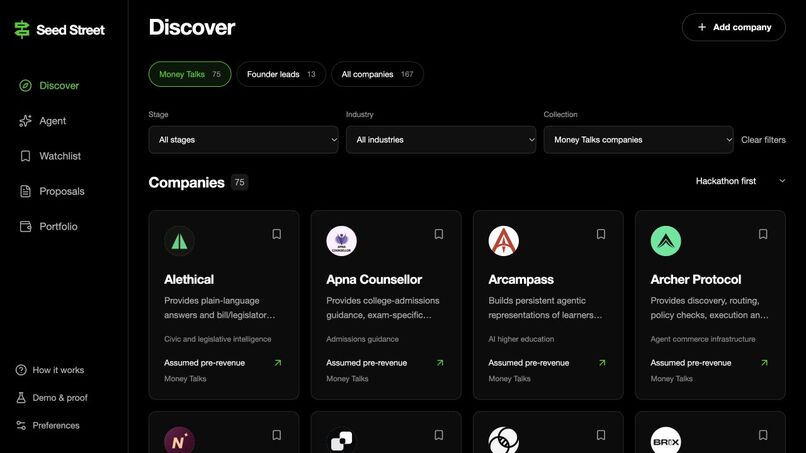
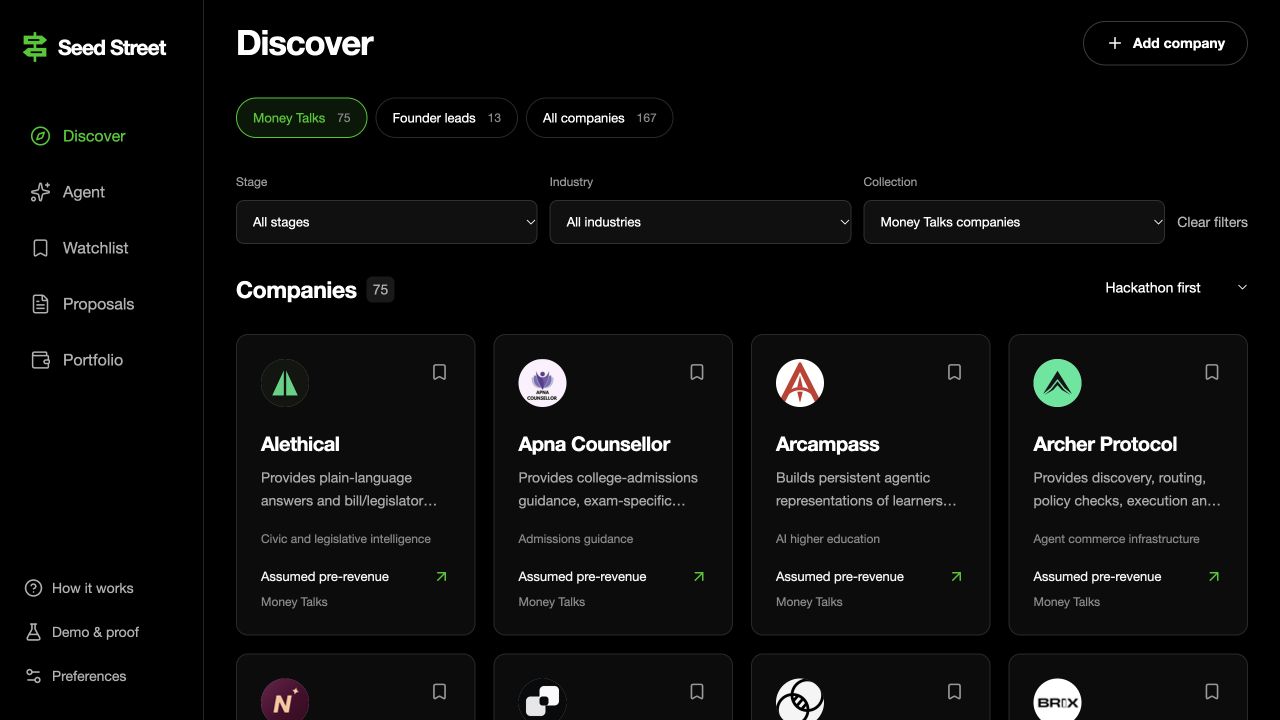
Discover startup companies, explore their products and build a watchlist around your investment thesis.
-
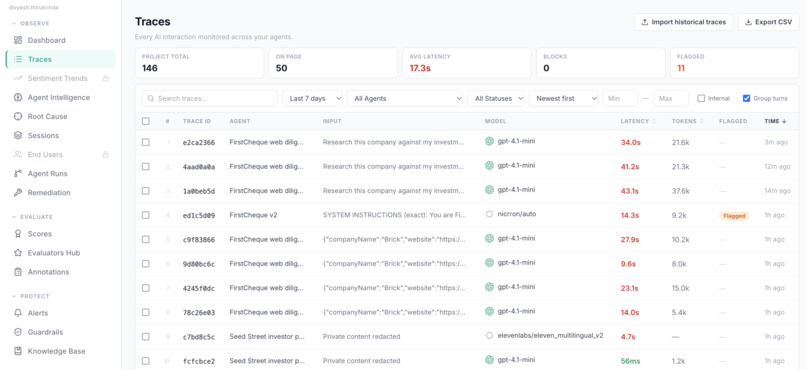
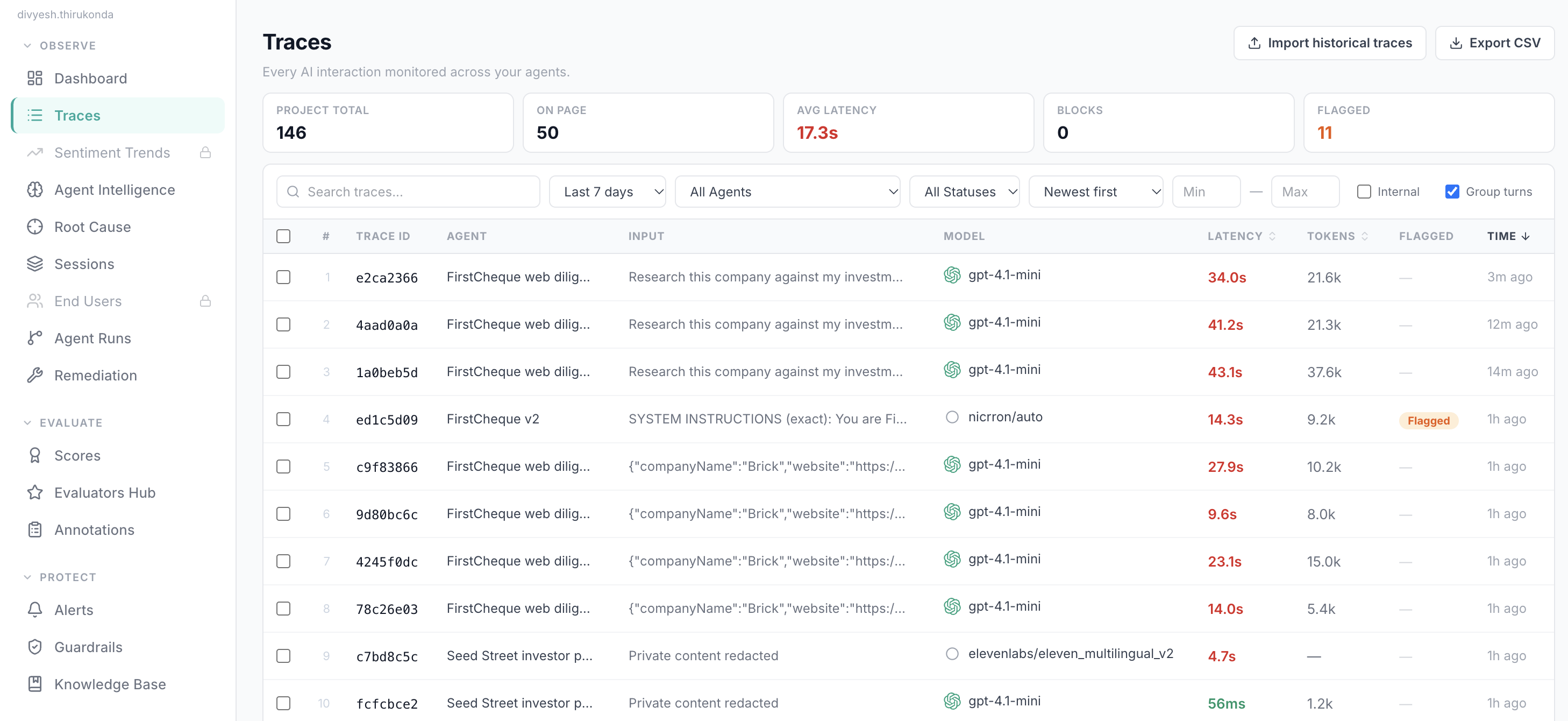
PRISM tracks model calls, latency, and flagged traces.
-
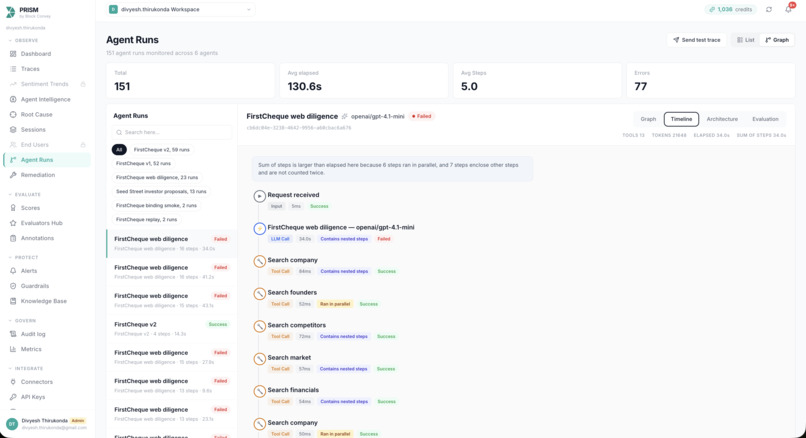
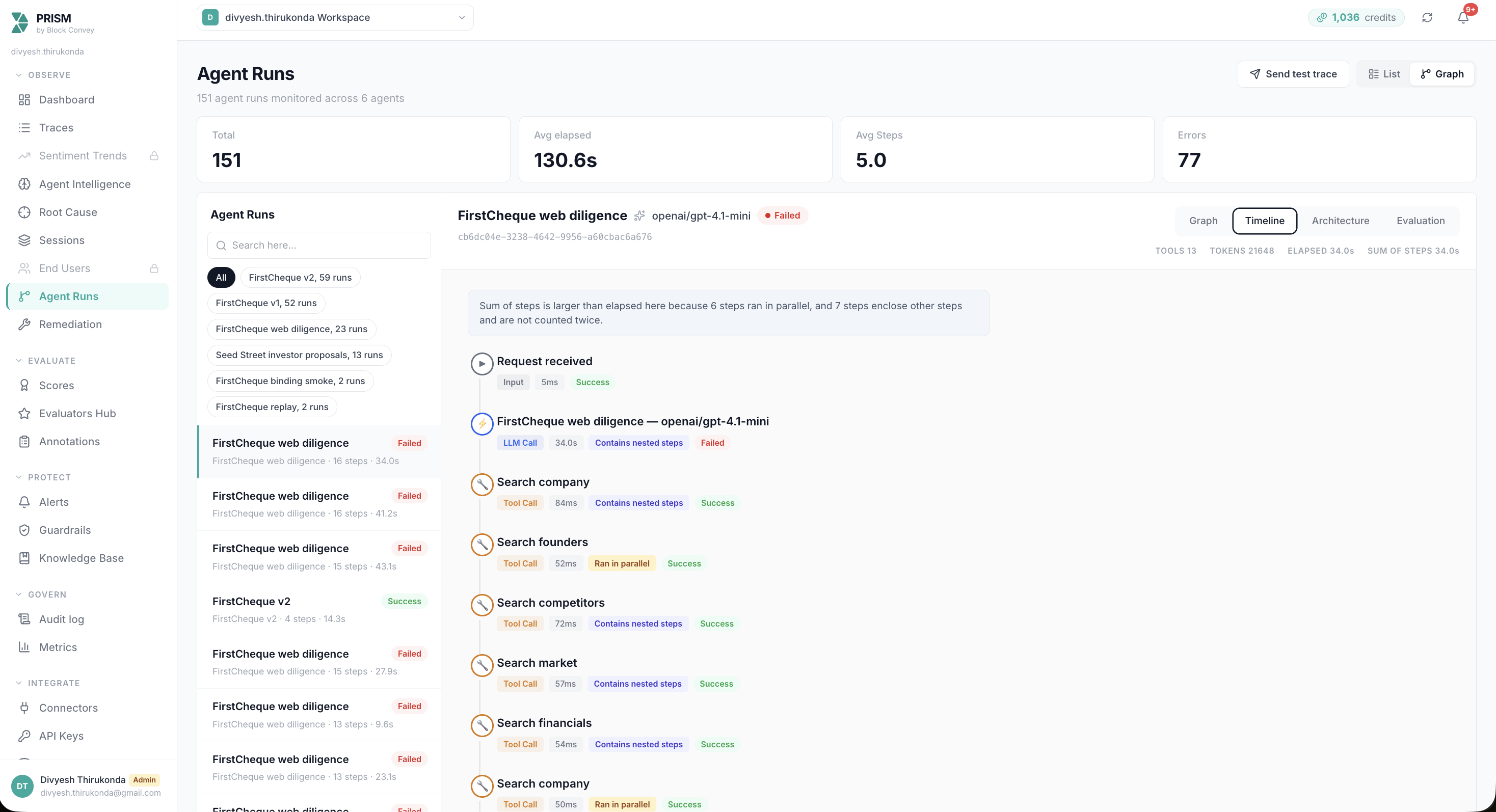
Agent timeline visualizes research steps and execution status.
-
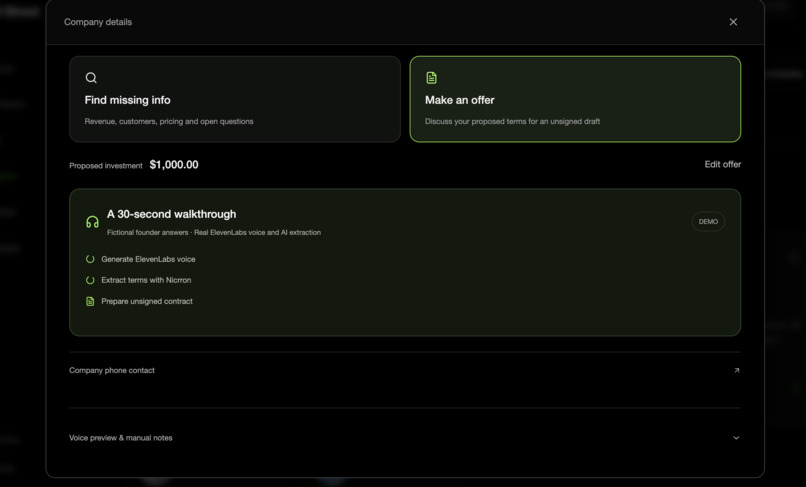
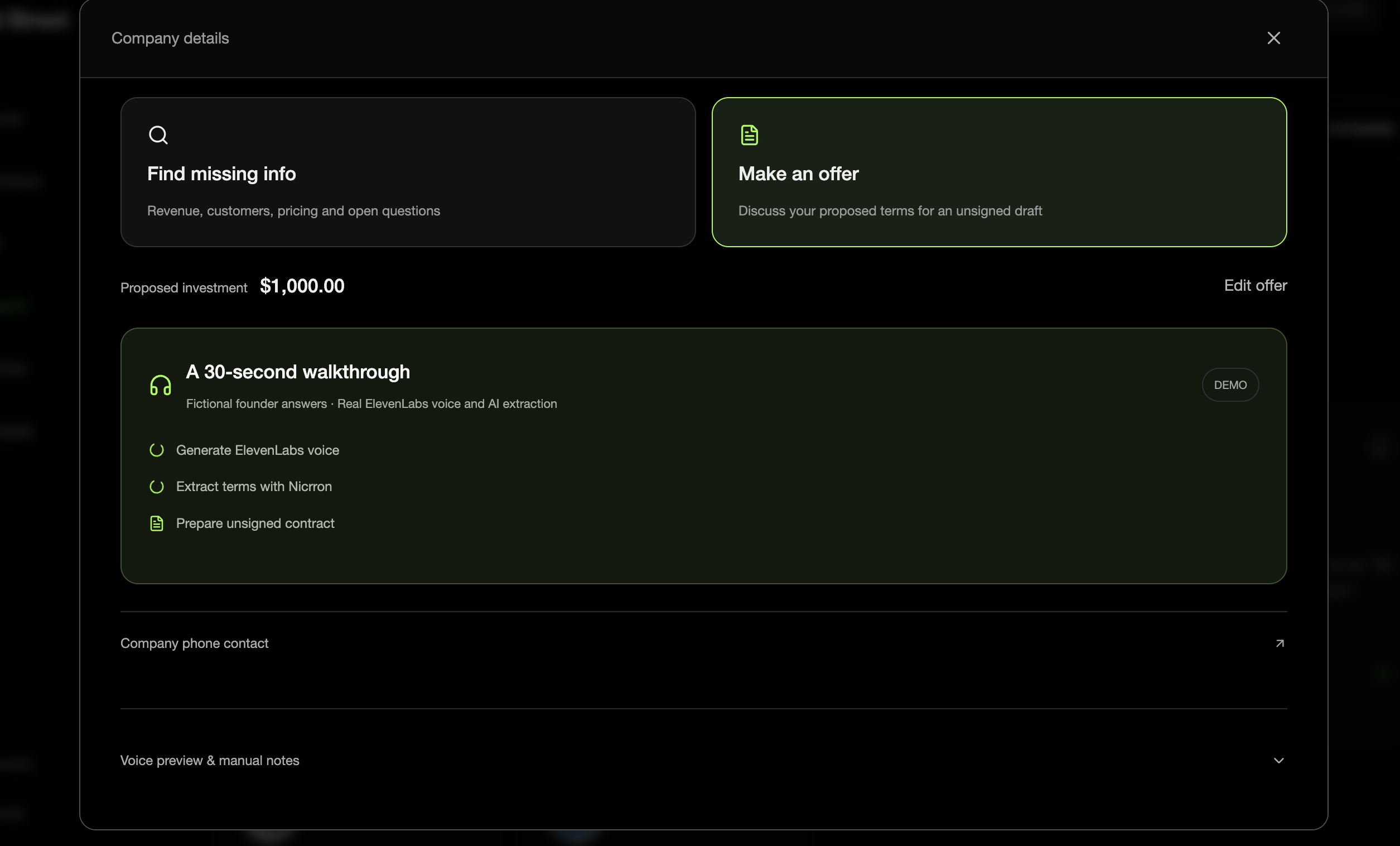
Voice demo extracts investment terms and drafts unsigned contracts.
Inspiration
The public markets gave everyday people a seat at the table. Early-stage startup investing still asks them to arrive with a venture firm's network, research team and vocabulary.
Seed Street is our answer: your thesis, your AI research team, your path from curiosity to conviction. Our mission is to democratize startup investing by making the research and preparation accessible before the first cheque is ever written.
What it does
Seed Street combines the familiarity of a brokerage watchlist with an agent workspace built for private-company research.
1. Start with your thesis. Set your budget, preferred industries, company stages, risk appetite, time horizon and revenue requirements. Searches stay organized around an investment question, not a pile of disconnected chats.
2. Discover your next company. Explore a sourced startup catalog, browse companies from the Money Talks community, or paste any startup website. Filter by the facts that matter to you and save companies to your watchlist.
3. Go deeper than the pitch. The research pipeline reads company pages and disclosures, follows product and integration links, plans targeted follow-up searches, and synthesizes company, team, competition, market, financial and risk evidence. Each report keeps original passages, source links and freshness dates available for inspection. It distinguishes a competing product from an integration partner and company traction from broader market evidence.
4. Turn conviction into a concrete next step. Prepare an editable offer, identify missing information, and use our ElevenLabs voice-assisted demonstration to turn founder answers into structured terms and an unsigned contract PDF. The investor reviews the proposal and downloads a draft pending signatures. Seed Street does not move money, issue equity or sign agreements.
Why it is different
A pitch deck tells you what a company wants you to believe. Seed Street gives you a research workspace to decide what you believe.
The thesis follows the investor from discovery into research. The agent investigates the product category, rather than stopping at an obscure company name. Financial checks distinguish ARR from total revenue and keep mock scenarios out of real-company financials. Evidence stays inspectable. Research becomes an actionable, editable proposal instead of another wall of AI text.
For example, researching Brick leads beyond its landing page to its investor disclosures, Autodesk Tandem integration, original Autodesk API documentation and a hospital case study. The result explains the surrounding workflow and the questions that matter for differentiation and adoption.
How we built it
- Next.js, React, TypeScript and Tailwind CSS power the investor workspace, company tiles, search threads, thesis controls and readable reports.
- Nicrron + Vercel AI SDK power live research planning, evidence synthesis and structured proposal extraction.
- PRISM traces retrieval, model calls and validation. We also built and ran a paired evaluation on fifty fixed inputs per version, backed by an eighteen-document synthetic knowledge base.
- Public-page retrieval and search discovery supply live evidence. Company identity, literal source passages and financial definitions are checked before promotion into a report or shared company profile.
- Vercel Blob persists the shared research library; investor preferences and proposal drafts stay local to the browser.
- ElevenLabs generates the voice experience for the founder-conversation demonstration. pdf-lib produces the exportable, contract draft.
What we learned and improved
The most useful research agent does more than retrieve: it asks the next question, follows the next source and knows which evidence supports which conclusion.
We tested the memo pipeline on the same fifty saved inputs, including ordinary and adversarial cases. Independent application-schema validation improved from 48/50 to 50/50 schema-valid memos, with one retained correction request in the improved run. These are recorded Nicrron model runs on a synthetic benchmark, not a claim of perfect factual accuracy. The Research tab exposes the saved results and methodology without rerunning the experiment.
Tracing also helped us improve how final answers and retrieval spans are connected, making the agent's work easier to inspect. We applied the same evidence-first thinking to live research: product-led follow-ups, original-source documentation and explicit separation of company facts from market context.
What is next
Deeper company coverage, richer comparisons and consent-based founder information collection. Longer term, Seed Street can connect investor conviction to eligible offerings through appropriate regulated partners.
Venture insight should not require a venture fund. Seed Street makes the first step accessible.
Built With
- elevenlabs
- nextjs
- nicrron
- prism
- react
- typescript

Log in or sign up for Devpost to join the conversation.