-
-

Download to Excel or Google SHeets
-
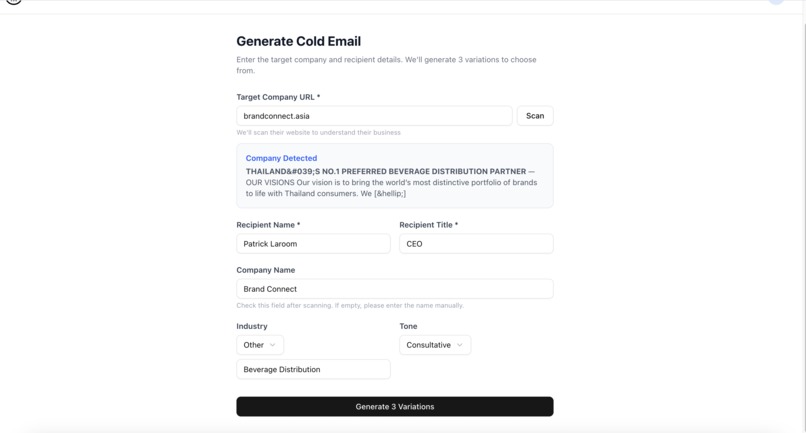
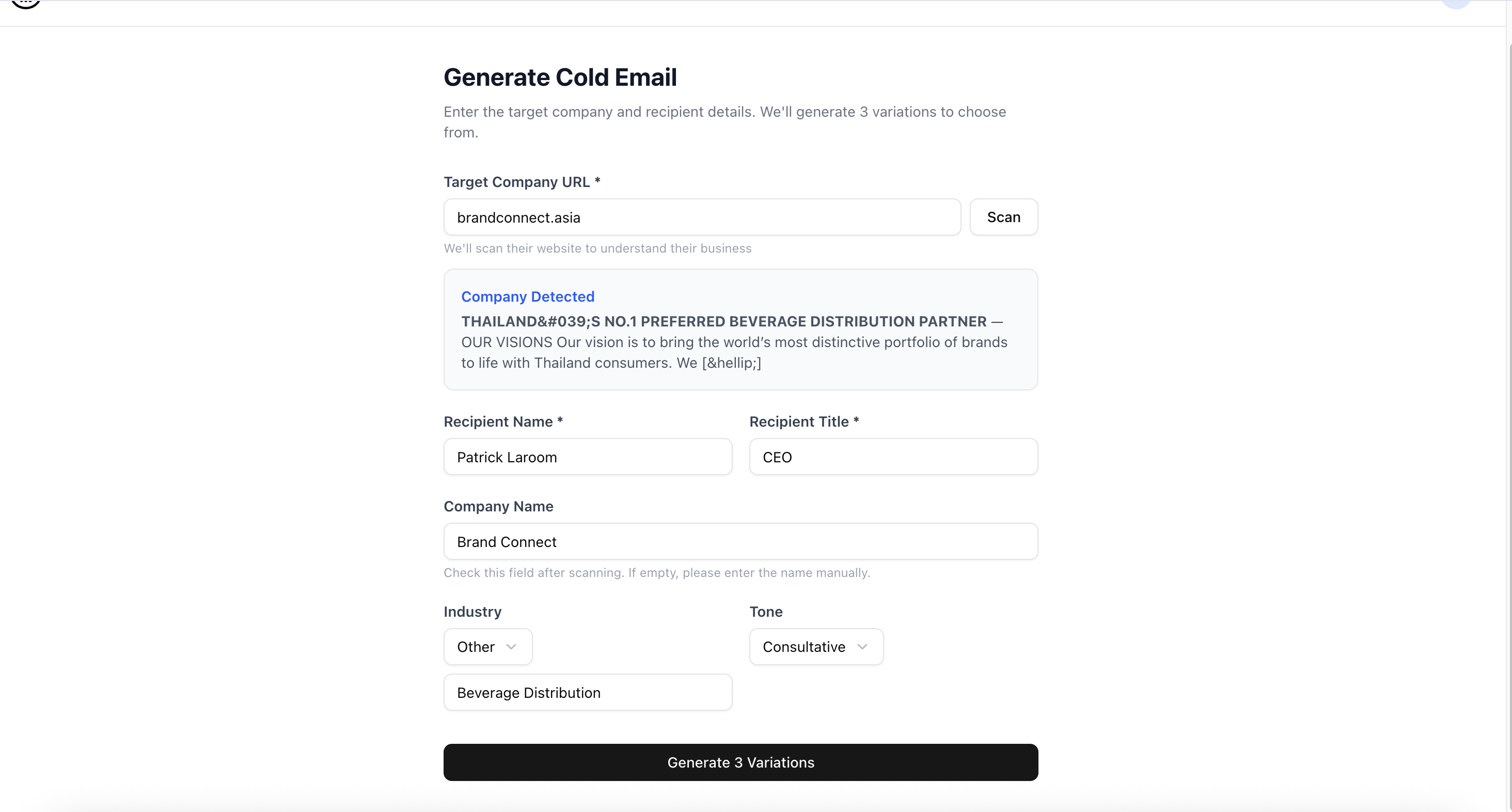
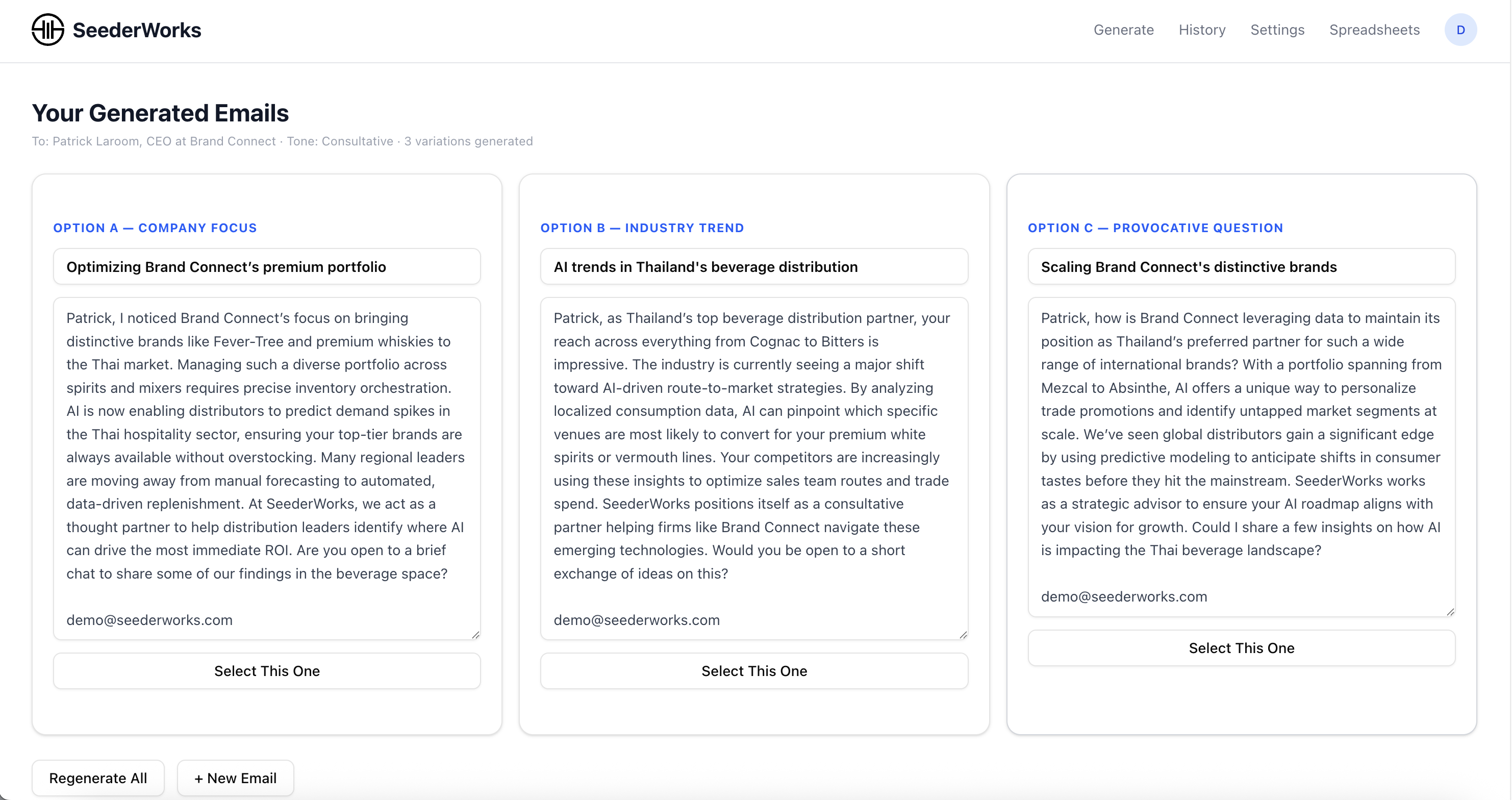
Generate emails by typing in URL of prospect
-
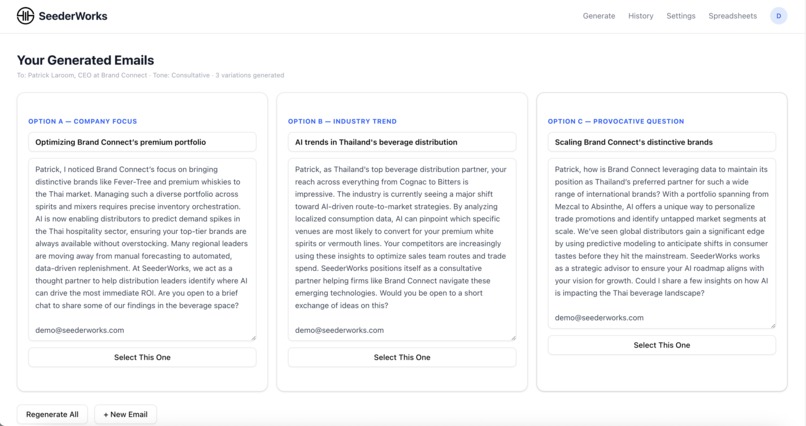
3 options generated
-
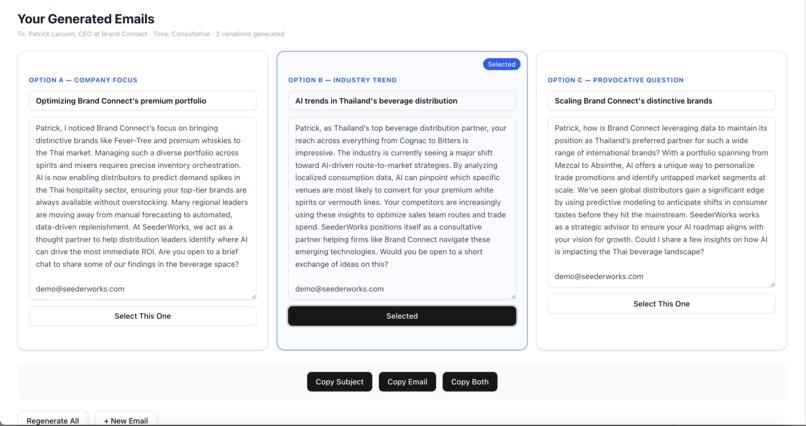
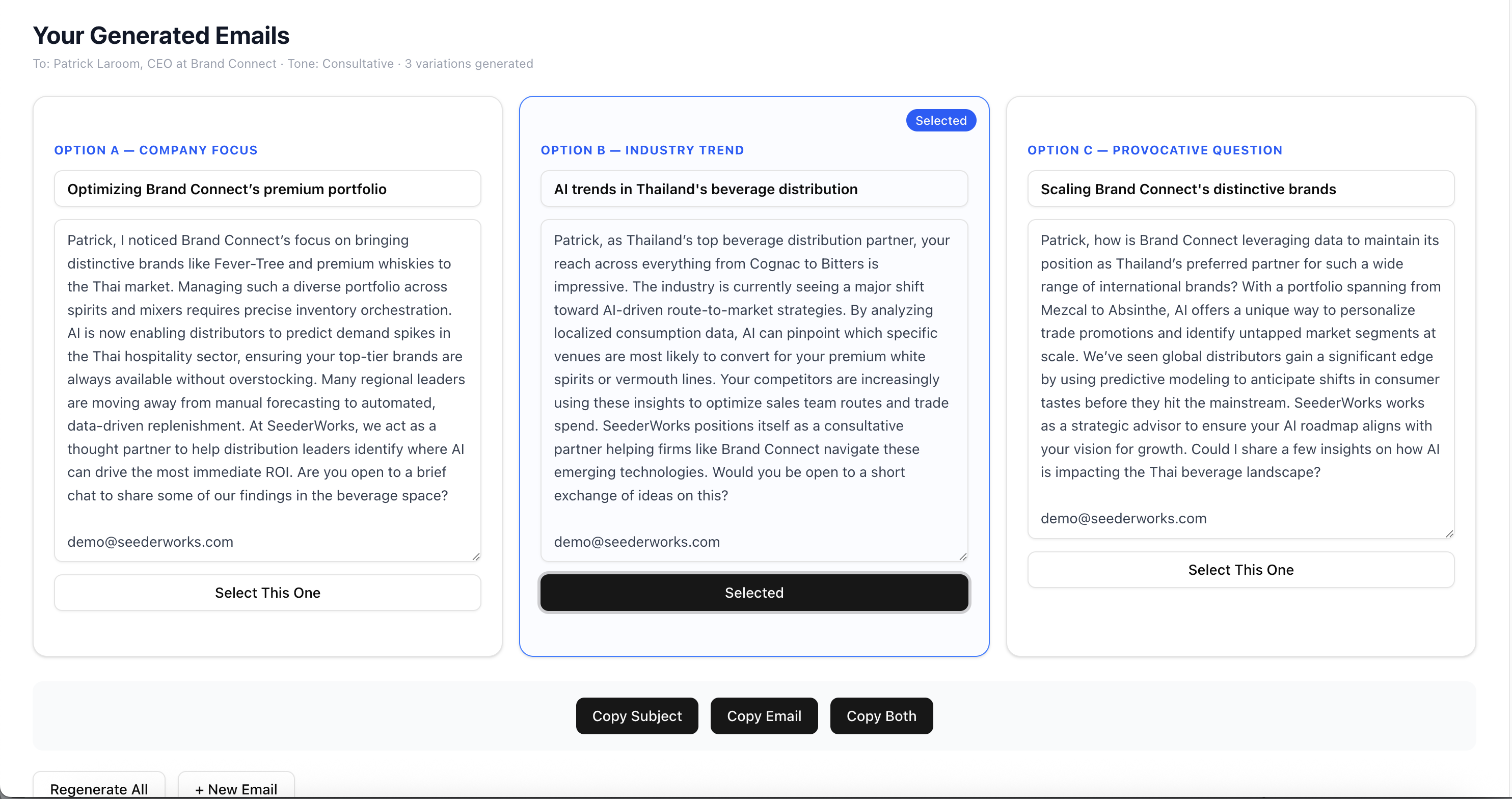
Copy and Paste into your email service

Inspiration
The inspiration for Seeder Email Studio came from watching B2B sales teams spend 15-20 minutes per prospect—researching companies, crafting personalized emails, and repeating this process dozens of times daily. We saw an opportunity to leverage Gemini 3 to automate this research and writing process, enabling users to generate high-quality, personalized cold emails at scale while maintaining the human touch that makes outreach effective.
What it does
Seeder Email Studio is an AI-powered platform that transforms cold outreach from a manual process into an intelligent pipeline:
- Input: Users enter a prospect's name, title, company URL, and select a tone ( consultative, direct, casual, or formal).
- Research: The platform scrapes the company website and uses Google Search grounding to gather context about the company, industry, and recent developments.
- Generate: Gemini 3 Flash Preview generates three distinct email variations using a structured six-part framework: personal opener, value bridge, competitive context, positioning, and call-to-action. Each variation uses a different lead strategy (company observation, industry trend, or provocative question).
- Select & Copy: Users review the three variations, each with its own subject line and personalized body, and copy their preferred version with one click.
- History: Every generation is saved with a full audit trail for future reference.
How we built it
The project uses a modern, production-ready stack:
- Frontend: Next.js with TypeScript, styled with Tailwind CSS and shadcn/ui components
- Backend: Next.js API routes handle the AI pipeline
- Database & Auth: Supabase (PostgreSQL + Row Level Security)
- AI: Google GenAI SDK with Gemini 3 Flash Preview for structured JSON output and Google Search grounding for real-time research
- Scraping: Custom web scraping pipeline to extract company context
The generation pipeline is multi-step: scrape → contextualize → generate → store. We use structured prompts with configurable temperature settings to ensure consistent, high-quality output across different tones.
Challenges we ran into
- Web Scraping Reliability: Extracting meaningful context from diverse website structures required robust parsing logic and fallback strategies.
- Prompt Engineering: Designing a six-part email framework that produces consistently personalized results across industries took extensive iteration. We had to balance structure with flexibility.
- Gemini 3 Integration: Learning to leverage structured output modes and Google Search grounding effectively required experimentation with different prompt strategies and temperature settings.
- Variation Quality: Ensuring all three generated variations felt distinct yet equally valuable required careful prompt design and testing across different company types.
Accomplishments that we're proud of
- Real Personalization: Our emails reference actual company details, not generic templates. Judges can test with any real company URL and see genuine personalization.
- Speed: Reducing 15-20 minutes of manual work to under 10 seconds while maintaining quality.
- Production-Ready Architecture: Full authentication, role-based access control, admin dashboard, and audit logging—not just a demo.
- Gemini 3 Feature Utilization: Successfully leveraging both structured output and Google Search grounding to create a true AI pipeline, not just a prompt wrapper.
What we learned
- AI as Augmentation: Gemini 3 excels at generating options, but giving users three variations to choose from respects their judgment while saving time.
- Context is Everything: The quality of scraped company data directly impacts email personalization. Investing in robust research pipelines pays off.
- Structured Prompts > Simple Prompts: Our six-part framework produces far better results than "write a cold email." Gemini 3's structured output mode made this reliable.
- Temperature Matters: Different tones (consultative vs. direct) require different temperature settings. We made this configurable per-generation.
- Real-Time Grounding: Google Search grounding adds current context that static scraping misses—recent news, industry trends, competitive moves.
What's next for Seeder Email Studio
- CRM Integrations: Direct export to Salesforce, HubSpot, and other CRMs
- LinkedIn Integration: Pull prospect data and company insights from LinkedIn profiles
- A/B Testing: Track which email variations perform best and learn from results
- Multi-Language Support: Generate emails in the prospect's native language
- Team Collaboration: Shared templates, approval workflows, and team analytics
- Email Sending: Direct integration with email providers for one-click sending and tracking
Built With
- cloudflare
- google-gemini-3-flash-preview
- google-genai-sdk
- google-search-api
- next.js
- postgresql
- react
- shadcn/ui
- supabase
- tailwind-css
- typescript
- vercel

Log in or sign up for Devpost to join the conversation.