-
-
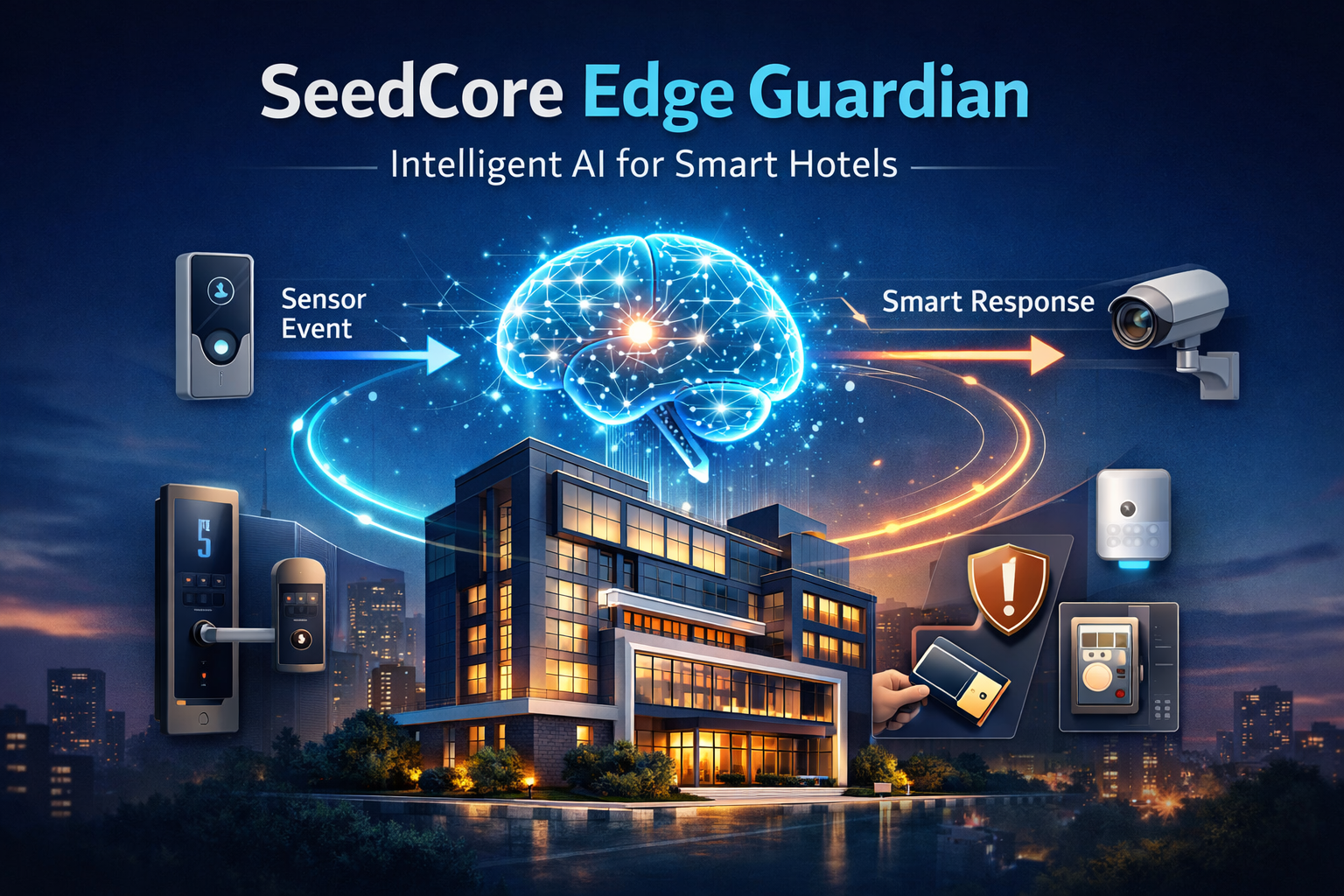
HERO IMAGE
-
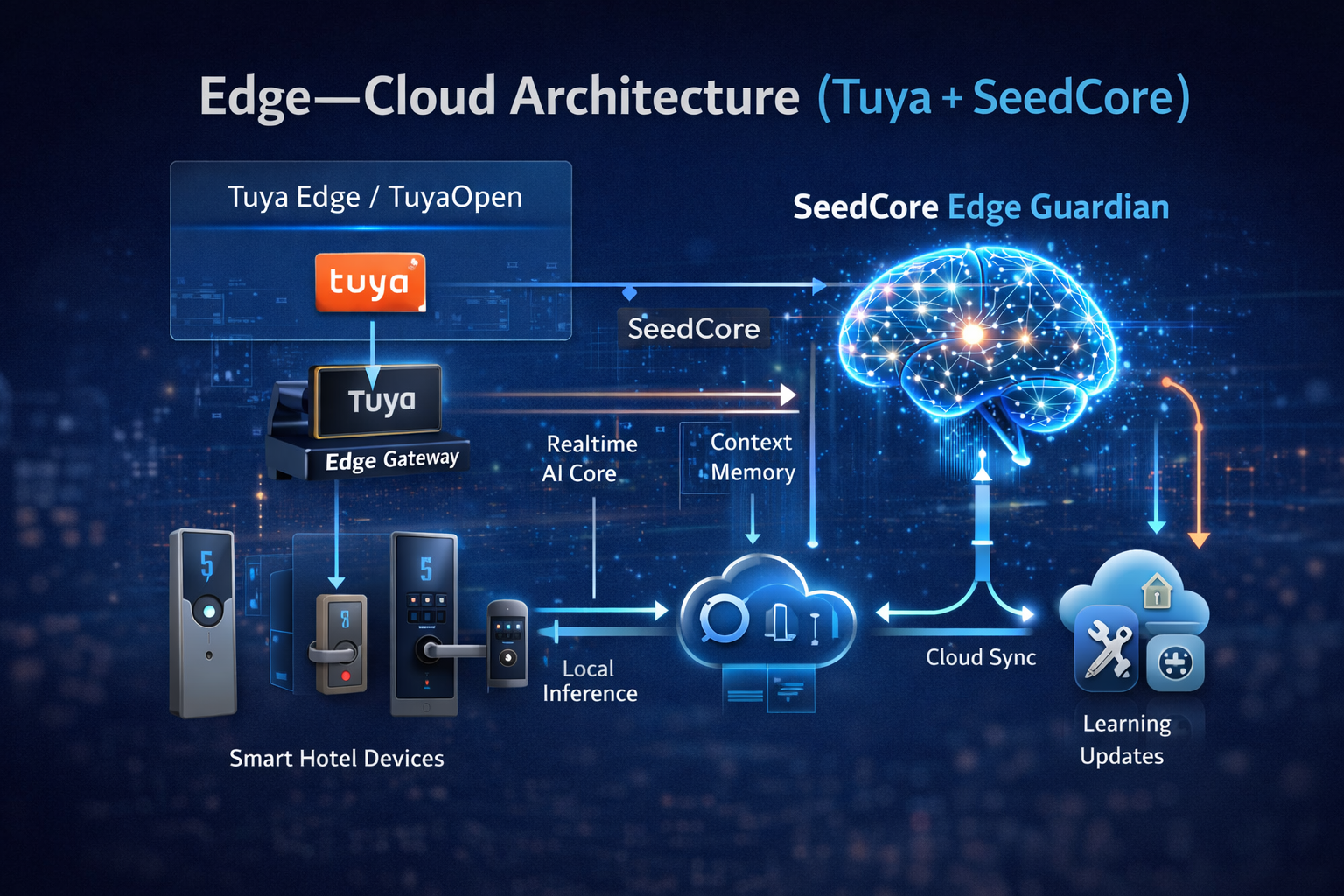
SYSTEM ARCHITECTURE
-
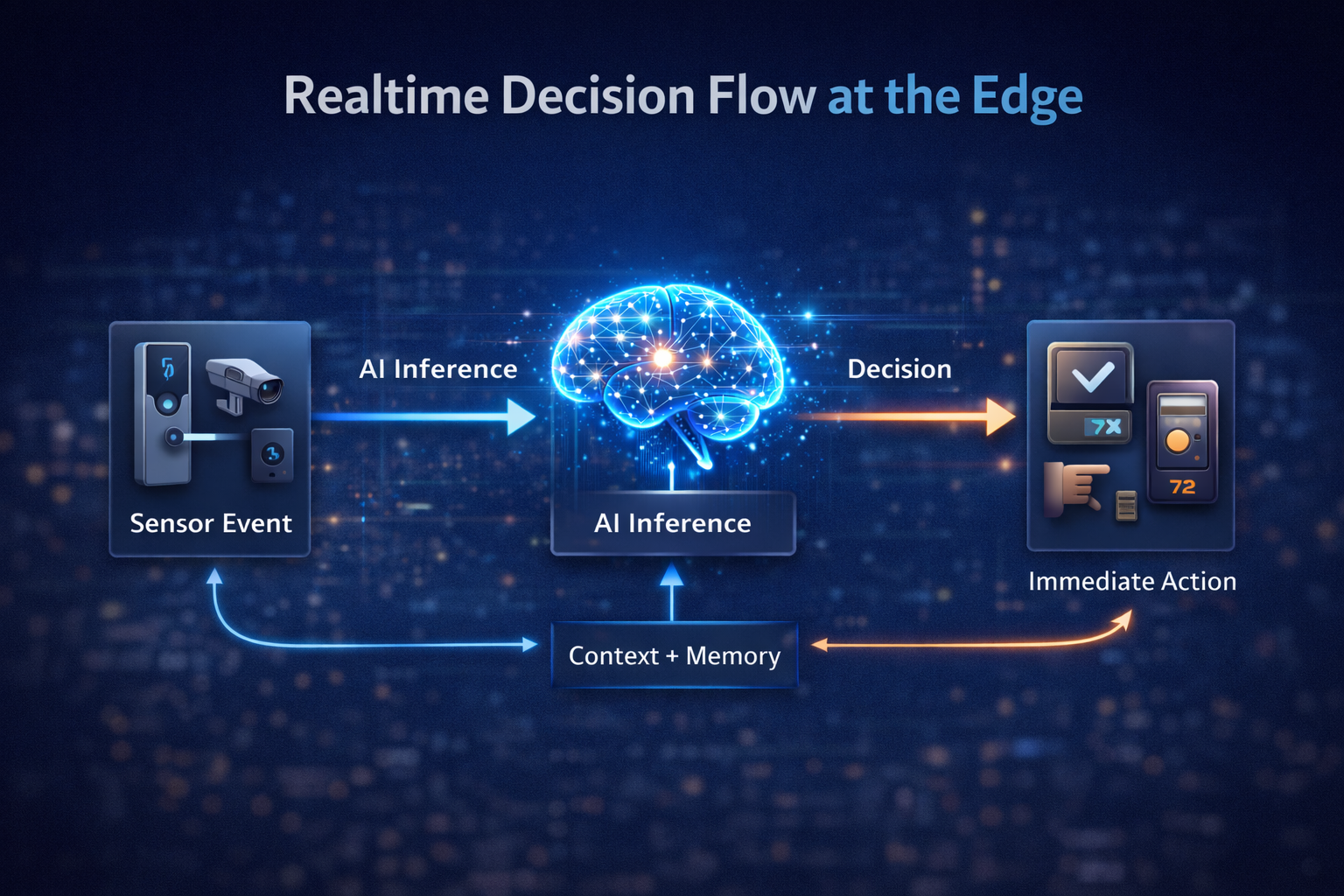
RUNTIME FLOW
-
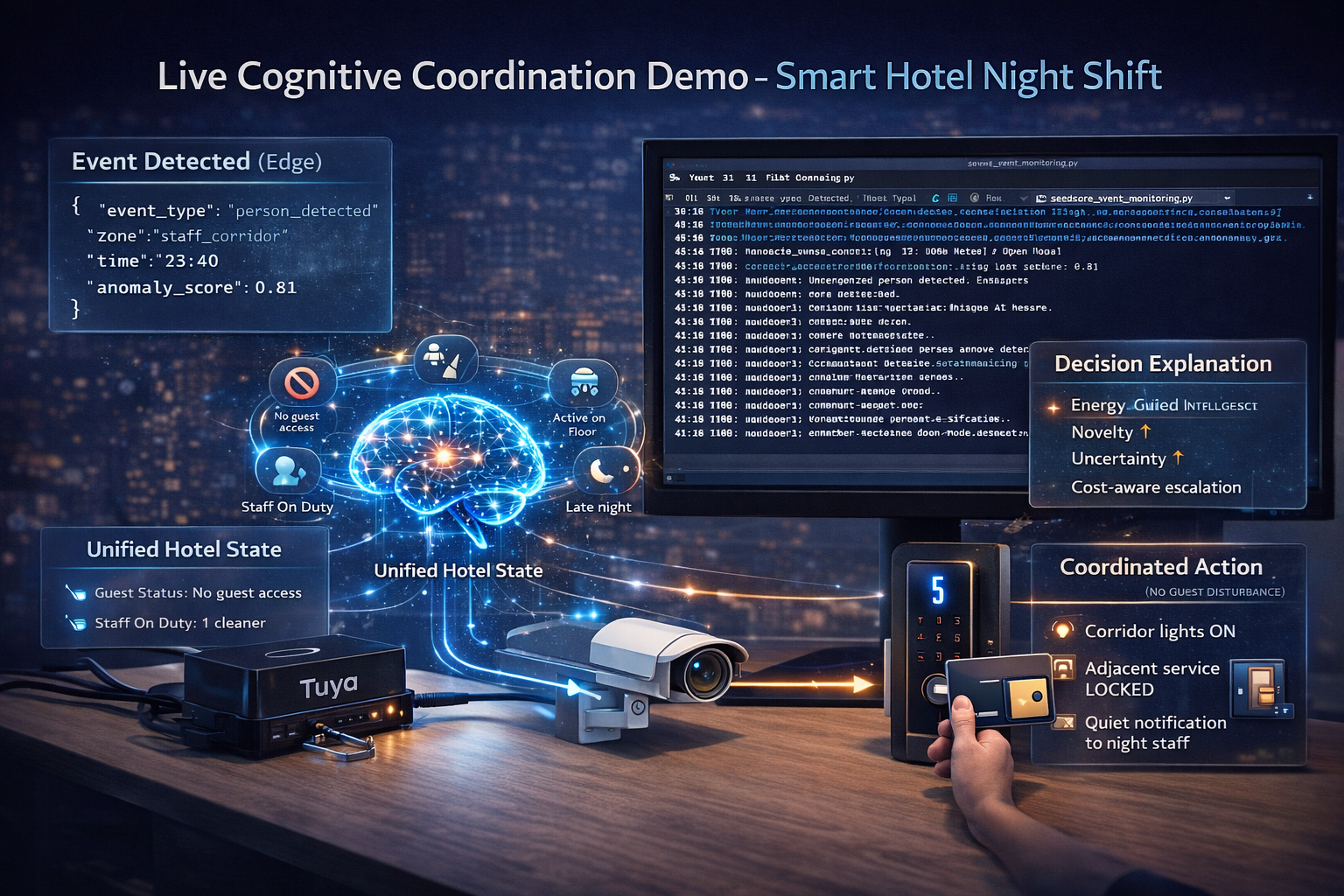
DEMO
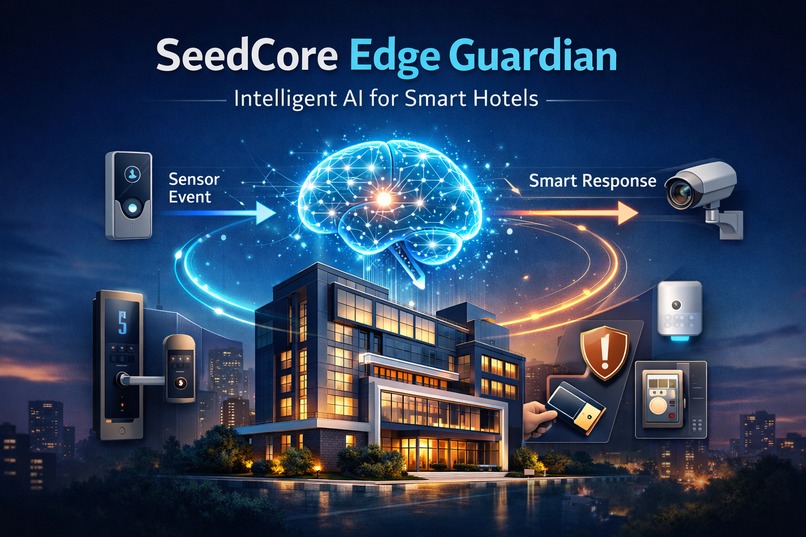
SeedCore Edge Guardian A Cognitive Coordination Layer for Autonomous Smart Hotels Hackathon Track: Tuya × AWS Hardware: Tuya T5 AI Dev Board Cloud Stack: AWS (EKS, IoT Core, DynamoDB, Ray) Scenario Focus: Smart Hotel Operations Core Innovation: Unified State + Energy-Guided Intelligence
- Inspiration Modern hotels are rapidly becoming autonomous environments. A single hotel now operates with: Hundreds of smart locks, cameras, lights, and HVAC units Service robots and automated cleaning systems AI concierges and cloud-based management software Guests, staff, vendors, and delivery services—all with time-bound access The challenge is no longer connecting devices; it is coordinating behavior across many entities—often with minimal human supervision. Today’s hotel automation is still rule-based and device-centric: Each system reacts independently Context is fragmented across vendors False alerts disrupt guests and staff Privacy and accountability are hard to manage SeedCore Edge Guardian was built to solve this coordination problem at the system level.
- What SeedCore Does (Uniquely) SeedCore Edge Guardian is not a traditional security system and not a rule engine. It is a cognitive coordination layer that: Consolidates signals from hotel devices into a Unified State Reasons across guests, staff, robots, rooms, and zones Uses an Energy Function to decide how much intelligence is needed Produces explainable, system-level decisions, not raw alerts Instead of asking, “Did a sensor trigger?” SeedCore asks, “What is happening in the hotel right now, and how should the system respond?”
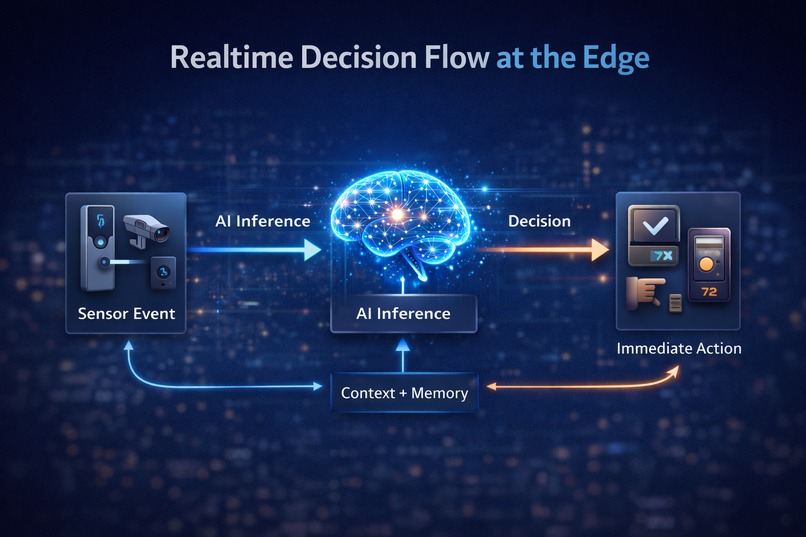
- Core SeedCore Concepts (Hotel-Relevant) Unified State (SeedCore-Specific) SeedCore maintains a hotel-wide state combining: Guest check-in / check-out status Staff roles and shift schedules Robot assignments and locations Room states and zone permissions Time, mode, and recent activity This allows decisions to be made at the hotel level, not per device. Energy-Guided Intelligence SeedCore computes an internal energy score based on: Novelty (is this unusual for this zone and role?) Uncertainty Cost and latency sensitivity Low-energy situations stay on the fast execution path. High-energy situations escalate to deeper cloud reasoning. This keeps the system: Responsive Cost-controlled Privacy-aware Task Graphs & Organ Graphs Task-level graphs: model workflows like “entry handling” or “room access” Organ-level graphs: represent persistent responsibilities (lobby monitoring, corridor access, housekeeping coordination) This makes the system extensible without rewriting logic.
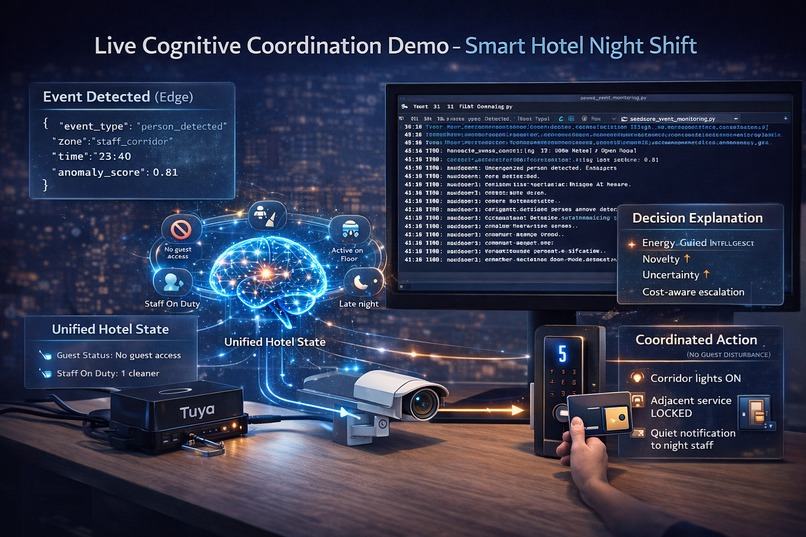
- Flagship Demo Scenario — Smart Hotel Night Shift Scenario: “Is This Activity Normal?” Environment Tuya T5 devices in the lobby and corridor Smart door locks Lighting and notification systems Cloud-based hotel management system Step 1: Edge Detection (Tuya T5) At 23:40, a Tuya T5 camera detects a person entering a staff-only corridor. The edge device: Performs lightweight inference (“person detected”) Generates a structured event with an anomaly score Does not make a decision { "event_type": "person_detected", "zone": "staff_corridor", "timestamp": "23:40", "anomaly_score": 0.81 } Step 2: Unified State Reasoning (AWS Cloud Cortex) SeedCore evaluates the event using hotel-wide context: Time: late night Zone: staff-only Staff schedule: one cleaner on duty Robot activity: cleaning robot active on the same floor Guest status: no guest access allowed The Control Plane computes high novelty → escalates reasoning. Step 3: Explainable Decision SeedCore produces an explanation: “Unrecognized person detected in staff-only corridor outside scheduled access. No matching staff role or robot assignment found.” This explanation is logged and visible to operators. Step 4: Coordinated Action (Tuya DP Updates) SeedCore issues coordinated actions: Turn on corridor lights Lock adjacent service doors Notify night staff quietly via the dashboard No alarms. No guest disturbance. Just coordinated intelligence.
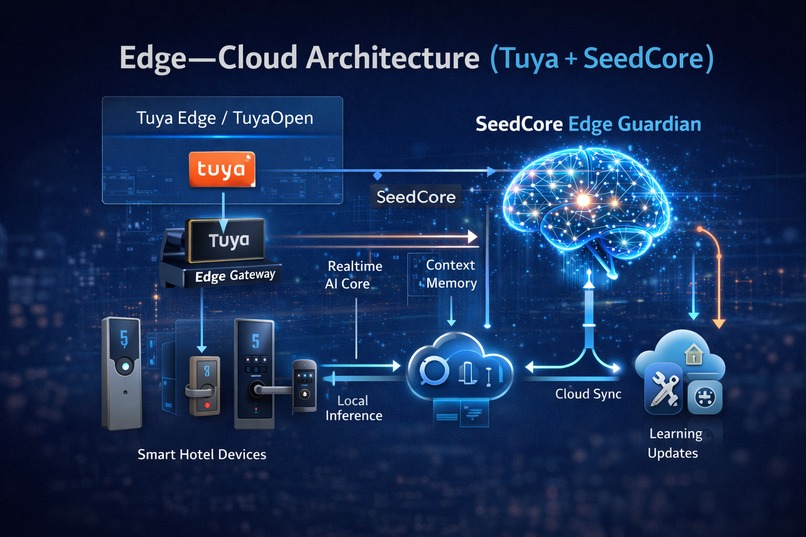
- Why Tuya + AWS Is Essential Tuya Real-world edge hardware (T5) suitable for hotels Fast integration with locks, lighting, HVAC DP-based control for coordinated actions AWS Kubernetes (EKS) for scalable coordination Ray for distributed tasks and reasoning IoT Core for secure messaging DynamoDB for unified state and audit trails Tuya provides perception and actuation. AWS provides system-level cognition.
- Why This Is Different (Judge Summary)
- Hackathon Roadmap Phase 1: Cloud simulation with unified state and explanations Phase 2: Tuya T5 live hotel corridor demo Phase 3: Energy routing + operator dashboard Each phase is independently demoable.
- Market & Future Expansion The same coordination layer extends naturally to: Smart apartments Autonomous hotels Mixed-use buildings Smart campuses Hotels are the ideal starting point because they expose the full coordination problem.
- Closing Statement SeedCore Edge Guardian demonstrates how Tuya edge intelligence and AWS cloud scalability can work together to enable autonomous hotels that understand situations, not just sensors. SeedCore doesn’t add more rules. It adds coordinated intelligence.

Log in or sign up for Devpost to join the conversation.