-
-
SEED Documentation
-
SEED User Interface
Inspiration
SEED was born from the need to enhance and streamline my own research and innovation workflow. I wanted a tool that didn’t just wait for questions, but actively thought alongside me, exploring tangents, surfacing connections, and revealing answers I didn’t yet know to ask for.
What it does
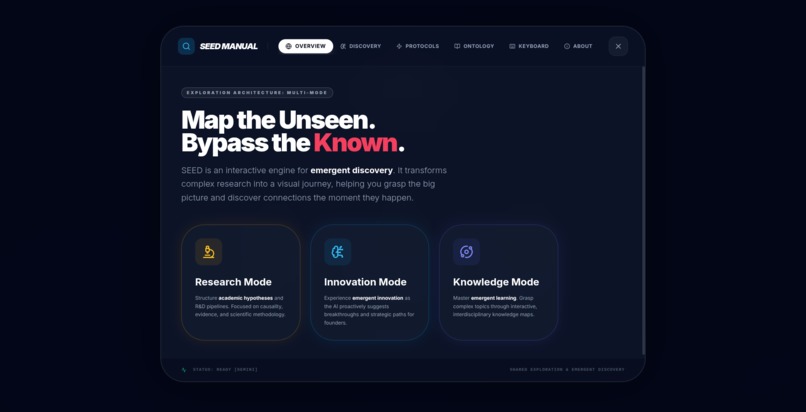
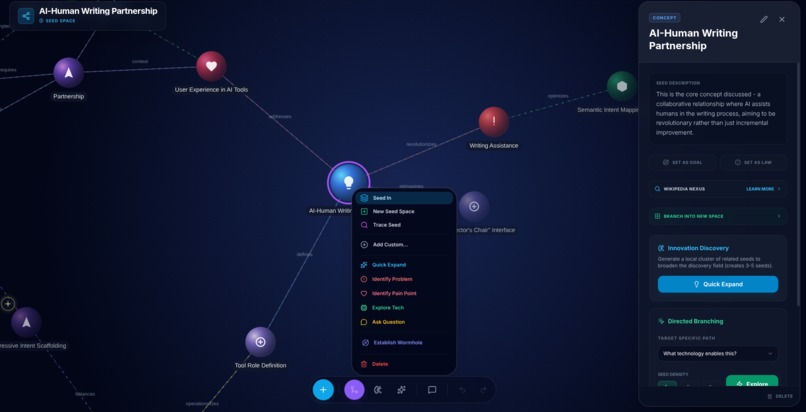
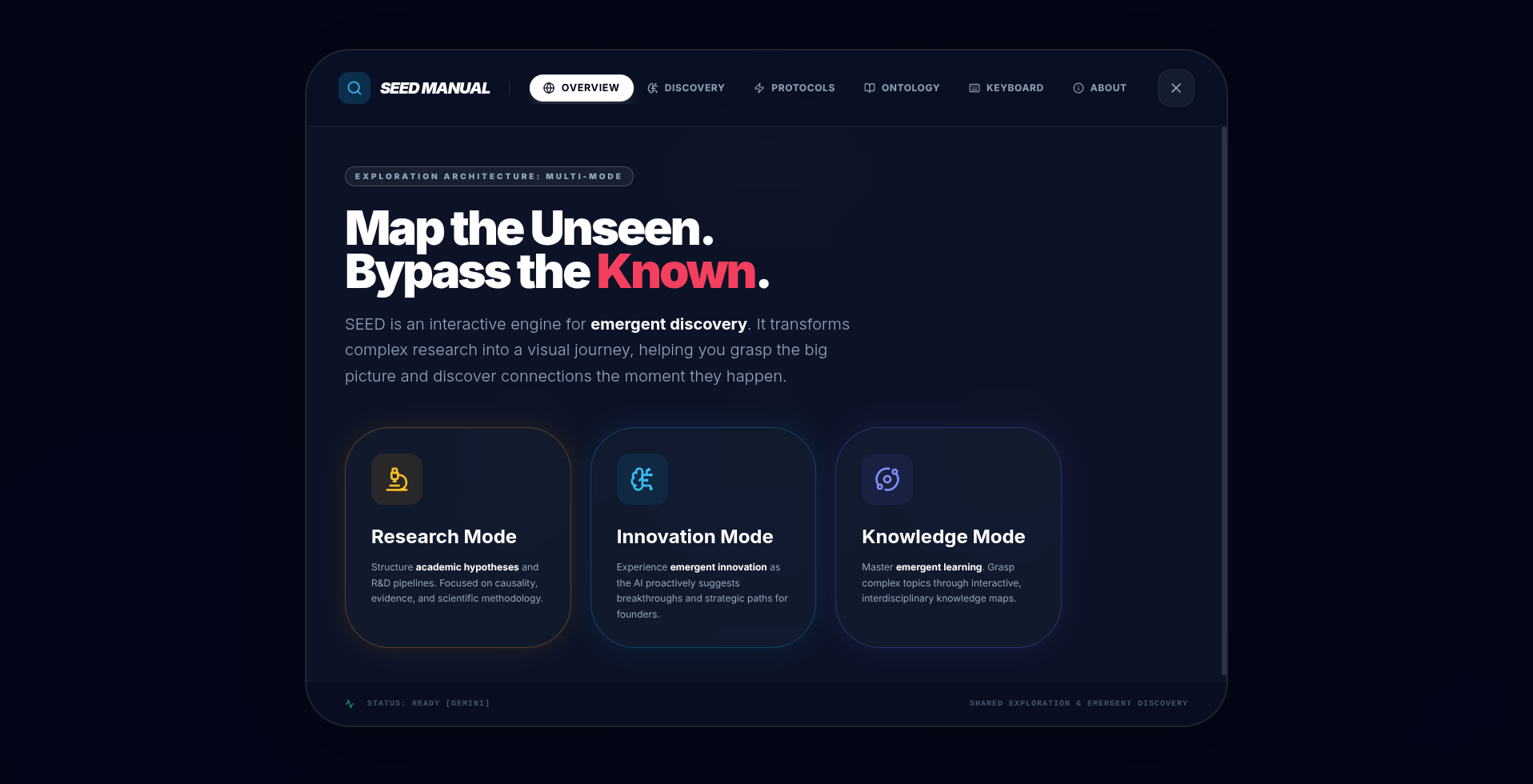
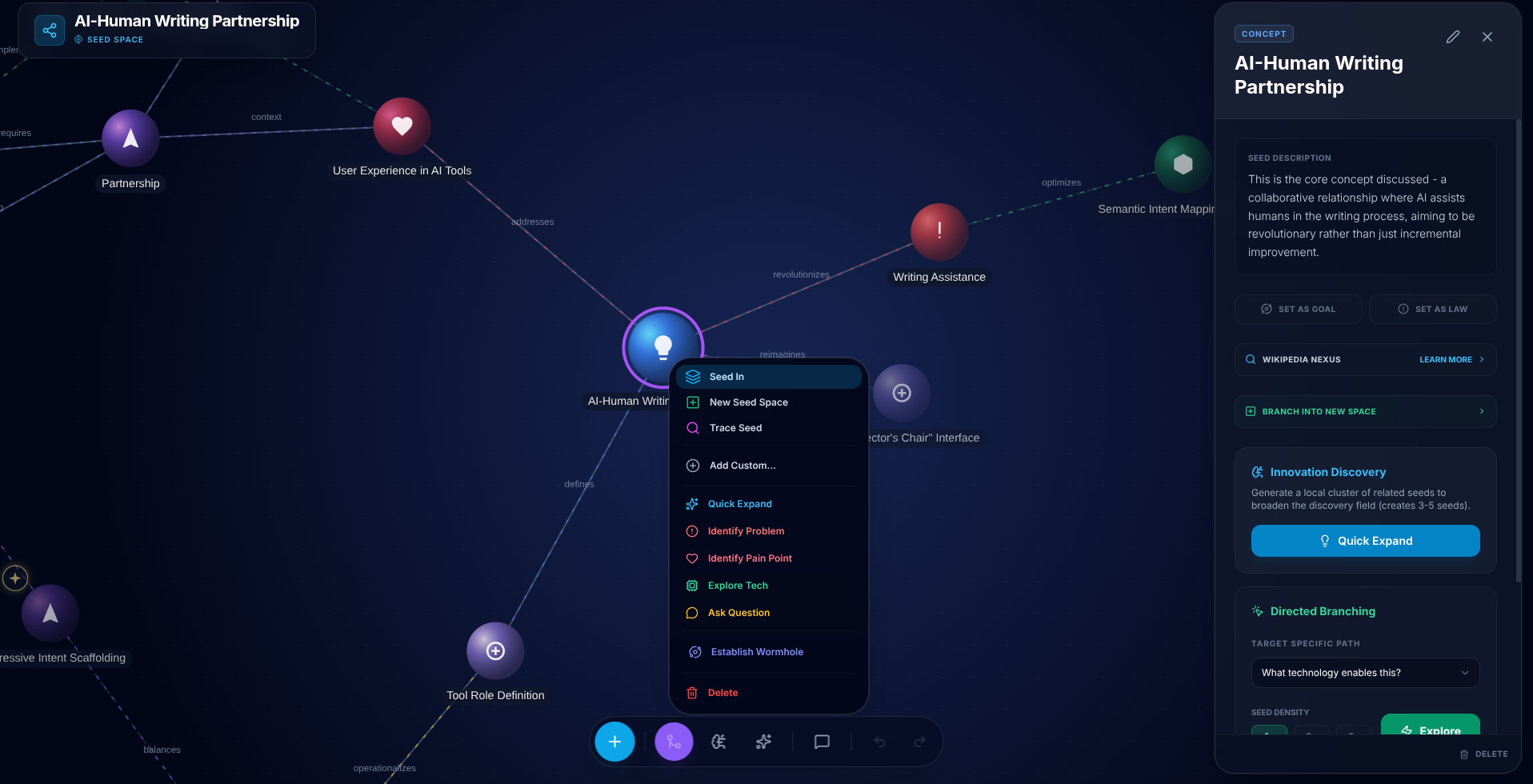
SEED leverages high-reasoning AI agents in Autonomous Discovery Mode to actively scout, expand, and explore concepts without manual prompting. By using advanced AI contextual understanding, SEED identifies hidden relationships and surfaces emergent insights in real time, transforming the AI from a reactive chatbot into a proactive research partner.
SEED goes beyond simple information retrieval. It enables emergent discovery, helping users bridge the gap between static knowledge and actionable solutions. It is an Idea Laboratory built to build the next big thing.
How we built it
Built entirely using Google Antigravity.
Challenges we ran into
The primary challenge was architecting a system for truly autonomous discovery. I drew inspiration from AI systems used in materials science discovery, which led to SEED's policy-driven and value-guided autonomous research engine.
Accomplishments that we're proud of
The Autonomous Discovery engine and its capacity for Lateral Thinking. It empowers researchers and founders to not only brainstorm but to bridge knowledge gaps and uncover insights that remain hidden within reactive, static information models.
What we learned
I gained deep insights into policy-driven AI agents for discovery and the robustness of building local-first, performance-heavy desktop applications with Electron.
What's next for SEED
The immediate roadmap includes real-time collaboration and integration with local LLMs, enabling a fully air-gapped research experience. My goal is to make SEED a proactive research partner for students and innovators worldwide.
Built With
- antigravity
- css
- d3.js
- electron
- gemini
- html
- javascript
- react
- tailwind
- tailwind-css-4
- typescript
- vite

Log in or sign up for Devpost to join the conversation.