Inspiration
Imaging is where clinicians leave the bedside: the scan lives on a PACS workstation down the hall, and at the bedside it’s a six-inch thumbnail on a phone. seeCOLe has put clinical data on lens since 2018. Glasses are the first screen that can show the scan where the patient actually is, so this Lens does only that, well.
What it does
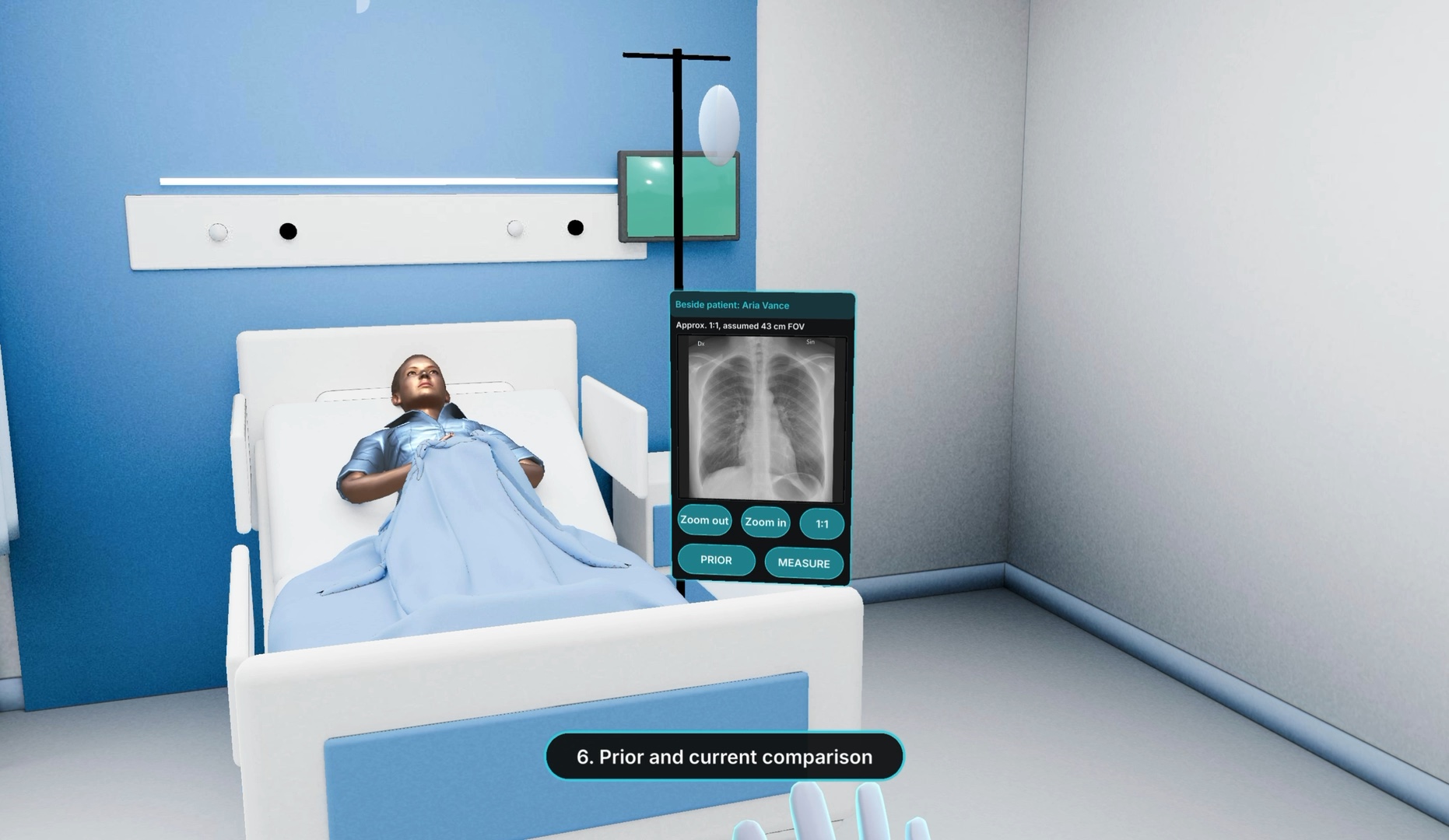
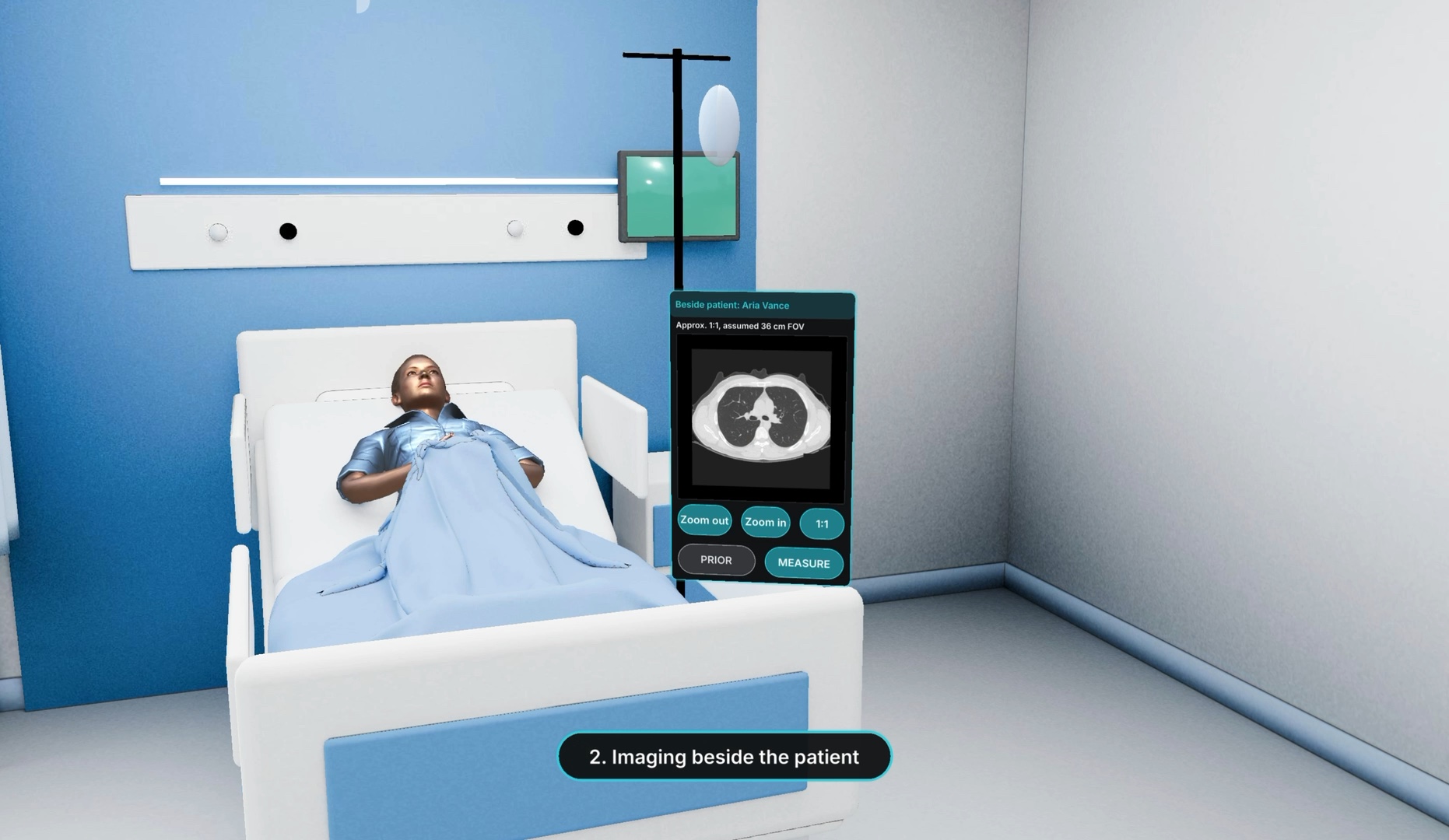
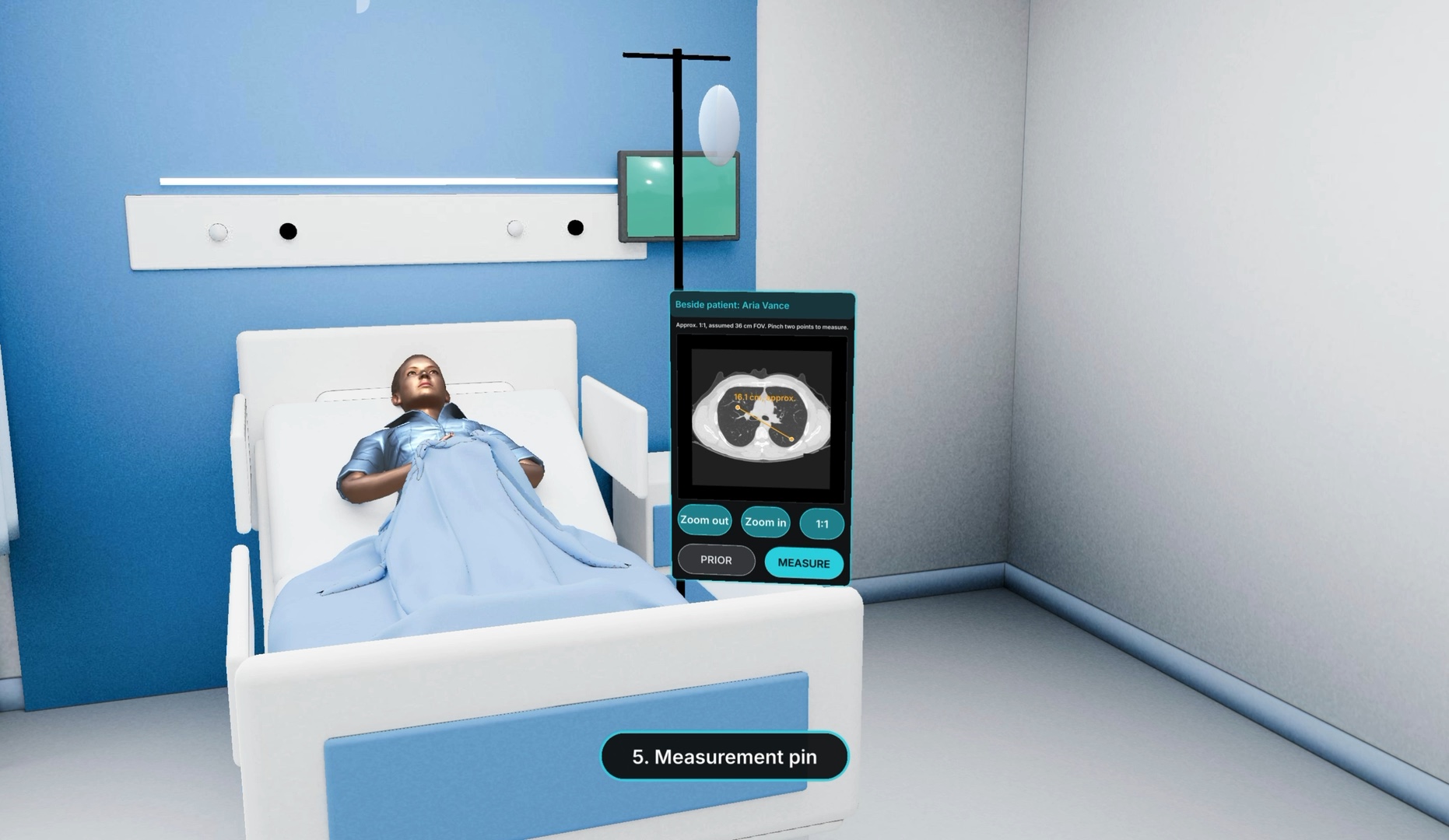
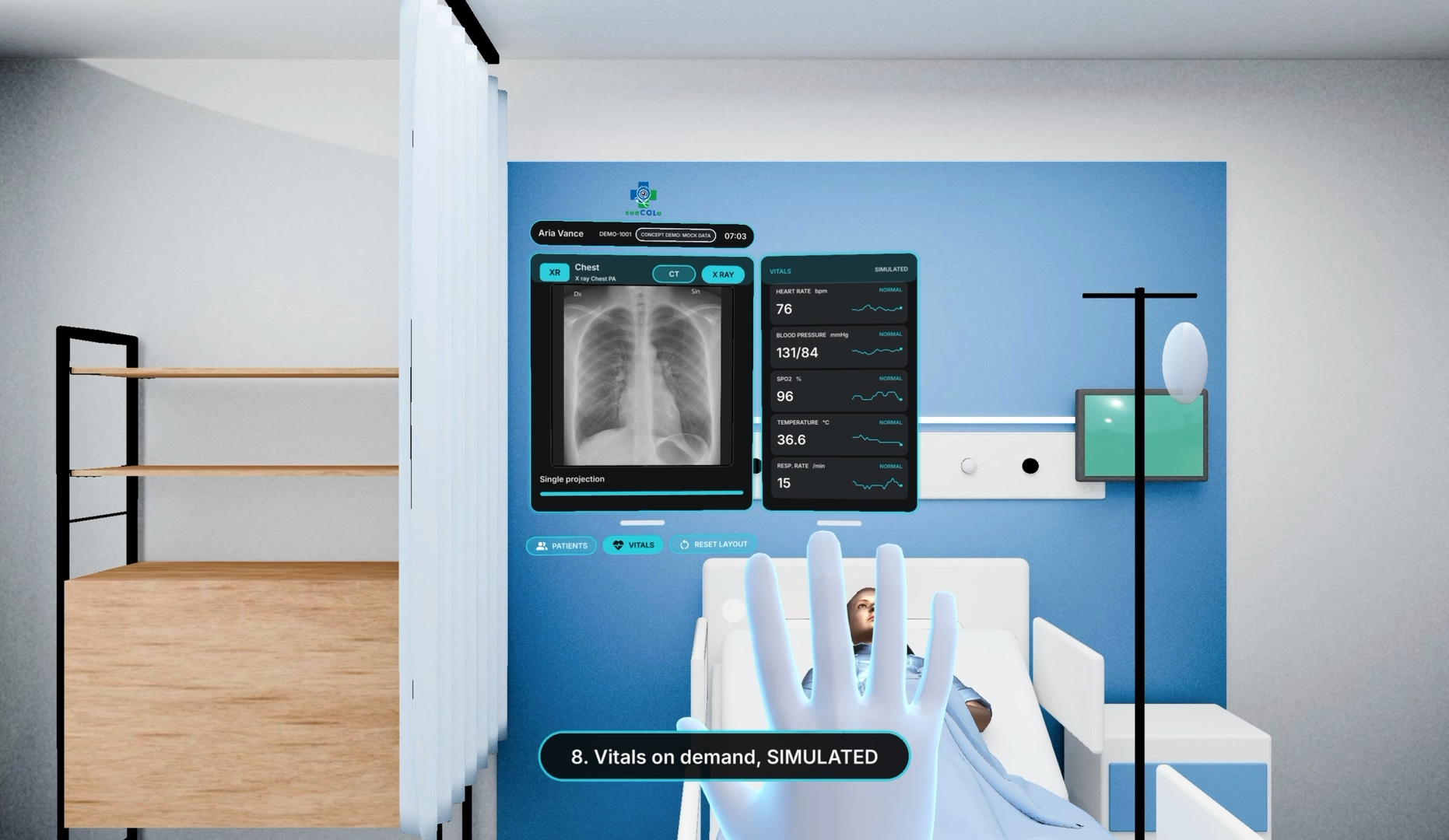
A clinician at the bedside sees the patient’s CT or chest X-ray in a frame beside the bed at approximately real size — the frame states its assumption on screen (“Approx. 1:1, assumed 36 cm FOV”) and never claims true size. Pinch to zoom and return to 1:1, grab the frame to carry it, pinch two points to measure in centimeters (marked approximate), toggle the prior study with a clear PRIOR label, and step through CT slices or switch to X-ray. A world-locked HUD holds the scan viewer; the patient list and simulated vitals open on demand and never cover the patient. Four fictional patients; every panel updates together.
How we built it
Planned with the Devpost Learn skill pack (devpost/design-brief.md). Built in Lens Studio 5.23.2 from the Specs Base Template with Snap’s CLAD workflow: Claude Code with the ls-clad plugin, working through the Lens Studio MCP — scene wiring via VirtualScene, editor scripts via ExecuteEditorCode, compile and run-and-collect-logs after every change (docs/BUILD_NOTES.md). Verified with LEAF: eleven scenarios, one per done criterion plus reachability, world-lock and patient-visibility checks, 11 of 11 passing with the raw log in docs/LEAF_RESULTS.md. Interaction Kit and UI Kit for every interaction, so it works with the mouse in Interactive Preview. CT and X-ray atlases built from CC0 studies with a small Python tool; a Blender-modeled hospital room for the preview only.
Challenges we ran into
Real size without real calibration (the frame declares its assumed field of view instead of pretending); keeping the patient visible with both side panels open; readable text on an additive display; a HUD that first followed the head and now stays fixed in the room.
Accomplishments that we're proud of
Every point of the brief shipped and is tested: eleven LEAF scenarios, one per done criterion plus reachability, world-lock and patient-visibility checks, 11 of 11 passing in the Lens Studio preview with the raw log in the repo. The Lens is honest about what it knows — “Approx. 1:1, assumed 36 cm FOV” on screen, measurements marked approximate, vitals marked SIMULATED, MOCK DATA in the top bar — which matters more in a clinical tool than a polished claim would. No panel covers the patient’s head or torso in any layout, and the HUD holds still in the room when you turn; both are tested, not eyeballed. Every asset is licensed and listed: CC0 studies, a CC0-textured room modeled for this project, an MIT avatar, OFL and Apache fonts and icons. And the whole thing went from a one-page design brief to a tested build in days, through CLAD and the Lens Studio MCP, with an agent doing the scene work and the build loop catching two real bugs before a human saw them.
What we learned
Designing for glasses means deciding where things live in centimeters before writing any code, and the preview’s limits are a design input, not an obstacle.
What's next for seeCOLe Radiology Lens
Validation on SPECS hardware, design-partner workflow reviews with ED and radiology teams, and the film placed on the patient at life size as the next spatial moment. seeCOLe augments the EHR and PACS; it never replaces them.
Development partner
Shahnewaj Mahmood, Dhaka XR. All patients fictional, vitals simulated, images de-identified CC0 studies. Not a medical device.
Built With
- blender
- clad
- claude-code
- leaf
- lens-studio
- python
- spectacles-interaction-kit
- typescript

