-
-
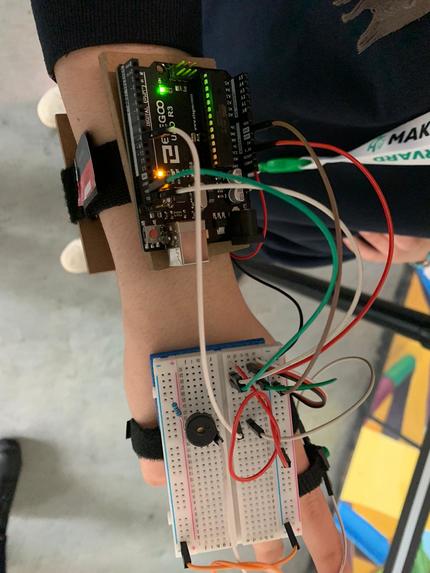
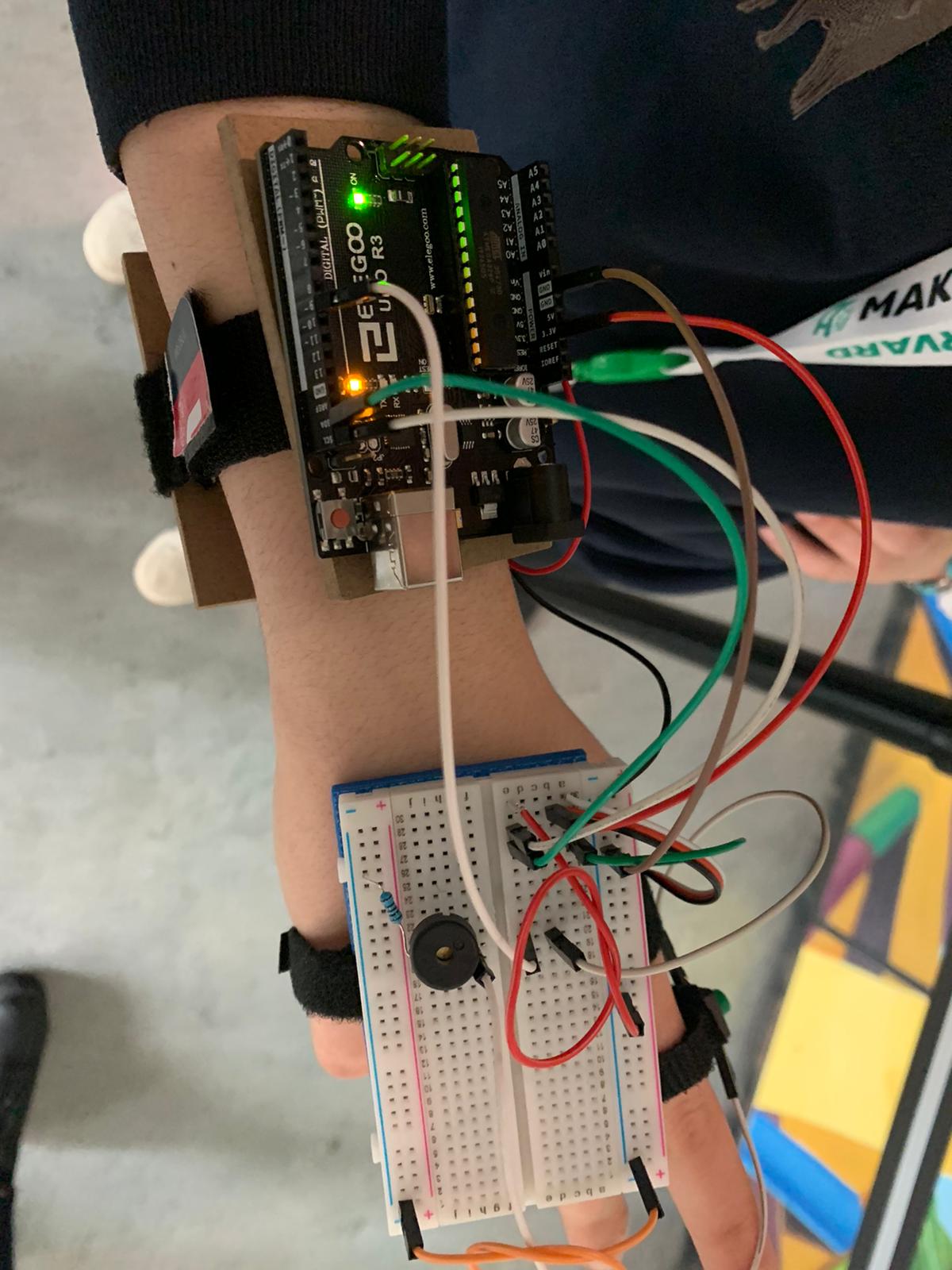
Top view: buzzer for sound, arduino uno, 9V battery
-
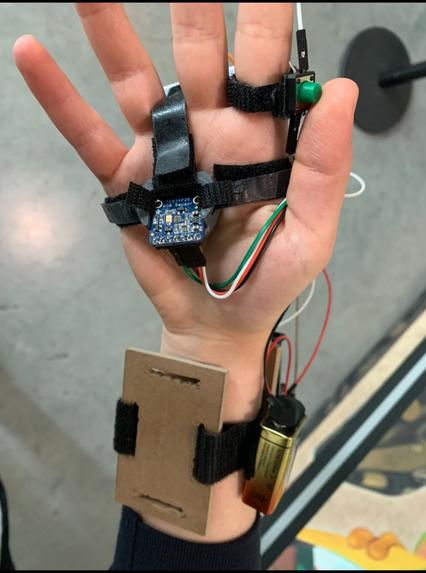
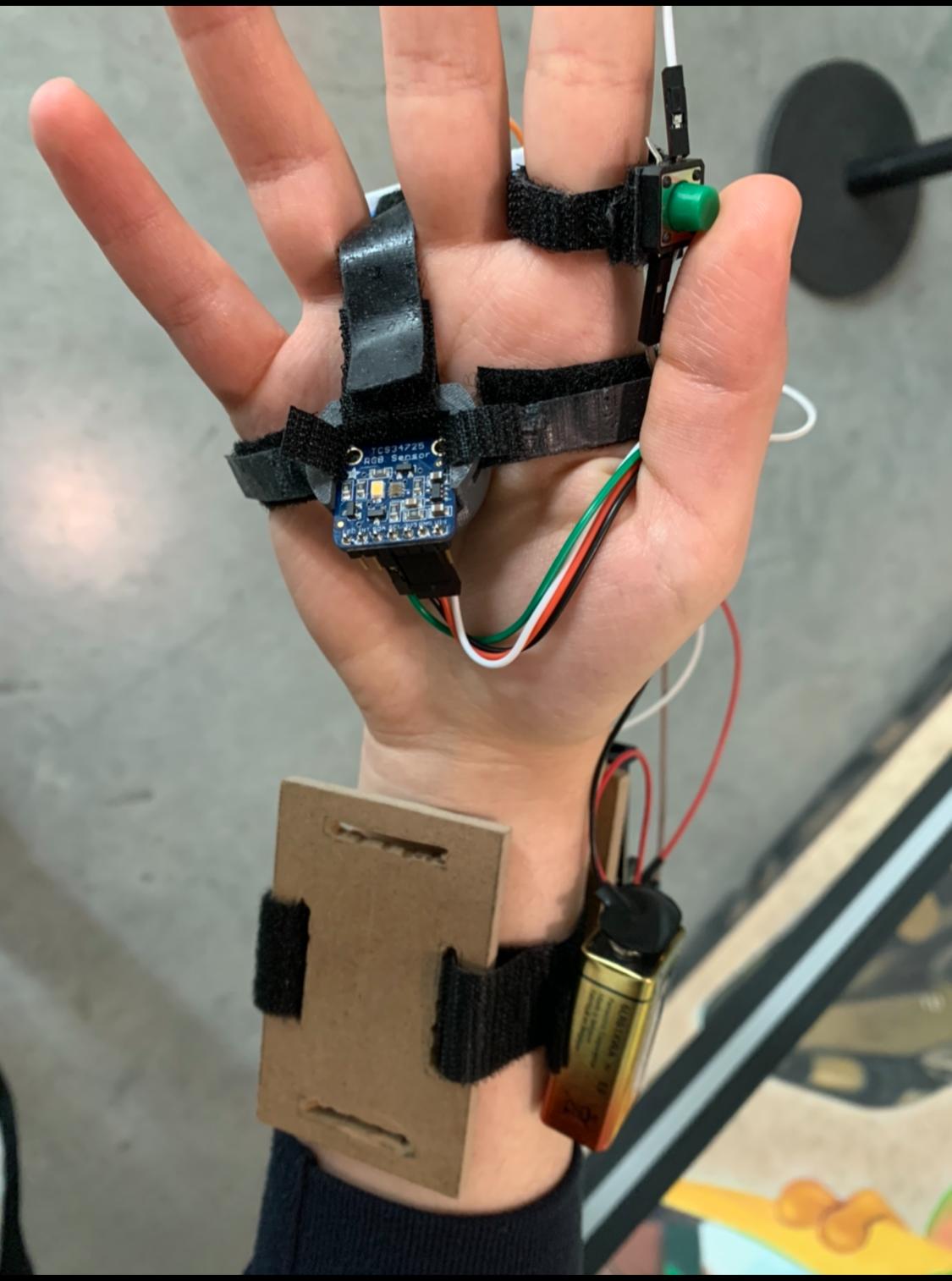
Bottom view: RGB sensor, green press-button
Inspiration
My roommate and I were talking about dreaming and that arose the following question, "how do people with visual impairments dream and how is color described to them?" I looked it up and there is not really a calibrated way to describe color, it usually associated with texture. This did not make sense to me because, for example, not all orange objects have the texture of an orange. We came up with a standard way to represent the difference in color to people with vision impairments.
What it does
Each color is associated with a specific tone (frequency). This way, a person can imagine the difference in color in their surroundings. We built a glove that reads RBG values of a color and outputs a tone associated with that color. We also added Morse encoded the first letter of each detected color in the color group. So, let's say we get closer to a red object. The tone will be at is highest and will play Morse's code for the letter R. We thought this will be helpful for us to debug the code and for judges to understand the calibration.
How I built it
We used a color sensor; it reads in the RGB values of the color we are trying to detect, then we converted that into the closest color group. We used an Arduino Uno and all code was done in CPP. We used a buzzer to output the sound.
Challenges I ran into
- 1st challenge: we first thought of converting color to temperature. Thermal pads were not available. Therefore, we decided to go for sound. We had one speaker and it was broken. We thought of using microphones to produce sound by applying voltage across them. This did not work. We found some proximity sensors so we tried to de-solder the transmitter to use it as a transducer, but this was not doable because we did not have the tools. Finally, more buzzers came in and we were able to integrate it with our idea.
- 2nd challenge: None of us have much experience with coding and converting RGB values into colors and groups was way more difficult that anticipated. Unfortunately, after writing that code, the Arduino ran out of processing memory. We had to cut down on a lot of RGB values which brought down the functionality of our glove significantly.
## Accomplishments that I'm proud of That is actually works! We were so close to giving up at 6 AM; the sound output was not doing what is was supposed to do. After it started working we got motivated to work harder. ## What I learned - Use an rpi for things like that
- how to code an arduino
- how to apply CS in real life
- how to function with no sleep.
## What's next for SeeC
We actually have so much faith in this idea. Our ultimate goal is to create tones for the entire color wheel (including the gradient and shades between). We want to give that group of people a vivid image of this world. We would also like to develop a glove that can assist them in their daily routine. We want to use a better MCU to process data and a louder speaker to output sound.
Built With
- adafruit
- arduinp
- cpp


Log in or sign up for Devpost to join the conversation.