-

App Icon
-
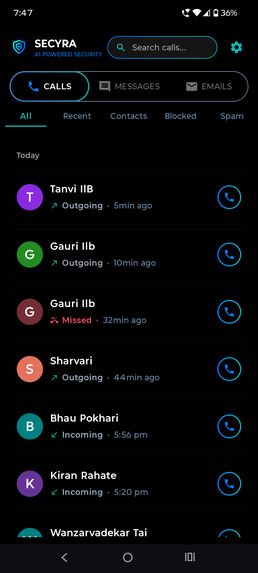
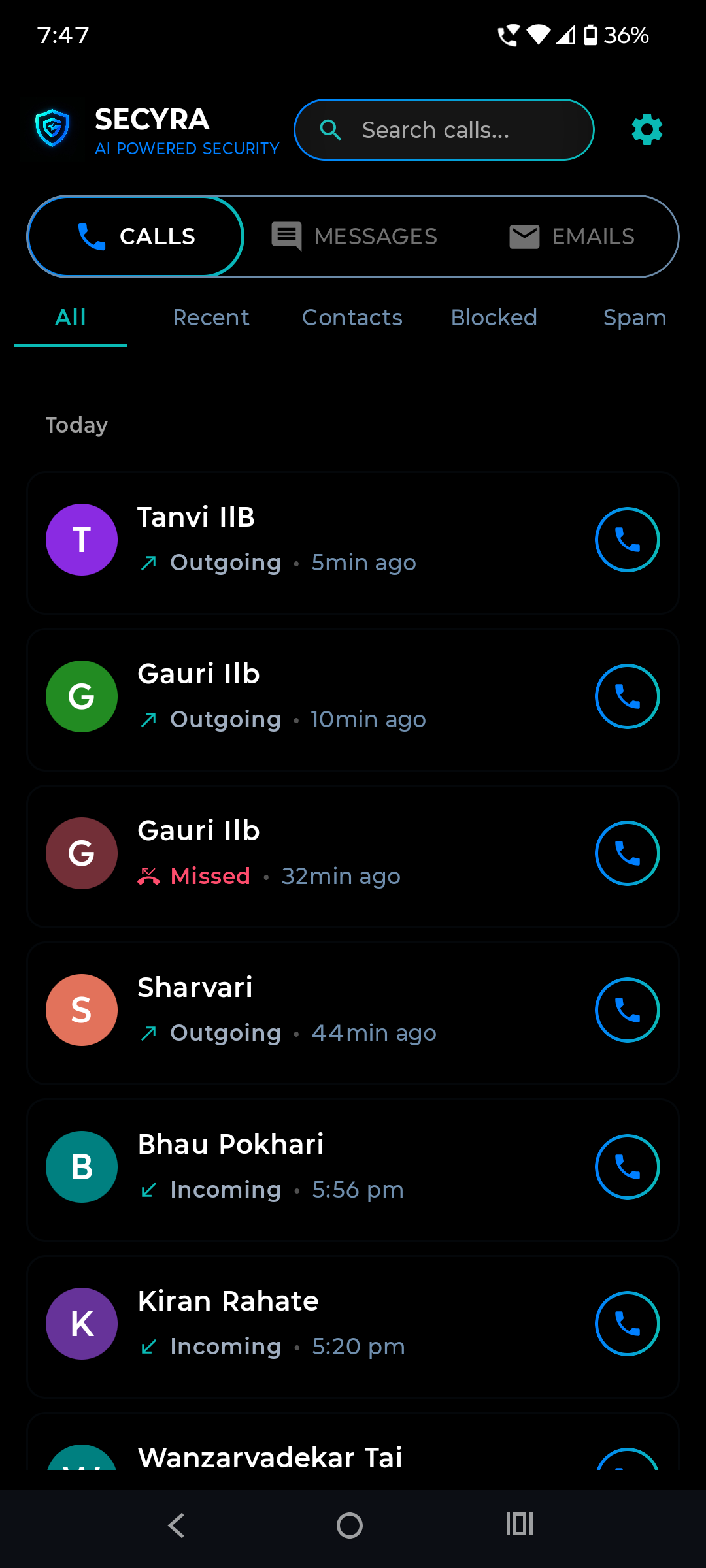
Calls Screen
-
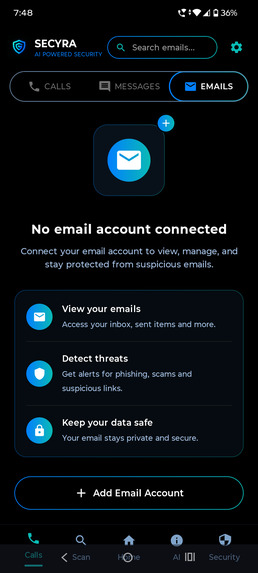
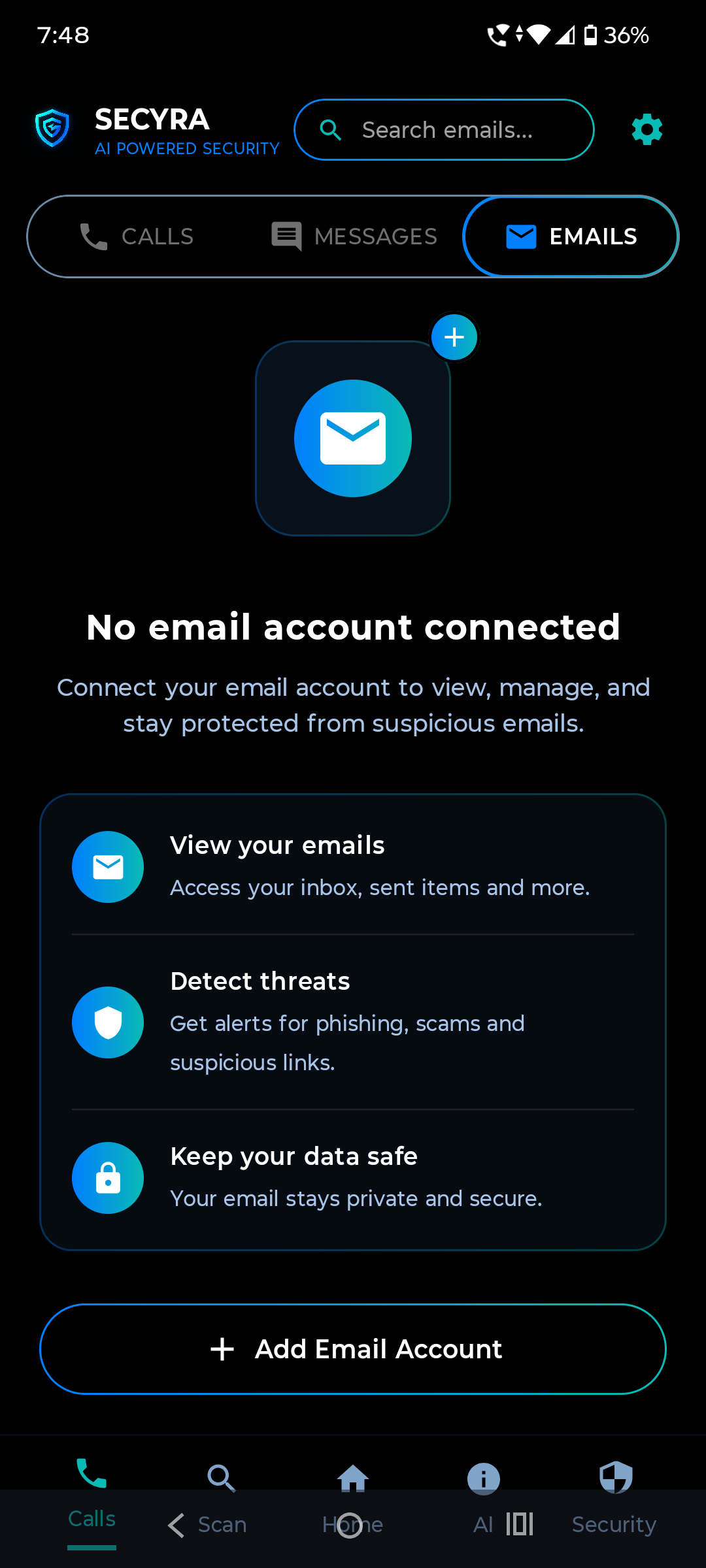
Emails
-
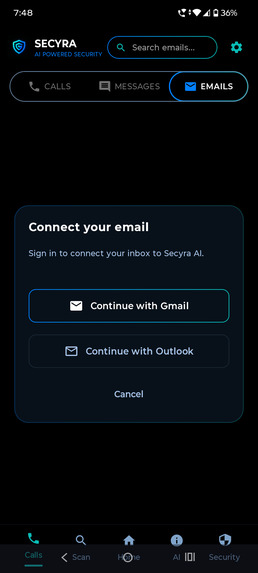
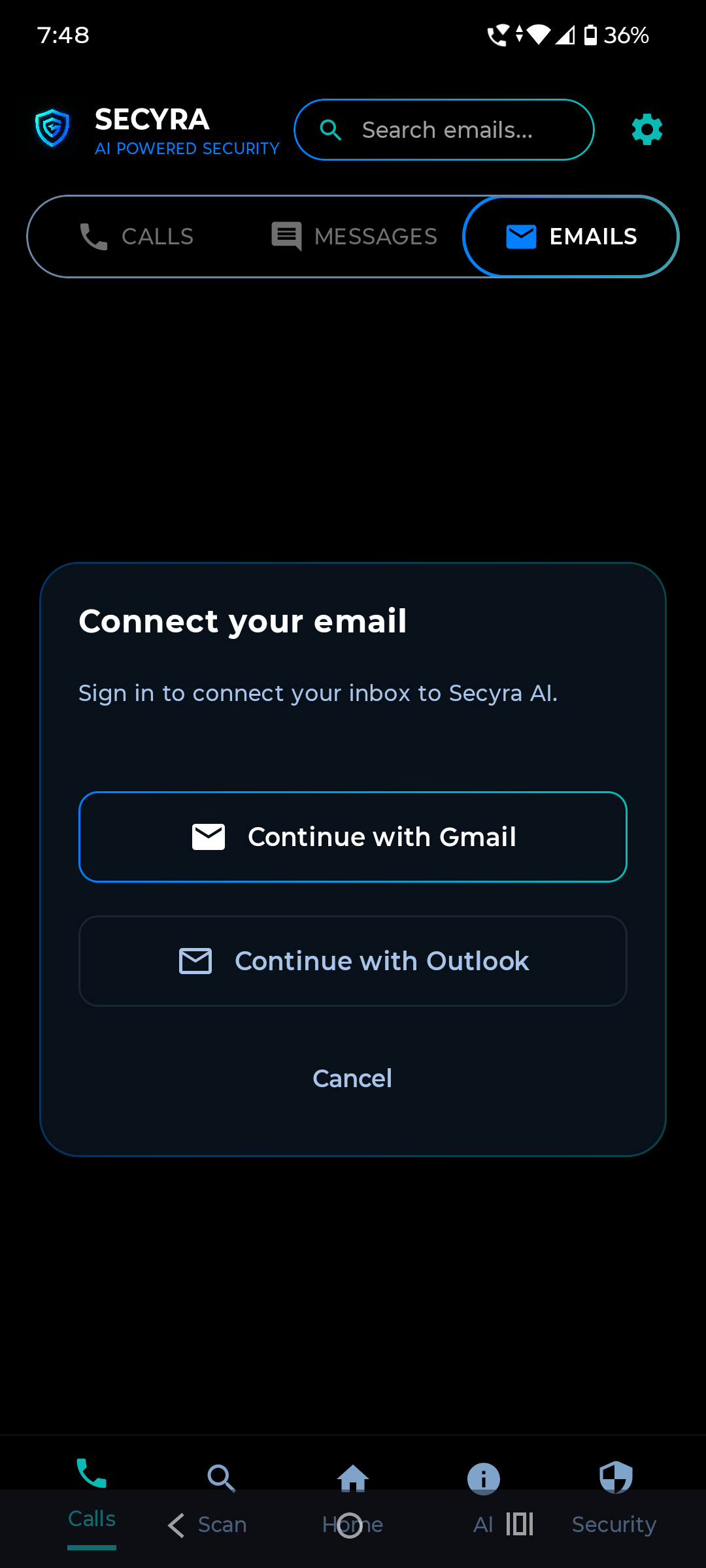
Email
-
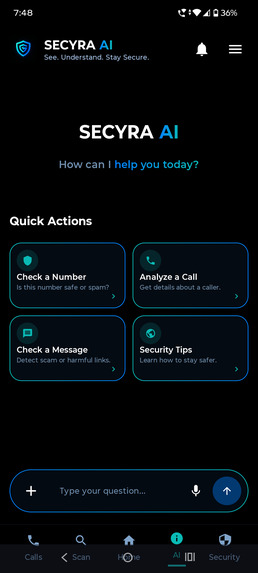
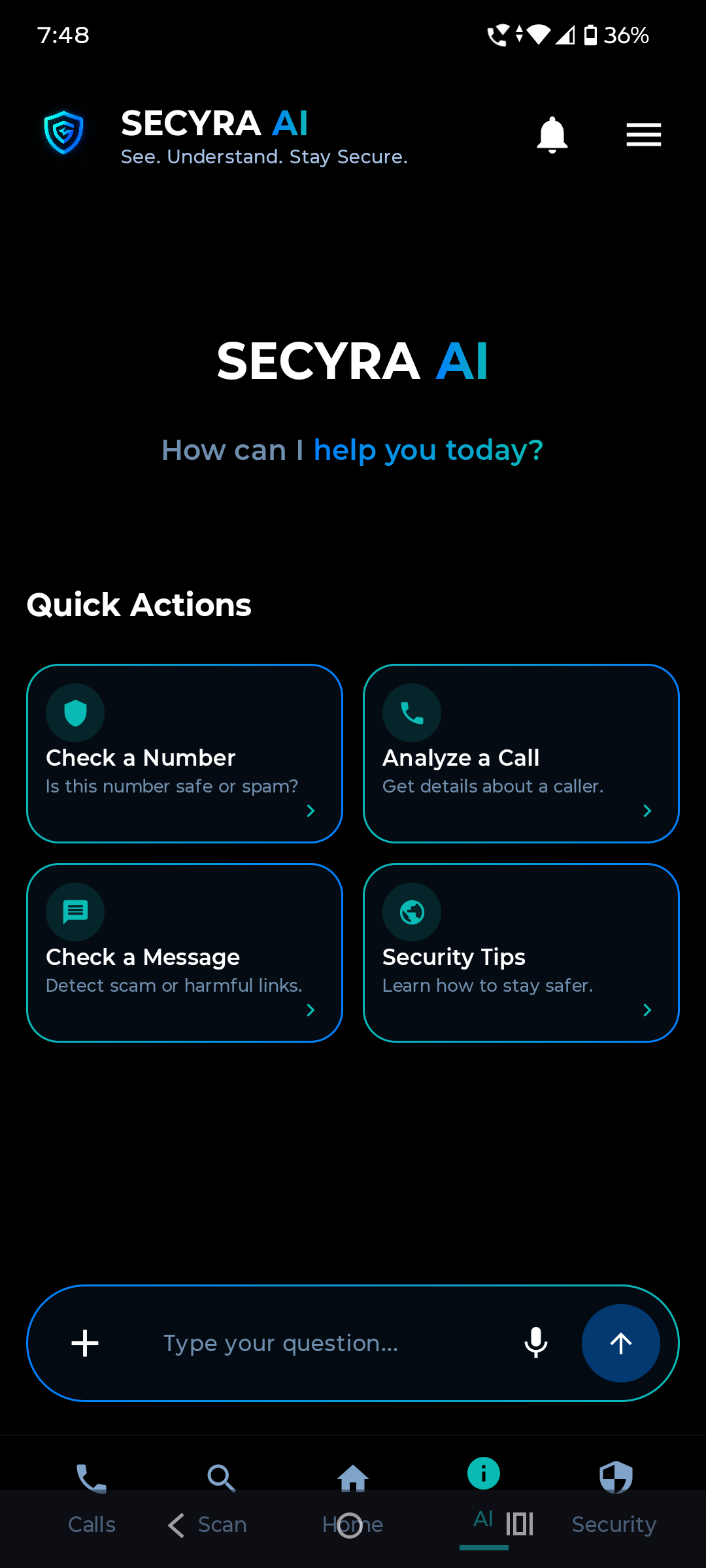
AI screen
-
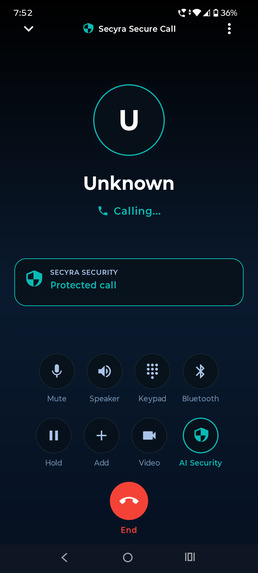
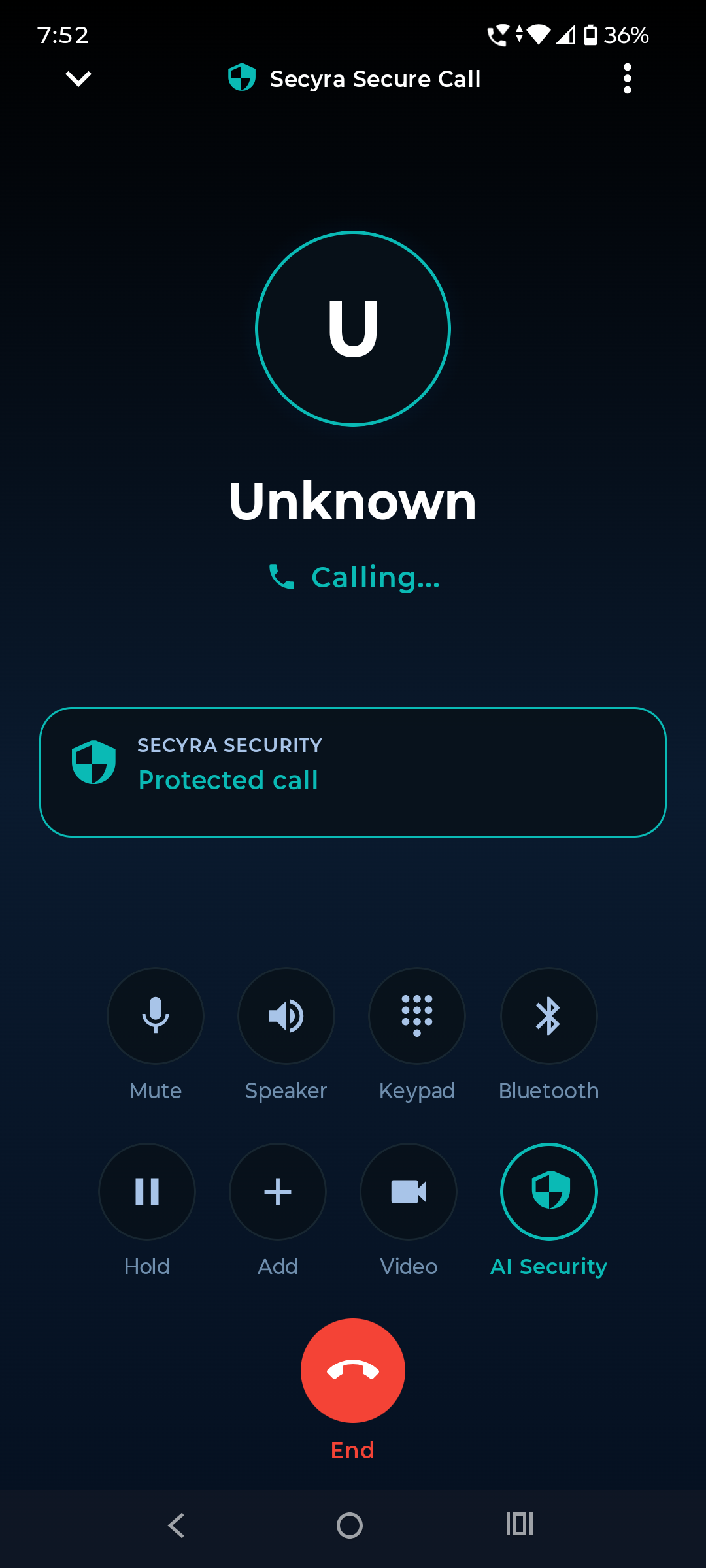
Calling Unknown

Inspiration
Digital fraud is becoming increasingly convincing. People receive suspicious calls, phishing emails, fraudulent messages, fake links, and impersonation attempts that can be difficult to recognize. We wanted to create a unified security companion that helps people understand these threats before they become victims.
What it does
Secyra AI is a universal AI-powered security platform designed to bring multiple digital-protection capabilities into one application.
Its vision includes call intelligence, suspicious-number analysis, message and email threat detection, website and QR-code scanning, AI-powered security explanations, and a centralized security dashboard. Instead of simply displaying a warning, Secyra aims to explain the available evidence and recommend safer actions while keeping the user in control.
Our planned advanced capabilities include ThreatGuard, an enhanced scam-prevention system, and SecureCall, a dedicated encrypted audio/video calling experience designed around identity verification and scam awareness.
How we built it
Secyra AI is being developed as an Android-first application using Kotlin and Jetpack Compose, with a clean architecture and MVVM design. The planned platform architecture includes Supabase-backed services and AI-assisted threat analysis, supported by deterministic security checks and relevant threat-intelligence sources.
Security is a core design principle: sensitive credentials and API keys should remain protected, permissions should be explicit, and AI-generated conclusions should not replace verifiable security evidence.
Challenges we faced
A major challenge is balancing powerful security features with Android platform restrictions, user privacy, accuracy, and performance. Caller identification is not always reliable, phone numbers can be spoofed, and AI cannot guarantee that every scam will be detected. Secure video calling also requires careful cryptographic design, identity verification, and security testing.
Another challenge is ensuring that the system explains risks clearly without generating false alarms or claiming capabilities that have not been implemented and tested.
What we learned
This project reinforced the importance of combining AI with deterministic security rules, trustworthy data sources, secure architecture, and transparent risk communication. We also learned that effective cybersecurity is not only about detecting threats—it is about helping people understand them and make safer decisions.
What's next
The next steps are to strengthen core scanning and call-protection functionality, integrate supported email providers, improve threat intelligence, and develop and independently review the SecureCall architecture. Our long-term goal is to make Secyra AI a comprehensive, trustworthy digital-security companion.
Built With
- amazon-web-services
- android
- api
- artificial-intelligence
- cybersecurity
- jetpack-compose
- kotlin
- llama
- mvvm
- supabase

Log in or sign up for Devpost to join the conversation.