-
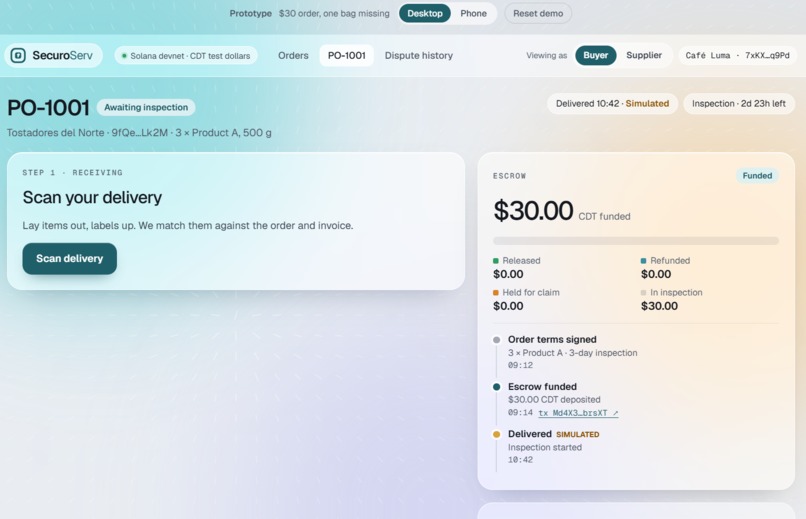
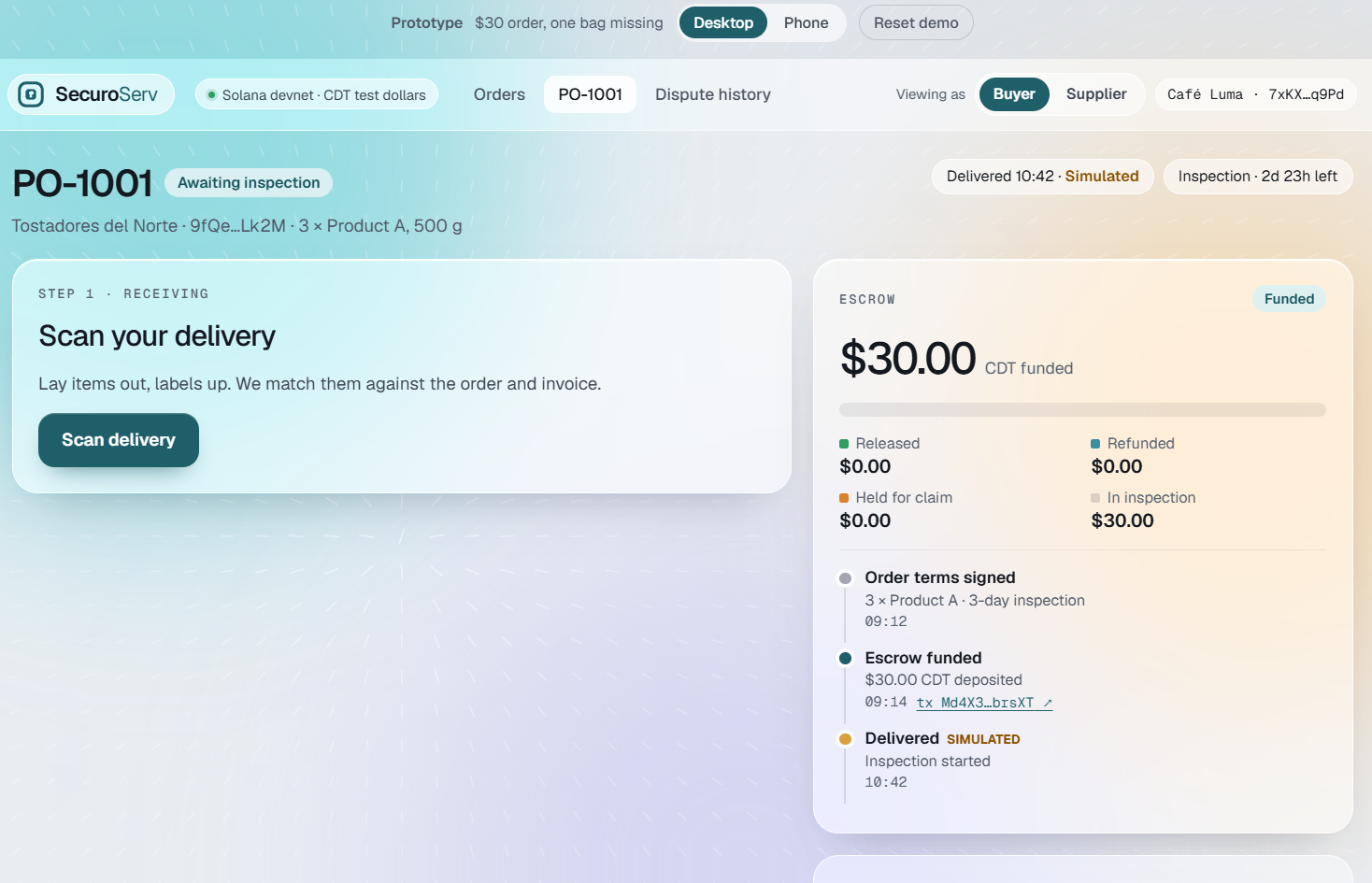
Home Page
-
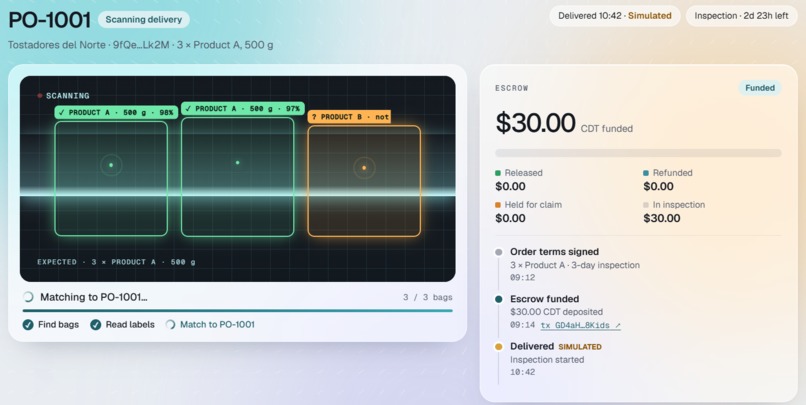
Gemini judging the transaction
-
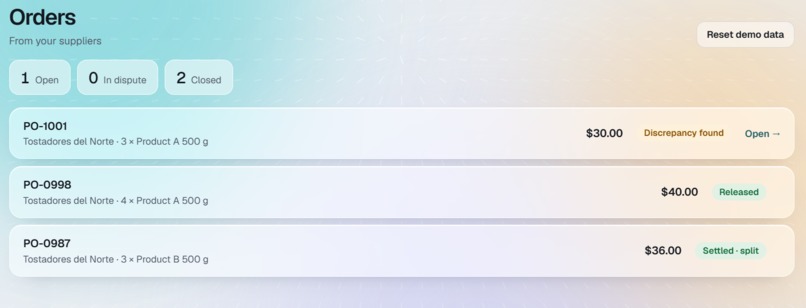
Orders Page
Inspiration
The idea came from a real problem one of us deals with personally. One of our team members runs a small business in Sri Lanka and imports products from countries like India and China. Sometimes what arrives doesn’t fully match what was ordered or billed and damage can be hard to verify. So we wanted to build a simple extra layer of trust between the shipment and the payment.
What it does
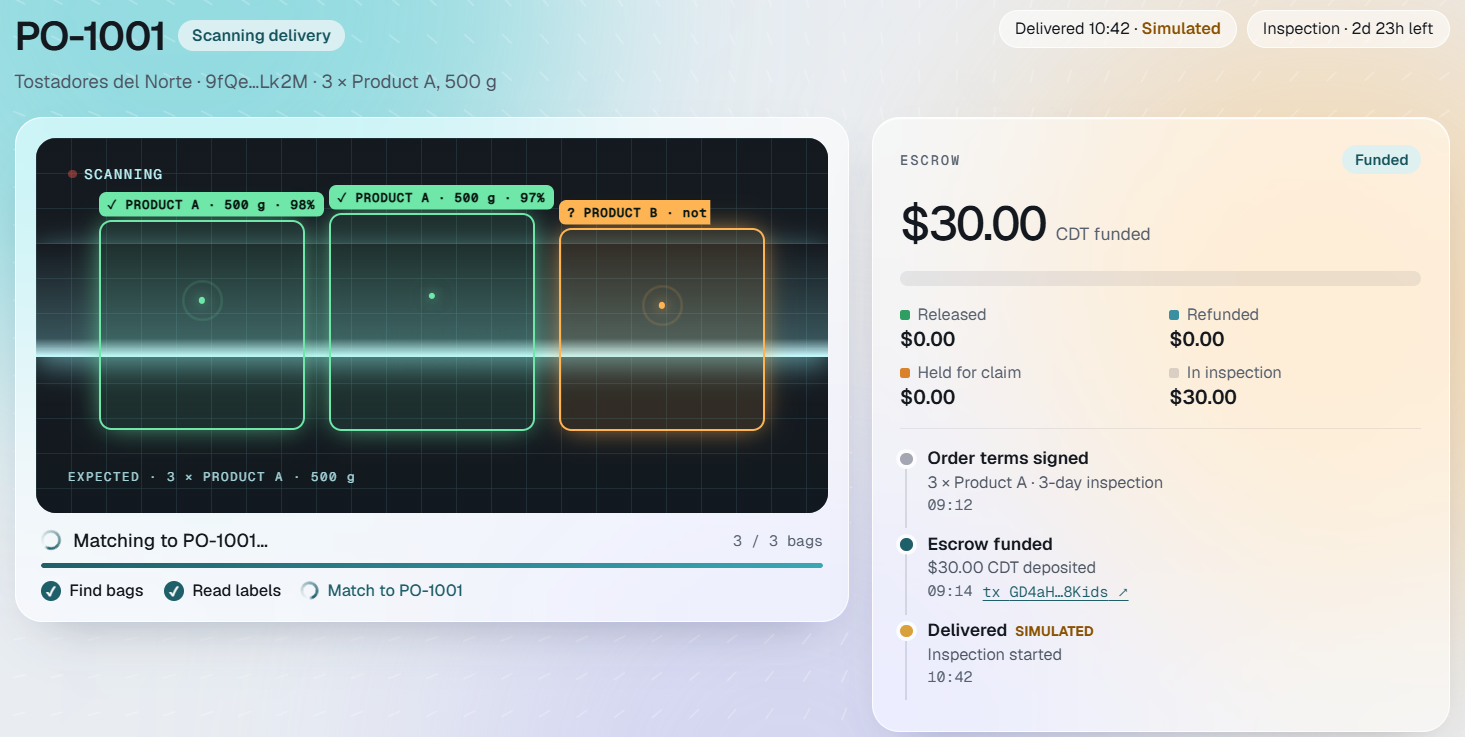
SecuroServ compares what was ordered, billed, and actually delivered. Gemini structures the purchase order and invoice, while a Raspberry Pi + custom YOLO model checks the physical shipment for item count and damage. Any missing, extra, unreadable or damaged items are flagged for review. AI provides the evidence but the final approval and payment decision stays with the user.
How we built it
We built the frontend with React + Vite and the backend with Express + TypeScript. Gemini extracts order and invoice details, while deterministic code handles the matching. For the physical shipment, we use a Raspberry Pi + USB camera with a custom YOLO model trained in Roboflow to count items and detect damage. The Pi sends the photo and results to SecuroServ, where everything is compared before human review and the Solana payment flow. Flow: Purchase order + invoice → Raspberry Pi + YOLO → comparison → human review → Solana payment
Challenges we ran into
One big challenge was deciding how much to trust AI when money is involved. We kept AI for reading and observing, while deterministic code handles the actual matching and approval logic. Computer vision was also tricky. With a small training dataset, lighting, angles, multiple objects, and different damage types could affect detection accuracy. We also had to connect Raspberry Pi, Roboflow, the backend, frontend, Gemini and Solana into one flow.
Accomplishments that we're proud of:
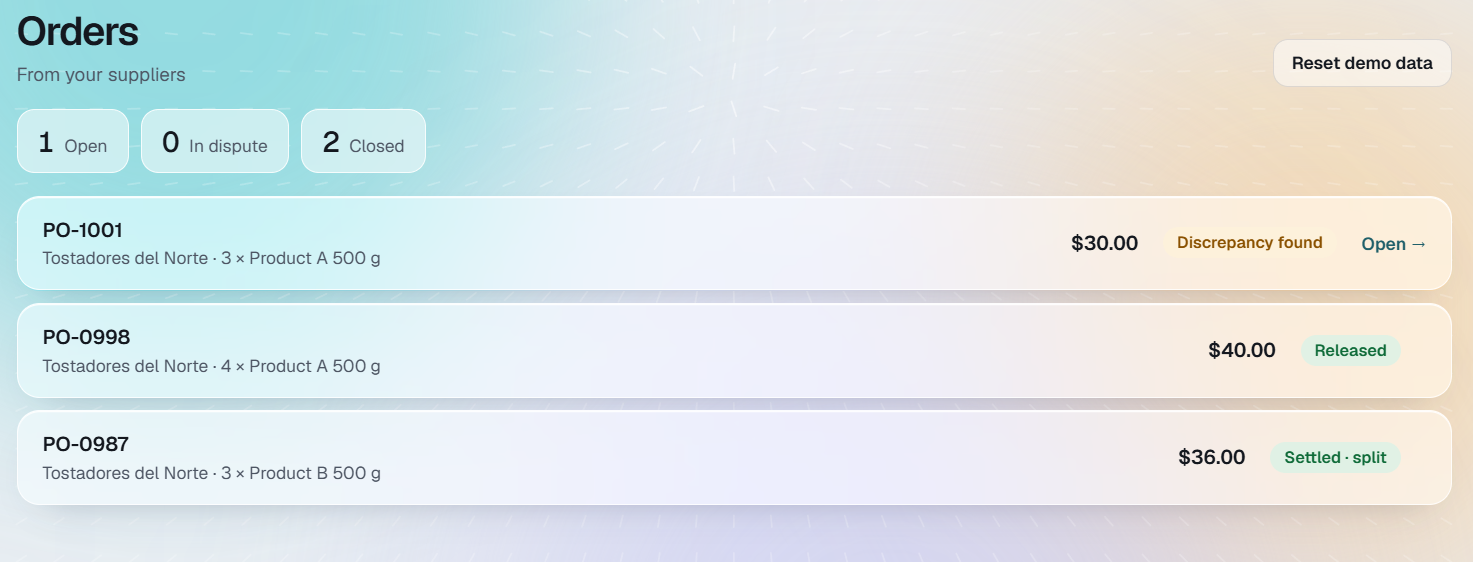
We got the real hardware connected to the web app. The Raspberry Pi can capture a shipment, run it through our YOLO model, send the result to SecuroServ and immediately affect the order status. Missing, extra or damaged items can be flagged before approval and any evidence change invalidates the previous approval.
What we learned
We learned that AI is better used as evidence, not as the final decision-maker. We also learned how important good training data is for computer vision and how useful shared data contracts are when multiple people are working on hardware, AI, backend, frontend, and blockchain at the same time.
What's next for SecuroServ
Next we want to improve the YOLO model with more training data, support more product types, add weight and other shipment sensors, and finish the full Solana devnet payment flow. Long term, we want SecuroServ to become a lightweight verification tool for small businesses importing goods internationally.


Log in or sign up for Devpost to join the conversation.