Inspiration
Inspiration
I built SecuritySense because finding a security vulnerability is only half the battle. Developers also need to understand the issue, reproduce it, fix it, and verify that the fix actually works. I wanted to explore how to make this process more transparent and reliable.
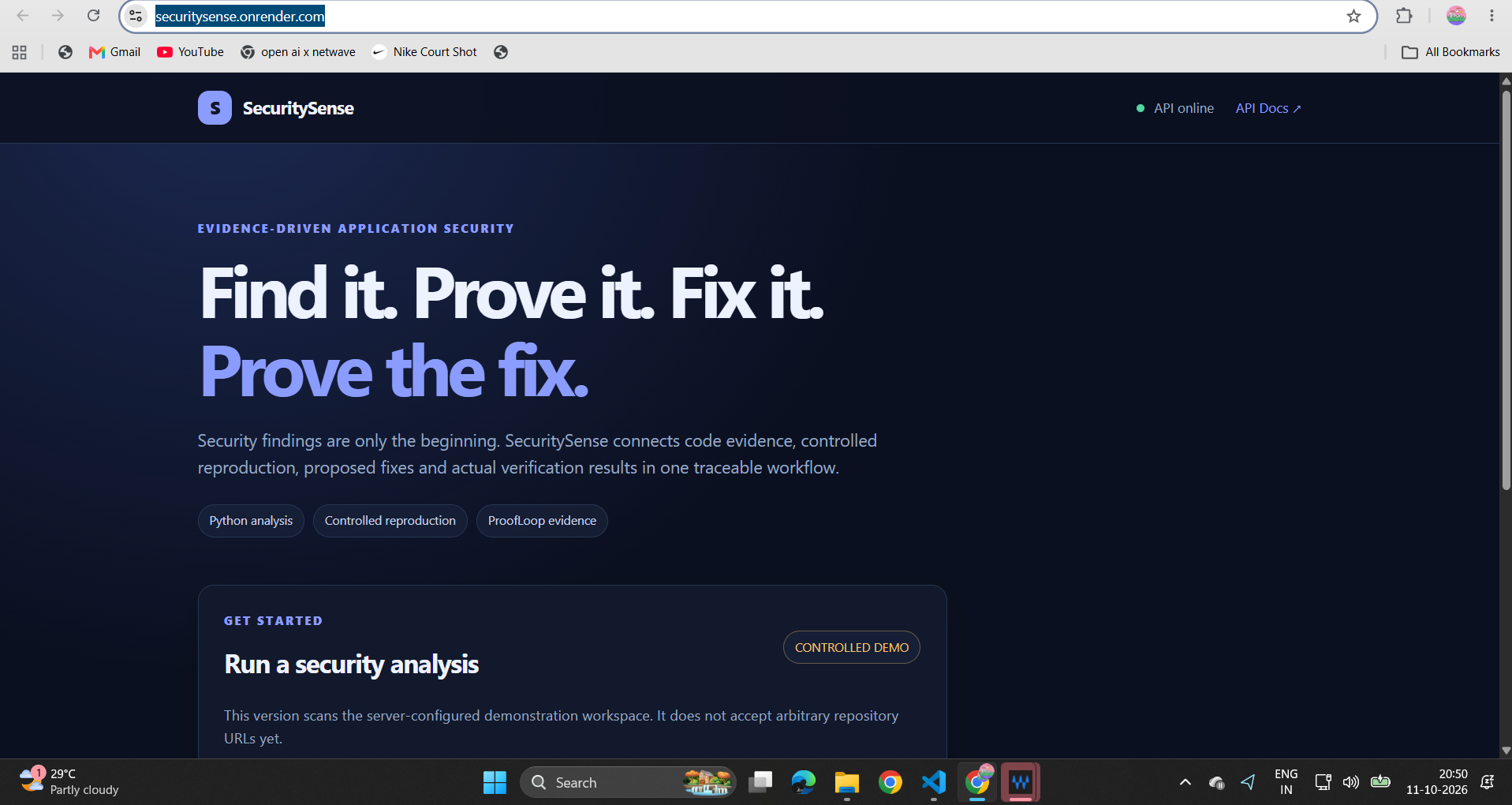
That idea became SecuritySense, built around one principle: Find it. Prove it. Fix it. Prove the fix.
What it does
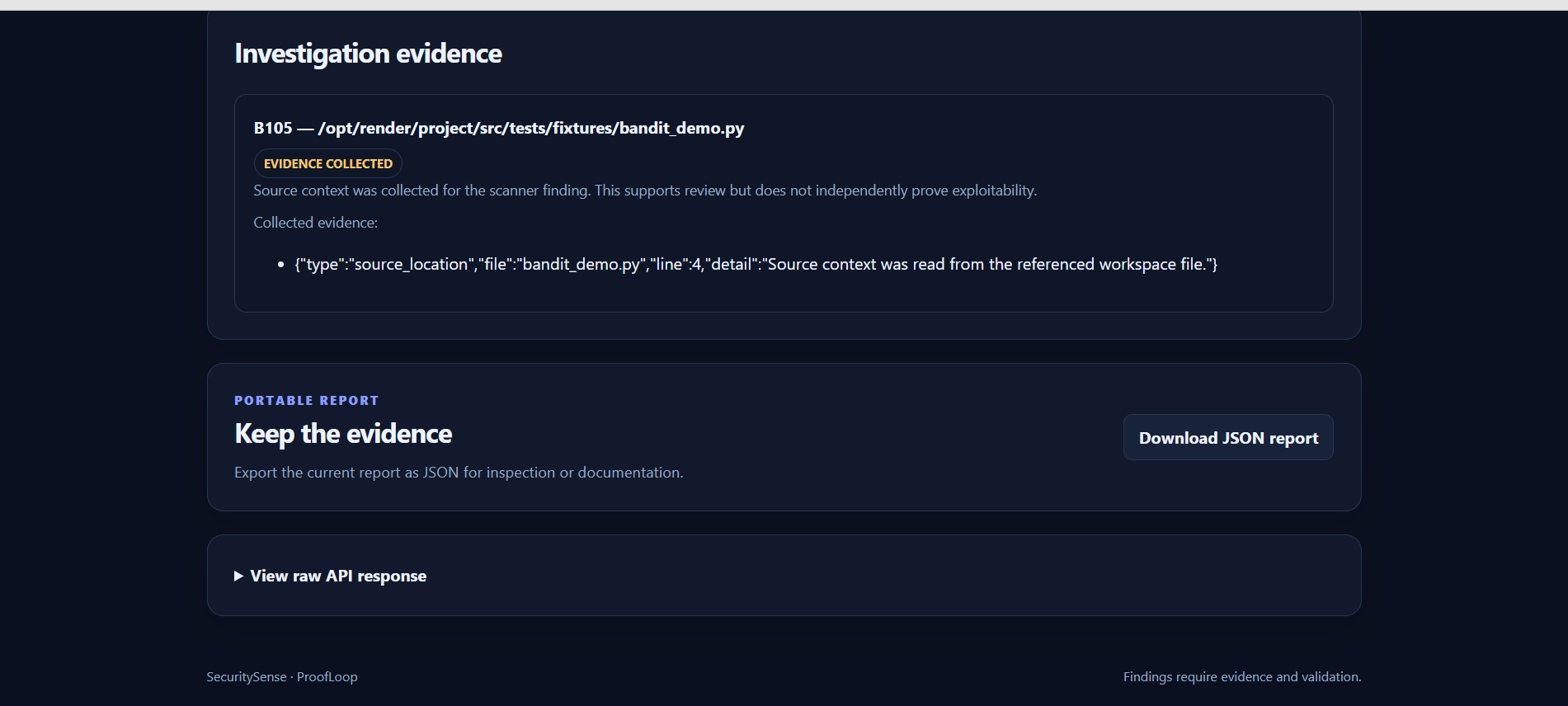
SecuritySense is a security analysis platform that demonstrates how developers can move beyond scanner warnings toward evidence-backed verification.
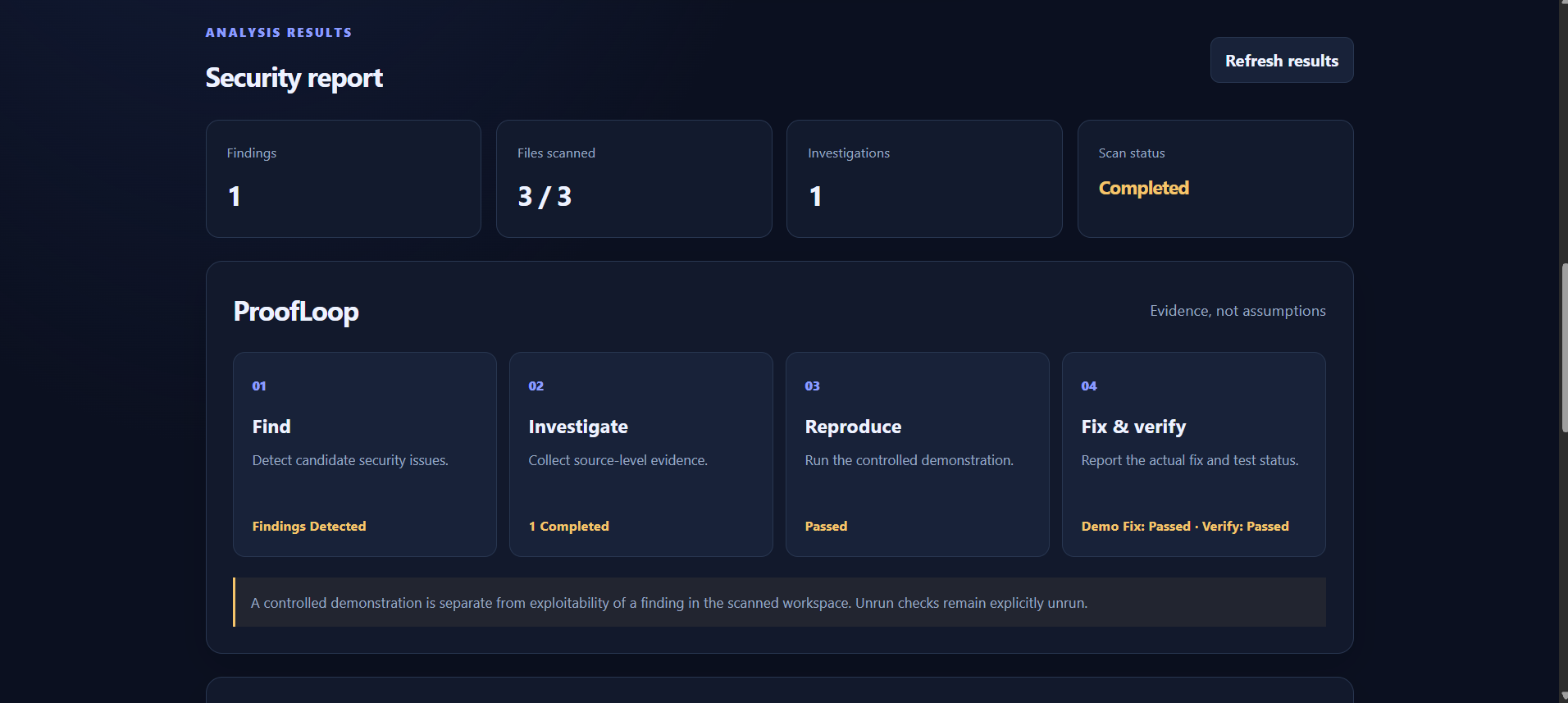
- Detect: Identify security issues using automated analysis.
- Investigate: Organize findings so they are easier to understand.
- Reproduce: Demonstrate vulnerable behavior using controlled test cases.
- Fix: Apply a controlled demonstration patch.
- Verify: Run tests to check whether the fix addresses the demonstrated vulnerability.
The current prototype focuses on a controlled Python access-control example, allowing me to demonstrate the workflow from vulnerability detection to verification.
How I built it
I designed and built SecuritySense independently using Python, FastAPI, HTML, CSS, and JavaScript. I integrated Bandit for Python security analysis and pytest for automated testing.
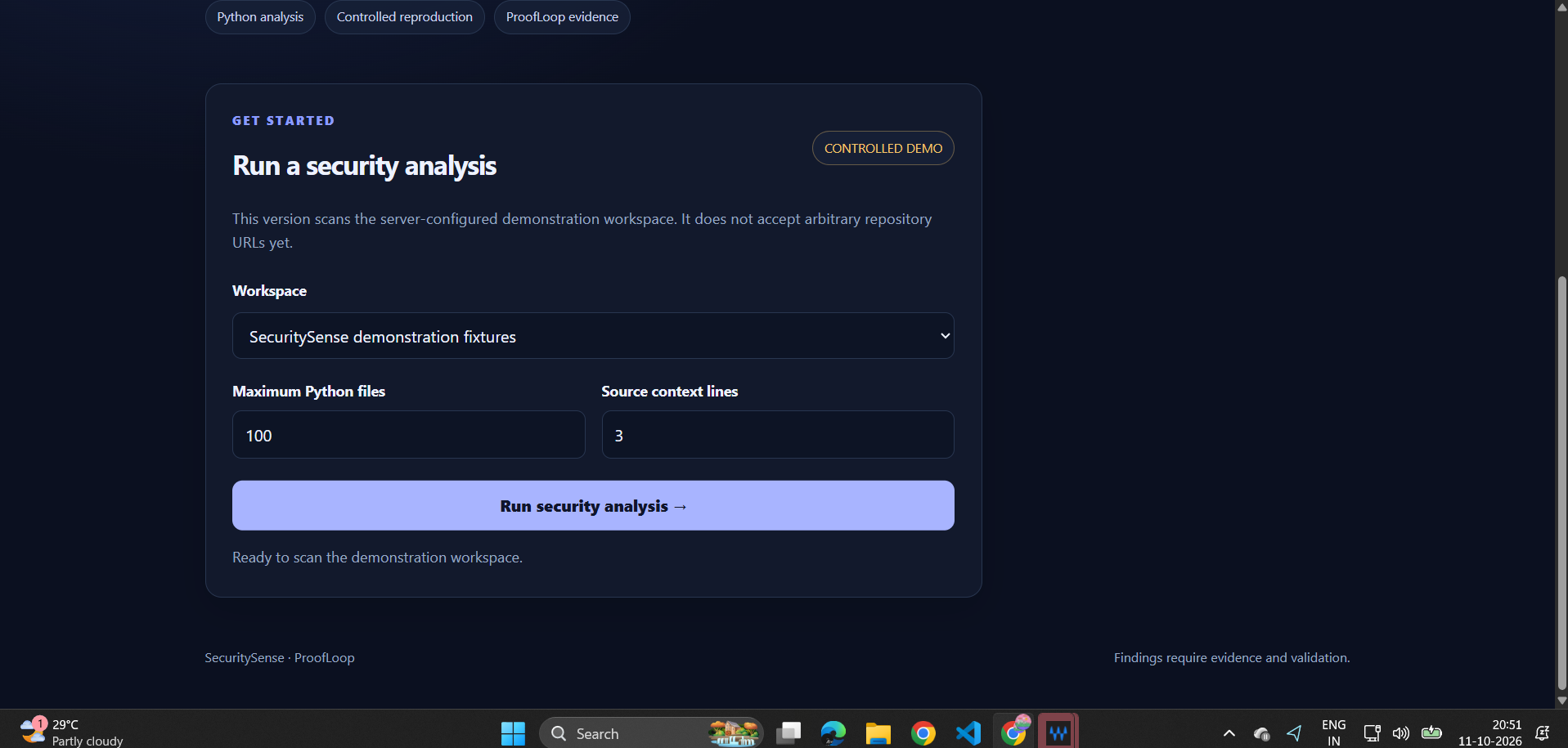
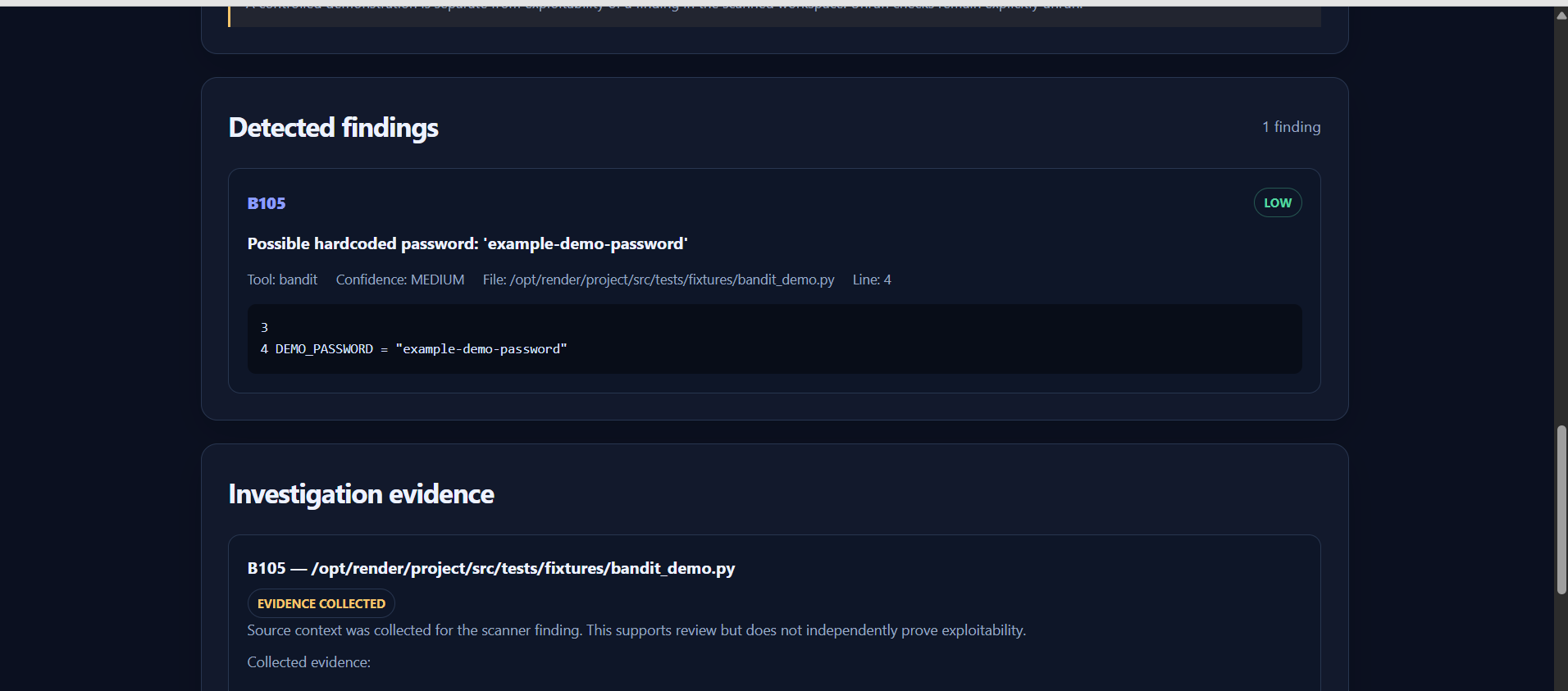
I organized the application into modular components for scanning, investigation, reproduction, fix handling, and verification. I also built a web interface for initiating scans, viewing findings, following verification results, and accessing reports.
Throughout development, I focused on making the workflow testable and transparent, while keeping the original demonstration source unchanged during the controlled fix process.
Challenges I faced
Building SecuritySense taught me that identifying a vulnerability is not enough. A scanner finding does not automatically prove exploitability, and a patch does not automatically prove that a vulnerability has been fixed.
I worked on separating these stages, handling test outcomes clearly, restricting the fix demonstration to approved fixtures, and improving error handling and reporting. Balancing useful automation with safe execution was another important challenge.
Accomplishments I'm proud of
I independently took SecuritySense from an idea to a working, deployed prototype. I'm particularly proud of implementing and testing a complete demonstration workflow that connects a security finding to reproducible behavior, a controlled patch, and verification results.
I also developed automated tests and validated the core workflow against the live application.
What I learned
Building this project strengthened my understanding of Python security analysis, API development, automated testing, and application deployment. More importantly, I learned to treat evidence and verification as essential parts of security automation.
A successful test provides evidence about the behavior tested; it does not guarantee that an entire application is secure. SecuritySense is designed around that distinction.
What's next for SecuritySense
My next goal is to extend the prototype toward broader repository analysis, richer investigation, and more comprehensive verification. I also want to improve remediation guidance while preserving the project's emphasis on evidence, safety, and transparency.
My vision is simple: help developers move from “A scanner found something” to “Here is the evidence, here is the fix, and here is what the tests proved.”
Built With
- bandit
- css
- fastapi
- github
- html
- javascript
- pytest
- python
- render

Log in or sign up for Devpost to join the conversation.