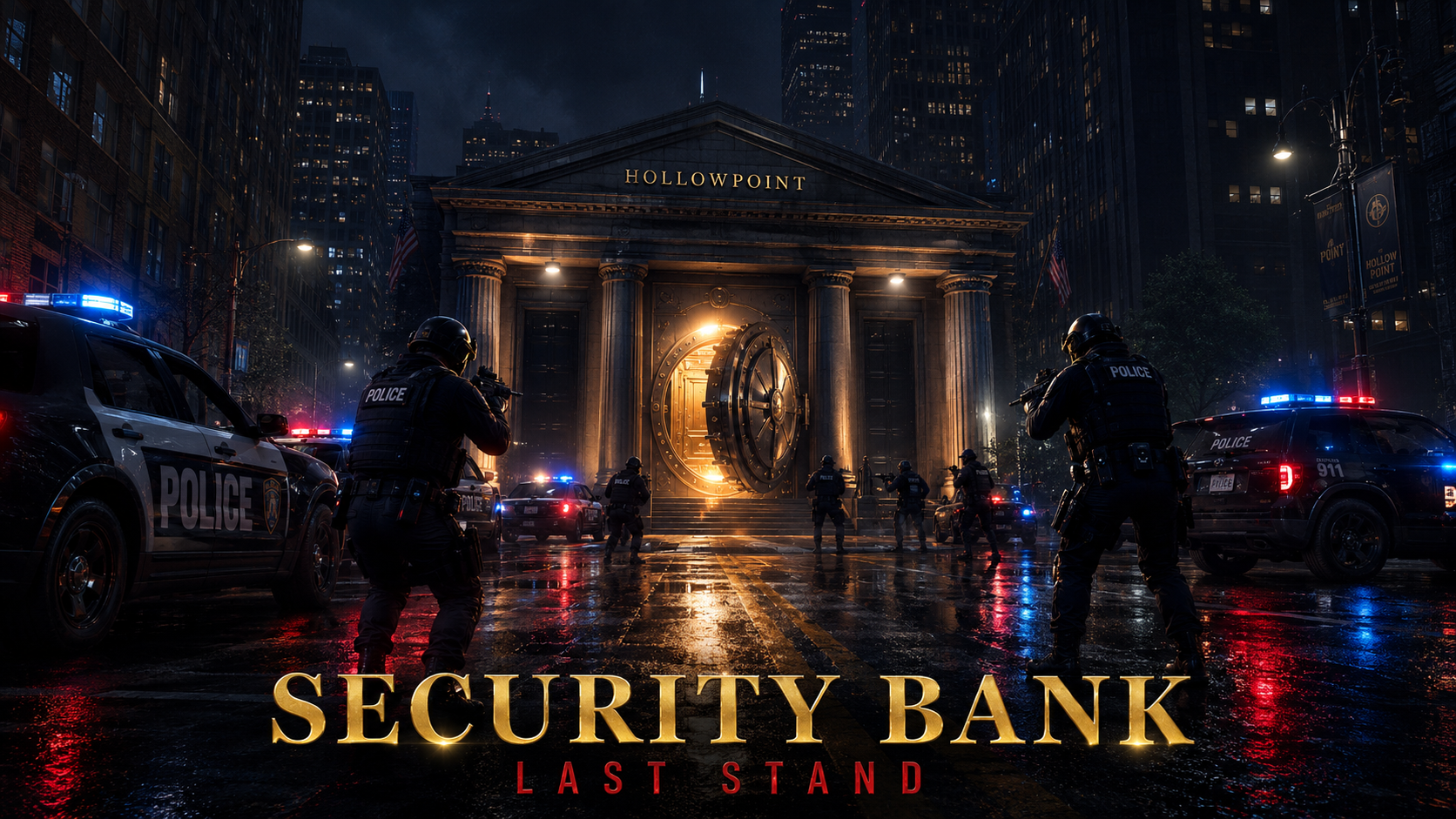
Security Bank: Last Stand
A top-down mobile tower defense built on one twist: success is the threat.
Inspiration
Most tower defense games punish you for losing. I wanted to design one that punishes you for winning. The hook — "winning yourself into a corner" — came from a simple question: what if every reward the player took actively made the game harder? That single idea drove every system in the design. You play a security operator defending a bank vault, and every dollar you extract for score raises your Heat, drawing bigger and deadlier waves. The more you win, the more you're hunted.
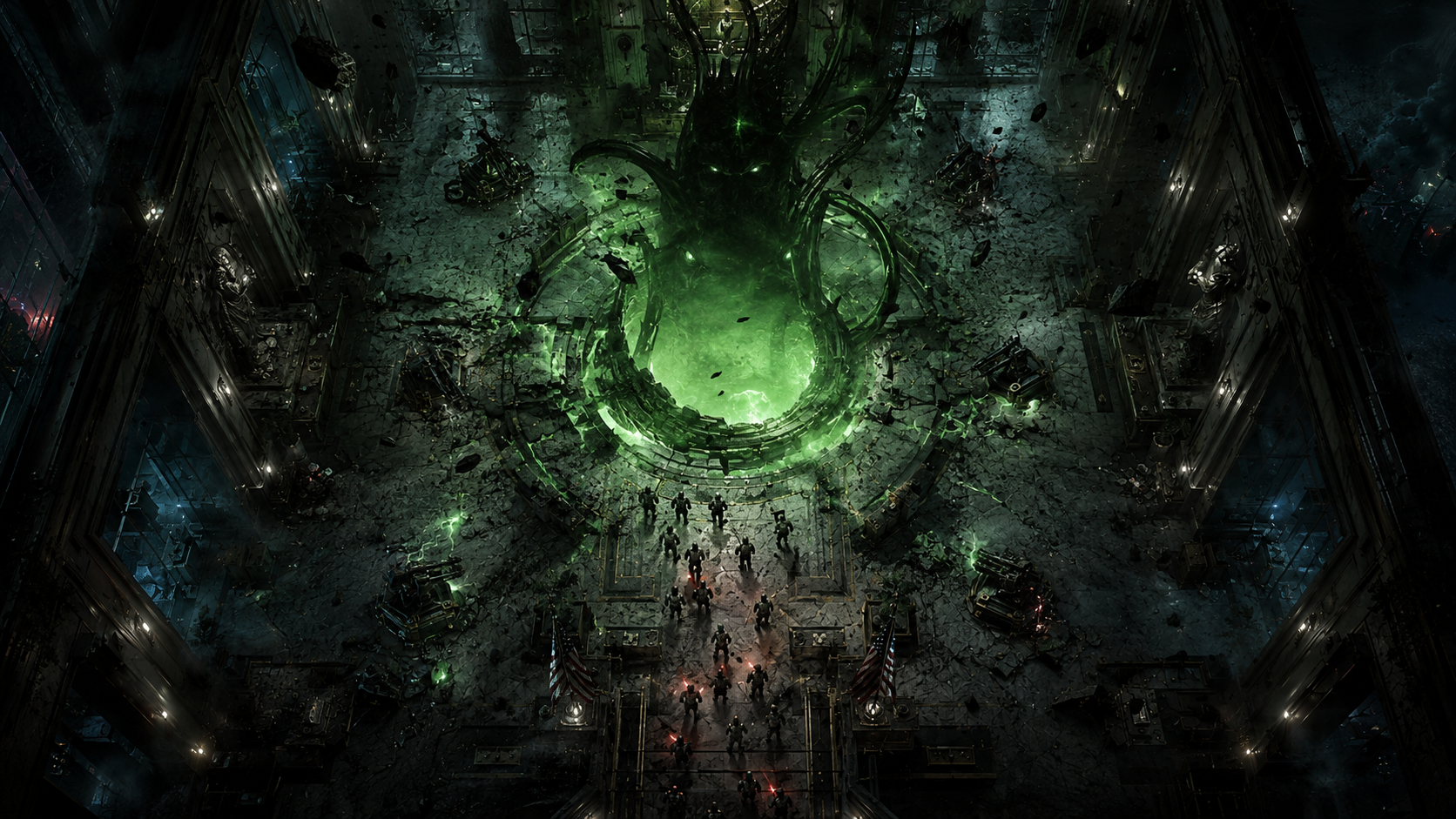
I also wanted the escalation to mean something narratively. So the bank isn't just a bank — it's a front for a secret organization, and the deepest vault holds a contained Anomaly. Criminals come for the money, the law comes for the secret, and all the chaos destabilizes what's contained below. The threat you're fighting and the prize you're protecting are the same thing.
What it is
- Core loop: Defend → Earn → Choose (Extract or Reinvest) → Upgrade → Escalate — looping back harder every cycle.
- The central decision: Extract cash for score (raising Heat), or reinvest it into a stronger defense. Greed is the core mechanic.
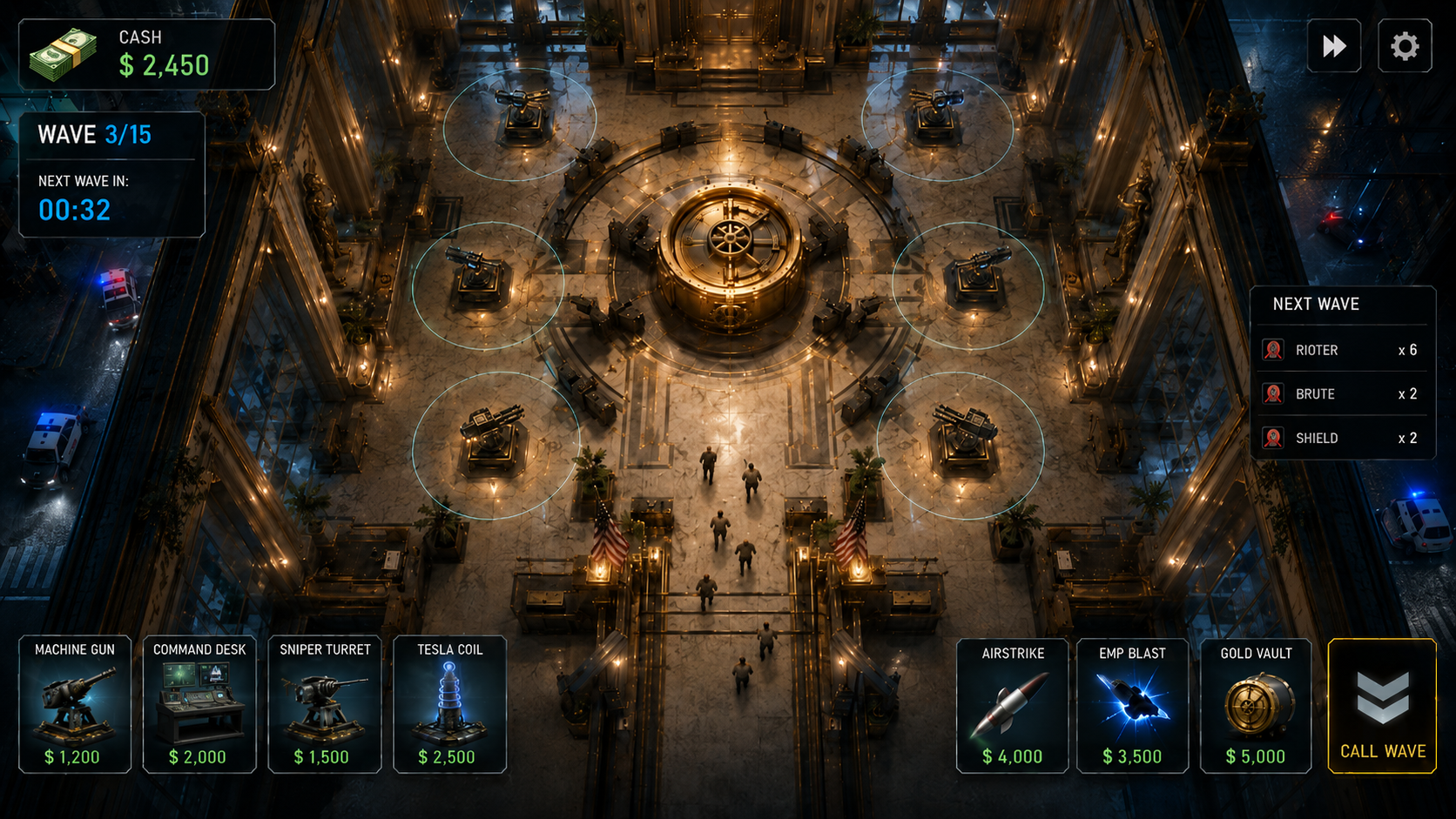
- Four defensive stations with distinct roles: Sniper Turret (single-target), Machine Gun (crowd control), Tesla Coil (slow/control), and a Command Desk (support/economy — not a weapon).
- The Heat system: hidden and felt early, then revealed as a police-scanner threat gauge the moment the law arrives — so the reveal lands as a realization, not a tutorial.
- Escalating enemies from sympathetic Rioters through SWAT and federal units to the surreal Anomaly boss.
- Goal: survive the escalating waves up to the Anomaly; your score is total cash extracted.
Designed mobile-first — landscape, top-down, thumb-friendly tap controls, readable silhouettes, and short, tense ~15-minute runs with long-term meta-progression.
How I built it
This was a pre-production design package, not a build, so the "construction" was design and documentation across four artifacts that tell one coherent story: a Game Design Document, a Player Journey Map, a Visual Concept Package, and a Production Plan. I used AI tools to generate the cinematic hero art and to iterate on rich game-UI mockups for the systems visuals, while keeping the design thinking — the loop, the economy math, the Heat formulas, the escalation logic — grounded in deliberate decisions. Every visual was made to match the documented game exactly, so the art and the design never contradict each other.
What I learned
The hardest and most valuable lesson was that coherence beats volume. It's easy to write a long design doc and generate a pile of pretty images; it's much harder to make four separate artifacts feel like one game. I learned to cut repetition aggressively, to make every system connect to the central tension, and to keep the player's emotional rhythm — when the game teaches, tests, and rewards — at the center of the design rather than just listing features.
Challenges
- Keeping the art and the design in lockstep. Early mockups showed towers that didn't match the design doc; reconciling every visual against the locked design took careful, repeated passes.
- Designing the Heat reveal. The mechanic only works if the player feels the consequence before they see the meter — pacing that reveal was a real design problem.
- Honest scoping. Deciding what belonged in the MVP versus the full-game concept forced hard cuts and a clear vertical-slice definition.
What's next
A playable vertical slice that proves the core loop is fun — the Lobby map with two towers — before layering on the full escalation, the meta-progression, and the mystery of what's really in the vault.
Built With
- claude
- doc


Log in or sign up for Devpost to join the conversation.