-
-
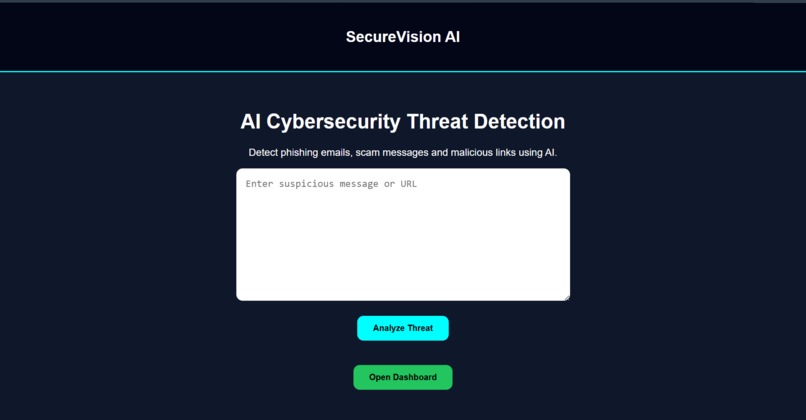
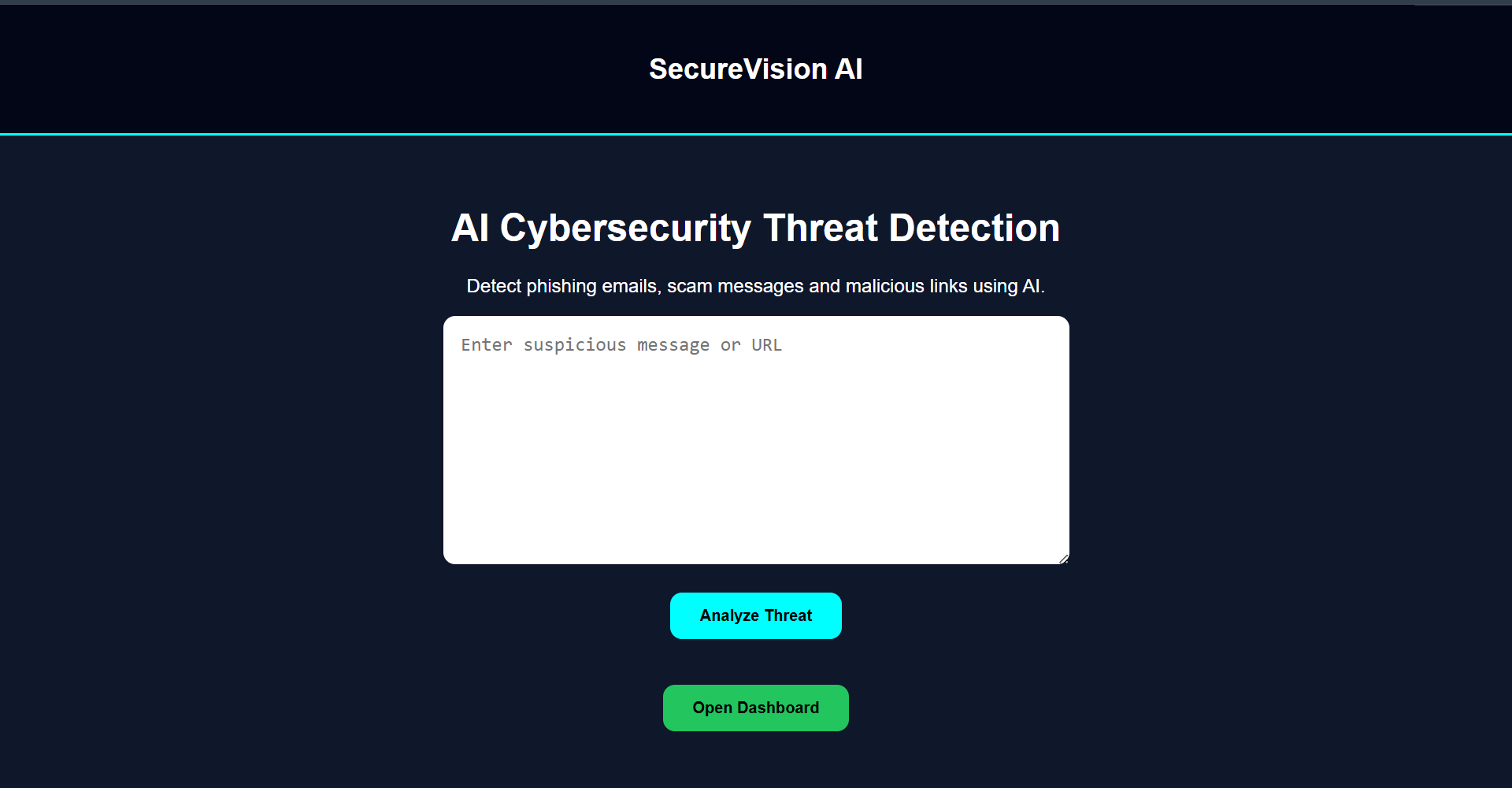
Home Page
-
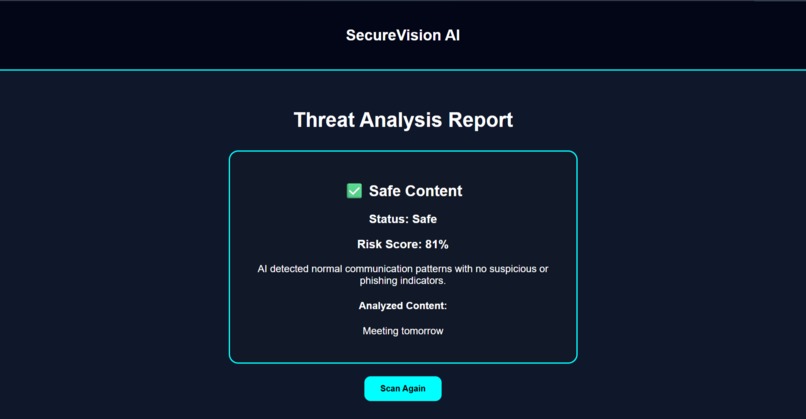
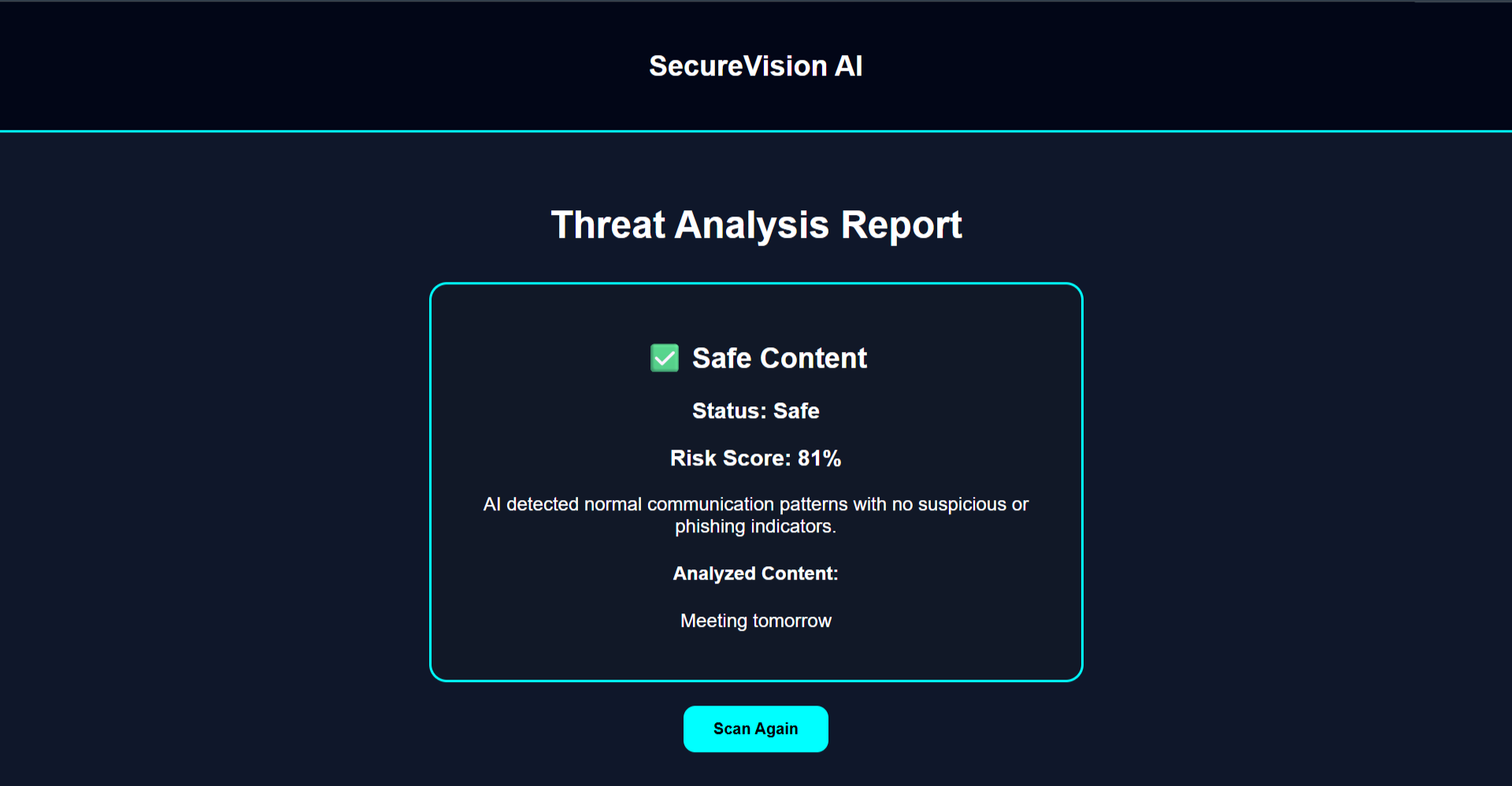
Safe
-
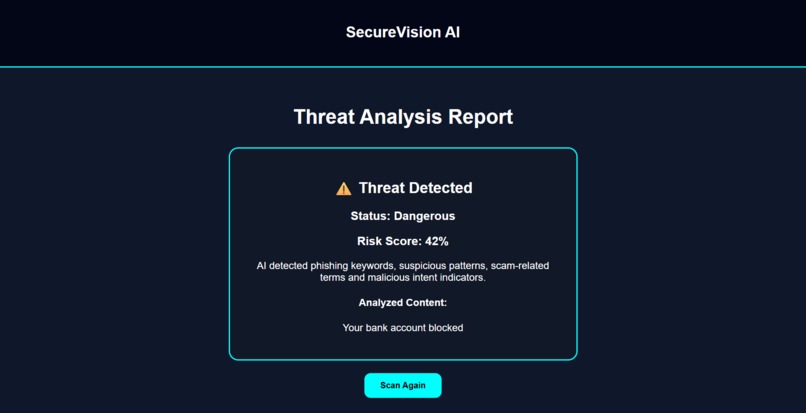
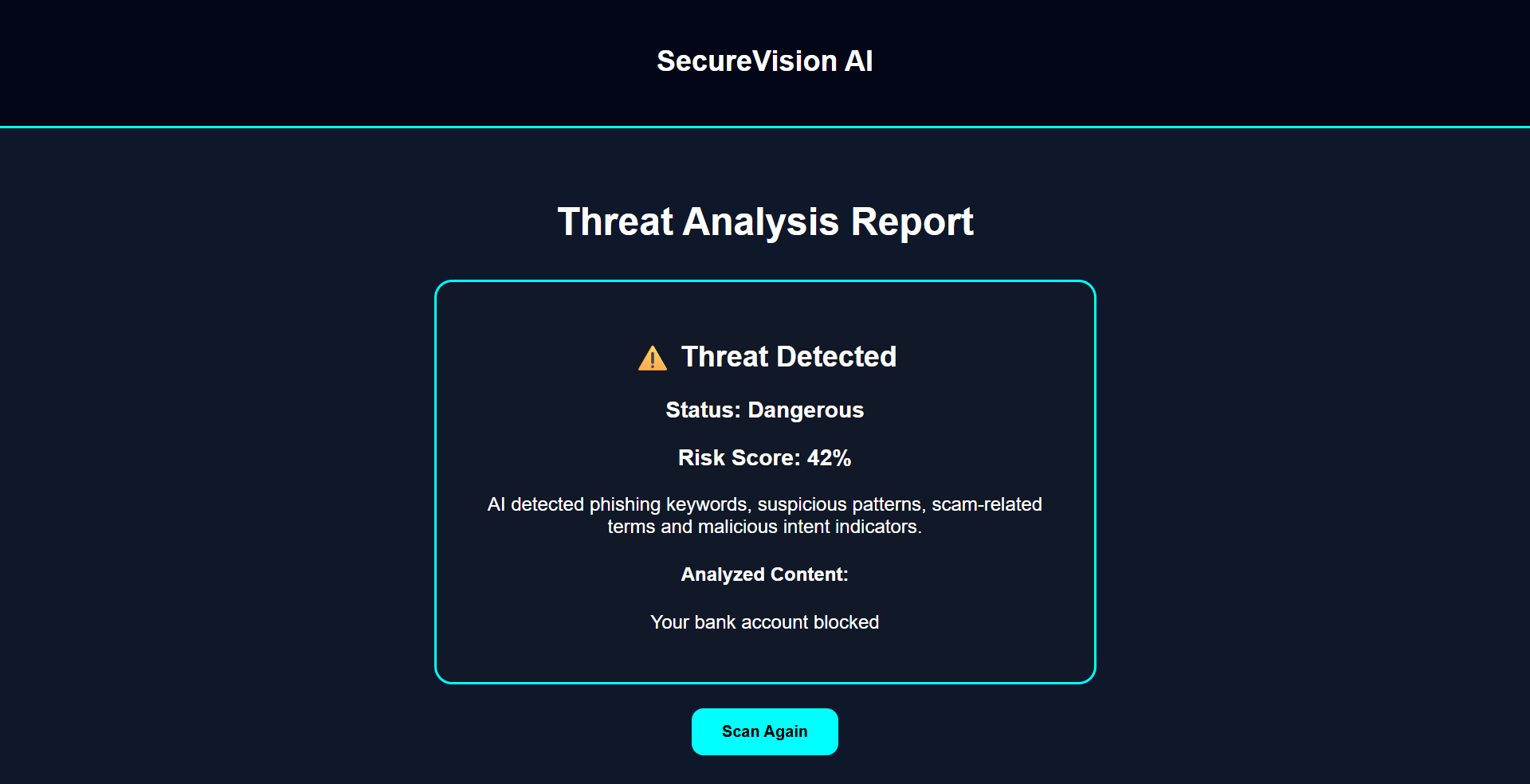
Dangerous
Inspiration
With the increasing number of phishing attacks, scam messages, and fraudulent online activities, there is a growing need for intelligent systems that can help users identify cyber threats. As someone interested in Cybersecurity and Artificial Intelligence, I wanted to build a project that combines both domains and demonstrates how AI can be used to improve digital safety. This inspired the development of SecureVision AI.
What it does
SecureVision AI is an AI-powered cybersecurity web application that analyzes suspicious messages and predicts whether the content is safe or potentially dangerous.
The application:
- Detects phishing and scam-related content
- Analyzes suspicious text using Machine Learning
- Generates threat predictions
- Displays risk scores
- Provides a cybersecurity dashboard for monitoring threat statistics
How we built it
We developed the frontend using HTML and CSS to create a simple and user-friendly interface.
The backend was built using Python and Flask, which handles user requests and integrates the Machine Learning model.
For the AI component, we used Scikit-learn with the Multinomial Naive Bayes algorithm. Text data is processed using CountVectorizer, which converts user input into numerical features that can be analyzed by the model.
Workflow:
- User enters suspicious content.
- Text is processed and vectorized.
- Machine Learning model analyzes the content.
- Threat prediction is generated.
- Results and risk score are displayed.
Challenges we ran into
- Integrating the Machine Learning model with the Flask web application.
- Understanding how text classification works in cybersecurity applications.
- Designing a smooth workflow between frontend, backend, and AI components.
- Handling different types of user input while maintaining accurate predictions.
- Building a complete AI-powered web application as a beginner-level developer.
Accomplishments that we're proud of
- Successfully combined Web Development, Artificial Intelligence, and Cybersecurity into a single project.
- Developed a working phishing detection system.
- Created a cybersecurity dashboard for threat monitoring.
- Implemented Machine Learning-based threat analysis.
- Built an end-to-end application that demonstrates practical cybersecurity concepts.
What we learned
Through this project, we learned:
- Python programming
- Flask web development
- HTML and CSS design
- Machine Learning fundamentals
- Text classification techniques
- Cybersecurity concepts such as phishing detection
- Integration of AI models into web applications
- Project development and deployment workflow
What's next for SecureVision AI
Future enhancements include:
- Real-time URL scanning
- OCR-based document verification
- Database integration
- User authentication and access control
- Malware and suspicious file detection
- Cloud deployment
- Advanced Machine Learning models
- Live threat monitoring dashboard
- Integration with cybersecurity threat intelligence feeds
Our goal is to evolve SecureVision AI into a more advanced cybersecurity platform capable of providing real-time threat detection and intelligent security insights.
Built With
- countvectorizer
- css3
- flask
- git
- html5
- machine-learning
- multinomial
- naive-bayes
- python
- scikit-learn
- visual-studio

Log in or sign up for Devpost to join the conversation.