-
-
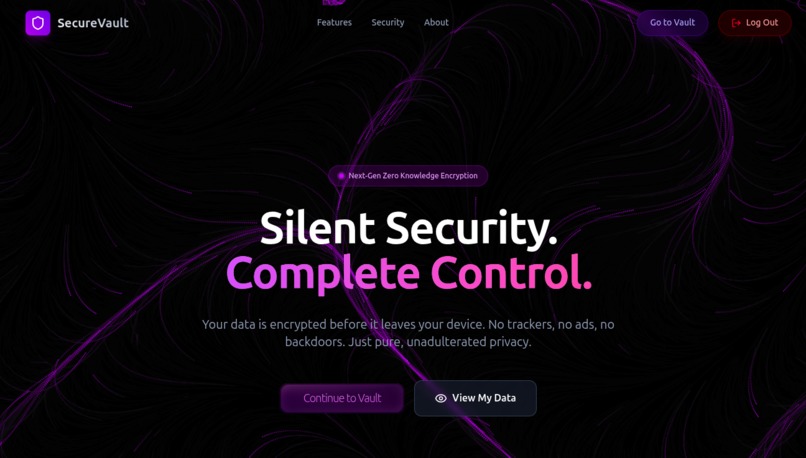
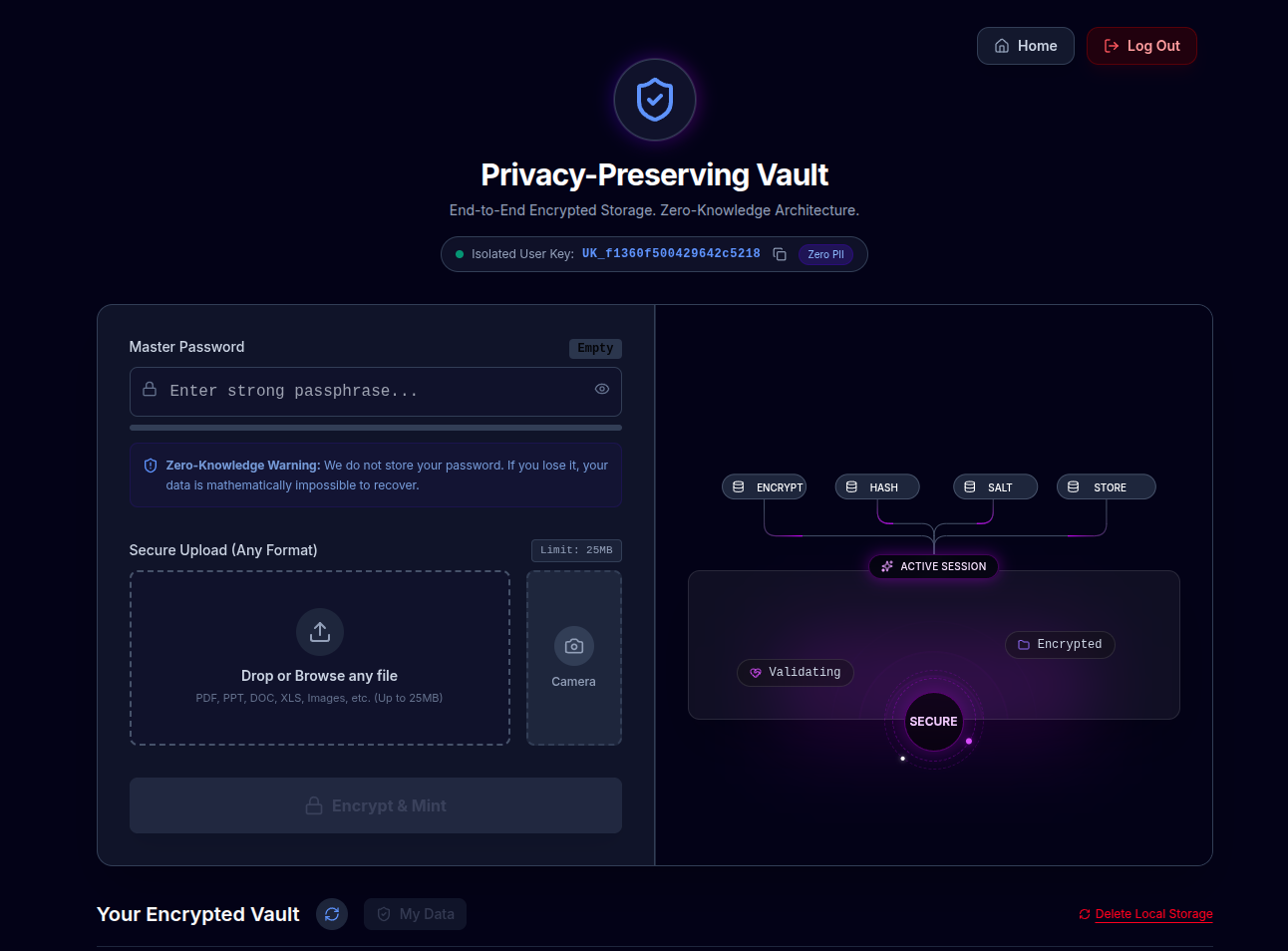
landing page
-
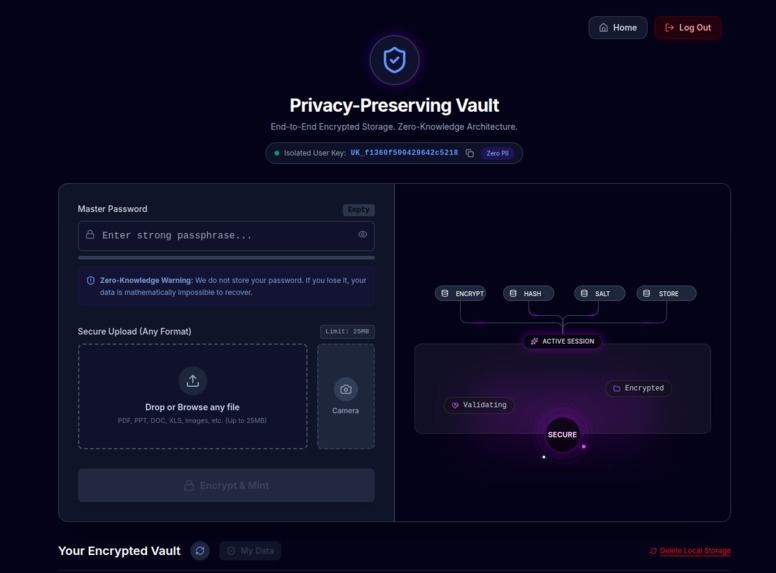
main process
-
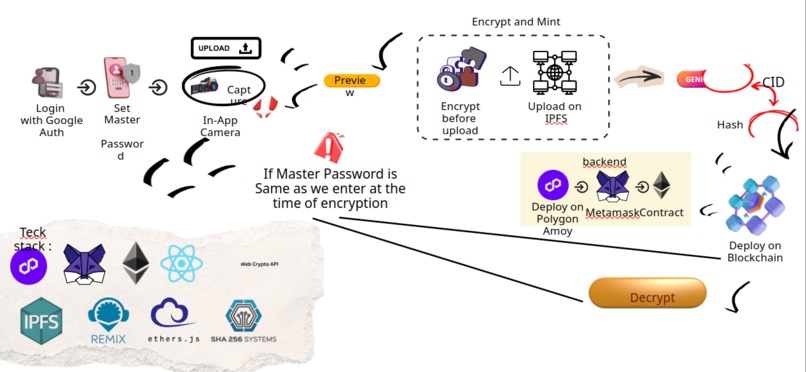
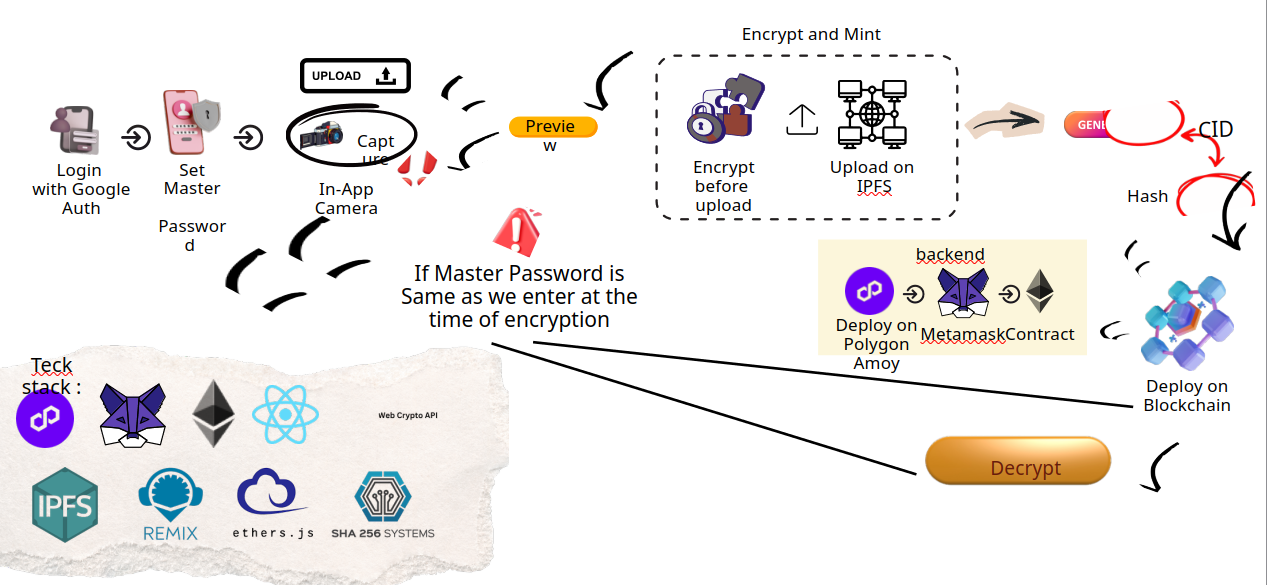
workflow
Inspiration
We were inspired by the growing need for better privacy and security for personal digital files. Most files are stored on centralized platforms, and users have limited control over their data. We wanted to build a solution that gives users more control using encryption, IPFS, and blockchain.
What We Learned
While building SecureVault, we learned about client-side encryption, decentralized storage using IPFS, smart contracts, wallet authentication, and Web3 integration. We also learned how to securely connect different technologies into one application.
How We Built It
SecureVault encrypts files on the user's device before storing them. The encrypted files are uploaded to IPFS, while the IPFS CID and file-related information are recorded on the blockchain through a smart contract. This provides a decentralized and tamper-evident way to manage important files.
Challenges We Faced
The main challenges were integrating encryption, IPFS, blockchain, and wallet authentication together. We also faced issues with smart contract deployment, IPFS uploads, and maintaining a secure connection between the stored file and its blockchain record. These challenges helped us understand the practical side of building a decentralized application.
Built With
- amoy
- ipfs
- metamask
- pinata
- polygon
- remix
- solidity

Log in or sign up for Devpost to join the conversation.