-
-
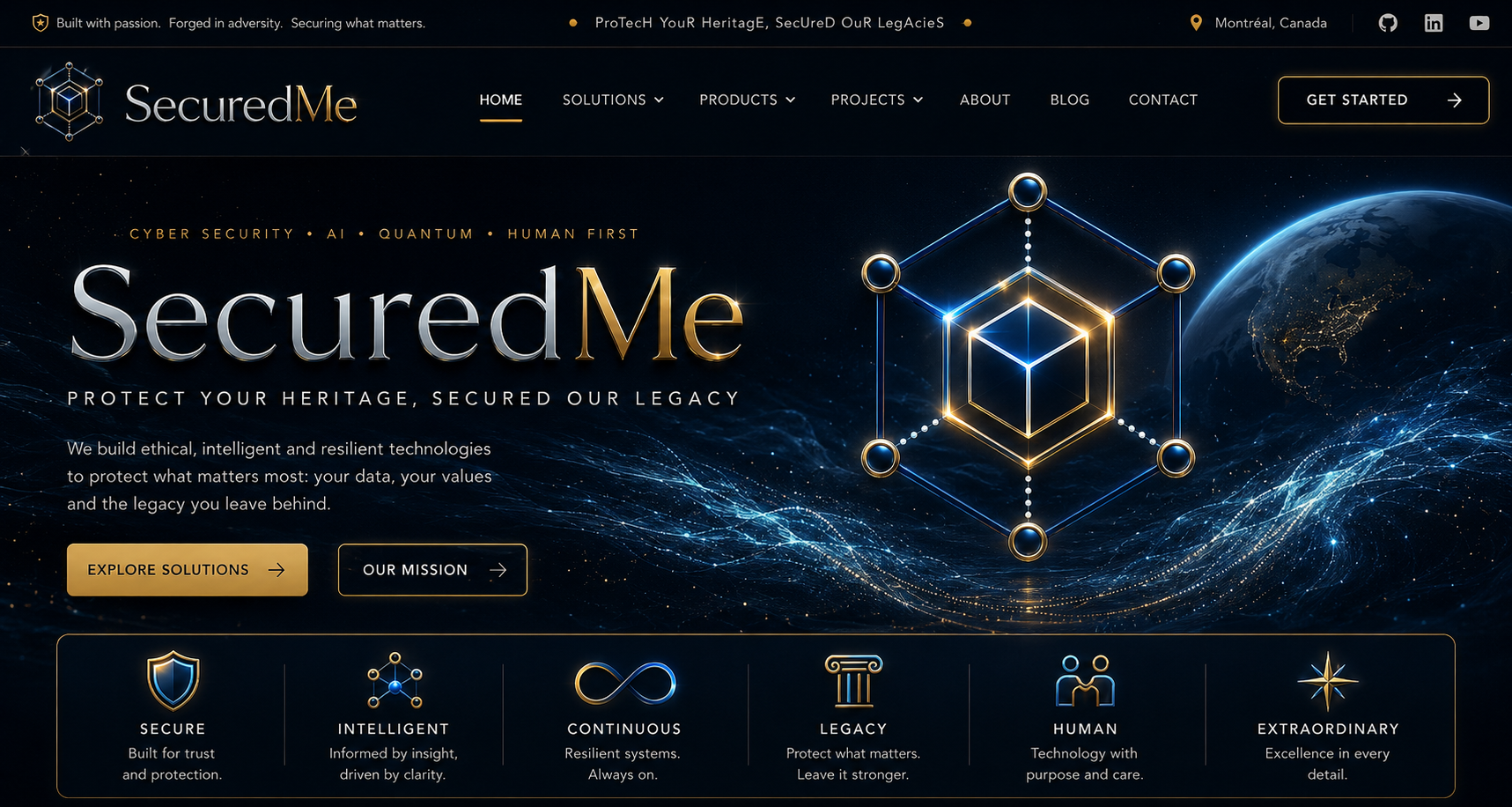
SecuredMe Education — privacy-first learning tools connected through shared contracts.
-
SecuredMe Education ecosystem — verified growth, safer choices, and learner agency.
-
Suite architecture — interoperable Education tools with shared governance and identity.
-
AlgoQuest — playful algorithm learning and guided problem-solving.
-
PaQBoT — structured question-oriented reasoning for learning journeys.
-
Tesla Workbench — experimental resonance and recovery learning workspace.
-
FNP-QNN — quantum-neural simulation and classroom exploration.
-
QuaNThoR — structured investigation and evidence-oriented reasoning.
-
Guided scientific exploration — turning complex concepts into learnable pathways.
-
Scholarium — Teach, Profiles, evidence, and bounded creative credits.
-
Synthia — scientific learning guidance with provenance-aware governance.
-
V.O.T Guardian — safer digital choices and protective learning workflows.
-
Visual Algorithm Designer — build and inspect algorithms visually.
-
FfeD-QLC and Algorithm Builder — advanced structures made explorable.
Inspiration
What it does
How we built it
Challenges we ran into
Accomplishments that we're proud of
What we learned
What's next for SecuredMe Education
Inspiration
SecuredMe Education began with a simple belief: educational technology should reward evidence of learning, not attention, pressure, likes, or time spent on a screen. Learners should be able to grow across tools while keeping privacy, agency, and a clear record of what they actually accomplished.
What it does
SecuredMe Education is a pre-alpha, privacy-first suite of interoperable learning tools. Its architecture separates three responsibilities:
- GrowthEvidencePassport keeps permanent learning evidence that is never spent.
- QiTLearningAllocationLedger represents educational allocations that can support optional learning paths and tools.
- ScholariumProfileCreditLedger (PiT) supports bounded creative activity between Scholarium Teach and Profiles.
The suite connects twelve public repositories through a shared Codex WebAuth contract. Provider-native OpenAI/Codex and Google/Gemini routes use explicit fingerprint acceptance, encrypted local session records, and a policy that prohibits publishing raw credentials or tokens.
How we built it
SecuredMe Education existed before Build Week. During the submission period, GPT-5.6 and Codex were used collaboratively to meaningfully extend, normalize, document, test, and present the suite. Codex helped us audit repository boundaries, identify the WebAuth mechanism and school-account acceptance hook, align shared adapter contracts, improve websites and code, produce evidence manifests, and prepare the judge handoff.
The suite combines Python services and CLIs with TypeScript, React, Vite, Tailwind CSS, Cloudflare delivery, Drizzle-backed components, and versioned JSON contracts. FNP-QNN and Gateway provide the clearest WebAuth reference implementation; every Education-suite repository implements or consumes the shared connector contract.
Challenges
The hardest challenge was not creating another isolated application. It was making twelve independently useful repositories tell one honest, testable story without collapsing their different purposes. We also had to separate permanent evidence from spendable credits, preserve provider-native authentication, document what existed before the hackathon versus what changed during it, and keep real minor data completely outside the pre-alpha demonstration.
Accomplishments
- A normalized twelve-repository Education-suite inventory.
- Shared Codex WebAuth governance with explicit fingerprint acceptance.
- Public demonstrations and source repositories for the suite tools.
- A privacy-first QiT/PiT learning architecture with non-manipulative boundaries.
- A judge handoff containing source, tests, schemas, READMEs, manifests, and a redaction record.
- No real minor data, environment files, raw tokens, dependency caches, or private assets in the submission package.
What we learned
A learning ecosystem needs more than attractive interfaces. It needs contracts that make consent, evidence, identity, credits, and deletion understandable across every tool. GPT-5.6 and Codex were most valuable as collaborative engineering partners: accelerating implementation while continually forcing architecture, provenance, and safety decisions into explicit artifacts.
What's next
Before the deadline we will keep strengthening tests, repository documentation, accessibility, and the final three-minute demonstration. After Build Week, the priority is a carefully reviewed pre-alpha learning vertical using only synthetic adult fixtures, followed by educator feedback and progressive integration of the remaining tool adapters.
Built With
- cloudflare
- codex
- drizzle
- gpt-5.6
- json-schema
- openai
- python
- react
- tailwindcss
- typescript
- vite
- webauth


Log in or sign up for Devpost to join the conversation.