-
-
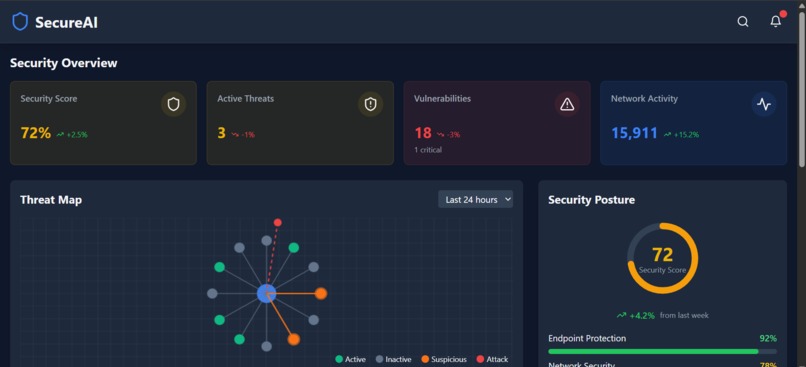
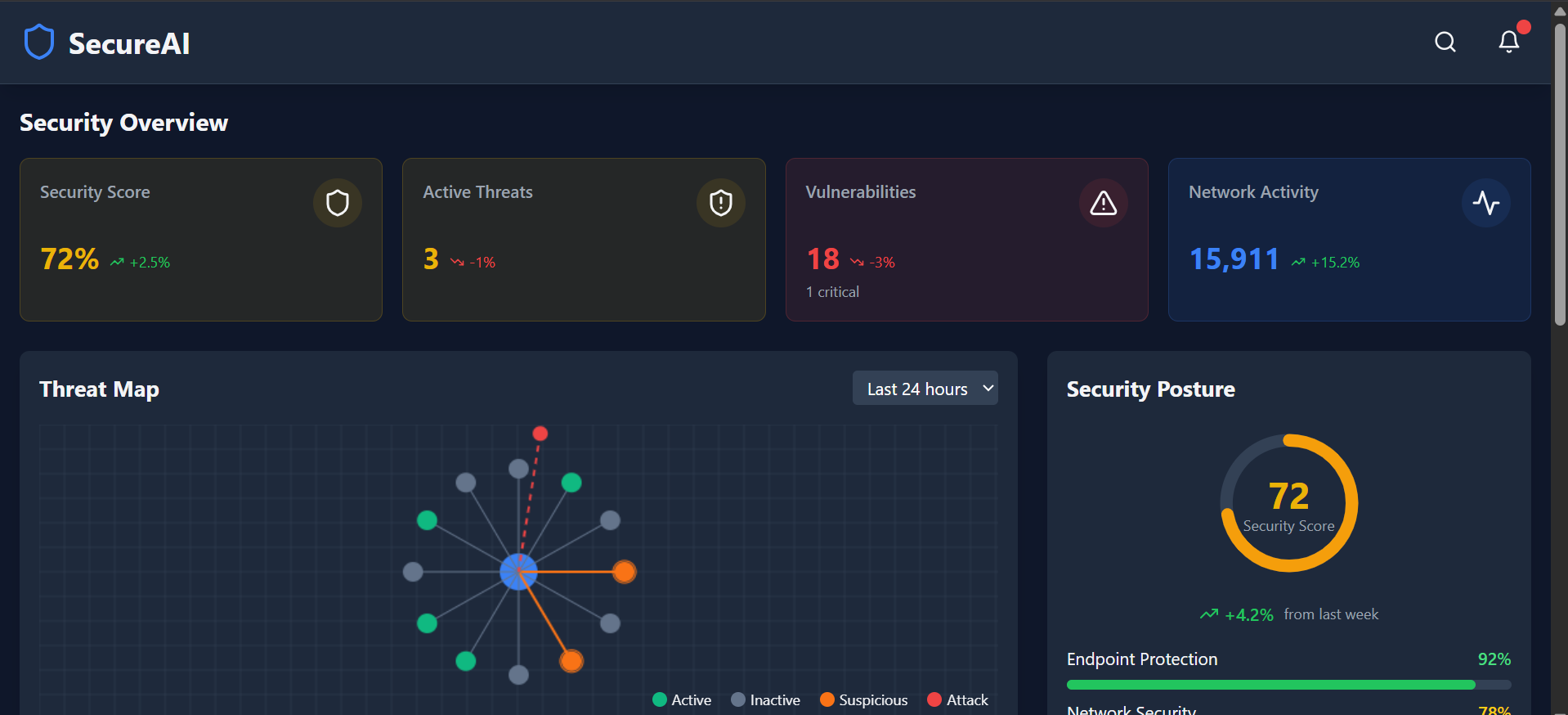
these is the prototype for secure AI. It shows if there is any vulnerability, active threat and so on.
-
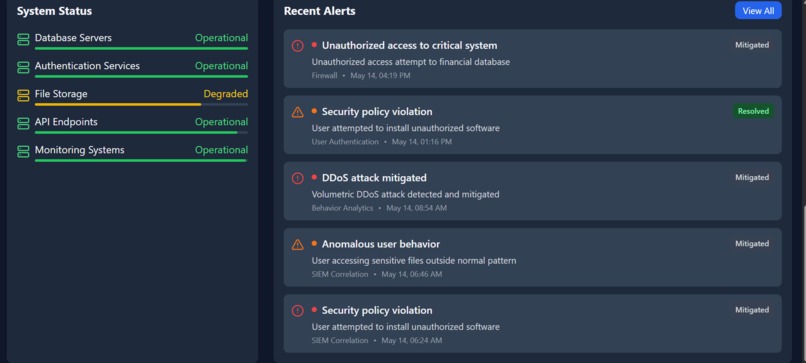
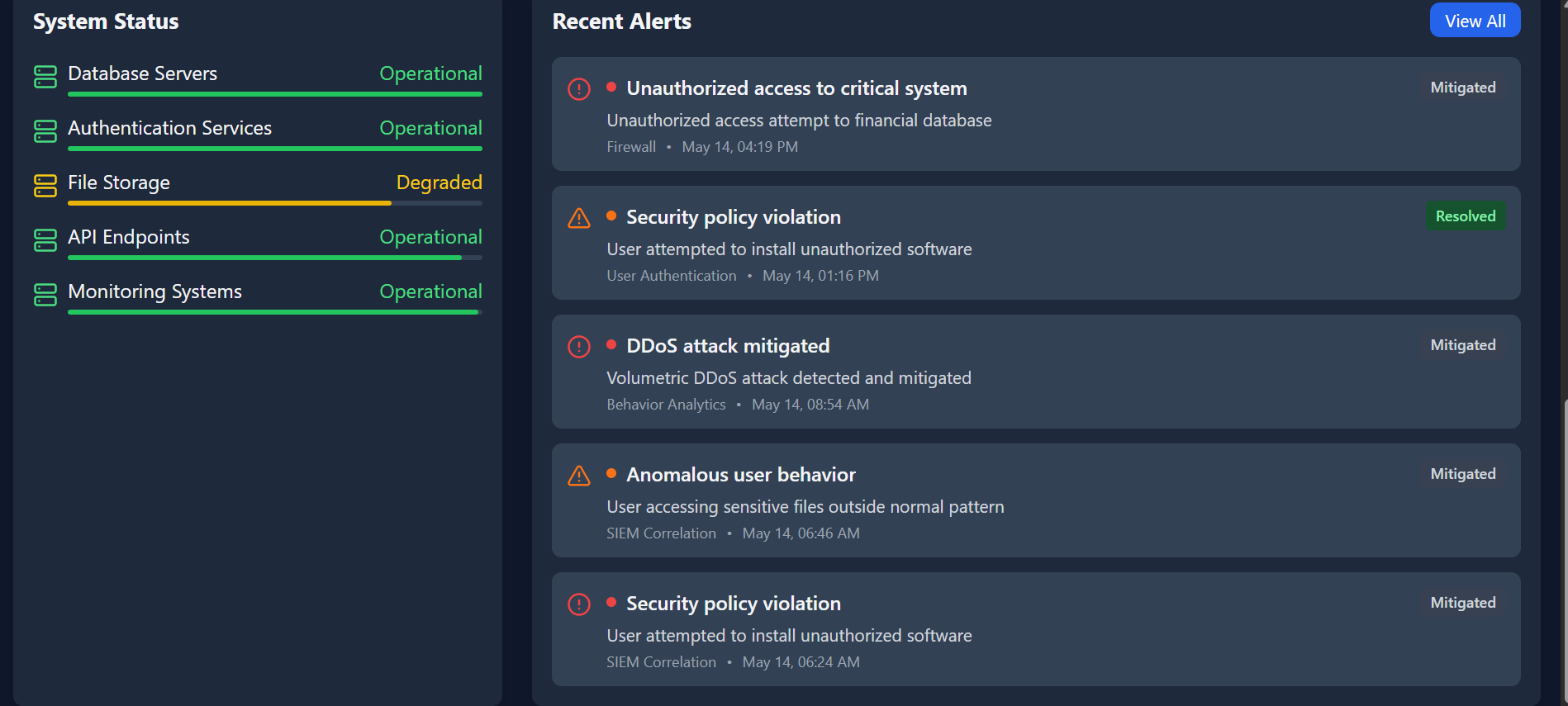
it shows if your system is ok and if there is someone trying to attack your system.
Inspiration
SecureAI was inspired by the growing need for advanced cybersecurity solutions that can proactively identify and mitigate threats in real-time. With the increasing sophistication of cyber attacks and the complexity of corporate networks, traditional security measures are often insufficient. We saw an opportunity to leverage AI's capabilities to enhance cybersecurity, making it more efficient and effective.
What it does
SecureAI is an AI-driven cybersecurity platform designed to automate threat detection, vulnerability assessment, and incident response within corporate networks. It uses machine learning models to analyze network traffic, identify anomalies, and classify threats. The platform also includes tools for continuous vulnerability scanning and an AI-powered incident response module that can automatically initiate countermeasures.
How we built it
We built SecureAI using a combination of machine learning frameworks, deep learning libraries, and natural language processing tools. We utilized TensorFlow and PyTorch for developing AI models, and NLTK for text analysis in incident reporting. Our backend was developed using Java, and we integrated SQL for database management. For networking, we used Cisco tools to implement AI-driven network segmentation. We also developed RESTful APIs to enable integration with existing security systems.
Challenges we ran into
One of the main challenges was integrating AI models with existing network security infrastructure. We also faced difficulties in training the models to accurately detect a wide range of threats without causing too many false positives. Additionally, ensuring the platform's scalability to handle large volumes of network traffic was a significant challenge.
Accomplishments that we're proud of
We are proud of successfully developing a prototype that demonstrates SecureAI's core functionalities. Our AI models show high accuracy in threat detection and vulnerability assessment. We also managed to integrate the platform with several third-party security tools, showcasing its versatility. Furthermore, the automated incident response feature has proven to be effective in simulating real-time threat mitigation.
What we learned
Through this project, we learned a lot about the intricacies of cybersecurity and the potential of AI in enhancing security measures. We gained insights into the challenges of integrating AI with existing systems and the importance of scalability in cybersecurity solutions. We also learned the value of continuous learning and adaptation in the ever-evolving field of cybersecurity.
What's next for SecureAI
Looking ahead, we plan to further refine our AI models to improve accuracy and reduce false positives. We also aim to expand the platform's capabilities to include more advanced threat intelligence features. Additionally, we plan to conduct more extensive testing with real-world network environments to ensure the platform's robustness. Ultimately, we hope to commercialize SecureAI and make it available to organizations worldwide to enhance their cybersecurity posture.

Log in or sign up for Devpost to join the conversation.