Inspiration
Smart contracts are immutable once deployed, meaning a single vulnerability can lead to irreversible financial losses. While tools like Slither and Semgrep are powerful, they require developers to switch between multiple applications, making security analysis an afterthought. We wanted to make security a natural part of the development workflow by building Secu-IDE, a unified IDE that detects vulnerabilities in real time as developers write and compile Solidity smart contracts.
What it does
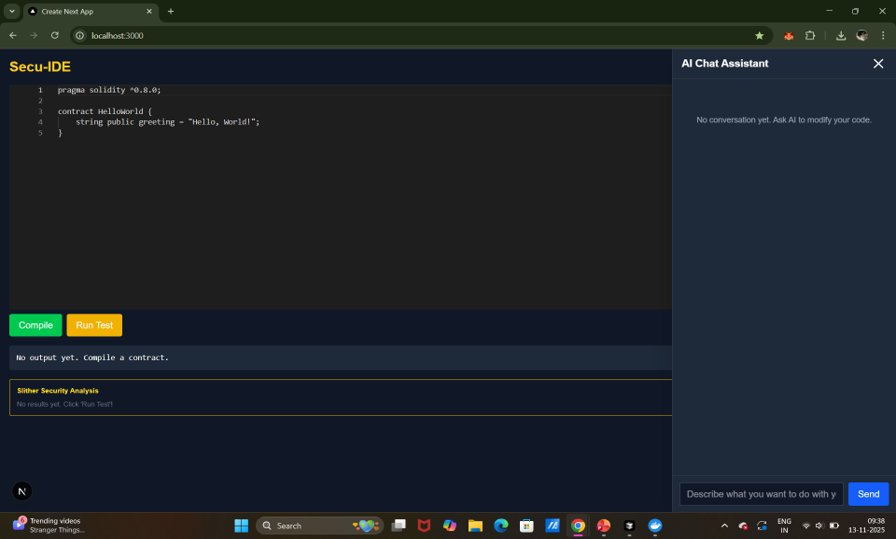
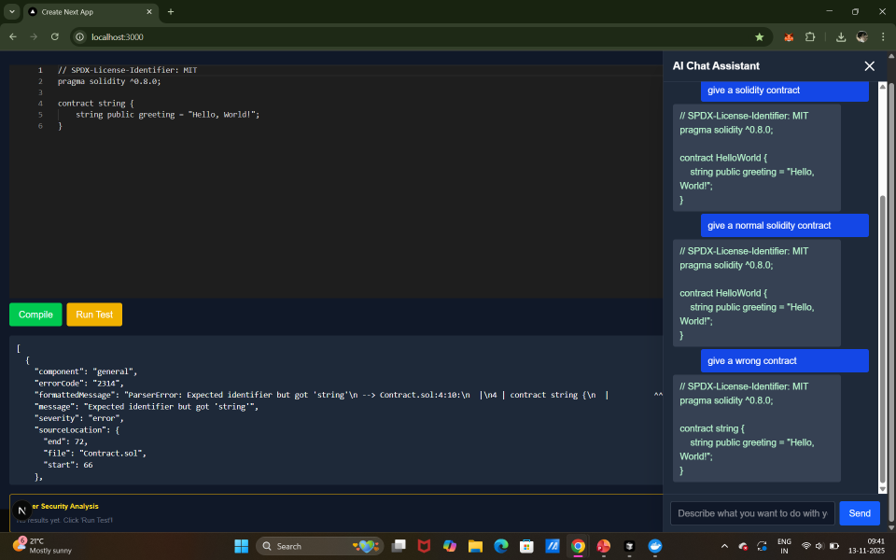
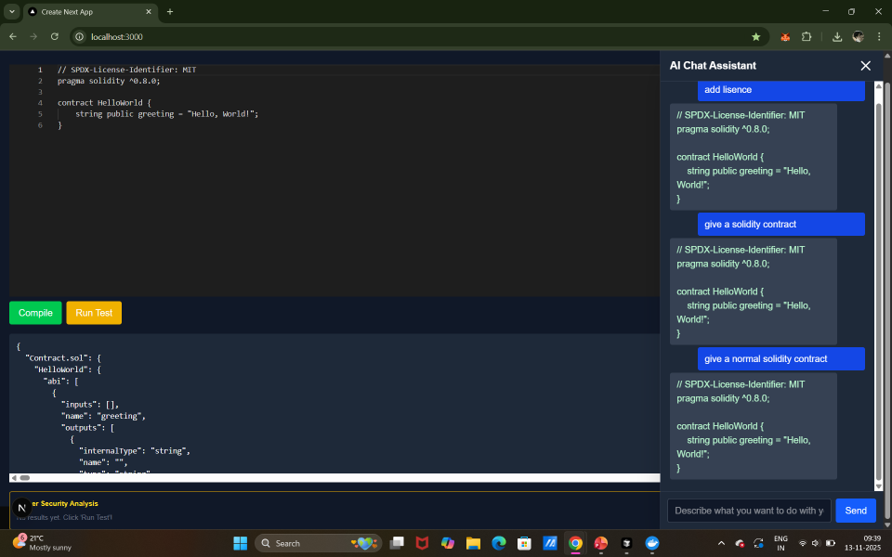
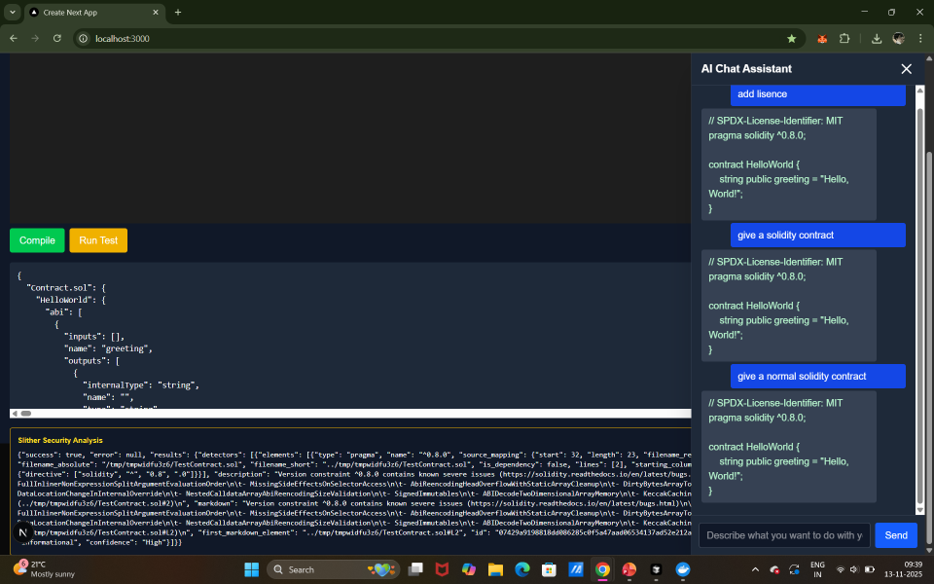
Secu-IDE is a web-based smart contract IDE that combines code editing, compilation, vulnerability detection, and AI-powered explanations into one platform. It compiles Solidity contracts using solc-js/solc, analyzes them with Slither and Semgrep, categorizes vulnerabilities by severity, and generates AI summaries with recommended fixes. This allows developers to identify and resolve security issues before deployment.
How we built it
We built Secu-IDE using a modular architecture:
- Frontend: TypeScript with Monaco Editor for an IDE-like coding experience.
- Backend: Node.js/Express to orchestrate compilation and analysis.
- Compiler:
solc-jsfor browser compilation andsolcon the backend. - Security Analysis: Slither for static analysis and Semgrep for rule-based vulnerability detection.
- Containerization: Docker to securely isolate analyzer execution.
- AI Integration: Generates human-readable explanations and security recommendations from analyzer outputs.
- Result Processing: Normalizes outputs from multiple analyzers into a unified JSON report for easy visualization.
Challenges we ran into
- Integrating multiple security tools with completely different output formats.
- Running Slither and Semgrep securely while maintaining low analysis latency.
- Designing a unified reporting format that combines results from different analyzers.
- Making complex security reports understandable through AI-generated summaries.
- Balancing real-time performance with accurate vulnerability detection.
Accomplishments that we're proud of
- Successfully integrated coding, compilation, security analysis, and AI explanations into a single platform.
- Achieved near real-time vulnerability detection for Solidity smart contracts.
- Eliminated the need for developers to switch between multiple security tools.
- Built a scalable, modular architecture that can easily support additional analyzers in the future.
- Improved the accessibility of blockchain security through AI-powered explanations.
What we learned
This project taught us about blockchain security, Solidity vulnerabilities, static analysis, rule-based detection, Docker-based isolation, backend orchestration, and designing modular software systems. We also gained valuable experience integrating AI into developer tools to simplify complex security information.
What's next for Secu-IDE
We plan to expand Secu-IDE by:
- Adding support for analyzers like Mythril and CodeQL.
- Implementing AI-powered automatic vulnerability fixes.
- Supporting additional blockchain ecosystems such as Aptos, Sui, and Solana.
- Integrating with CI/CD pipelines for automated security checks.
- Introducing machine learning models for vulnerability prediction and smarter security recommendations.
Built With
- css
- html
- javascript
- node.js
- slither
- solc-js


Log in or sign up for Devpost to join the conversation.