-
-
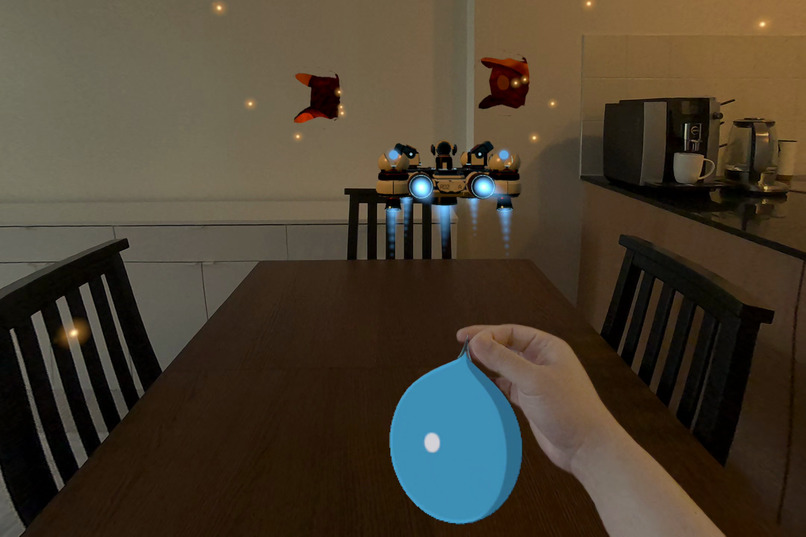
Use fluidic input to pilot your repair carrier to seal breaches in your room
-
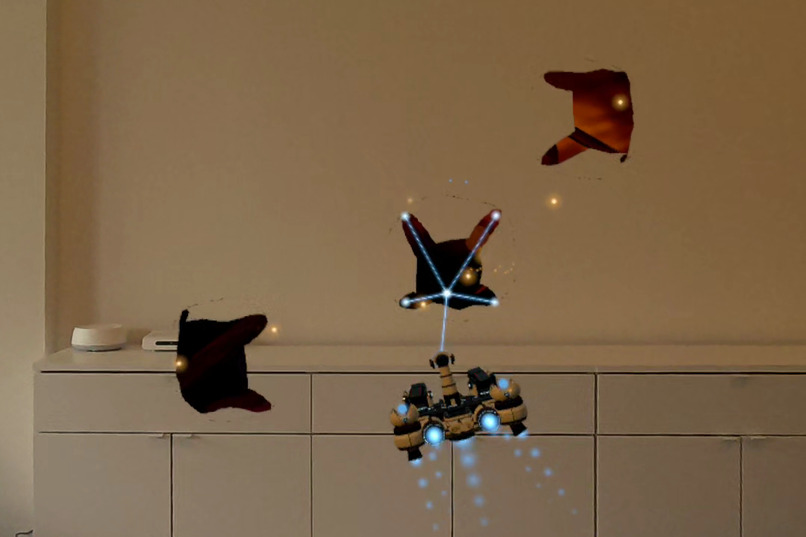
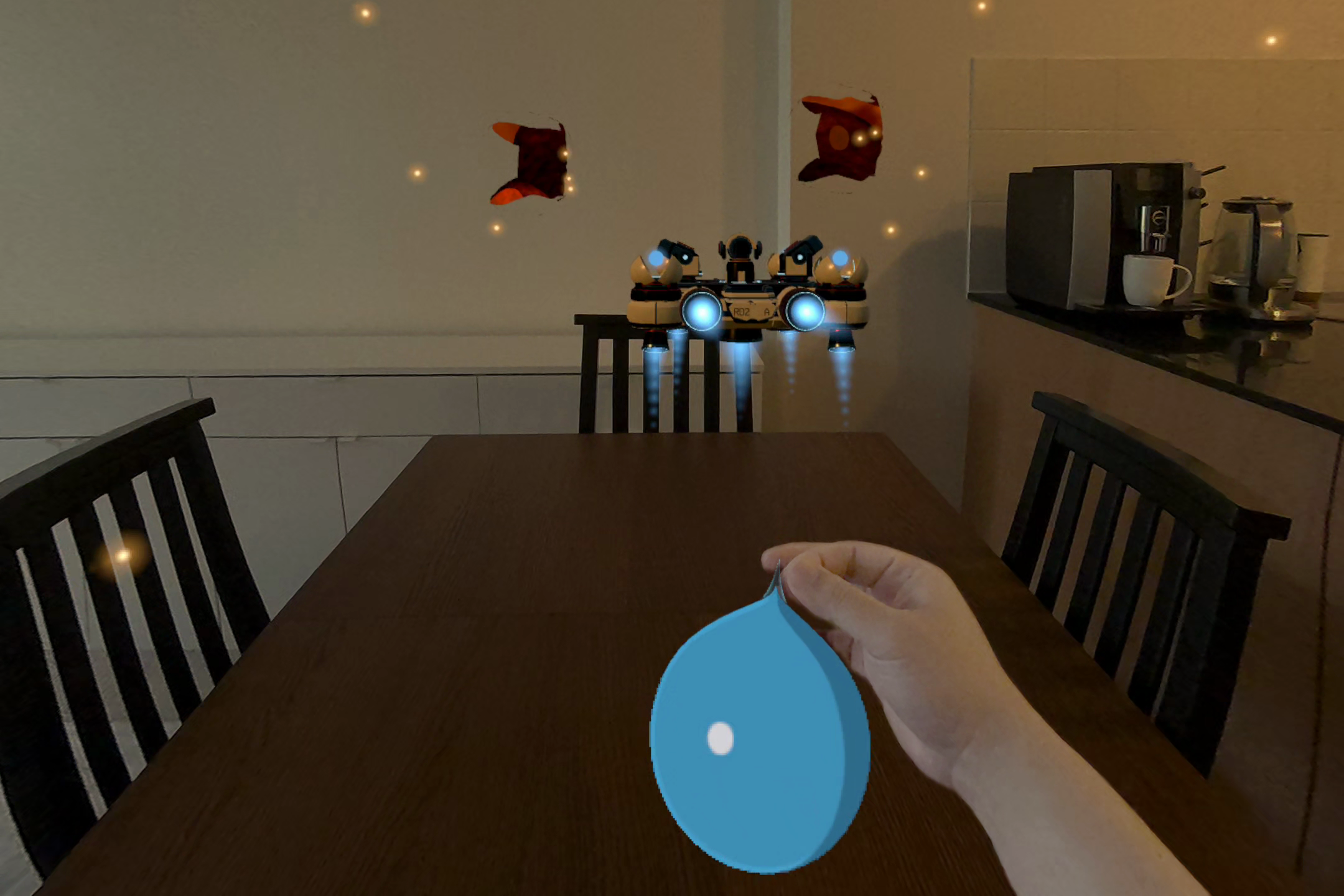
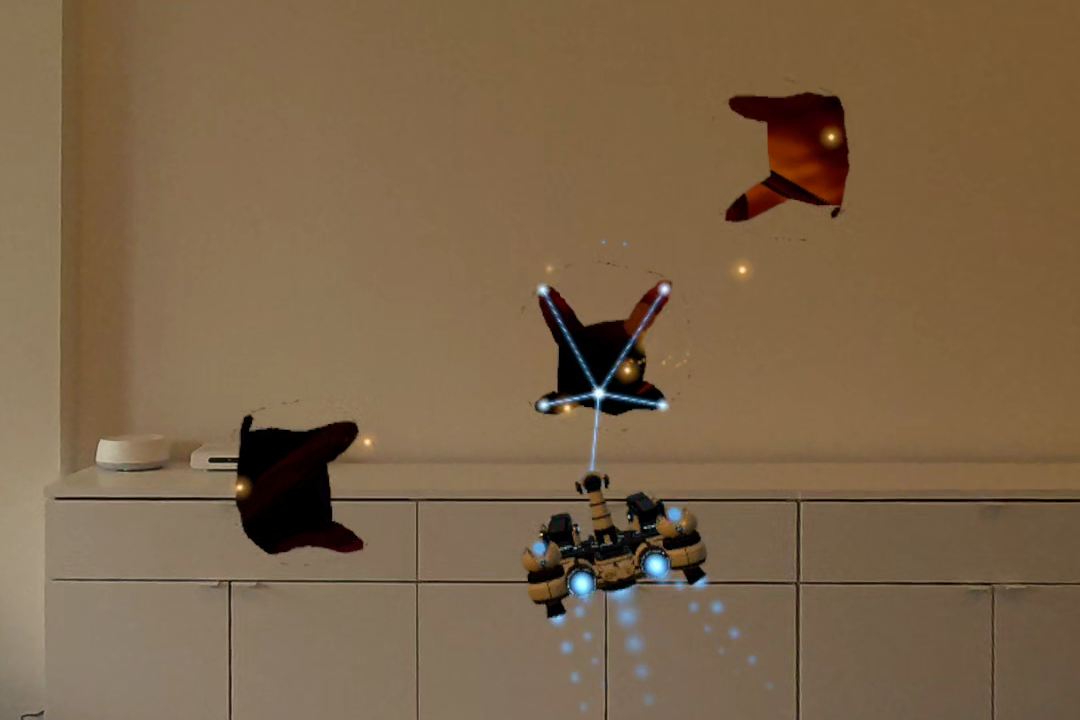
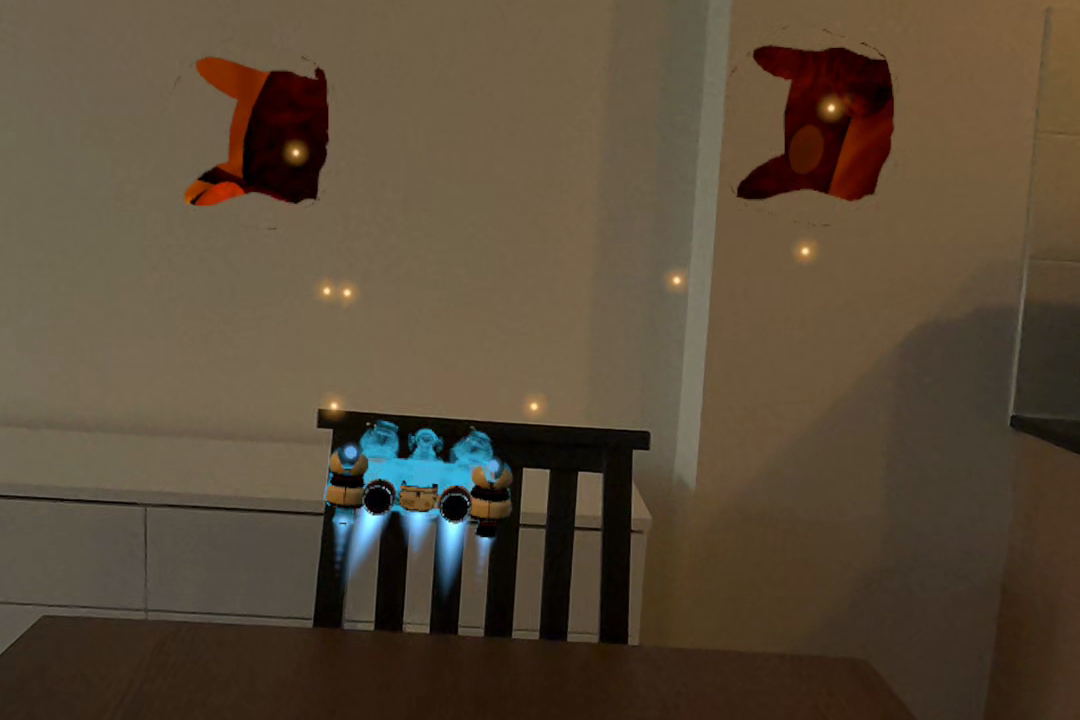
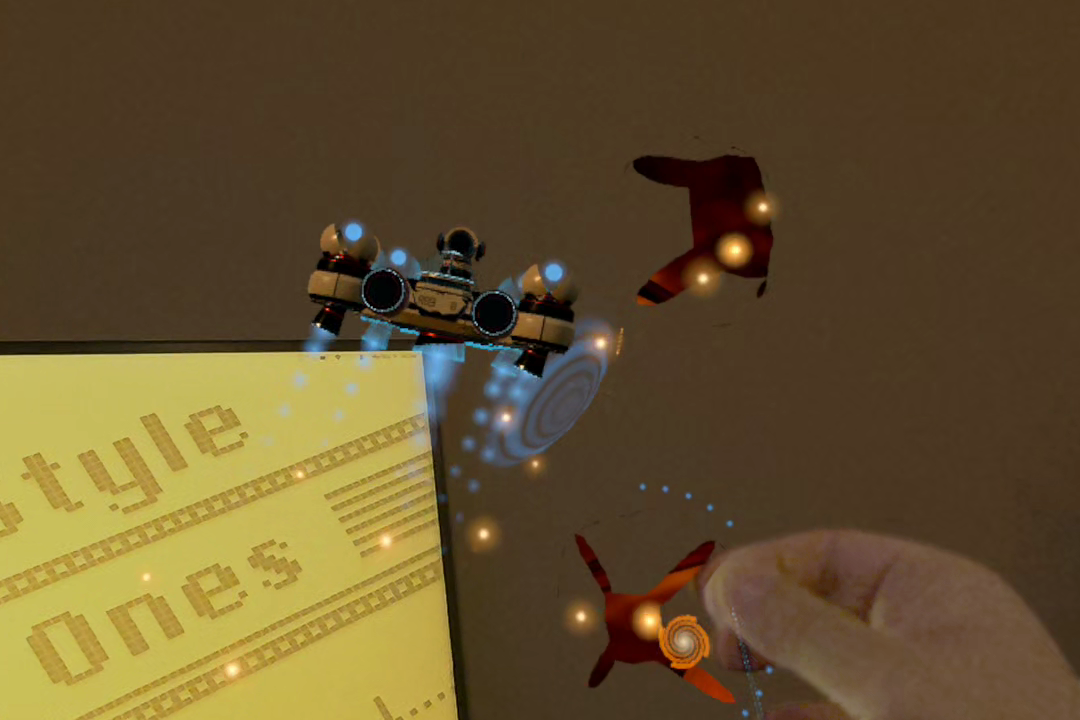
Your carrier's sealing laser's fire off once you get close - careful of the spores though!
-
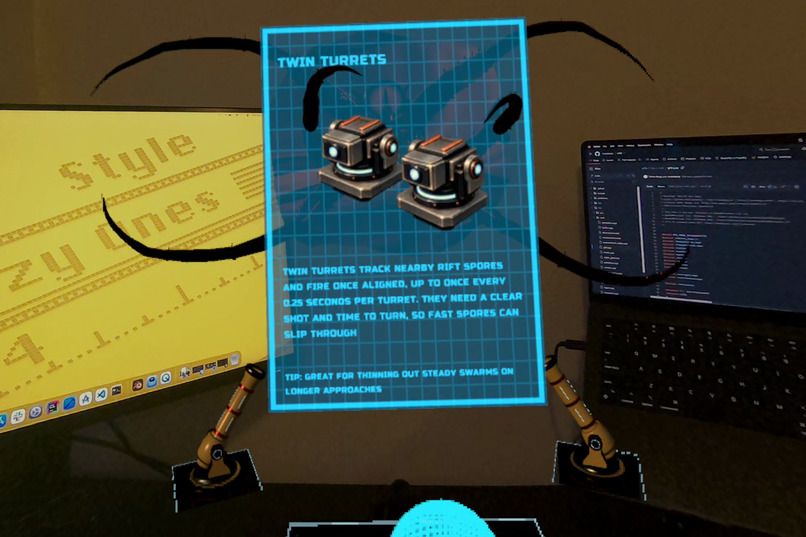
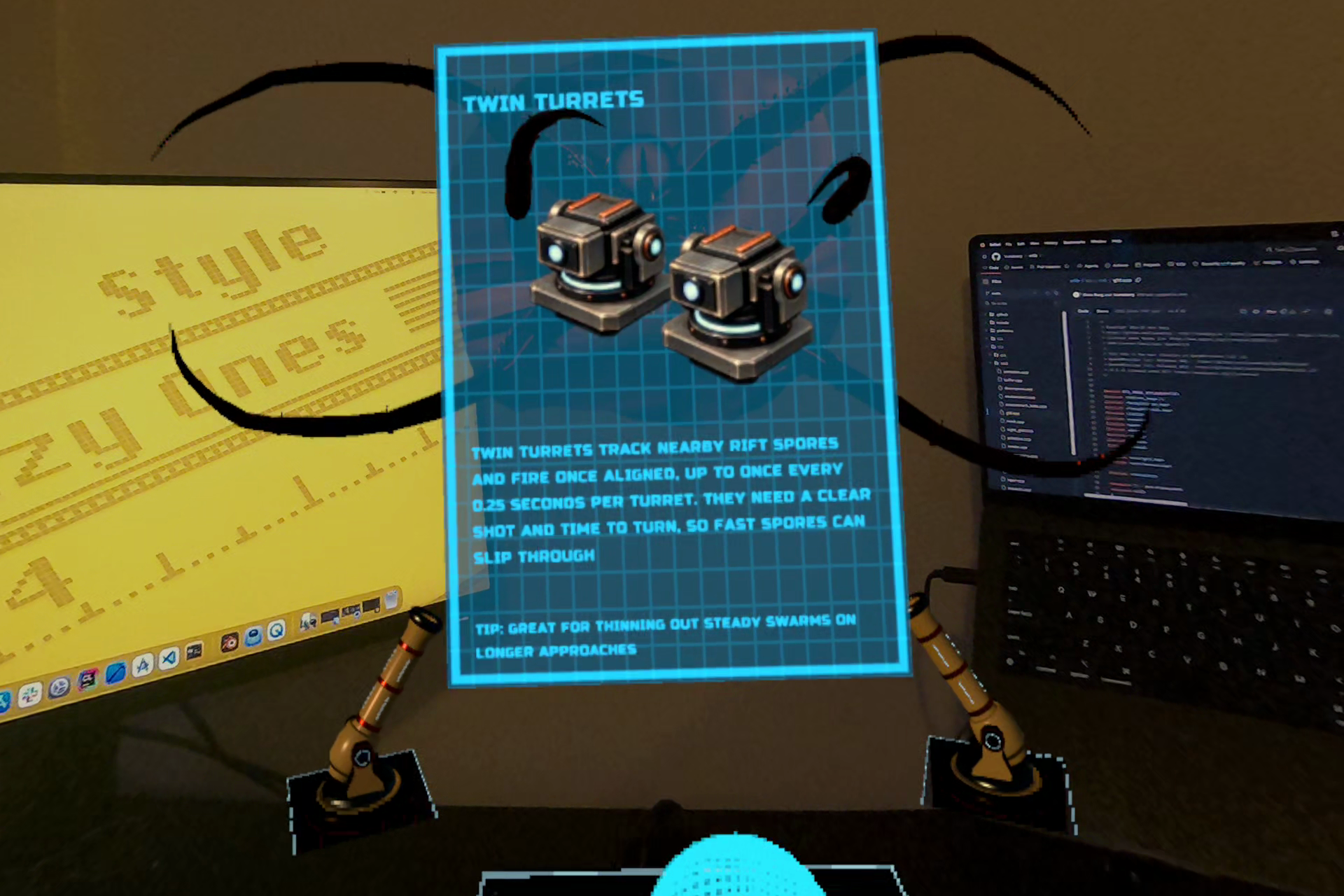
Use upgrades wisely to win tricky breaches
-
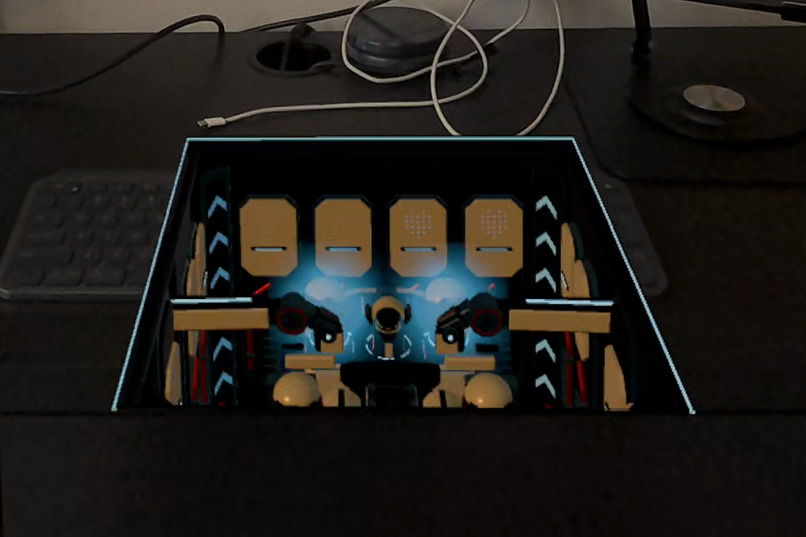
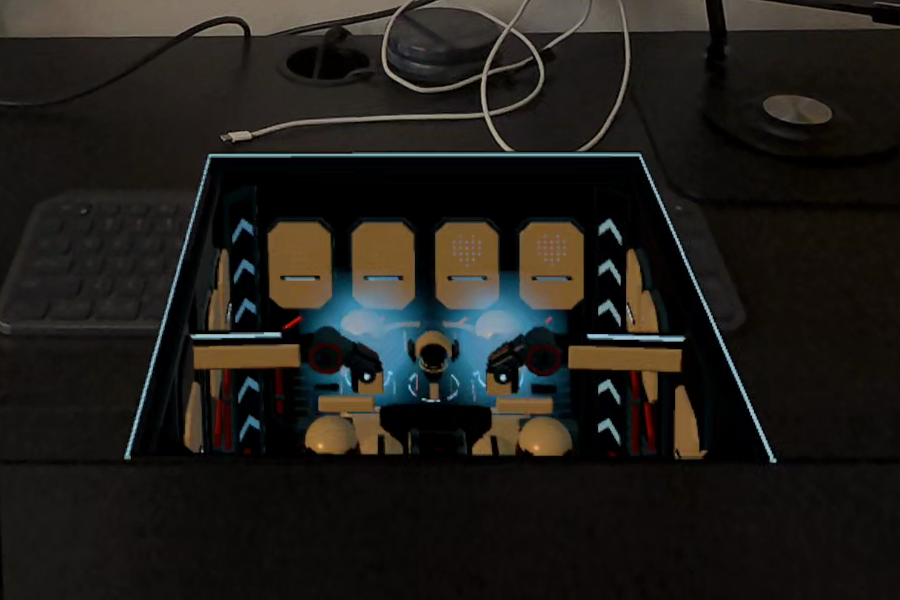
Fit upgrades
-
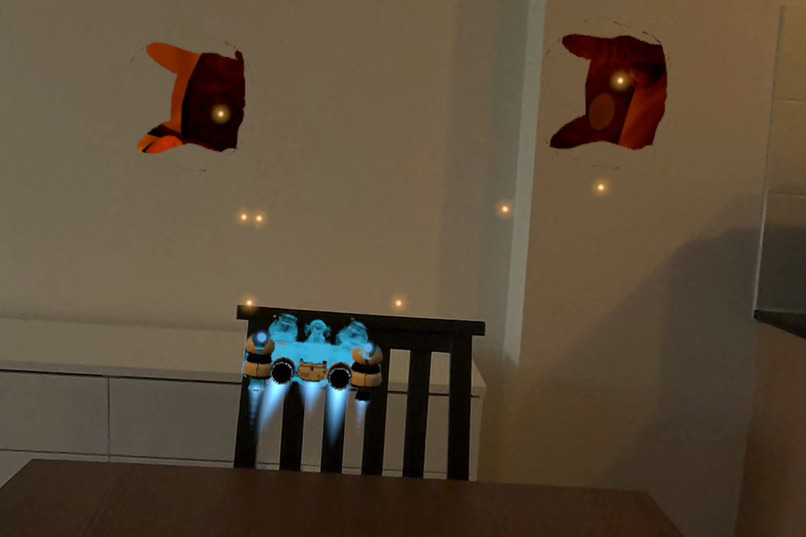
Phase in/out of furniture as an additional strategy (optional)
-
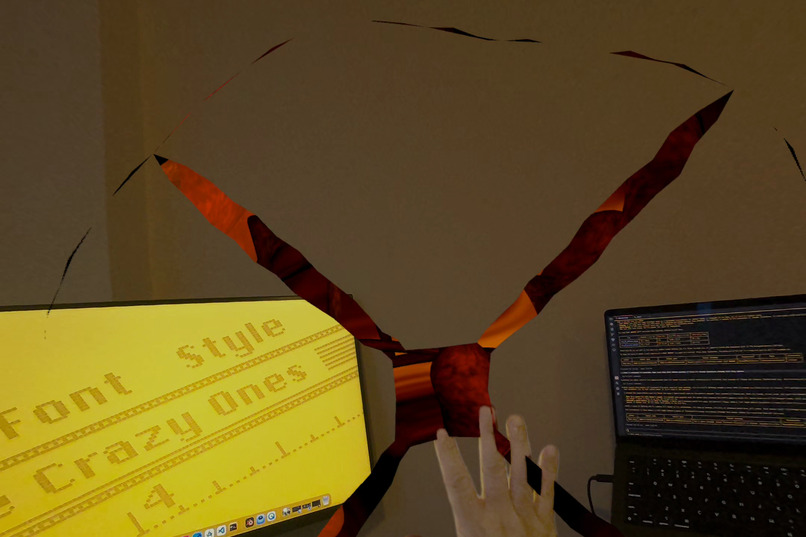
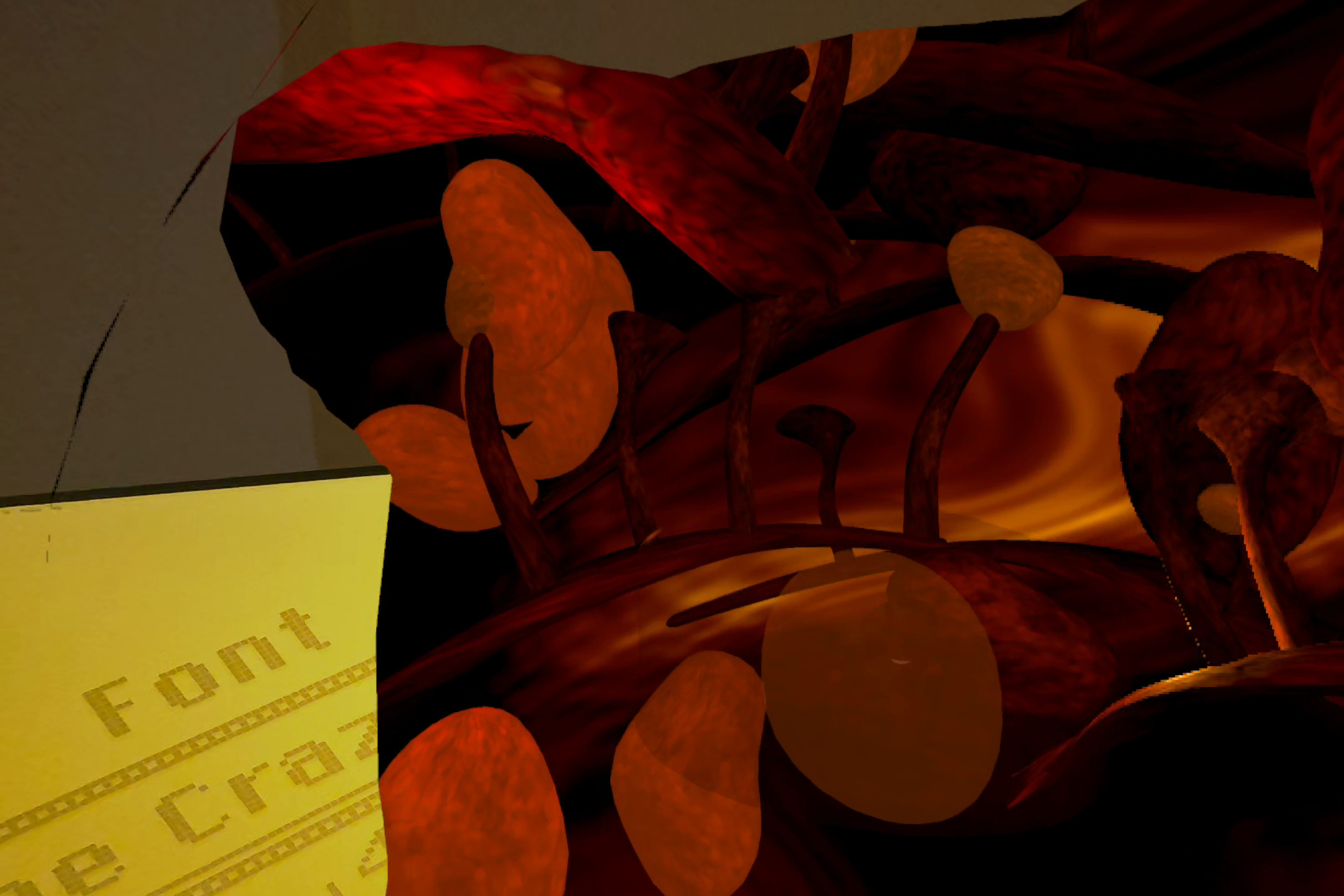
Discover whats inside the rift (intro)
-
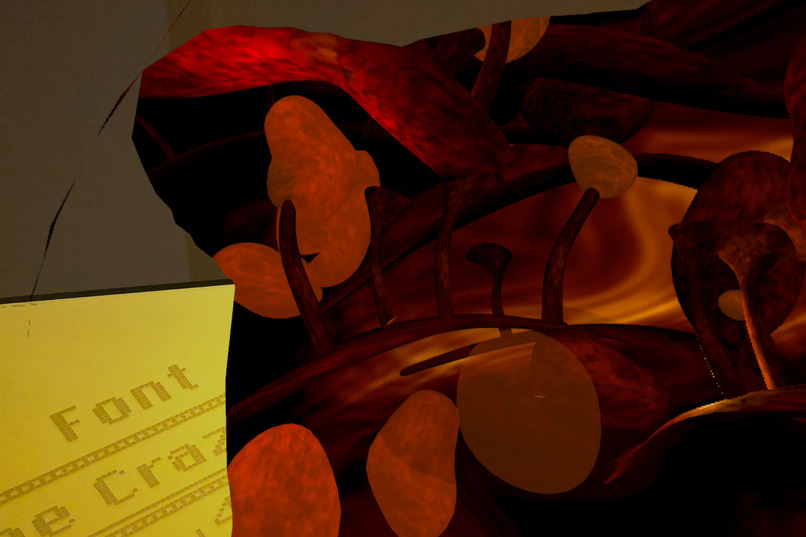
You can poke your head in!
-
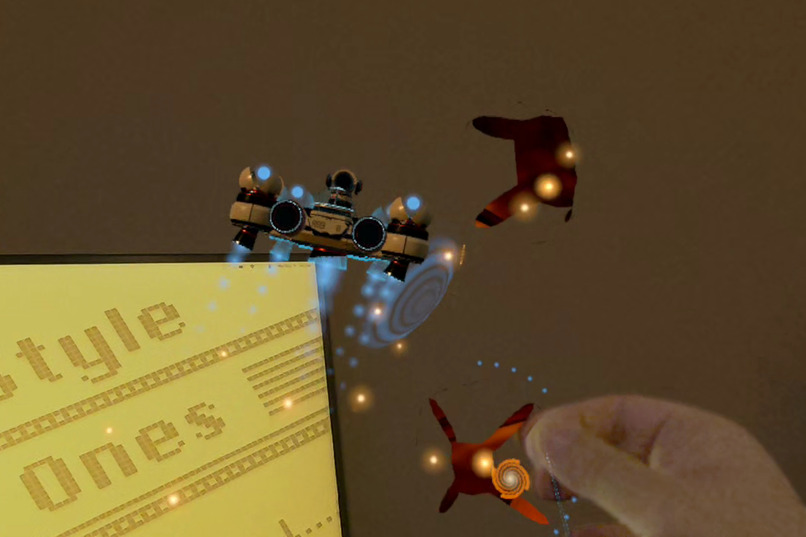
Use upgrades such as shields to protect your carrier in very close quarter battles
-
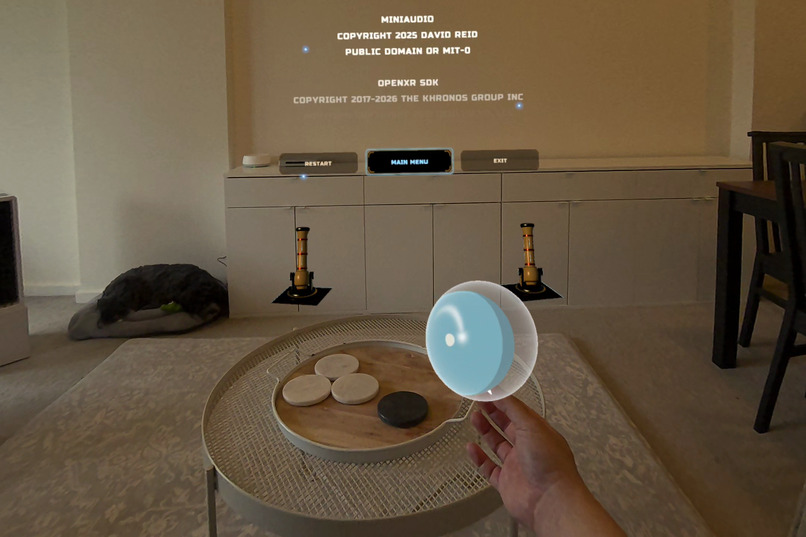
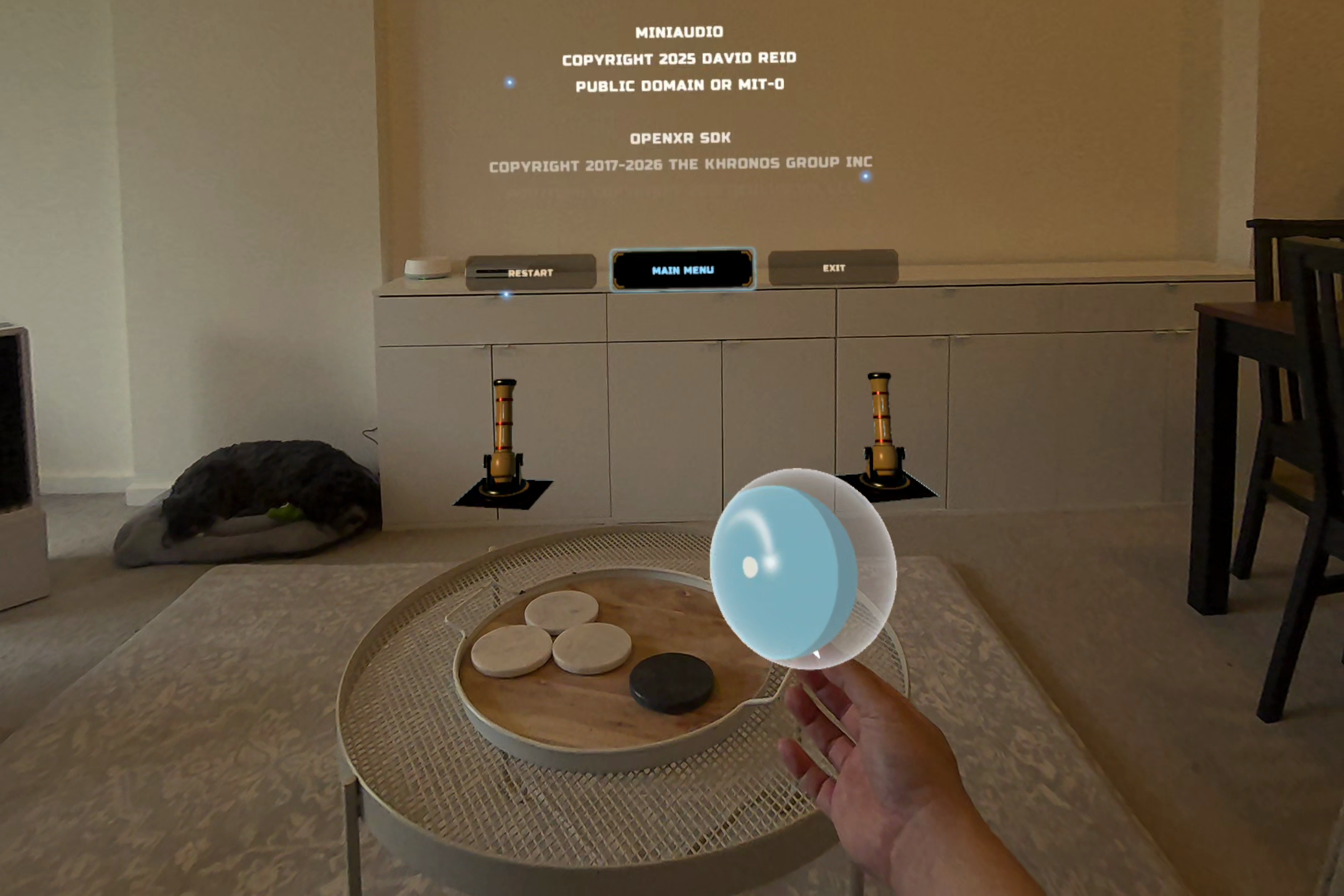
Move spatial fluidic input ball for optimal comfort
Inspiration
Rift Repair draws on the side-scrolling shoot 'em ups (shmups) I loved growing up: Gradius and R-Type.
Above all, I wanted to turn my OpenXR library (xrlib), Vulkan renderer (xrvk), and years of mixed reality ideas into a complete game.
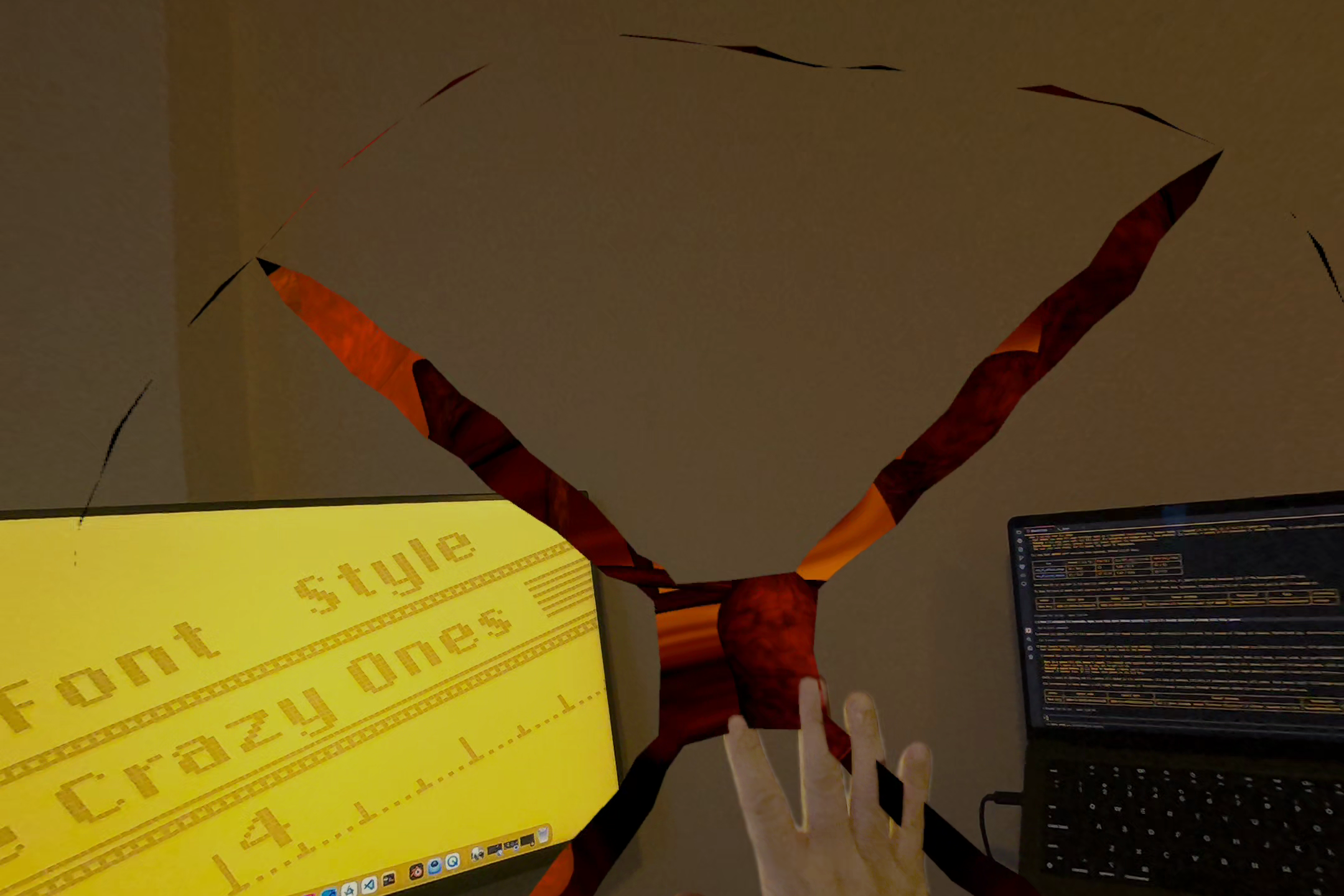
One inspiration was a passthrough portal demo from 2023: open a portal with natural hand gestures, step into a virtual room, then look back into your living room. Pretty cool, but what could I actually do with it?
After exploring seated morphing puzzles and tabletop robot tactics, I landed on Rift Repair: a classic shmup reimagined for mixed reality, right in your living room!
What it does
Built for hand tracking, mixed reality and relaxed seated play, Rift Repair features a novel "fluidic input" system (patents pending). It gracefully handles brief tracking losses and fast movements while keeping interactions natural and intuitive. No controllers, no exaggerated gestures. Just reach out, pinch, and take control.
The game involves rifts tearing open between our reality and a world beyond our own. Your table becomes a launch portal for a repair carrier, while rifts and incoming threats turn the surrounding room into your battlefield. Dodge spores that respond to your environment, protect the carrier's power cores, phase-out (hide) in your furniture, and seal each breach.
Across increasingly tricky encounters, discover equipment, choose upgrades and devise strategies to survive. Skilled flying helps, but clever combinations or optionally your environment, can turn the tide when reflexes aren't enough.
How I built it
Rift Repair is built using C++, OpenXR and Vulkan, powered by my open-source xrlib and xrvk native libraries. No conventional game engine!
Optimised for Meta Quest, it uses OpenXR extensions for hand interaction, room understanding, passthrough and foveated rendering. My Vulkan renderer provides multiview and physically based rendering, with runtime checks and fallbacks for optional capabilities. The codebase also supports VisionPro through my visionOS OpenXR runtime.
I handled low-level xrlib/xrvk engineering, "fluidic input", game design and tuning, achieving a steady 90 FPS on Quest 3S across multiple scenarios. Improvements will flow back into my libraries.
AI agents formed a small virtual studio: Claude as gameplay programmer using my xrlib XrApp scaffolding code; Codex as 3D artist using my concepts; both contributing to audio. Shared briefs and hands-on testing with volunteer playtesters guided the iterations.
Challenges I ran into
Balancing fast, precise one-pinch flight with tracking interruptions took extensive tuning. I also eliminated the flicker when crossing portals, caused partly by each eye transitioning at different times, while optimising for standalone Quest hardware.
Accomplishments I'm proud of
Creating an entirely original mixed reality game from the ground up, bringing years of ideas and experimentation together with novel hand interactions that led to four provisional patent filings. Rift Repair also pushed my open-source XR stack far beyond isolated demos.
What I learned
A complete game exposes problems demos don't. AI agents accelerated production, but discovering the fun still required headset playtesting, failure and iteration.
A variety of playtesters with varying experience in XR and game development helps a ton with refining the game to as wide an audience as possible and help stack your assumptions against real players.
What's next
More encounters, equipment and strategies, followed by Arcade mode, two-player co-op and world rankings.
Reality needs repairing. Take the controls, Ensign!
Built With
- c++
- openxr
- vulkan
- xrlib
- xrvk

