-
-

Login page for shelters.
-
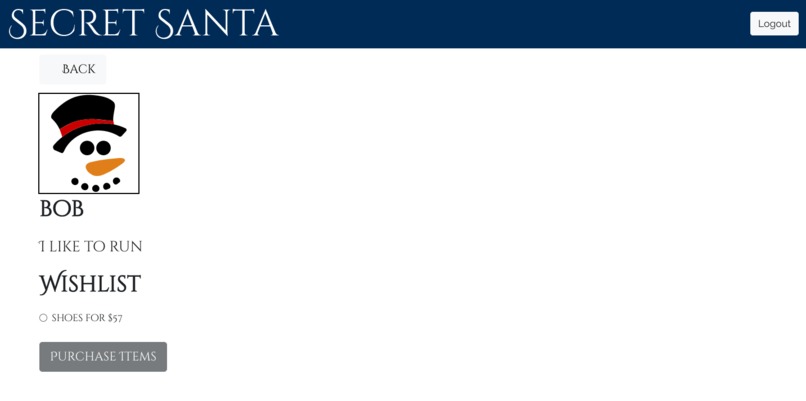
Profile page for people living in homeless shelters. Users can select what they would like to purchase as a gift.
-
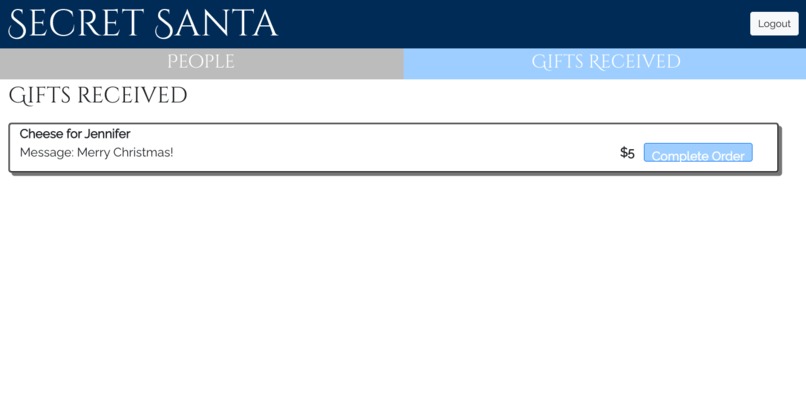
Tab for shelters to view their received gifts. Shelters receive the payment and once they purchase the gift, they mark as complete.
-
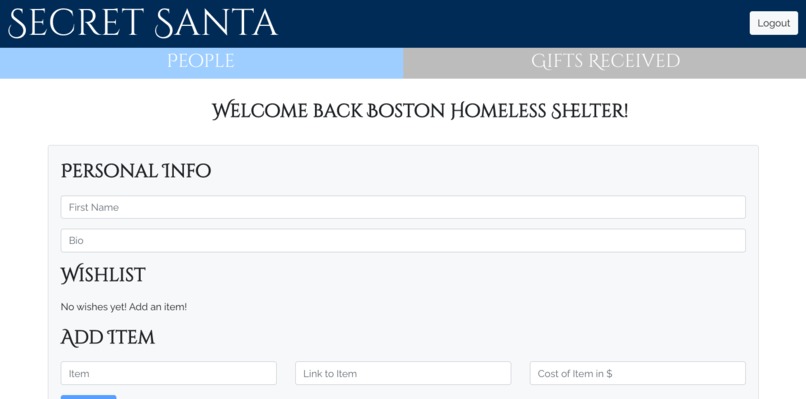
Hub for shelters to add people. Can include a first name, a bio, as well as their holiday wishlist (name, link, price).
-
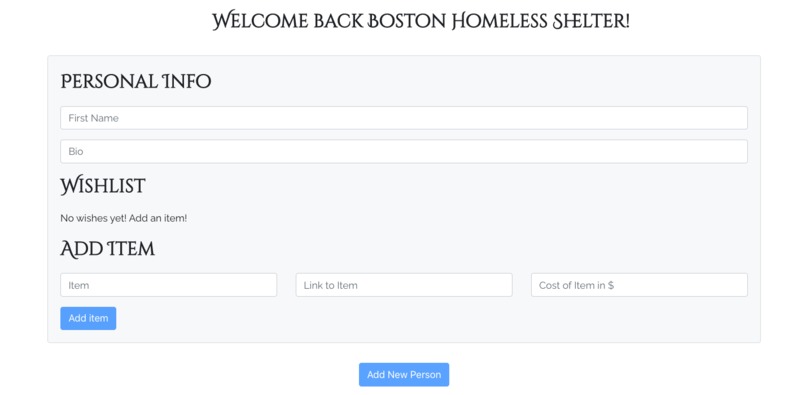
Another view of the hub for shelters to add people.
-
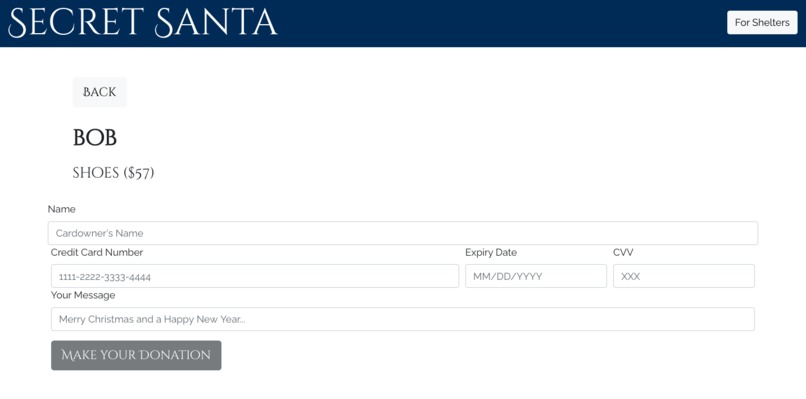
Gift purchasing page. The donation amount for the gift goes to the shelters, who will then purchase the gift for the person.
-
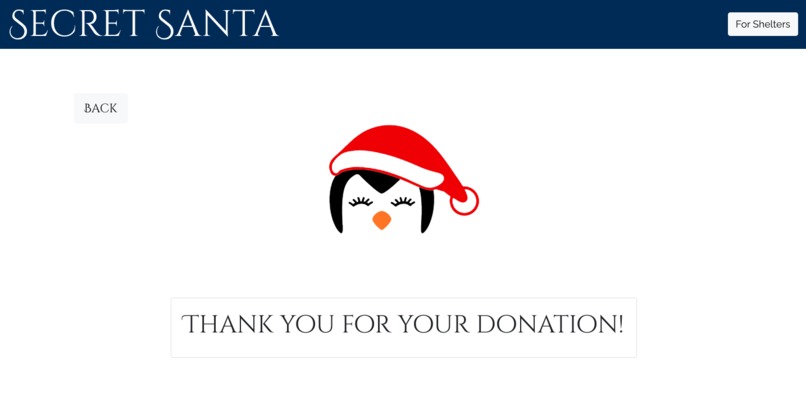
Gift donation thank you page.
-
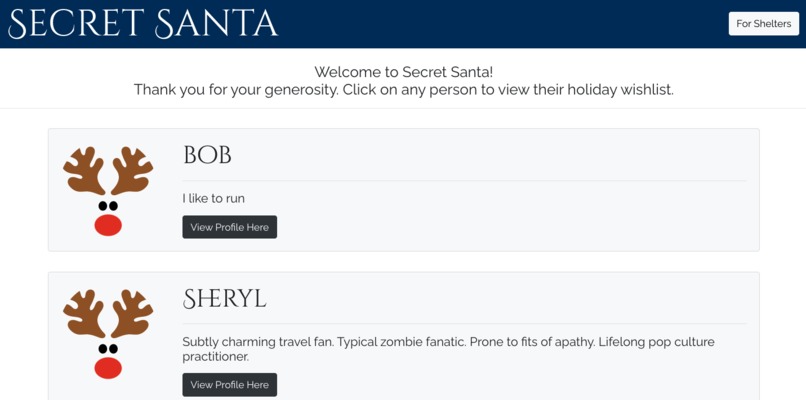
Homepage where you can view profiles of people living in homeless shelters along with a short bio and their wishlist.
-
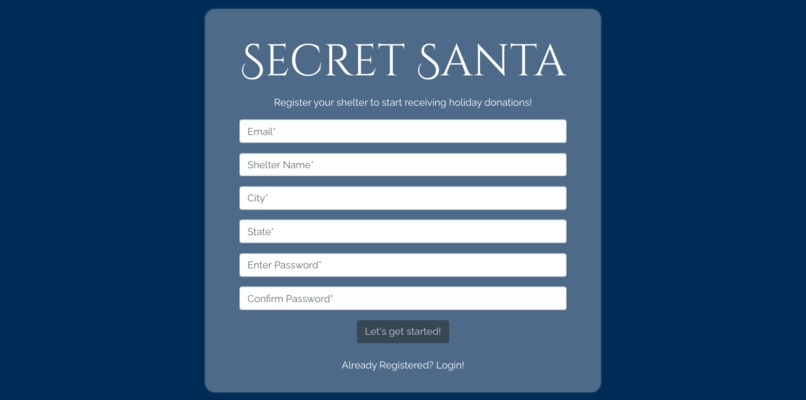
Registration page for shelters.


Submission Track: Inequality
Inspiration
Our project falls under the category of inequality. One of our team members worked with homeless shelters frequently and he realized that most of them only received food for the holiday season. We felt that there was an opportunity for more interaction, more personalization and more warmth to represent the spirit of the festive season and that’s how we came up with Secret Santa!
What it Does
Secret Santa is a web application that allows homeless shelters to post the biography and holiday wishlist of the homeless. Donors can then see these people living in shelters online and donate the monetary cost of the gift for shelters to then purchase the physical item for its people.
How We Built It
Our application was built using React.JS and Google's Firebase, with a database stored on Firebase’s Realtime-Database. We built up the pages first, testing them locally, before introducing dynamic sites by loading Firebase data into Redux. We also use Firebase Authentication so that homeless shelters could create an account with Secret Santa to then add gift recipients.
Challenges We Faced
Our team members were scattered around the globe between Singapore and various parts of the US, hence coordination across time zones was a tremendous challenge. Additionally, some members of the group were heavily inexperienced, and it was difficult integrating the different levels of experience within the group. Another challenge was setting up a working payment system with Stripe. None of us have ever built a payment system before, and while we attempted to connect Stripe with Firebase using Cloud Functions, we ultimately couldn’t get it to work in time for project submissions.
Accomplishments We're Proud Of
Nonetheless, that we were able to overcome so many limitations in a format that none of us really had any experience working in, to create a thoroughly functional application with state management, dynamic sites, and at the same time teach the newer member of the group a lot about computer science and hacking in general, is something that we’re very proud of. We’re also proud that we were able to come up with an easy to use application that was tremendously relevant to solving a salient problem.
What We Learned
We learned that it was surprisingly easy (with a bit of willpower) to coordinate and work remotely on software projects online, and that the online format of hackathons offers many new opportunities to meet people we would not have otherwise met. Also the newbie learned the basics of React.
What's Next
We are exploring opportunities to widen the scope of this application and maybe try operating it in a limited capacity in regions closer to where we live. Given more time, we’d love to have a working payment system with Stripe so that donors can actually gift to homeless shelters.


Log in or sign up for Devpost to join the conversation.