-
-
promo
-
-
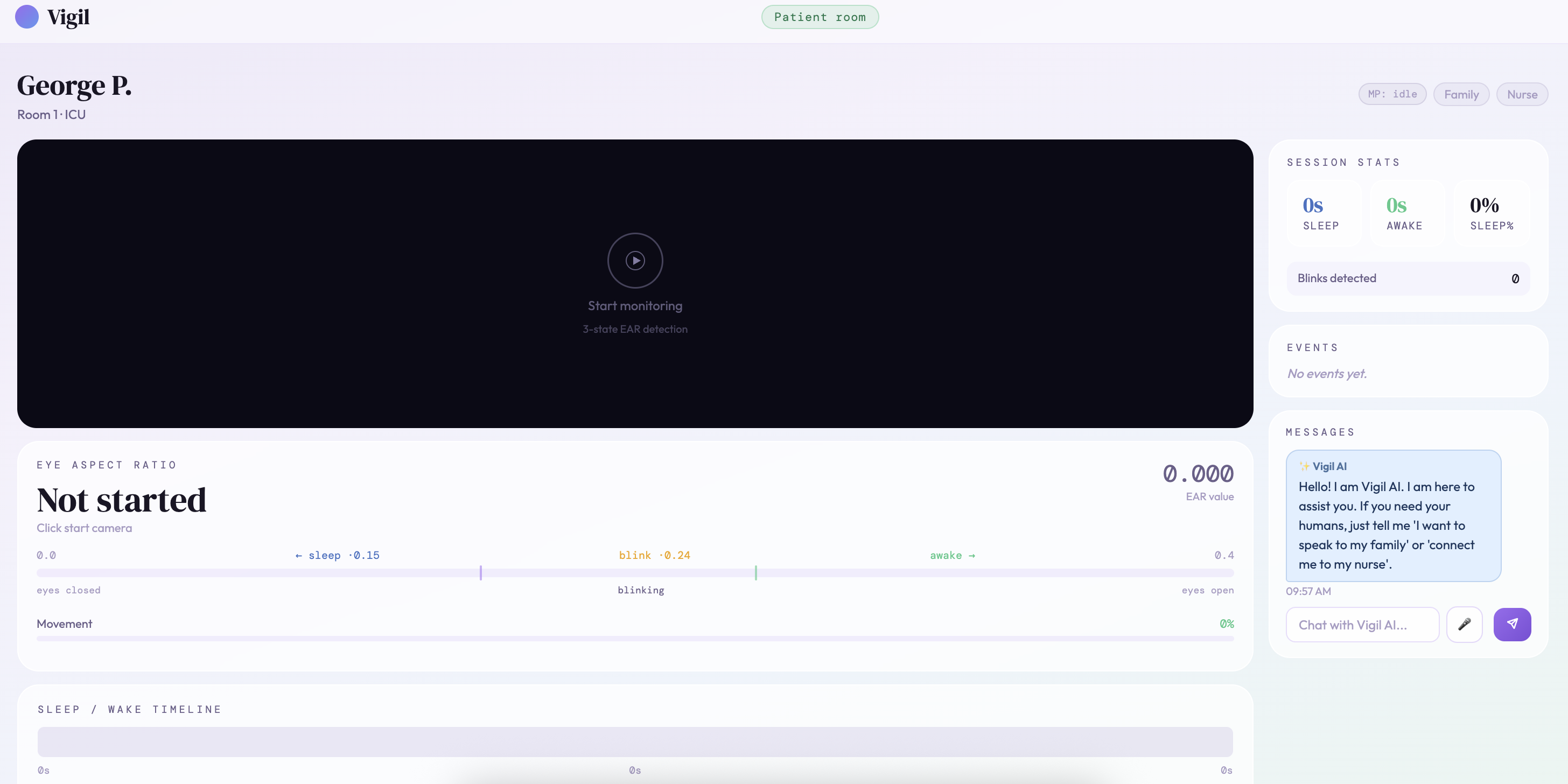
interface
-
Inspiration
Patients in ICUs and long-term care settings often face severe communication barriers, especially when experiencing reduced consciousness or mechanical ventilation. Studies show that up to 60% of ICU patients experience delirium, and roughly 40% require mechanical ventilation, both of which significantly limit their ability to interact with family or caregivers. In nursing homes, patients with neurodegenerative conditions frequently experience confusion and isolation, compounded by difficulty using traditional communication tools. At the same time, clinical staff are overburdened and cannot consistently facilitate patient-family interaction. Clinical research, including 2025 SCCM guidelines, highlights that family engagement is one of the most effective strategies for reducing delirium, yet it remains underutilized due to logistical barriers.
What it does
Vigil is a patient monitoring and communication platform that detects when a patient is awake and enables timely connection with family and care teams.
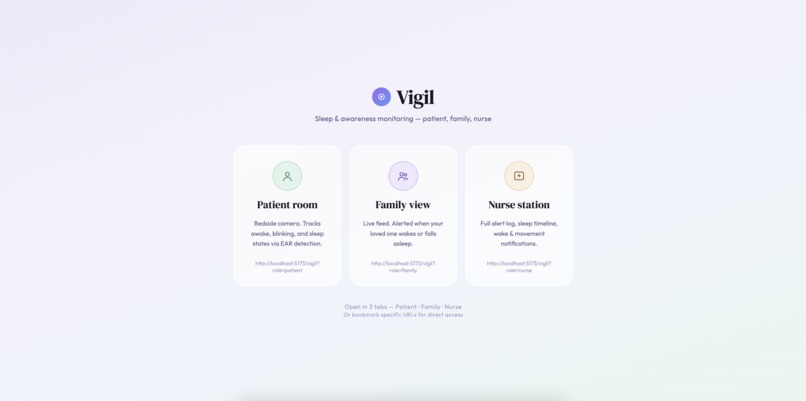
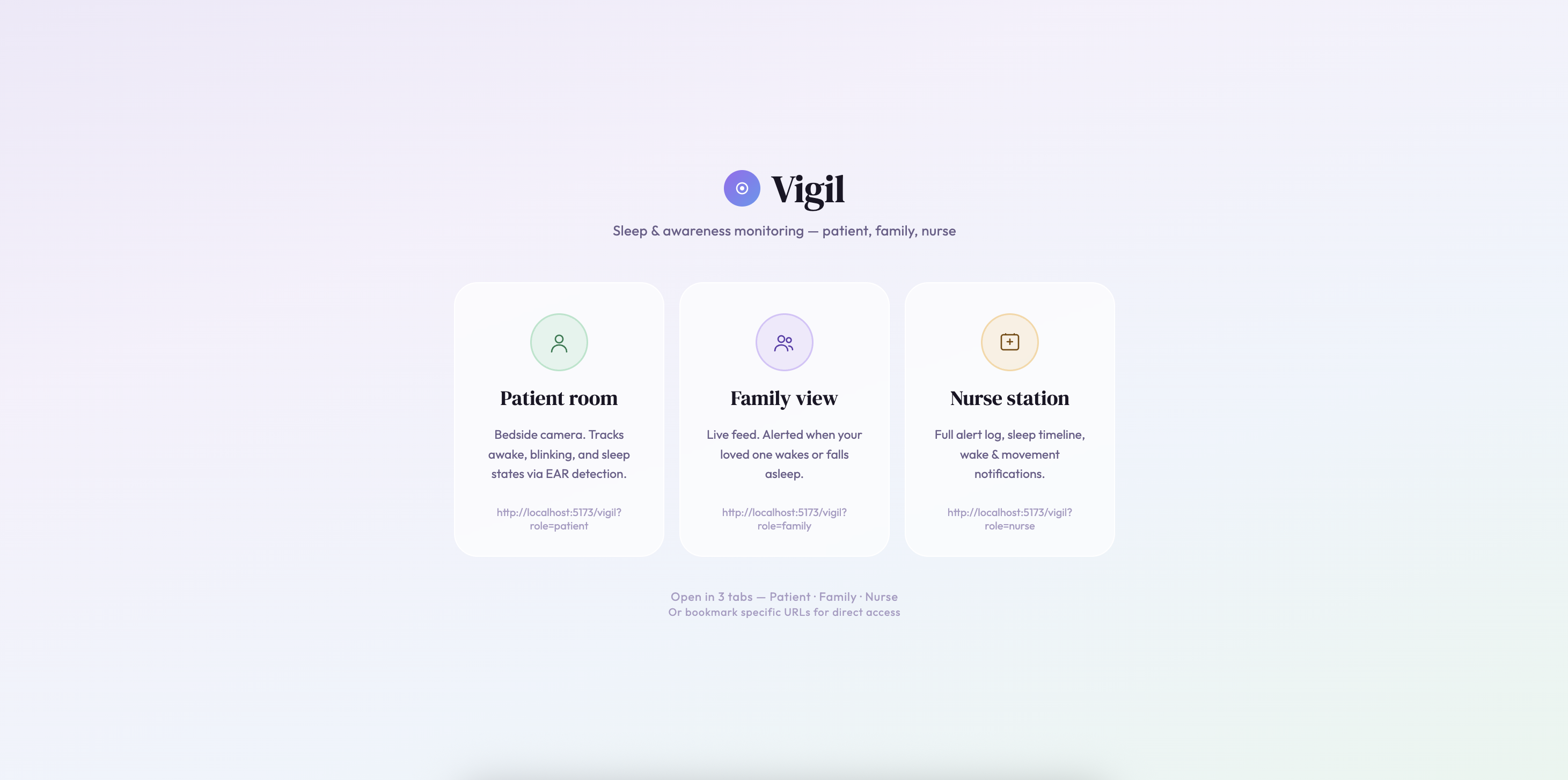
The system includes three interfaces:
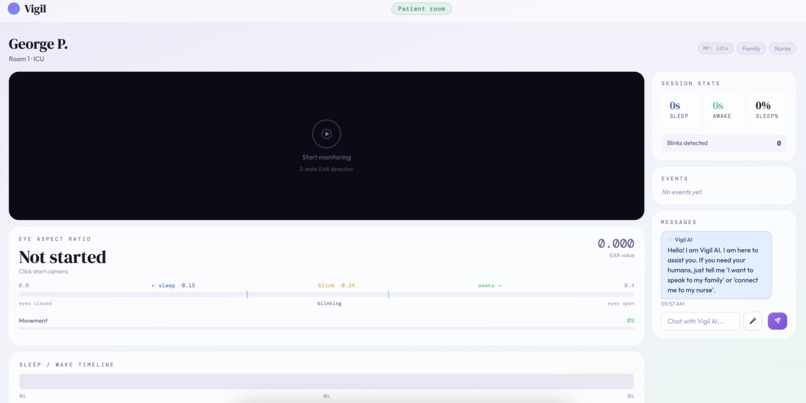
- Patient interface: supports accessibility through features like text-to-speech
- Family interface: enables messaging and connection with both patient and nurse
- Nurse interface: provides a real-time timeline of patient wakefulness and sends audio alerts when a patient becomes alert
Vigil focuses on improving connection and optimizing clinical workflow.
How we built it
We divided development across frontend, backend, and computer vision systems.
- Frontend: React + Vite for responsive, real-time user interfaces
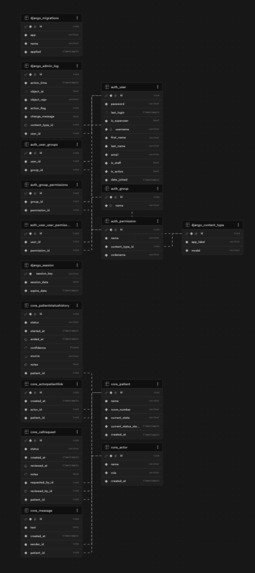
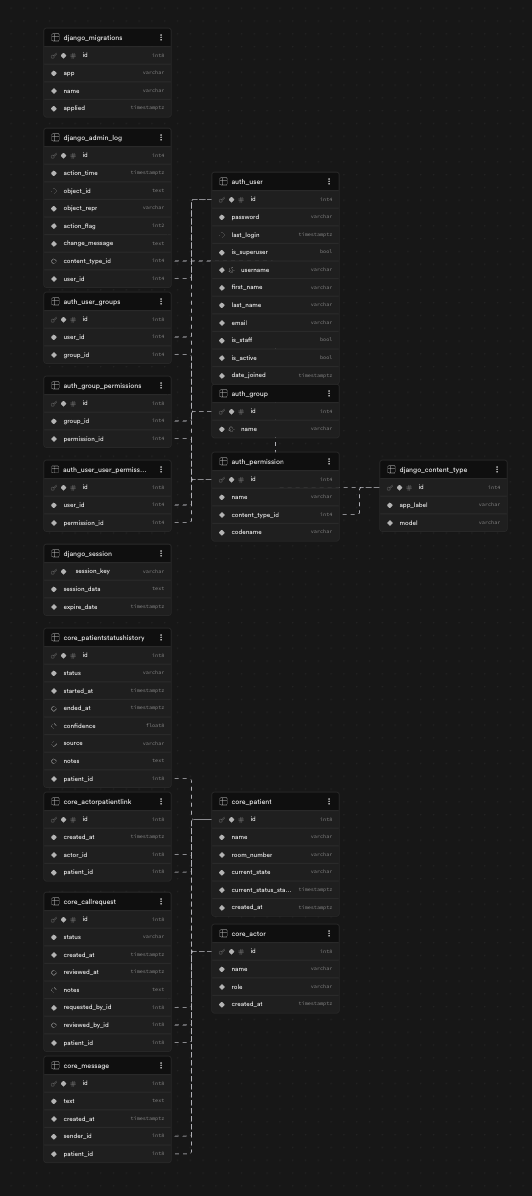
- Backend: Django for API handling, business logic, and system coordination
- Database: Supabase for storing and syncing application data
- Computer Vision: MediaPipe for detecting eye state and estimating wakefulness
- Real-time communication: WebSockets for instant updates across all users
We used GitHub for version control and team collaboration, working across separate branches and integrating continuously.
Challenges we ran into
- Distinguishing true wakefulness from brief eye closures or blinks in computer vision
- Integrating reliable text-to-speech functionality
- Initial connectivity issues with Supabase
- Coordinating development workflows across a team with varying levels of Git experience
Accomplishments that we're proud of
- Building a fully functional, multi-interface system within a limited timeframe
- Successfully integrating real-time communication, computer vision, and backend logic
- Creating a solution grounded in validated clinical challenges and care gaps
- Collaborating effectively across a team with diverse technical experience
What we learned
We learned how to rapidly scope a real-world healthcare problem, divide responsibilities efficiently, and integrate multiple technologies into a cohesive product under time constraints.
What's next for Vigil
- Integrating with hospital smart TV systems (e.g., SONIFI Health) for scalable deployment without additional hardware
- Improving detection models to capture more nuanced levels of consciousness
- Expanding communication features, including potential video calling
- Adapting the platform for broader use across ICUs, nursing homes, and palliative care environments

Log in or sign up for Devpost to join the conversation.