-
-
SecondWind
-
A thrift store, digitized, browsable online
Inspiration
The textile manufacturing industry produces 8–10% of all global emissions: more than aviation and shipping combined. 70–90% of donated clothes get sent to landfills or shipped overseas. It's not that people don't want to buy secondhand, it's just that nobody wants to drive to four thrift stores and spend hours sifting through racks. People want to scroll from their couch. Secondhand stores already have the inventory: thousands of items, priced low, sitting on racks with zero digital presence: no product IDs, no barcodes, no listings. I wondered: what if you could browse every thrift store within 10 miles the same way you shop online?
What it does
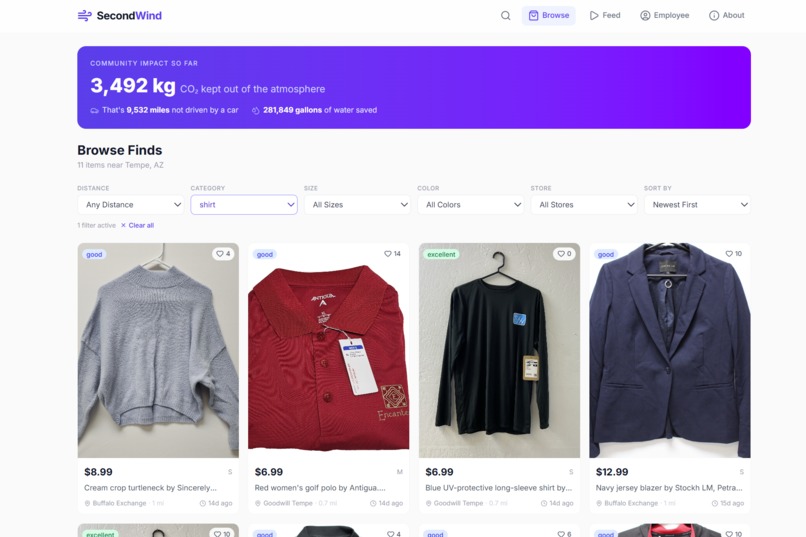
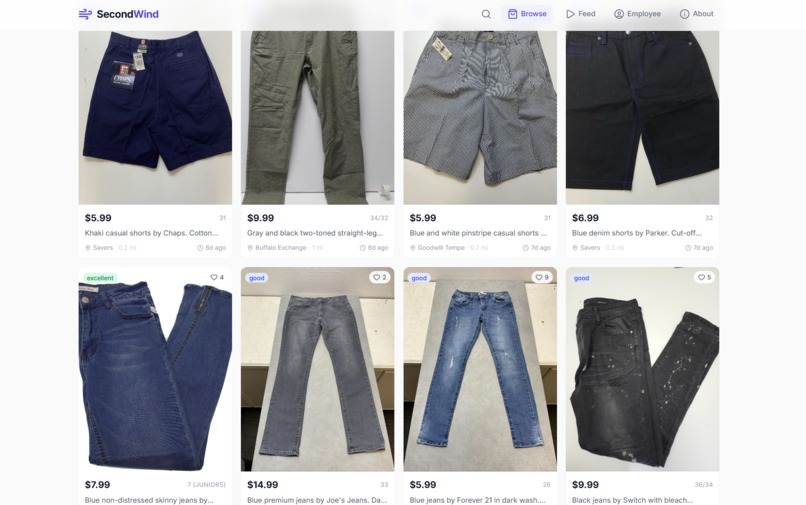
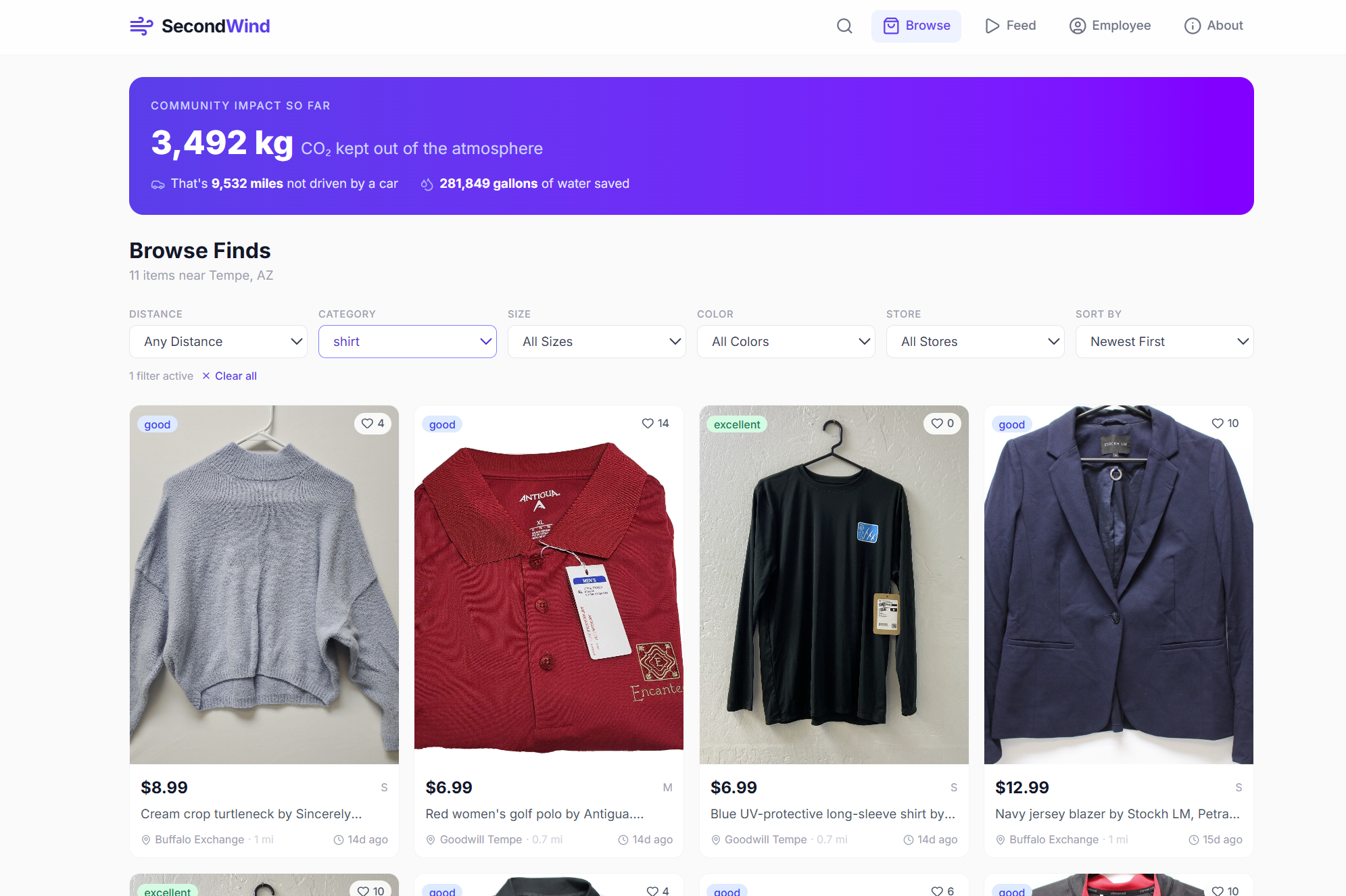
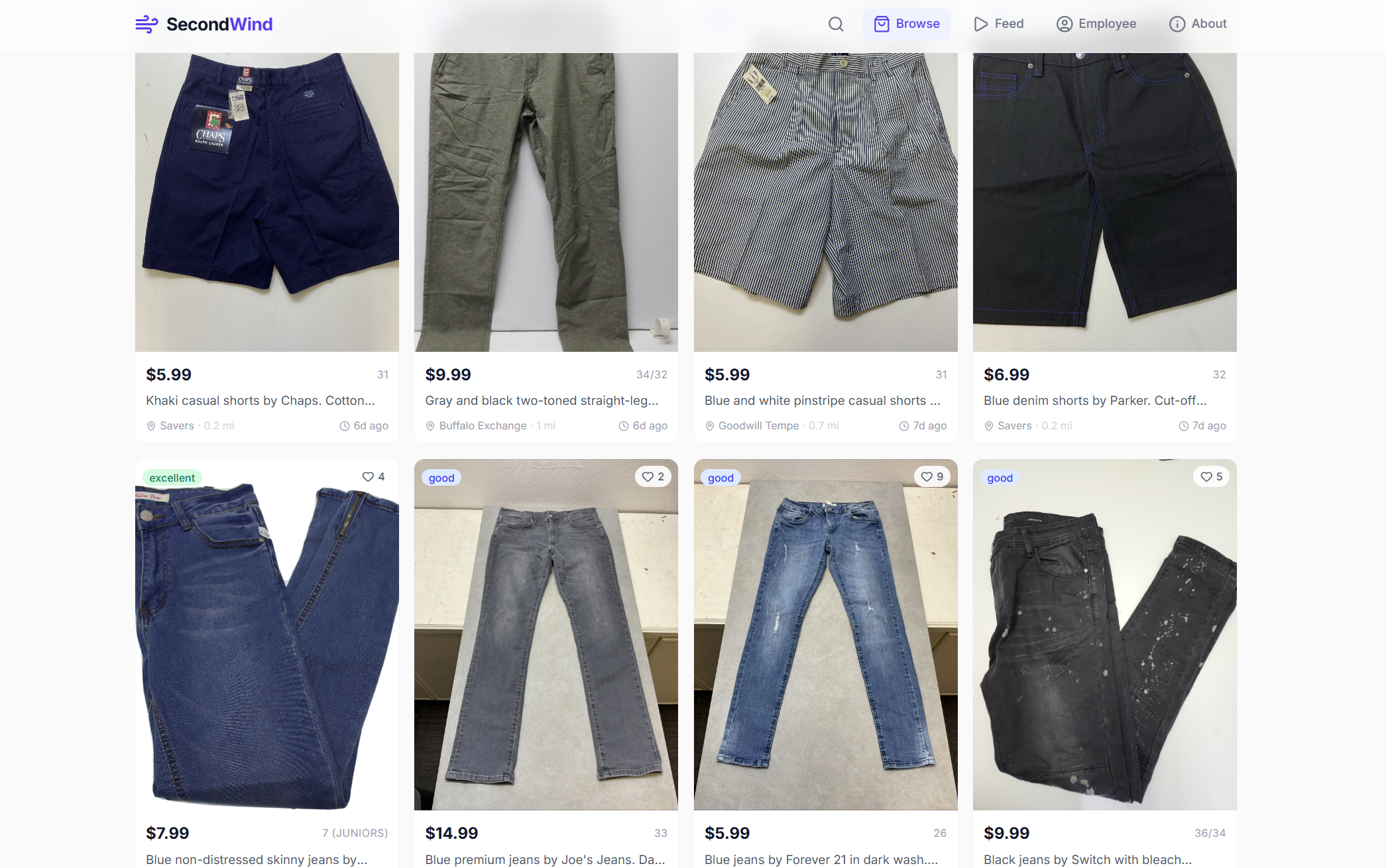
SecondWind enables secondhand store employees to document items simply by snapping a few pictures. Gemini AI Vision analyzes the photos and auto-generates structured listings, extracting the item's type, brand, size, color, material, condition, and price from its appearance and tags. These listings populate a browsable, searchable online catalog. Every item links to a real store nearby. A carbon badge on each item shows exactly the CO₂ and water avoided by buying secondhand instead of new, helping consumers make sustainable purchasing decisions.
How we built it
React (Vite) frontend with Tailwind CSS. Gemini 2.5 Flash API handles the vision pipeline. Deployed on Vercel. We pre-populated the catalog with items from real Tempe thrift stores.
Challenges we ran into
Getting Gemini to return consistent JSON with a natural tone was a big hurdle. We iterated on the system prompt extensively, as the AI Vision pipeline is the core innovation of the platform. Balancing scope was also challenging: SecondWind has a lot of natural features (store analytics, user accounts, item reservations, map integration) but I had to cut down to what I thought I could polish in time.
Accomplishments that we're proud of
The AI cataloguing pipeline works! After snapping a few photos, you get a comprehensive, structured listing in ~5 seconds that would take a human 2+ minutes to write manually. It is now economically viable to digitize one-of-a-kind inventory for the first time ever. Every other secondhand platform (Depop, Poshmark, ThredUp) requires individual sellers, shipping logistics, and markup. SecondWind requires exactly one employee with a phone, which can be easily integrated with their current intake process. Pictures can even be taken directly from the rack. The sustainability comparison (buying new: ~15 kg CO₂ across 8,000 miles of supply chain vs. buying secondhand: ~0 kg, 2 miles away) is something we're particularly proud of as a communication tool.
What we learned
Vision AI is now good enough to handle unstructured, real-world input - wrinkled tags, inconsistent lighting, items on hangers - but only if the prompting is precise. We also learned that the hardest part of promoting sustainability isn't awareness or technology. It's making the sustainable choice easier than the default. SecondWind works because it doesn't ask anyone to sacrifice convenience, it benefits the consumer, the store, and the environment in concert.
What's next for SecondWind
Item reservations, stronger employee authentication, an integrated map (geolocation is already mostly implemented), and a store analytics dashboard so managers can see what's being searched and what's selling. The business model is self-evident: thrift stores get higher foot traffic and sell-through, consumers get effortless access to great finds, and the only cost barrier, manual data entry at scale, is eliminated by the AI pipeline. We're also exploring a licensing pilot with thrift stores near ASU.
Built With
- gemini-2.5-flash-api
- javascript
- node.js
- react
- tailwind-css
- vercel
- vite

Log in or sign up for Devpost to join the conversation.