-
-
SecondVoice
Inspiration
Dysarthria can make everyday communication difficult. We wanted to create a tool that works from the first sentence, without lengthy voice training, while keeping the user in control.
What We Built
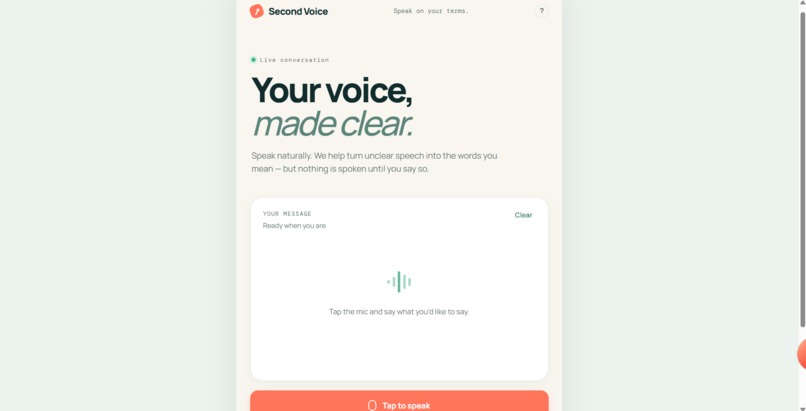
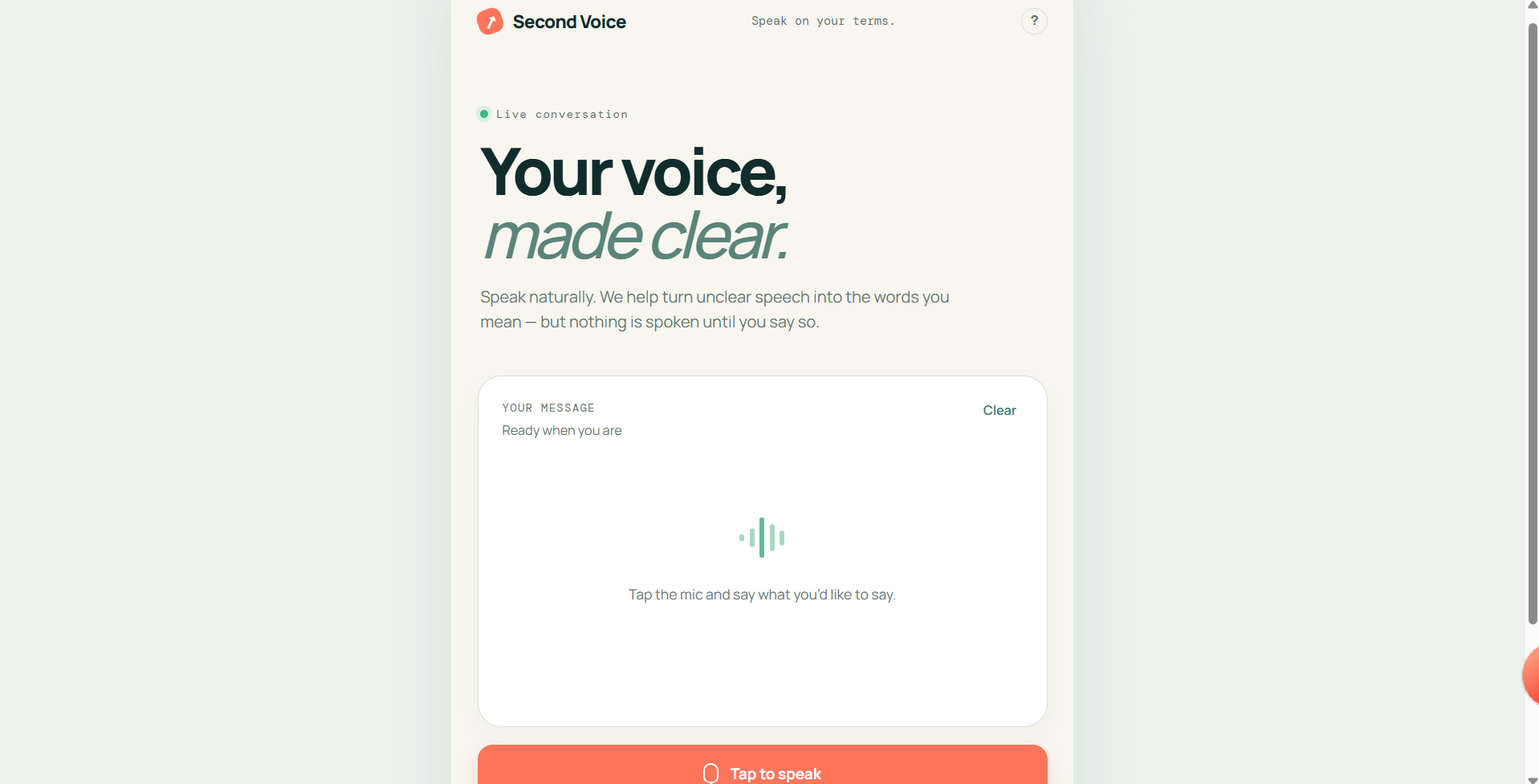
Second Voice listens to unclear speech and combines the transcript with a personal phrasebook and situational context. GPT-5.6 generates 2–3 likely sentences. The user can select or edit one and confirm before the app speaks it aloud.
How We Built It
We built Second Voice using Codex, with GPT-5.6 as the core reasoning engine. Speech-to-text captures input, while text-to-speech provides clear spoken output. GPT-5.6 handles sentence reconstruction and disambiguation.
Challenges
Our biggest challenge was balancing speed, accuracy, and user control. Fragmented speech also required careful tuning of how much weight to give the transcript, phrasebook, and context.
What We Learned
We learned that small UX decisions matter greatly for accessibility. The number of suggestions and confirmation steps must minimize effort while ensuring the user remains in control.
What's Next
We plan to explore lower-latency realtime transcription and smarter phrasebook suggestions while preserving the project's zero-training and confirm-before-speak approach.
Built With
- codex
- gpt-5.6
- personal
- phrasebook
- situational
- speech-to-text
- text-to-speech

Log in or sign up for Devpost to join the conversation.