-
-
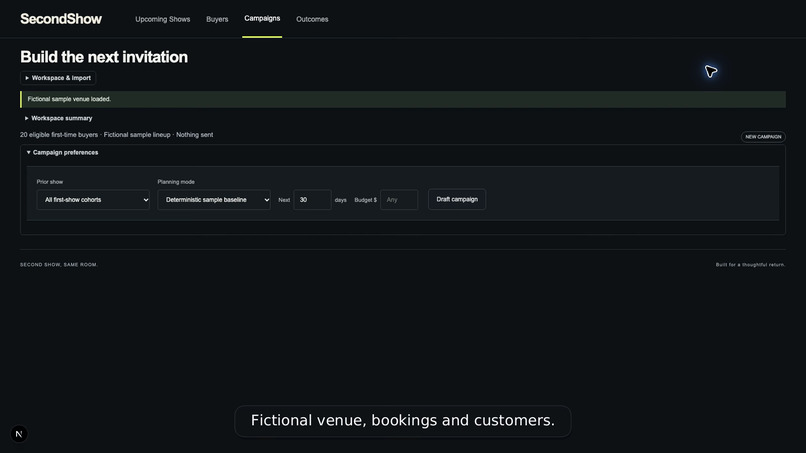
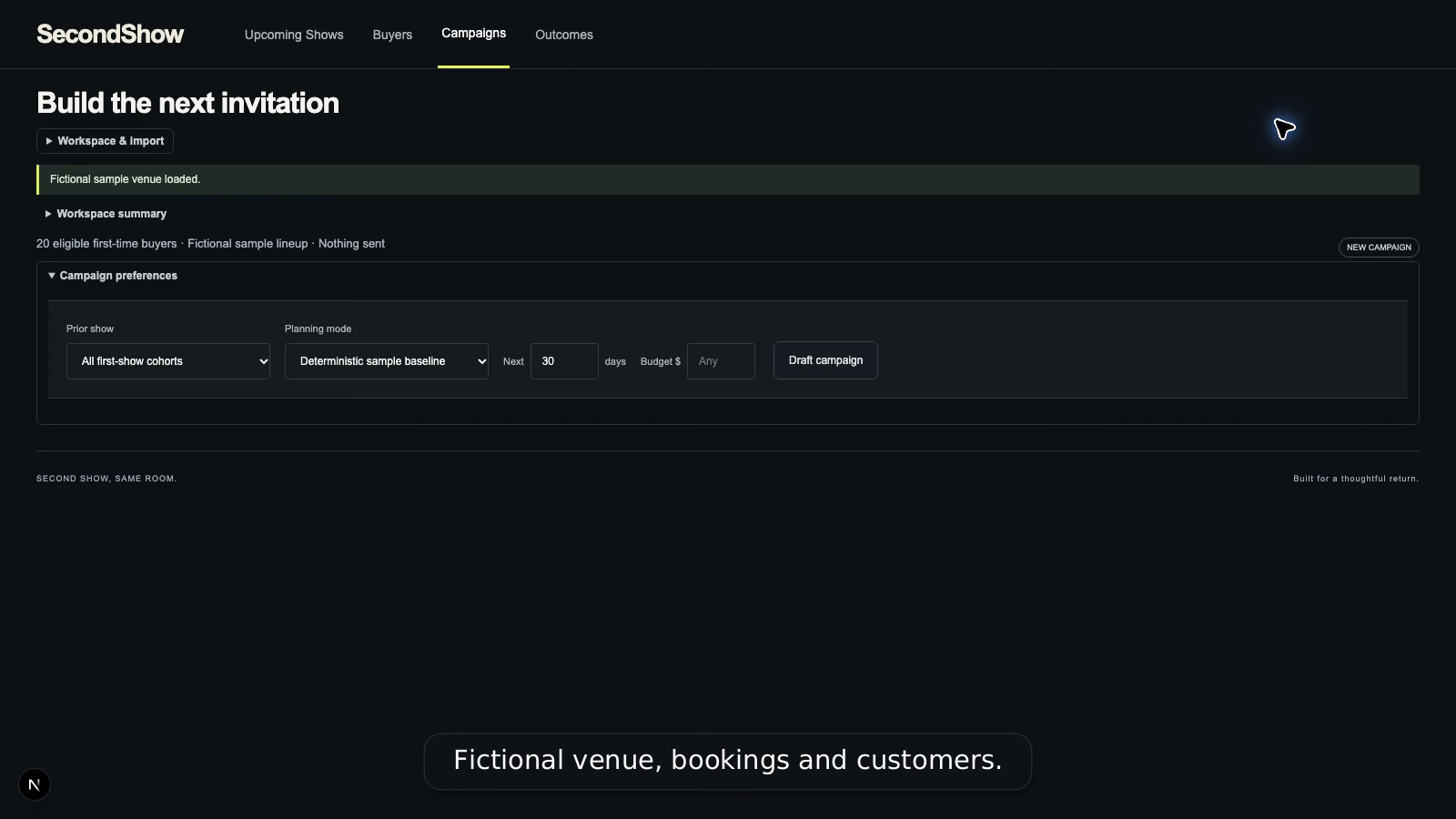
Choose the first-show signal and constraints for Qloo-assisted planning.
-
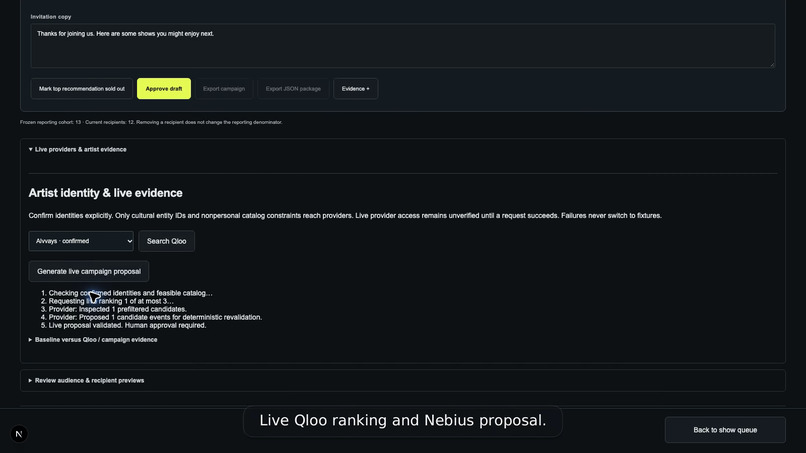
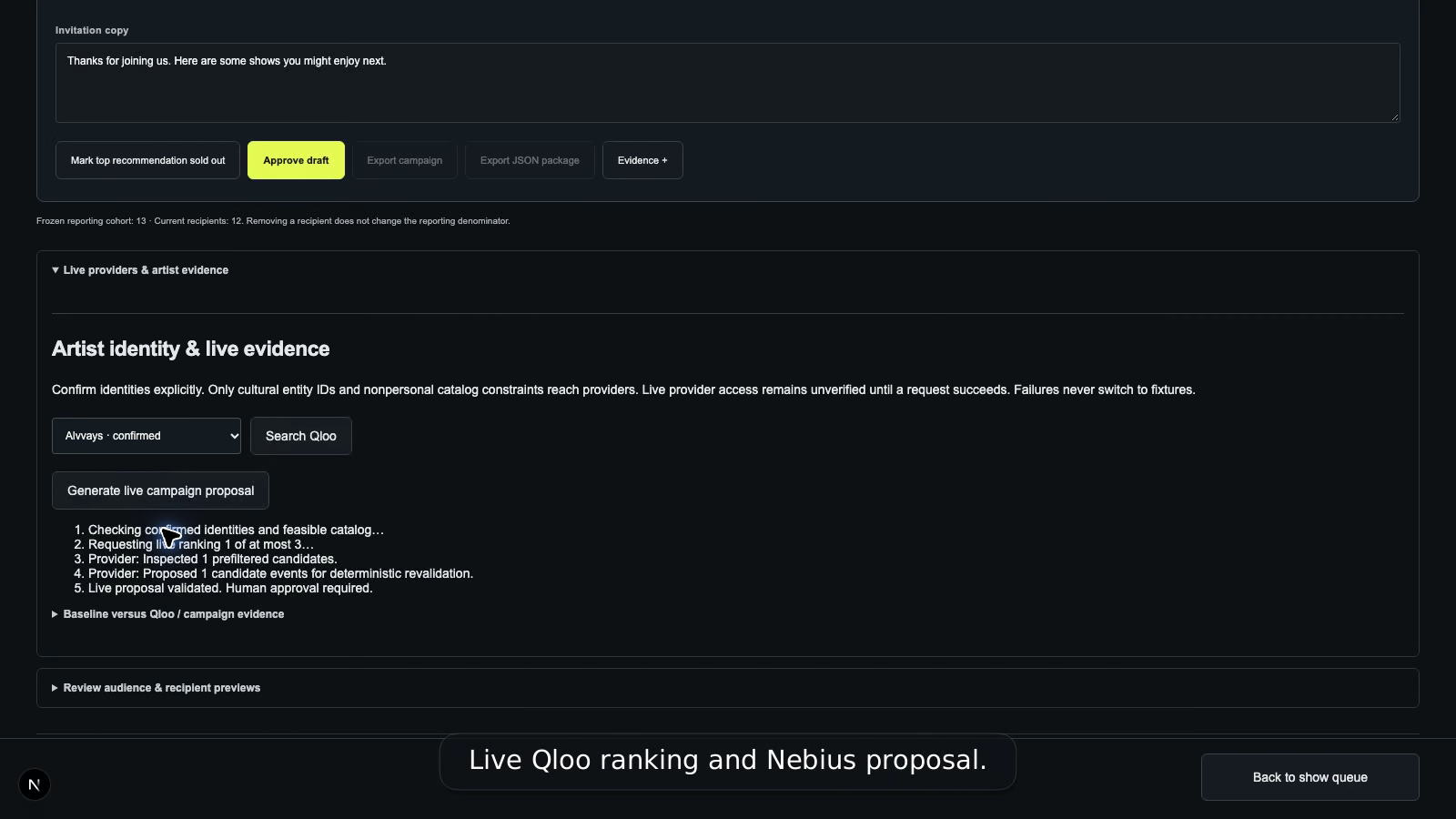
See Qloo taste evidence and the model’s proposed eligible show.
-
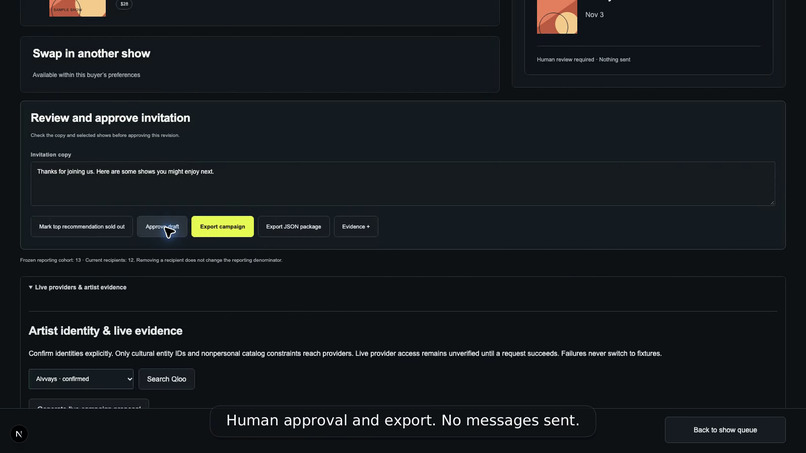
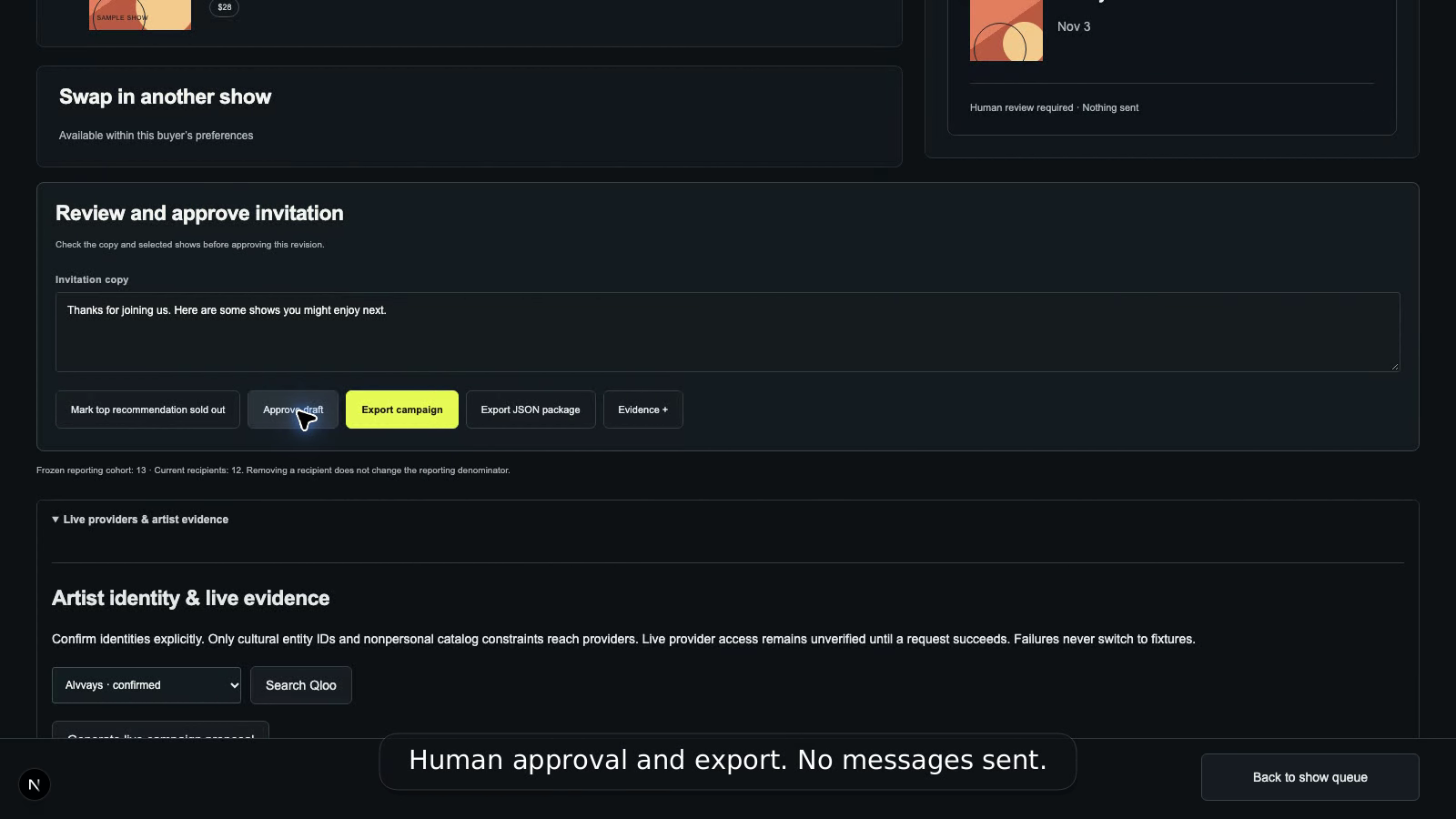
Review and approve the campaign before exporting the recommendation.
-
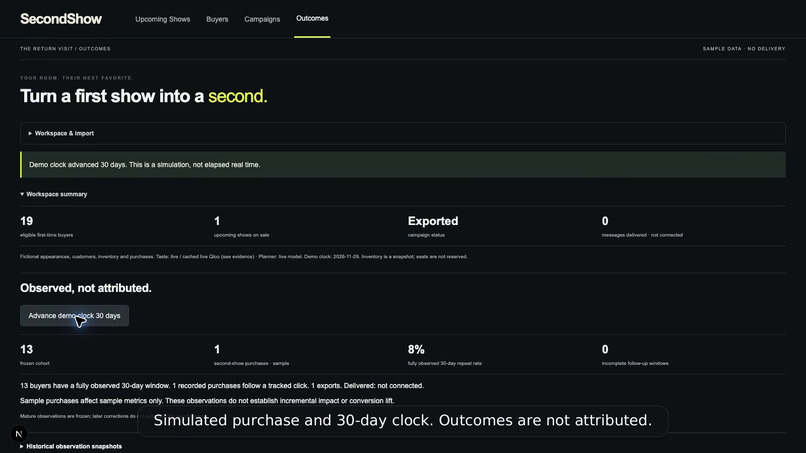
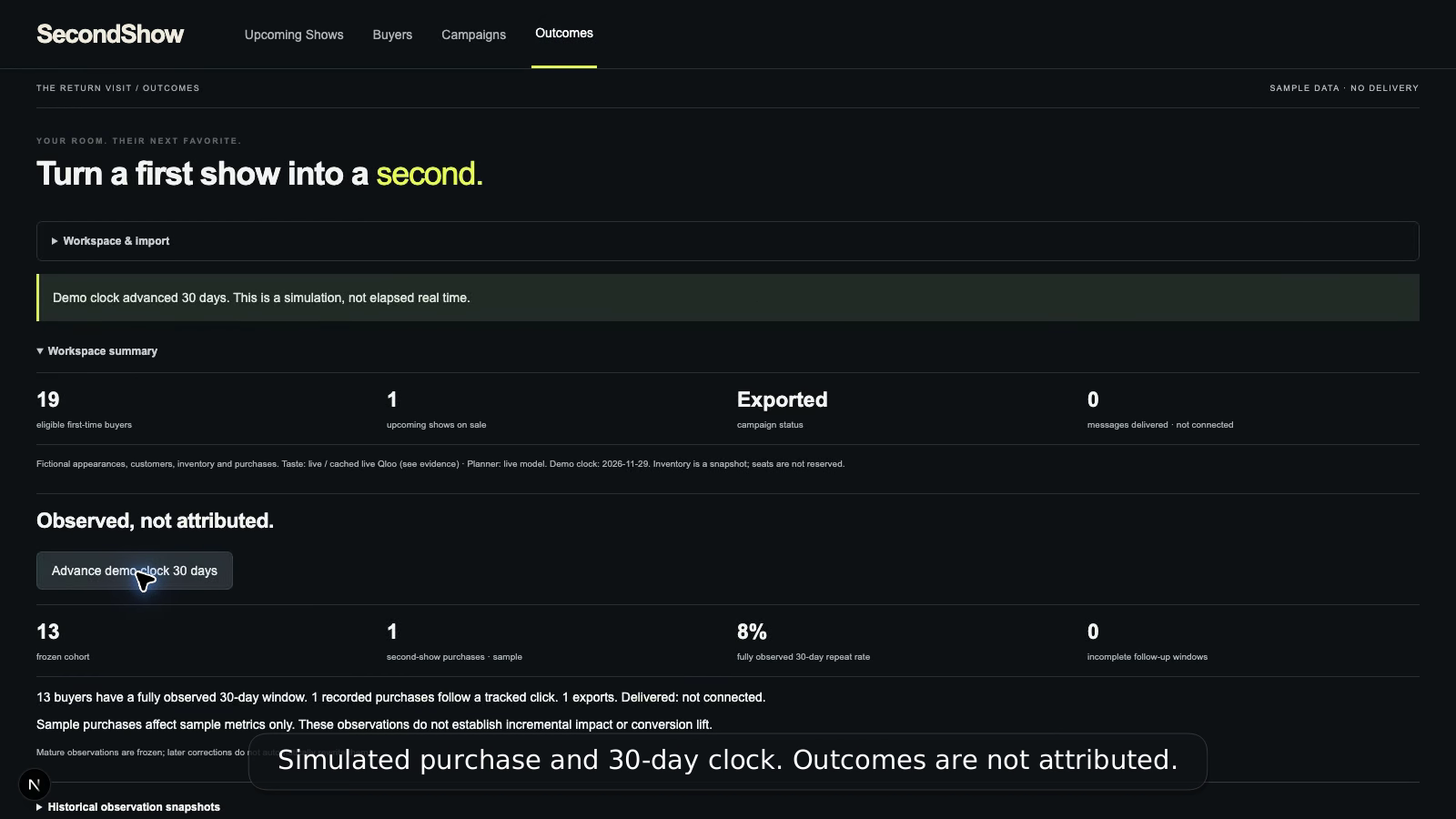
Track 30-day outcomes after a recommended next-show campaign.
Qloo-powered taste, grounded in a venue’s real options
A first-time buyer has seen one show, so a venue has little purchase history to work with. A genre/date baseline can match a label and sort by show date. SecondShow uses Qloo’s cultural taste graph to relate that prior artist to artists in the venue’s eligible upcoming lineup, giving the operator an affinity-informed ranking and evidence to review.
Try the live demo: https://secondshow.vercel.app/
A real side-by-side
For a fictional buyer whose first show was Japanese Breakfast, the same four eligible events were compared over a 14-day window. The genre/date baseline selected Alvvays and The War on Drugs. A live Qloo insights query ranked Alvvays and Big Thief highest from the same lineup, using the confirmed Japanese Breakfast artist identity as its taste signal. The baseline favors matching genre and earlier show dates; Qloo uses artist taste relationships to surface a different recommendation for the venue to review.
How Qloo powers the agent
- Resolve artists: Qloo’s
GET /searchreturns artist identities for the operator to confirm. - Rank the feasible shortlist: Qloo’s
GET /v2/insightsreceives the confirmed prior artist assignal.interests.entities, limits results to eligible upcoming artists withfilter.results.entities, and requests explainability. The app records the returned order, evidence, and retrieval time. - Plan and review: NVIDIA Nemotron 3 Super on Nebius Token Factory inspects candidate aliases and proposes events. SecondShow checks the returned IDs against the feasible shortlist, displays the baseline alongside the proposal, and requires human approval before export.
Only artist search terms and cultural entity IDs go to Qloo; the app does not send buyer records to the provider. Eligibility checks cover consent, purchase history, inventory, date, budget, and admission constraints.
What judges can try
Load the sample venue, select a first-show cohort and constraints, confirm artist identities, generate a live Qloo-assisted proposal, compare it with the genre/date baseline, and approve and export the campaign. The real Qloo and Nebius workflow has been tested with fictional data.
Built with and next steps
SecondShow uses Next.js, React, TypeScript, Qloo, and NVIDIA Nemotron through Nebius Token Factory. Next: evaluate the same feasible lineup with a predeclared repeat-purchase endpoint and connect venue messaging with human approval.
Limitations: Sample data; checkout and outcomes are simulated, and no messages are sent or tickets issued.
Built With
- nebius-token-factory
- next.js
- nvidia-nemotron
- playwright
- qloo
- qloo-api
- react
- typescript
