Inspiration
An event ends, the crowd leaves, and the cleanup begins. Cardboard, bottles, signage, and reusable supplies can quickly become one mixed waste stream, even when some of those materials still have value.
We saw this as a coordination problem. Recovering materials requires more than identifying what can be recycled. Someone needs to record what is available, organize collection, find a suitable destination, and confirm what actually arrived.
That inspired SecondRoute: Giving discarded materials another destination. We wanted to make the journey from discarded material to recovery easier to manage and easier to account for.
What it does
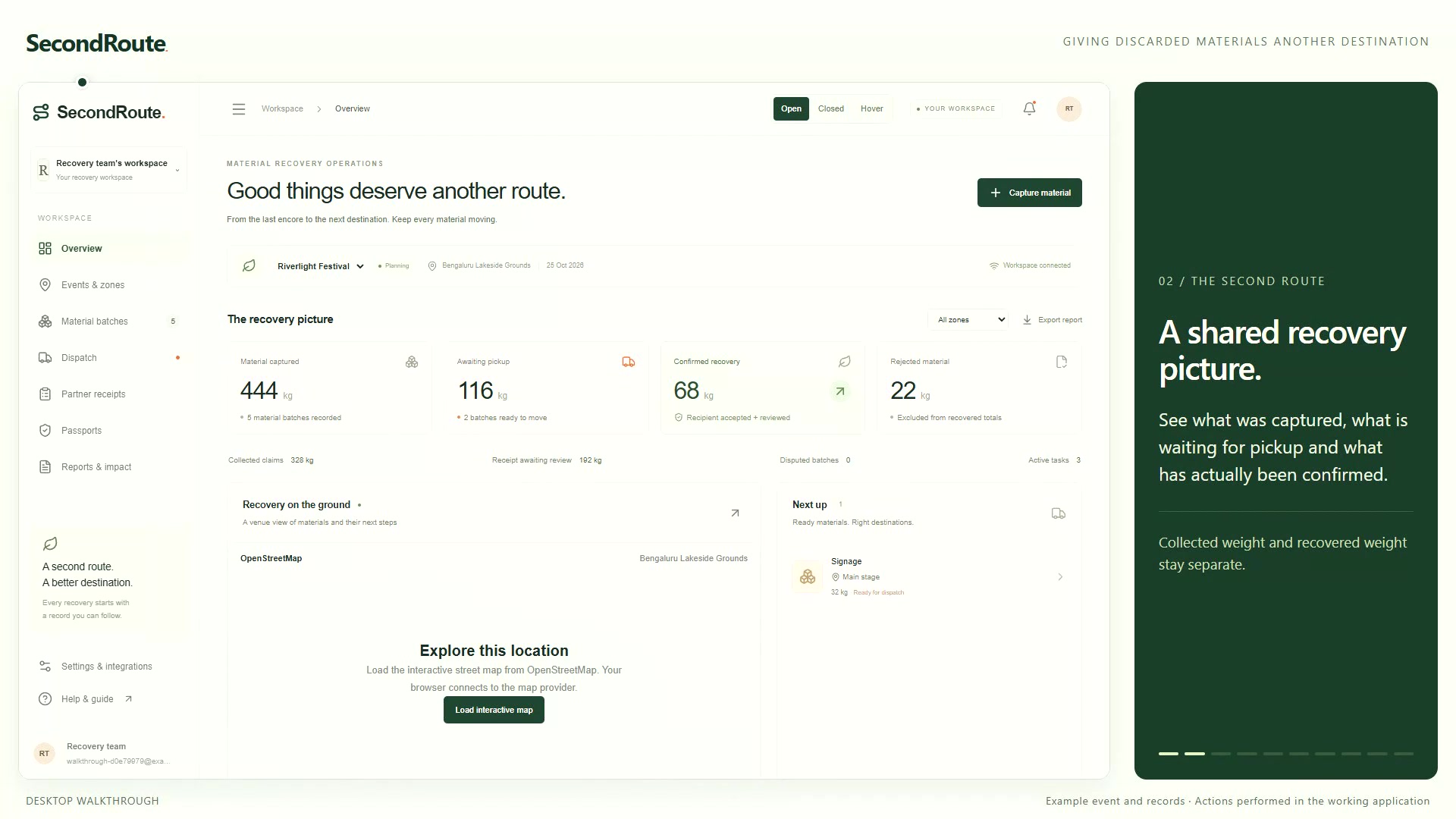
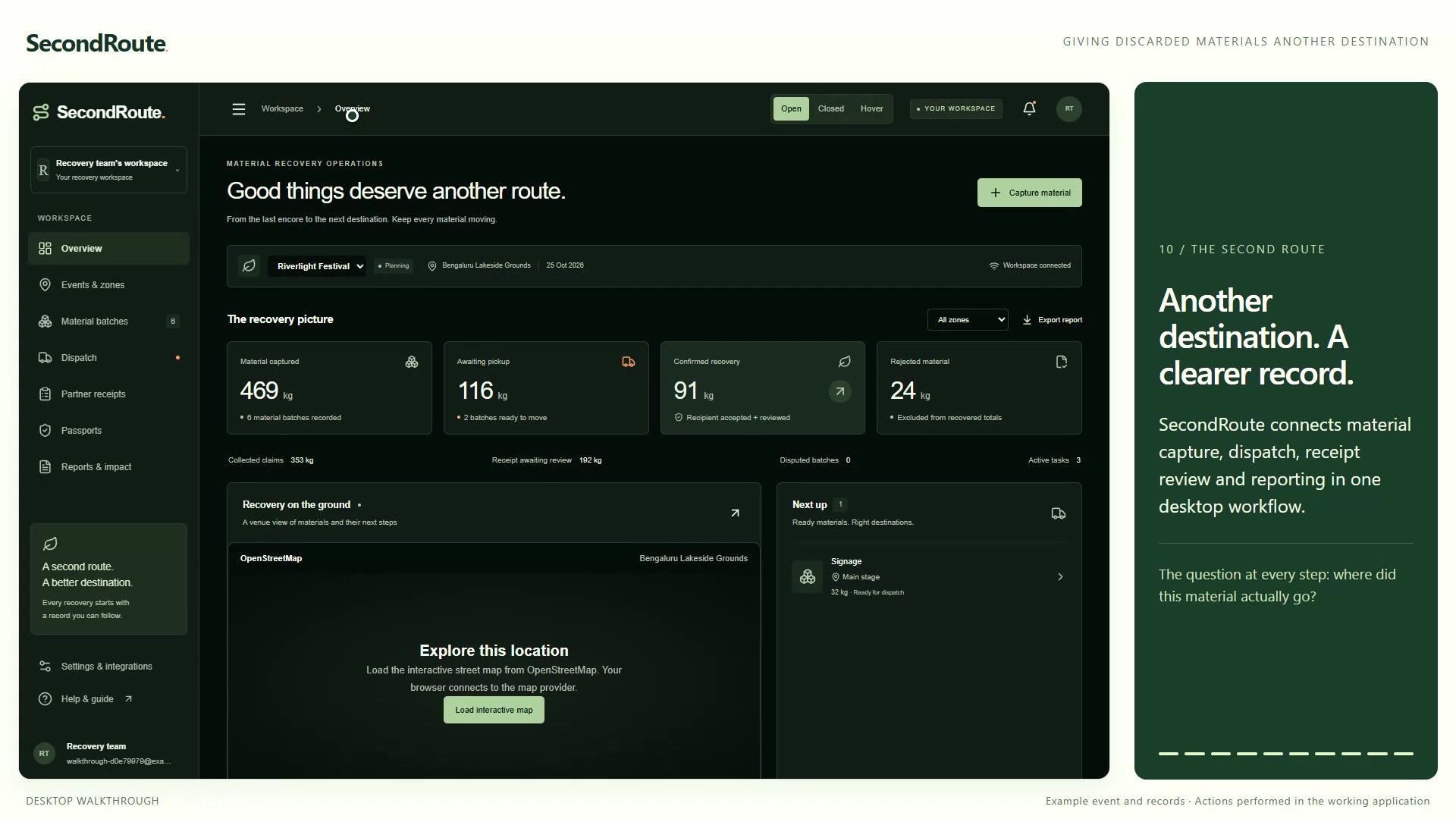
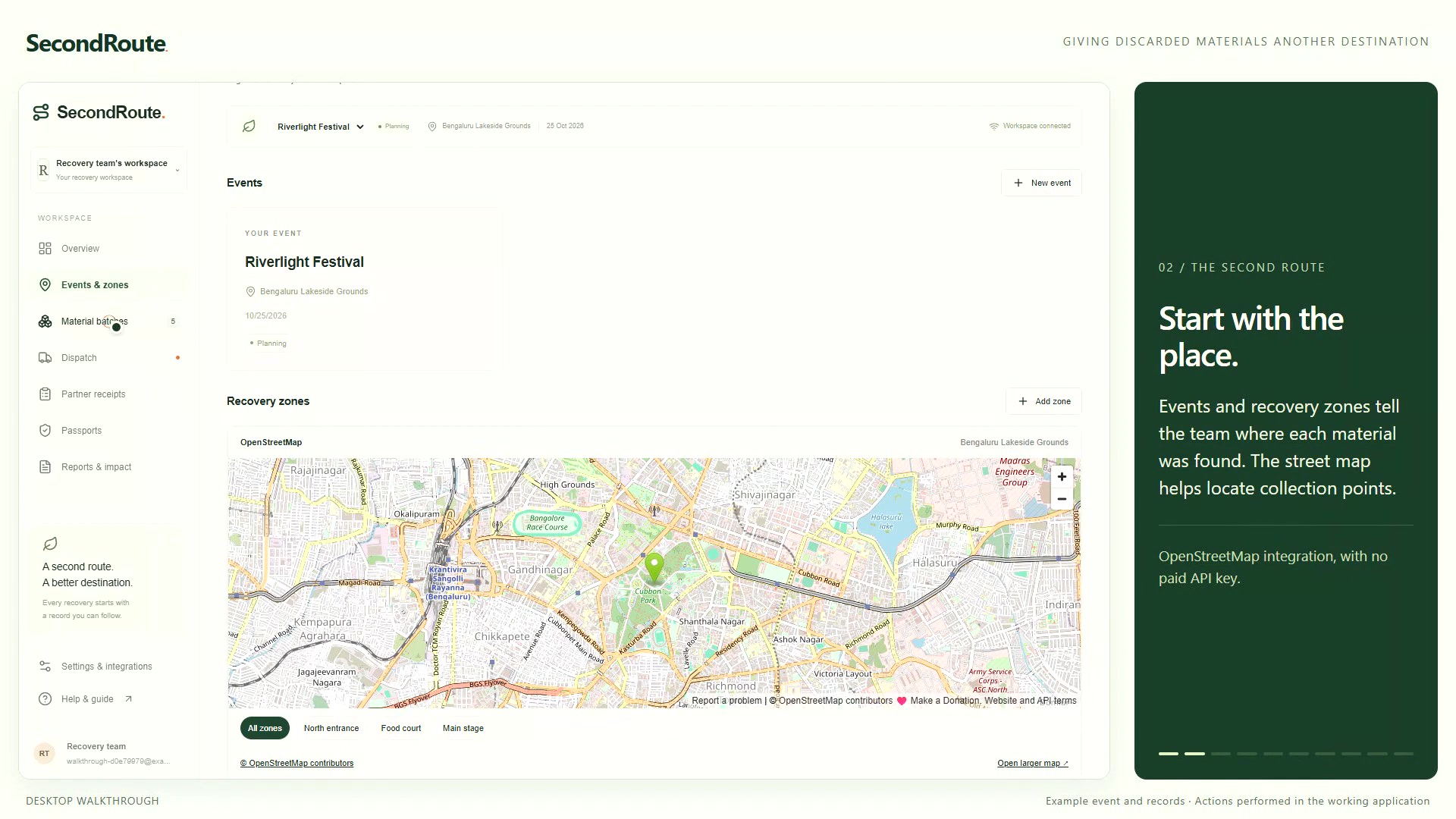
SecondRoute is a material-recovery platform for events, campuses, and venues. It brings material records, collection batches, recovery partners, and progress tracking into a shared workflow.
The process connects the people handling materials in the field with the coordinators arranging collections and the partners receiving them. Its central question is simple: Where did this material actually go?
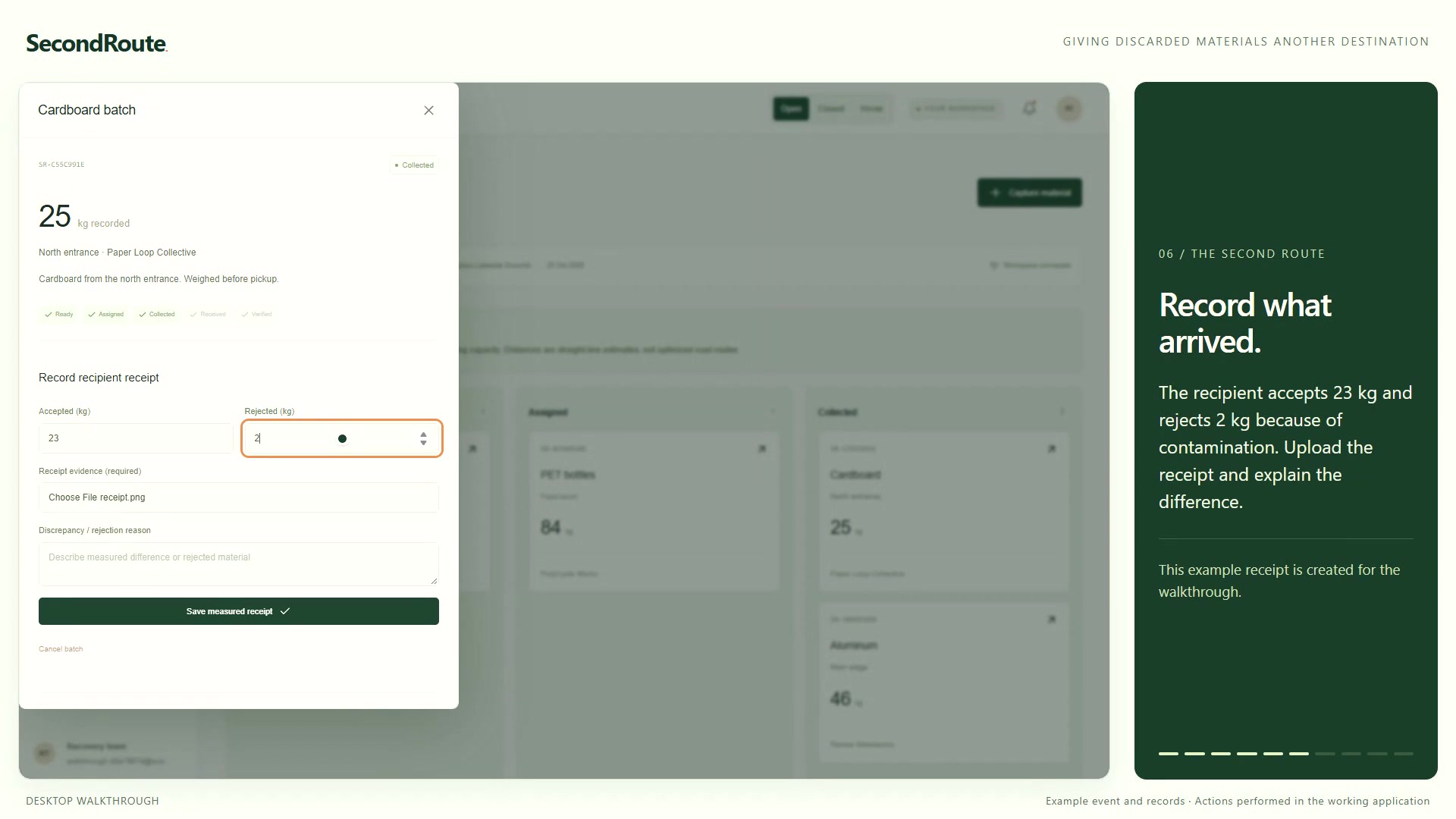
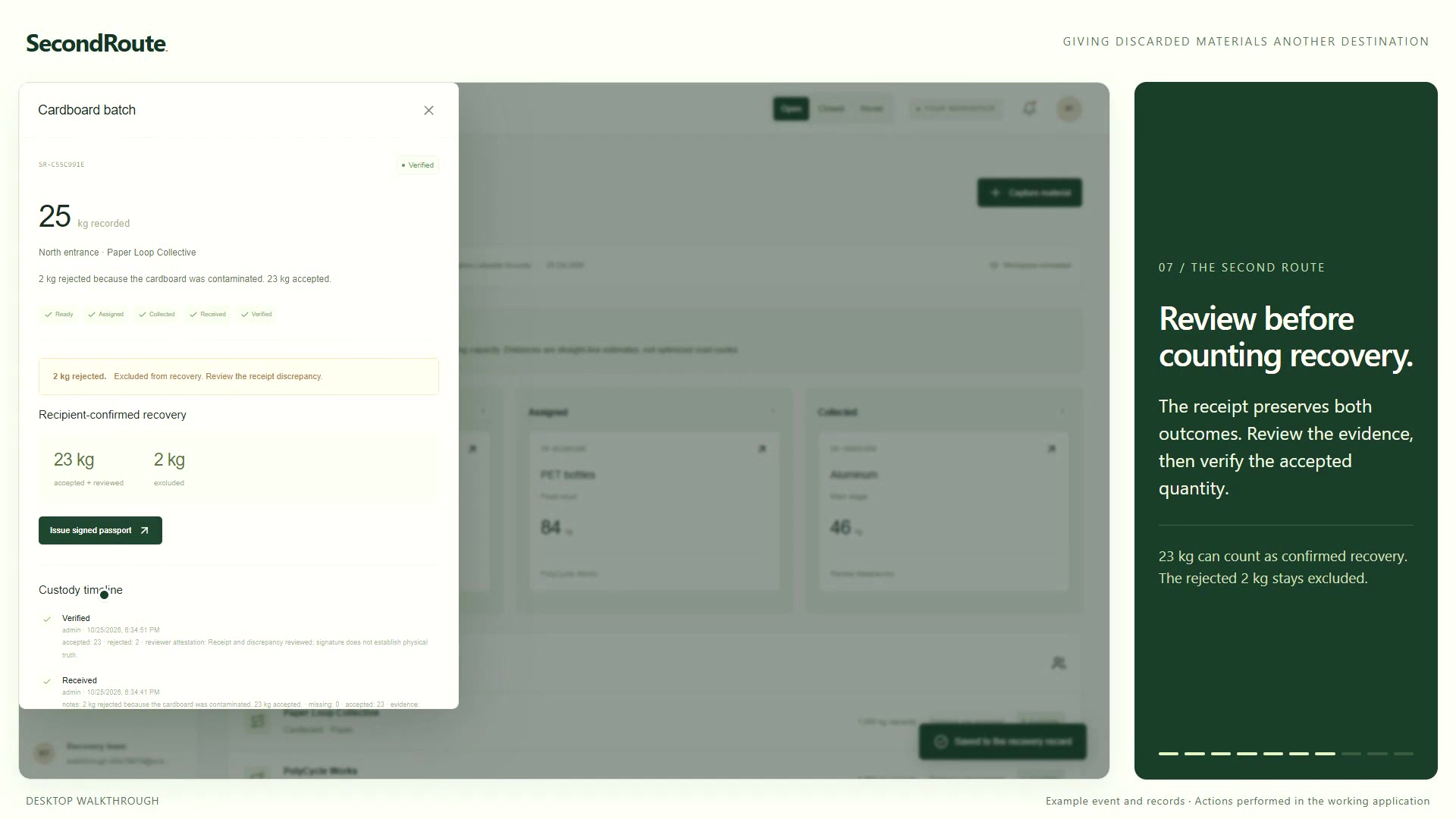
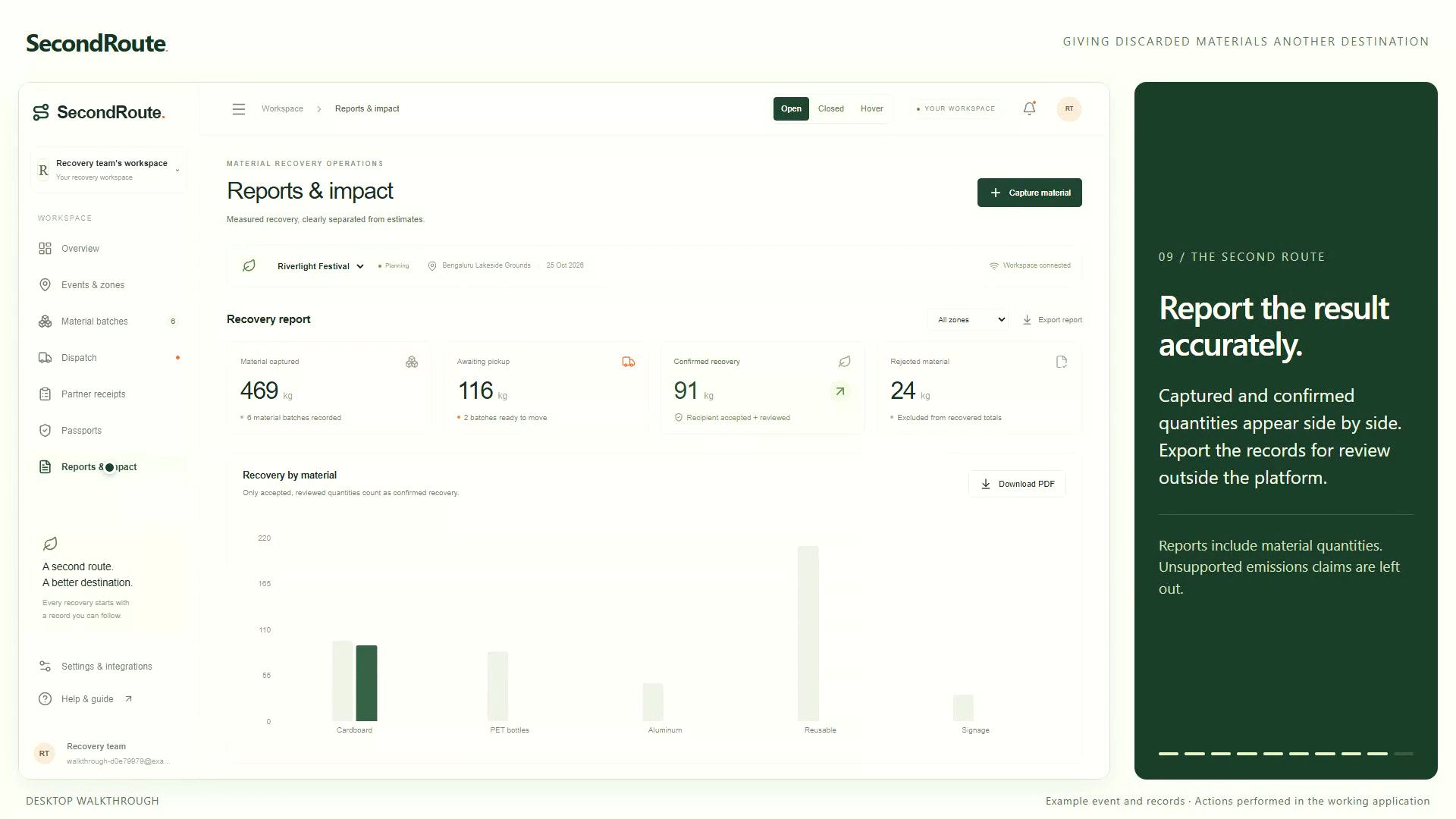
Our approach distinguishes between material recorded, material collected, and material accepted at its destination. These represent different stages of recovery. Keeping them separate creates a more useful picture of progress and helps organizers identify incomplete collections, discrepancies, and rejected materials.
SecondRoute turns event cleanup into a traceable recovery process, supporting the Sustainable Supply Chains track through material lifecycle tracking and recovery coordination.
How we built it
We built SecondRoute around the material journey, starting with the actions people need to complete rather than treating the dashboard as the entire product.
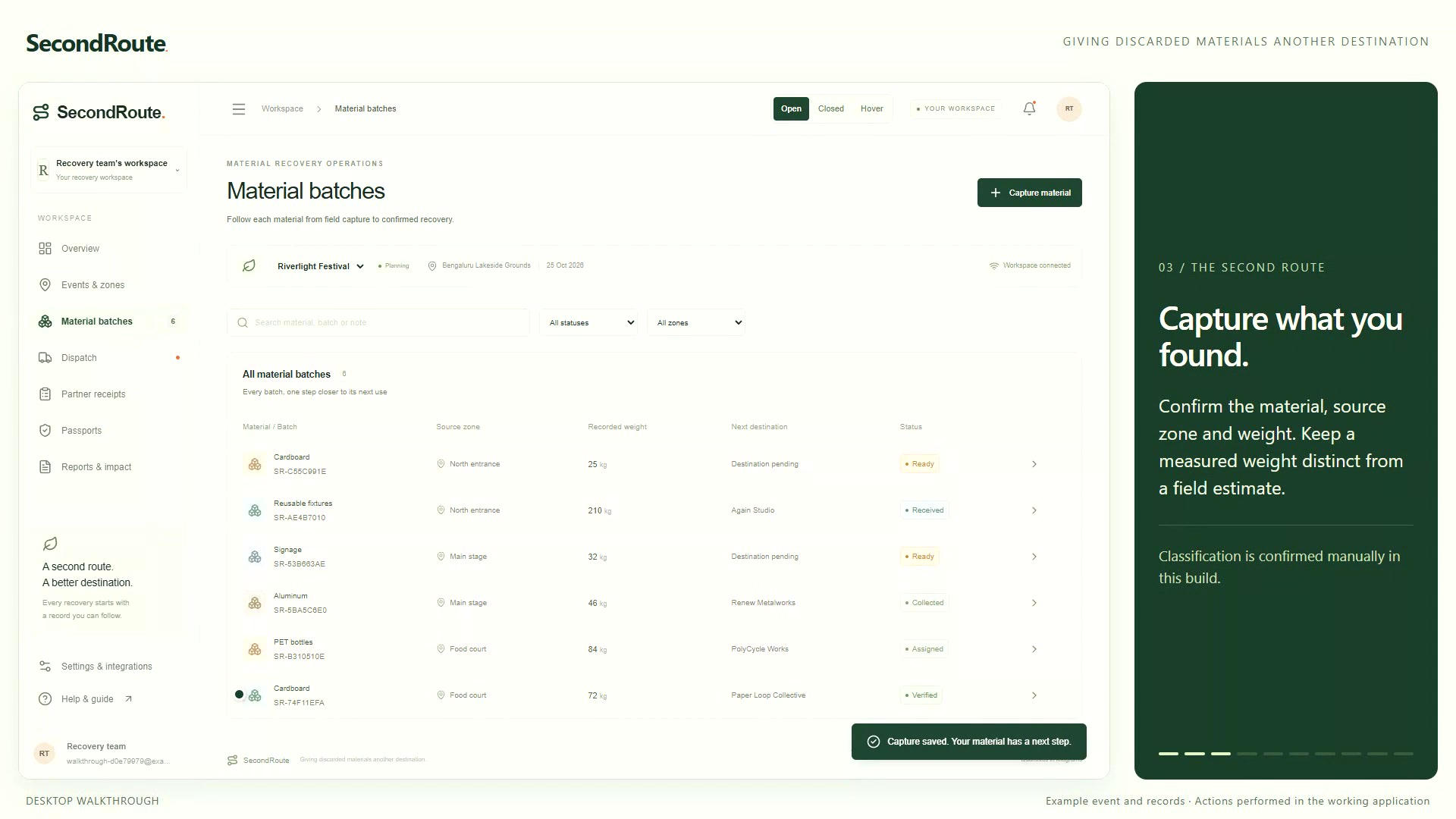
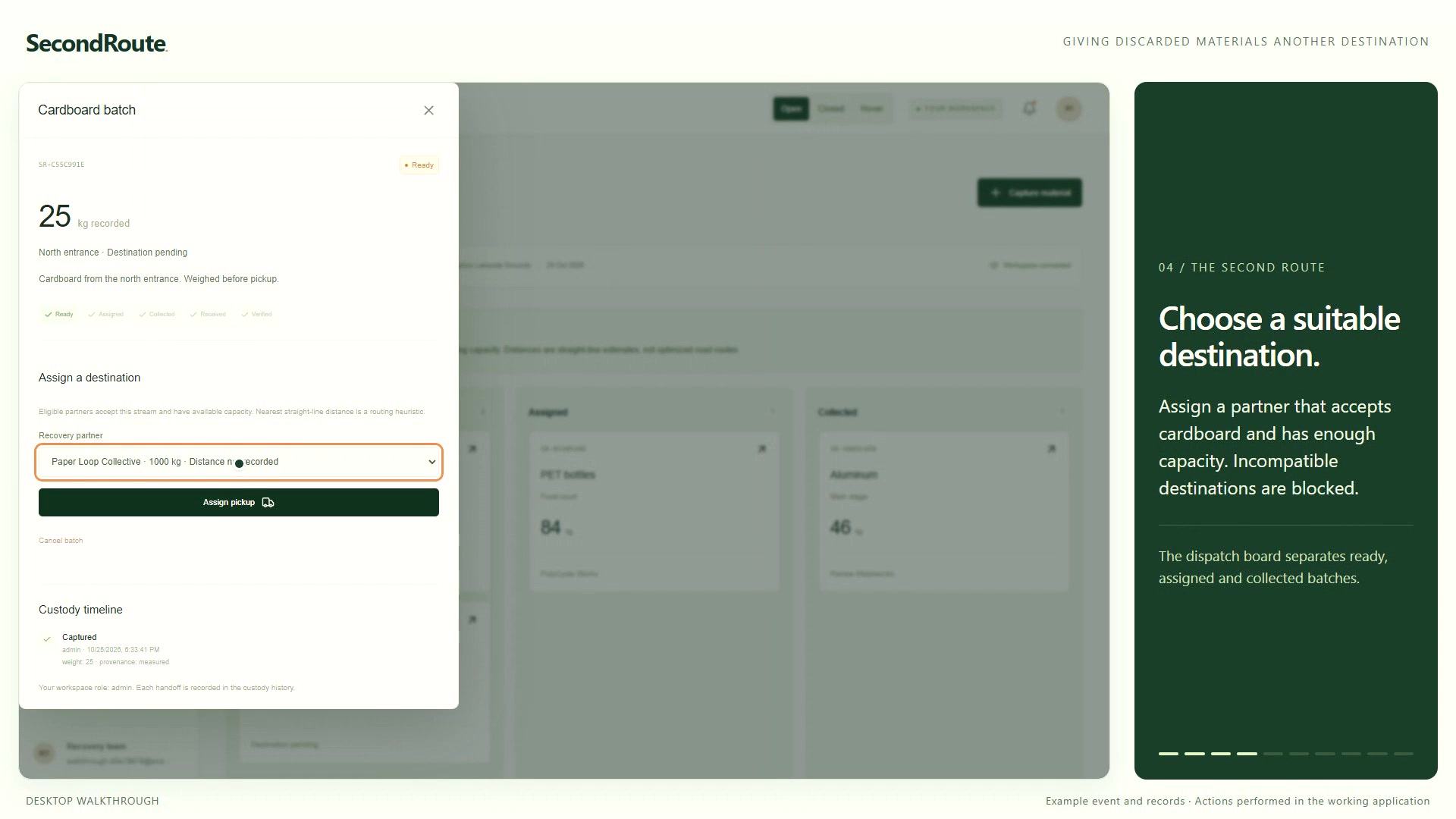
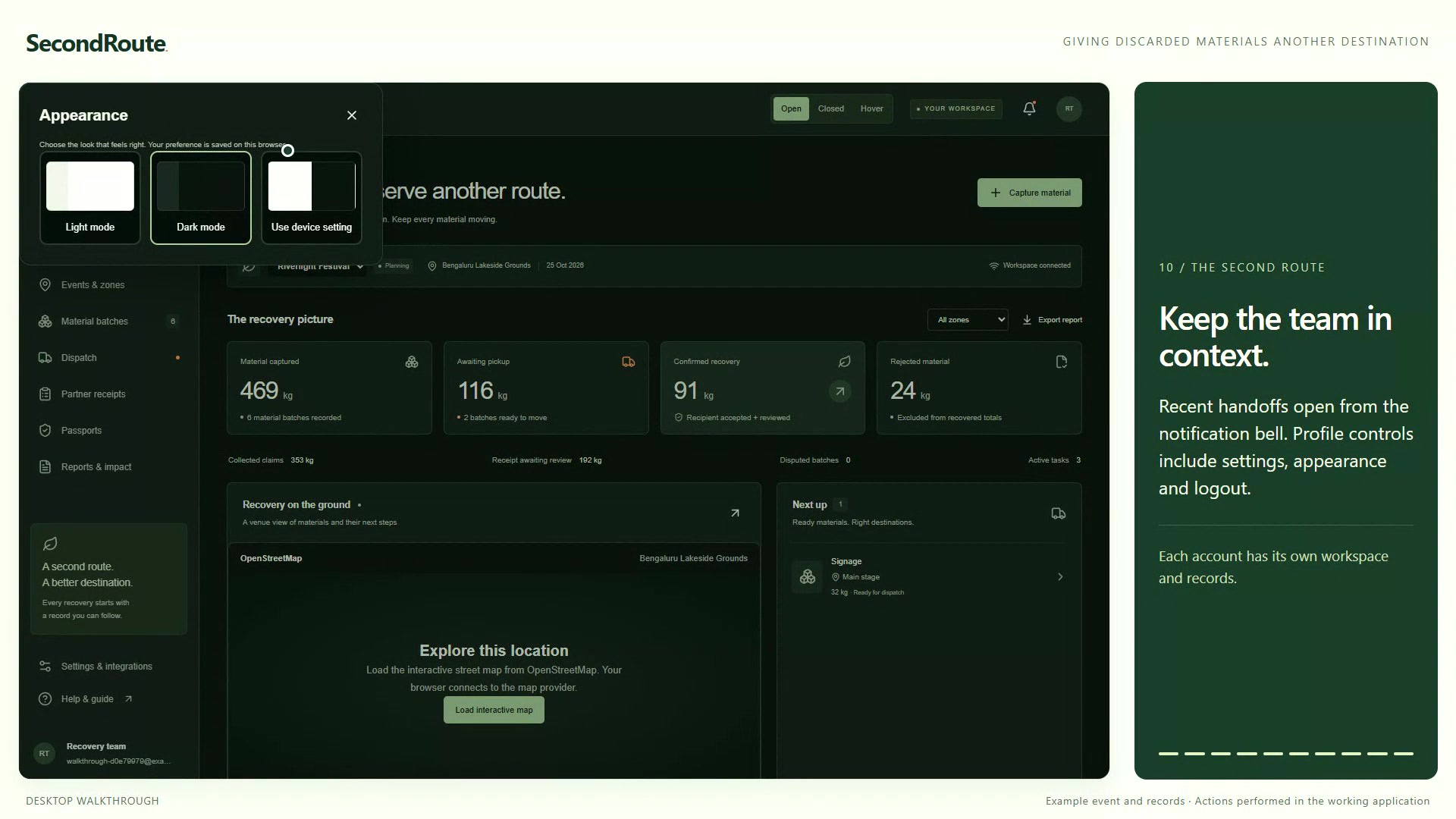
The web experience brings together material capture, batch organization, collection coordination, and recovery records. We structured the workflow around the responsibilities of field workers, coordinators, and receiving partners, with each stage contributing information to the batch's history.
MaterialOps served as a reference for the initial event-recovery concept. We developed SecondRoute's identity and product direction around a particular priority: making the difference between a collection claim and a confirmed recovery clear.
We used Codex to support development and iteration, translating the product workflow into an application and refining how users move through it.
Challenges we ran into
One of the central challenges was defining what should count as recovery. Recording an item does not mean it has been collected, and collecting a batch does not establish that a recipient accepted the entire load. We needed to make those distinctions understandable throughout the product.
Another challenge was balancing field simplicity with operational detail. Workers need a quick way to record materials, while coordinators need enough information to organize useful batches and suitable collections.
We also had to think carefully about evidence. A digital record can document a handoff, but it should not imply more certainty than the underlying information supports. This shaped our emphasis on clear quantities, explicit stages, and transparent recovery records.
Accomplishments that we're proud of
We are proud of turning an event-cleanup problem into a concrete product with a clear purpose and an understandable workflow.
SecondRoute connects the discovery of discarded materials with the coordination needed to give them another destination. Bringing those steps together makes the project more useful than a standalone waste log.
We are especially proud of the product's focus on accountability. Treating collection and receipt as separate milestones encourages more careful reporting and keeps unresolved material visible.
We also established a distinct identity for SecondRoute, with a name and message that express its purpose directly: materials can have another destination when people have the tools to coordinate that journey.
What we learned
We learned that circularity depends on logistics as much as material identification. A recyclable item still needs an appropriate destination, a collection process, and someone willing to receive it.
We also learned that useful sustainability reporting starts with precise definitions. Captured, collected, received, and recovered quantities should not be treated as interchangeable.
Finally, we learned to treat verification as a question of evidence rather than presentation. A polished report is only useful when someone can understand where its information came from, what it establishes, and what remains uncertain.
These lessons shaped SecondRoute into a project focused on practical coordination and transparent records.
What's next for SecondRoute
Our next priority is to validate the workflow through a small pilot with an event organizer and a recovery partner. We want to understand where field recording takes too long, what information partners need before accepting a collection, and which discrepancies occur most often.
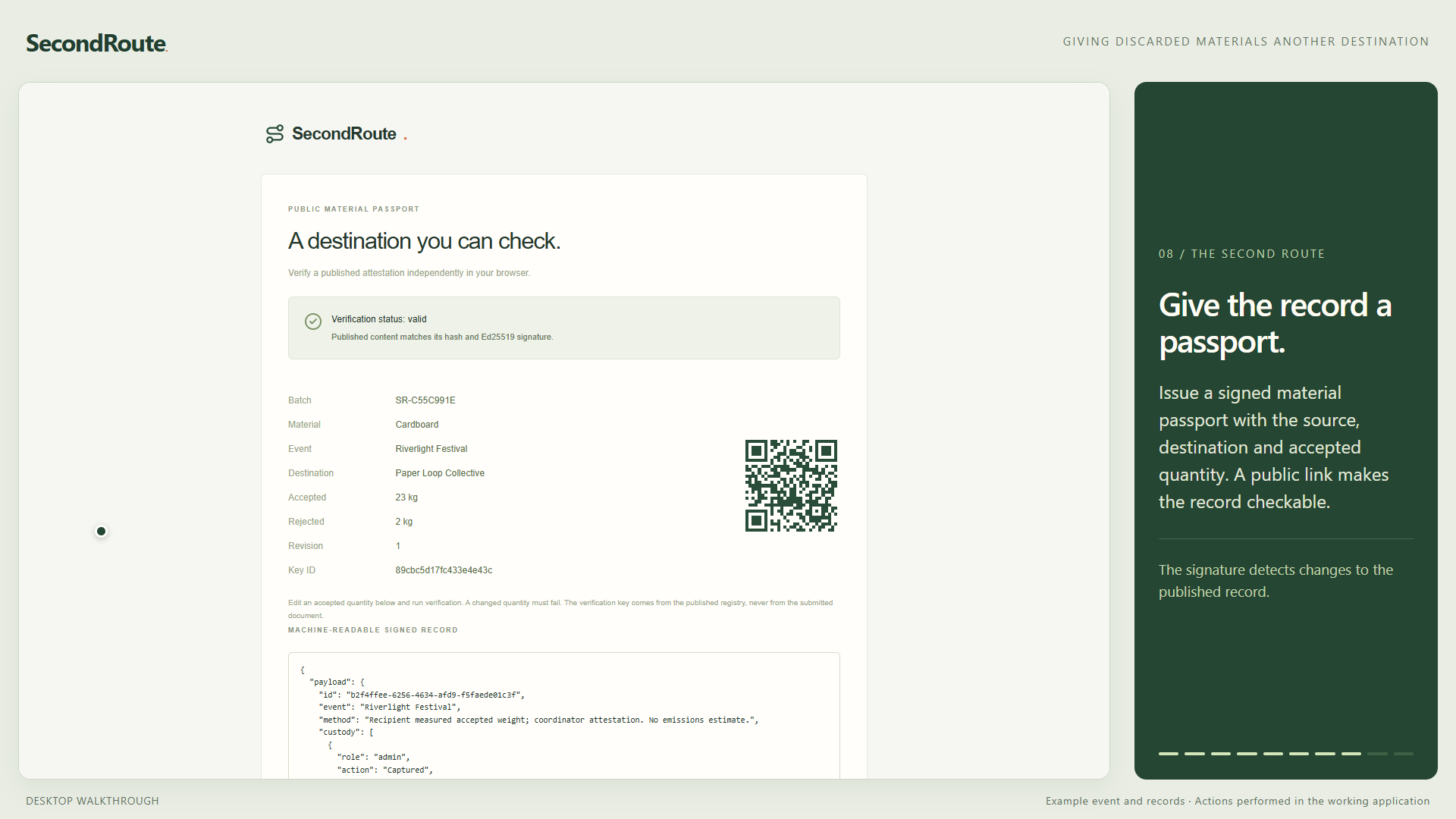
Further development will focus on stronger offline capture, better material classification, more useful partner matching, and independently checkable material passports.
We also want to improve environmental reporting using documented calculation methods, keeping estimated benefits separate from measured material quantities.
Longer term, we see SecondRoute supporting repeated recovery operations across campuses, venues, and organizations. The goal is to make giving materials another destination a routine part of event operations.
Built With
- css
- javascript
- plpgsql
- typescript


Log in or sign up for Devpost to join the conversation.