🍊 SecondRead
Read twice. Think once.
Still going...
Inspiration
Most fact-checking tools tell you what to believe. We wanted to build something different: a tool that helps you ask better questions instead of giving you answers. SecondRead was inspired by the idea that media literacy is not about distrust. It is about reading with more context.
What it does
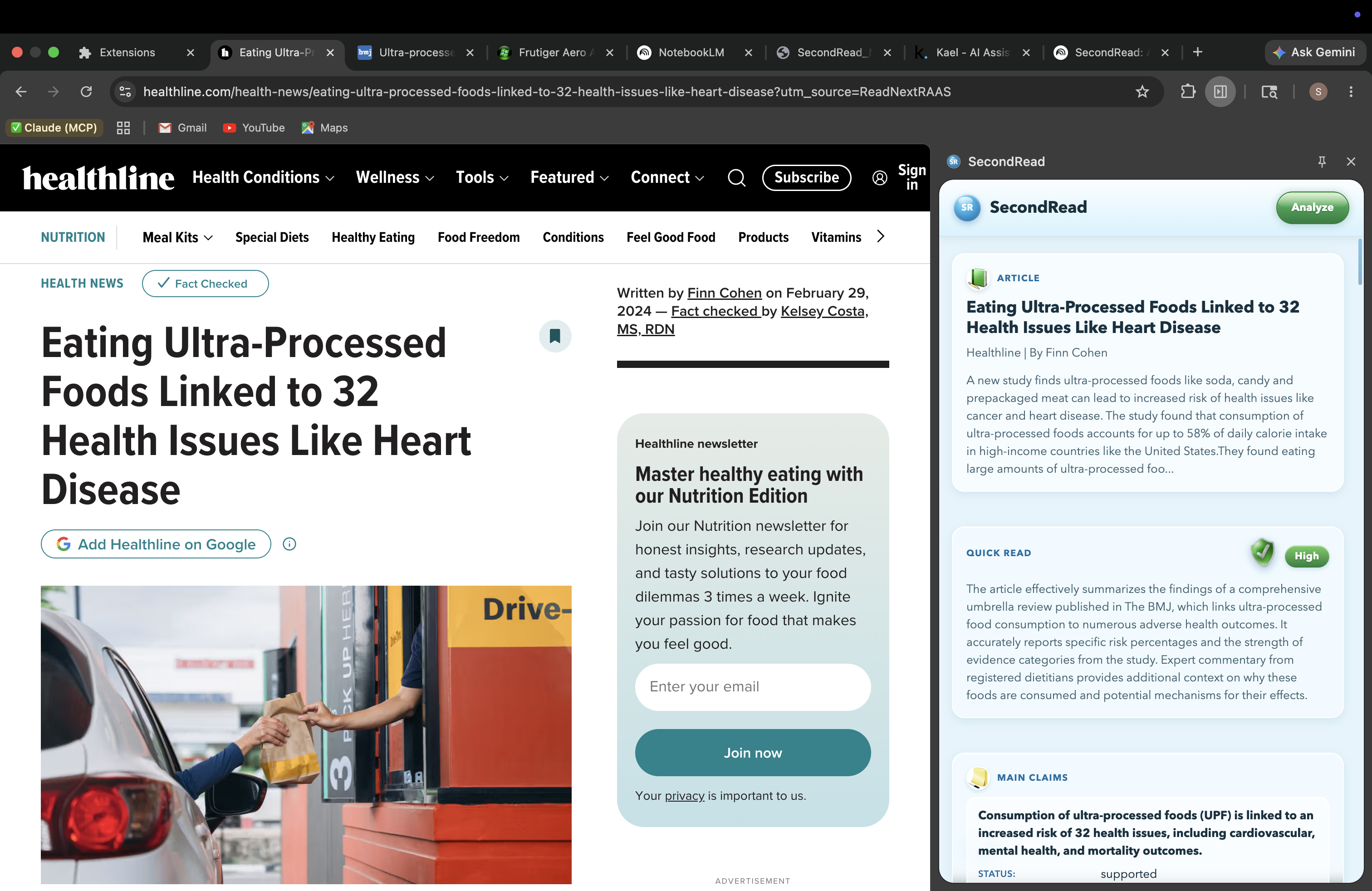
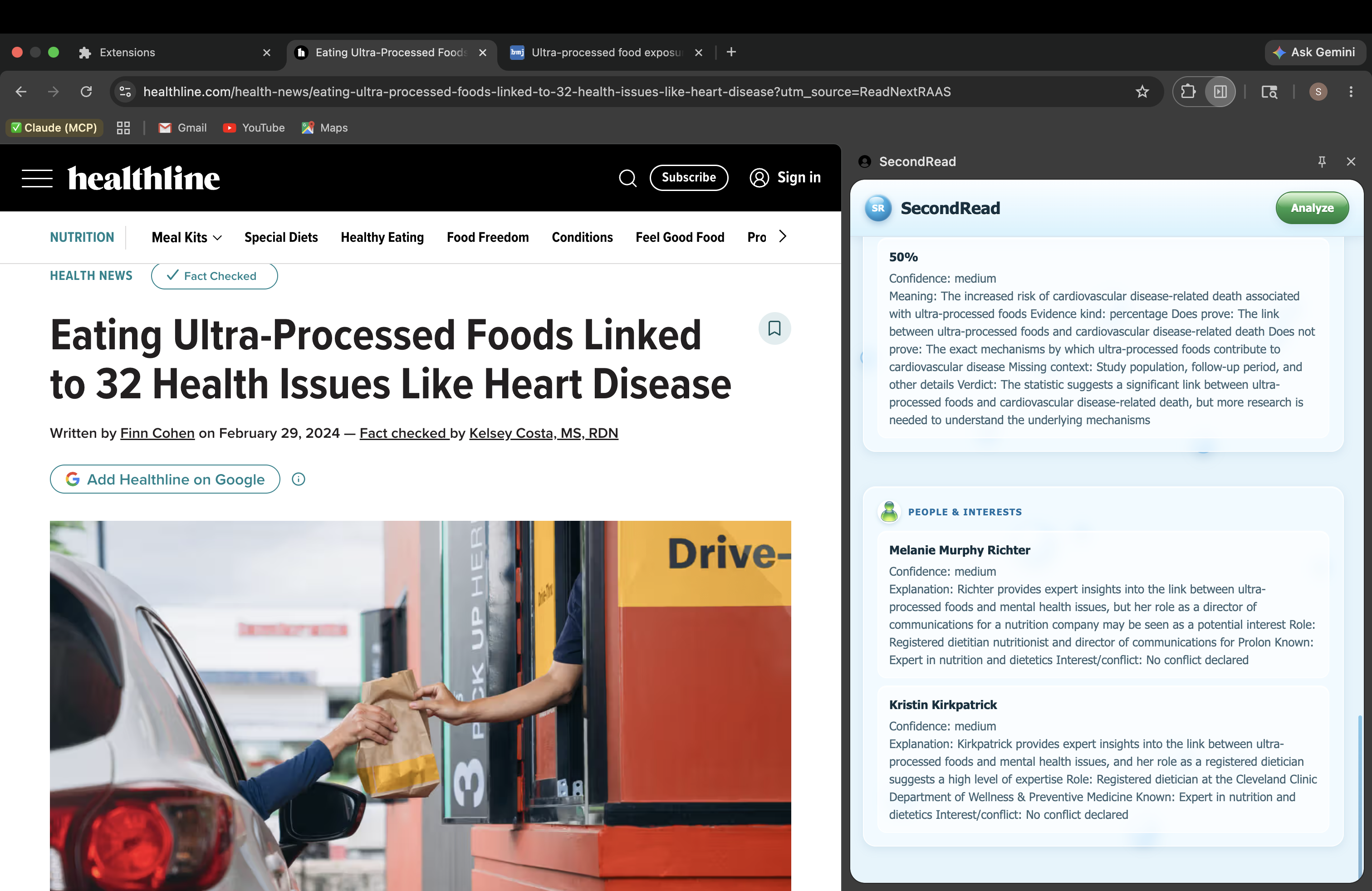
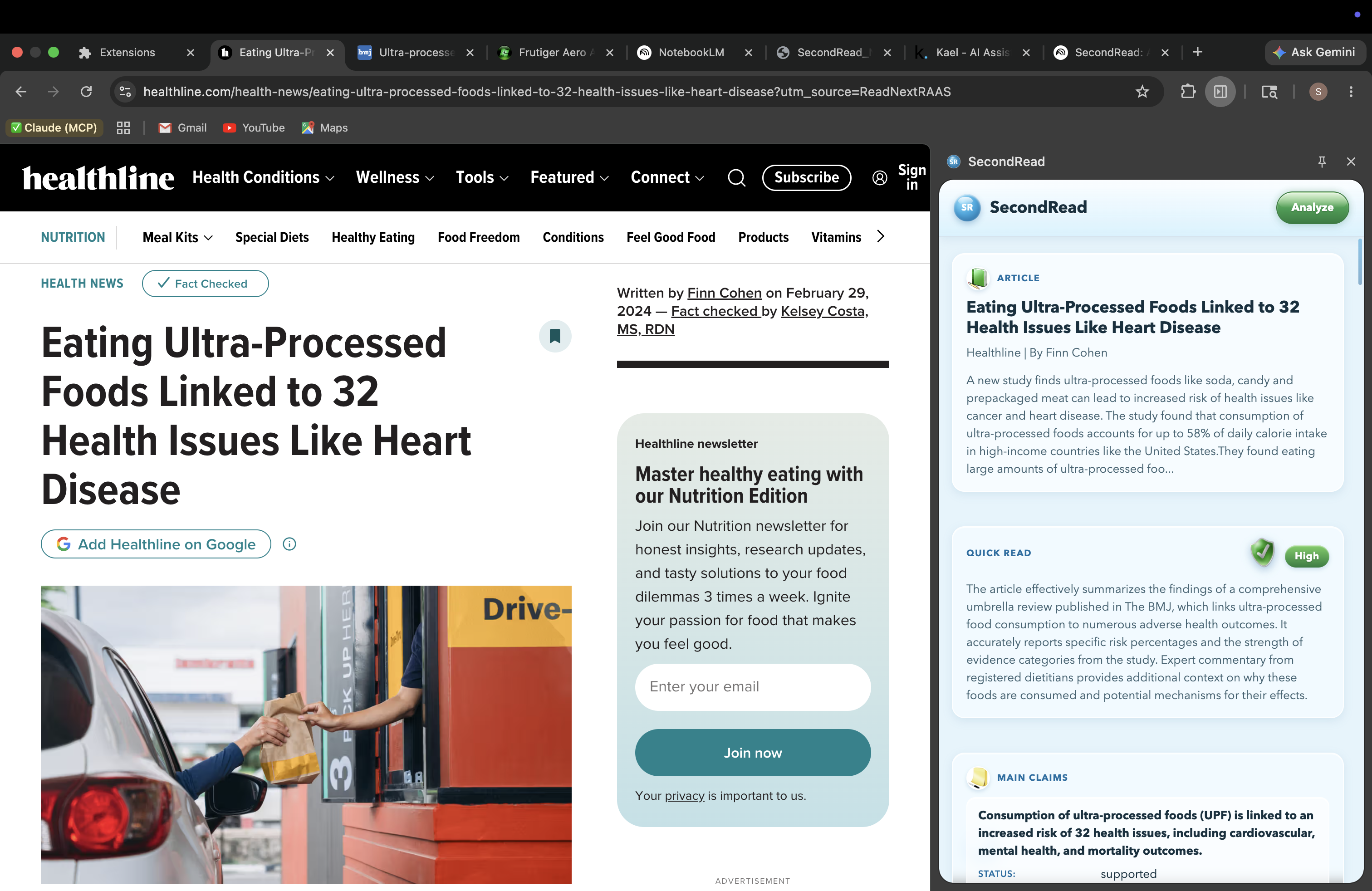
SecondRead is a Chrome extension that analyzes the news article you're currently reading and surfaces a second layer of context directly in a side panel.
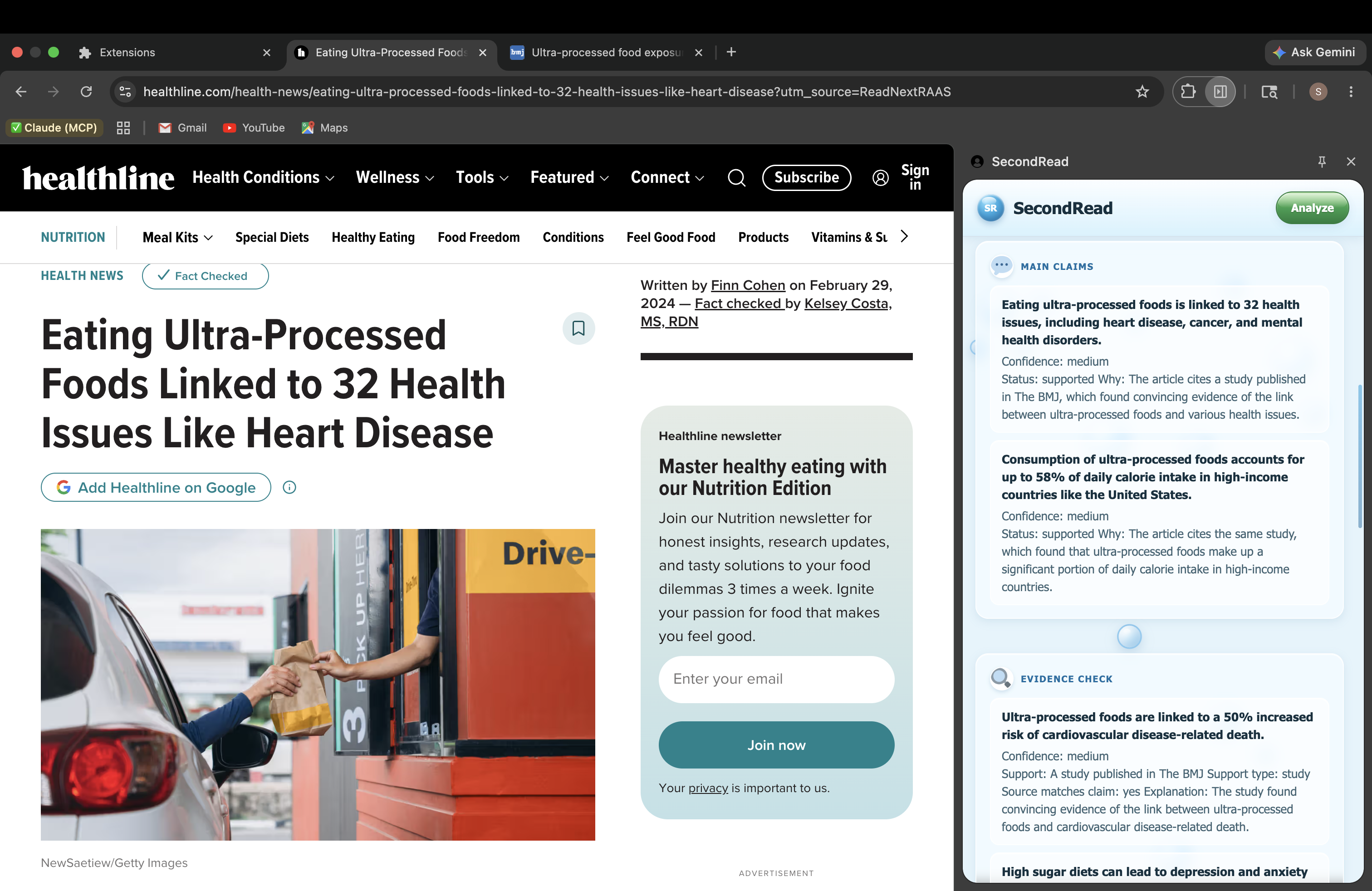
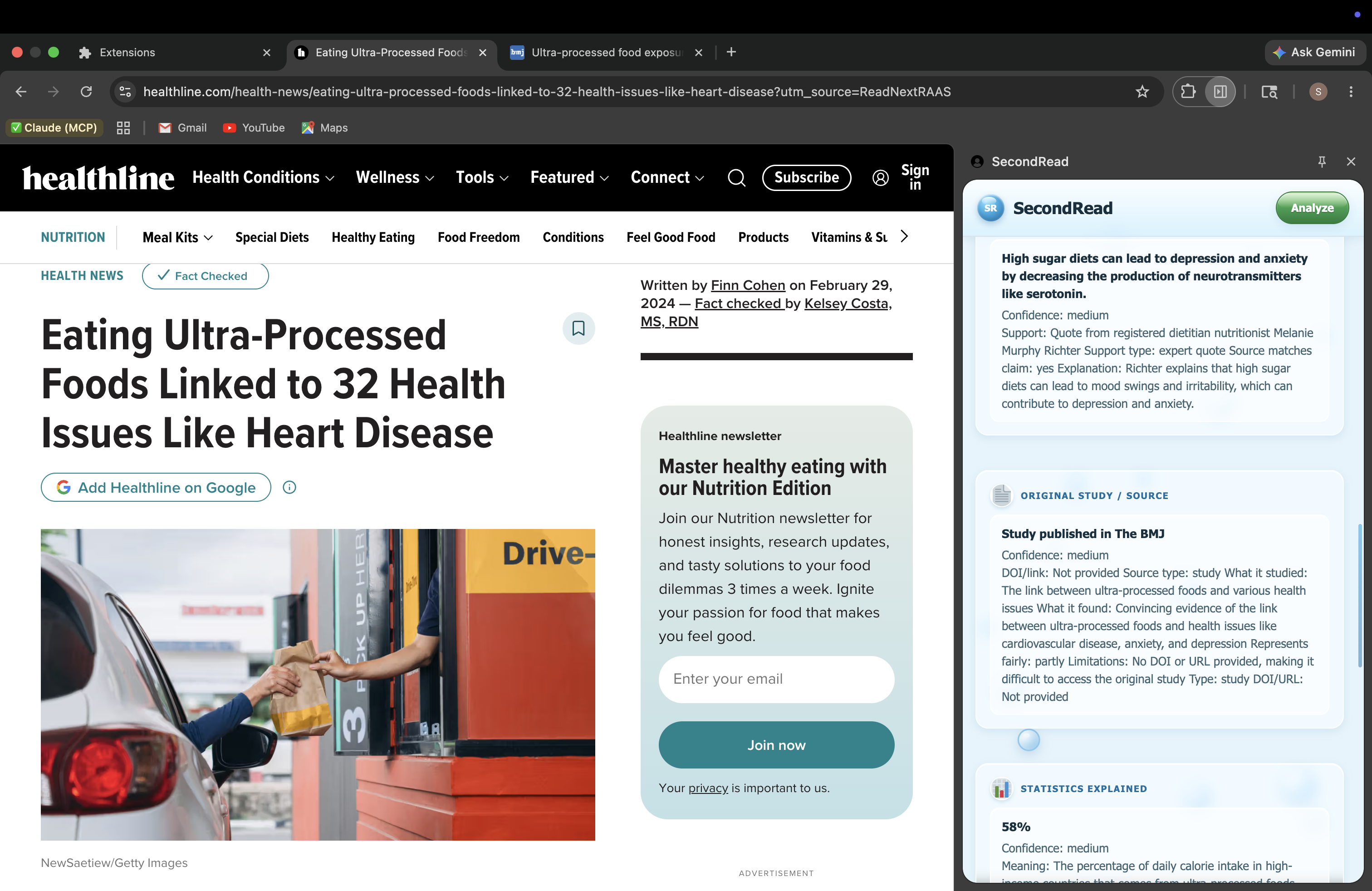
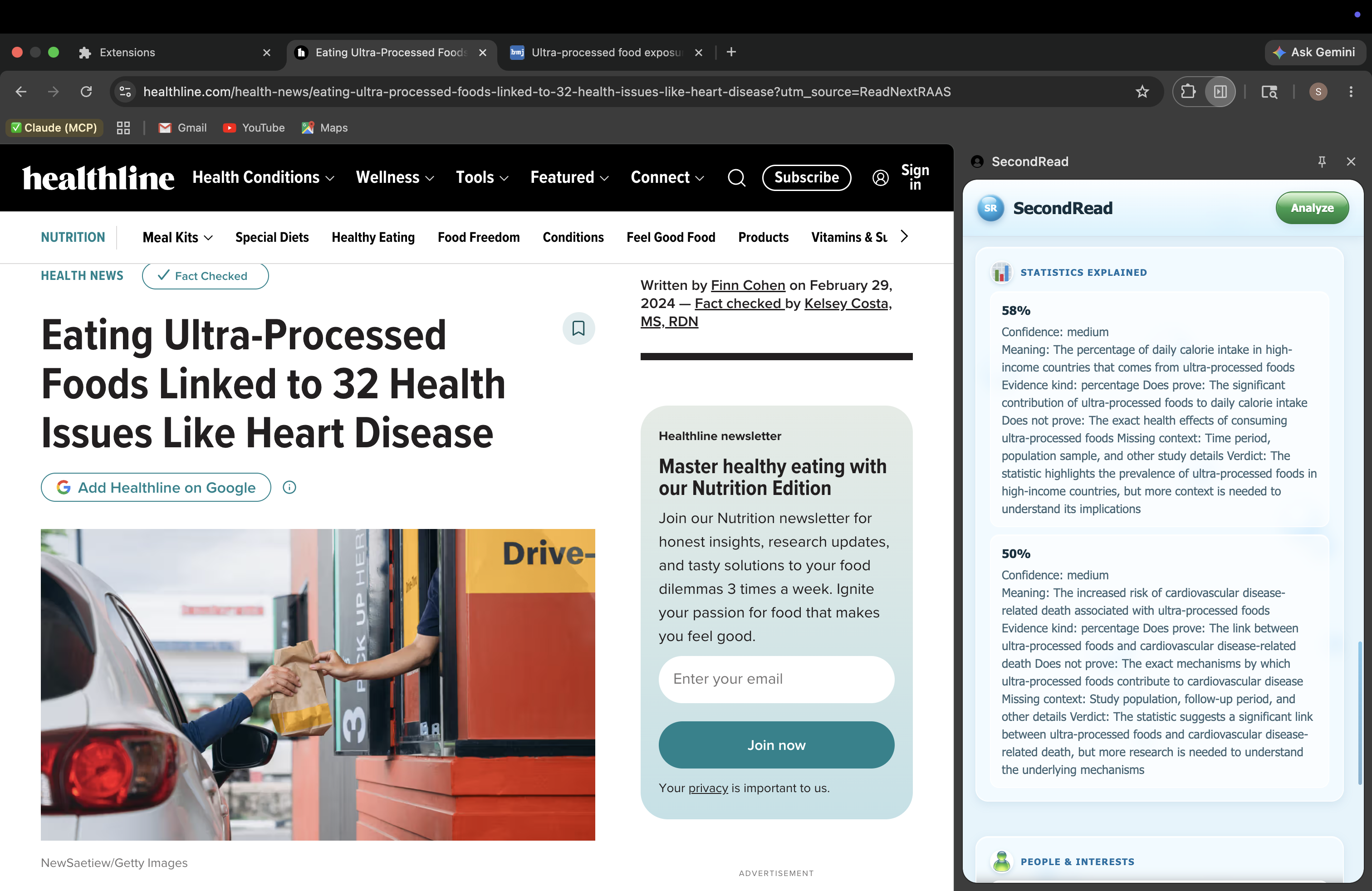
It identifies the article's main claims, checks what evidence is offered for each one, explains important statistics in plain language, and flags missing context, unclear sourcing, loaded language, or absent funding/conflict disclosures.
SecondRead does not label articles as true or false. Instead, every warning is attached to a visible criterion, supported, partly supported, unclear, overstated, or unsupported so readers can understand what deserves a second look without being told what to believe.
How we built it
We built SecondRead with a deliberately simple stack: Chrome Extension Manifest V3 with plain JavaScript and HTML/CSS on the frontend, and an Express backend that routes article data to Gemini.
We used Mozilla's Readability.js to extract clean article text from the current page. The backend handles all AI calls so the API key never touches the extension.
Chrome MV3 Vanilla JS Express Gemini API Readability.js
Challenges we ran into
Getting the Chrome Side Panel API to communicate reliably with the content script took more debugging than expected.
We also spent significant time designing a prompt that would make the AI return consistent, structured JSON without inventing facts or making unsupported claims. The hardest constraint was teaching the model to be cautious rather than confident.
Accomplishments that we're proud of
We're proud that SecondRead is designed around transparency instead of authority. It does not produce a black-box credibility score or tell readers what to think.
Instead, it breaks the article into claims, evidence, statistics, and context, then explains why each item may deserve a closer look.
We're also proud that it works directly in the browser, where reading actually happens, instead of asking users to copy and paste links into a separate tool for example.
What we learned
The hardest part of building an AI product is not just connecting to the model. It is designing the product boundaries around the model.
Getting an AI system to be consistently cautious, structured, and honest about what it does not know required far more iteration than the code itself.
What's next for SecondRead
Next, we want to add deeper source tracing: automatically detecting DOIs, reports, polls, and datasets cited in an article, then checking whether the article represents them fairly.
We also want to compare coverage across outlets, surface publication and author context more reliably, and improve support for scientific and health reporting where statistics are often easy to misread.
Built With
- chrome-mv3
- express.js
- gemini-api
- groq
- javascript
- mozilla
- vanilla-js


Log in or sign up for Devpost to join the conversation.