-
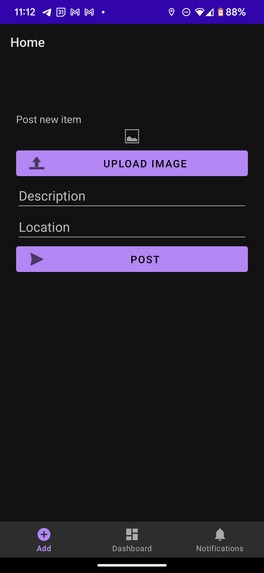
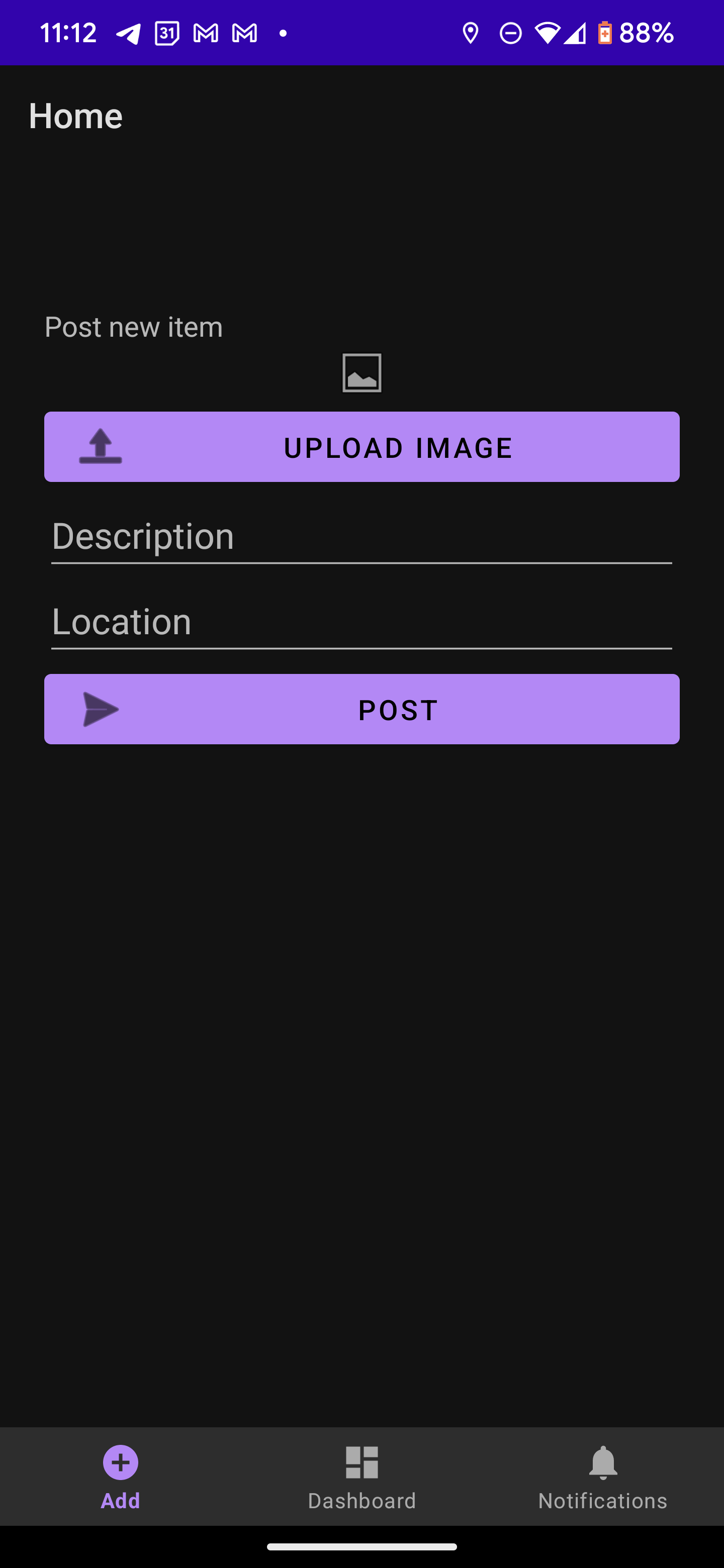
Add new posting
-
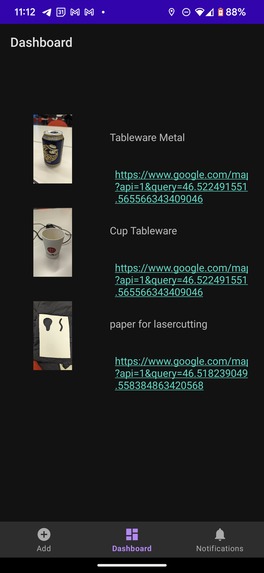
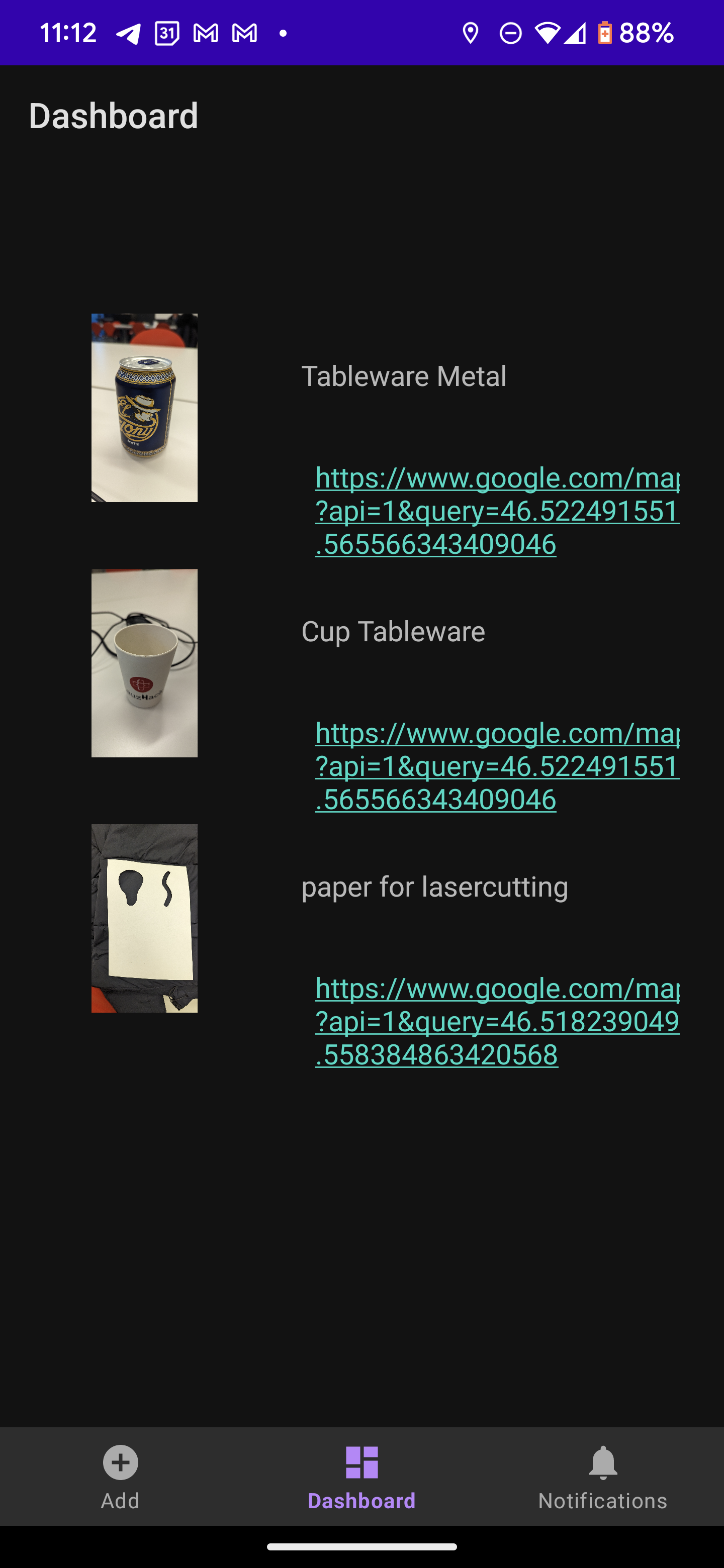
Marketplace with clickable locations, filter by object type
-
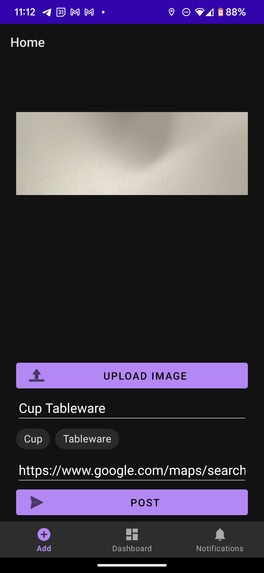
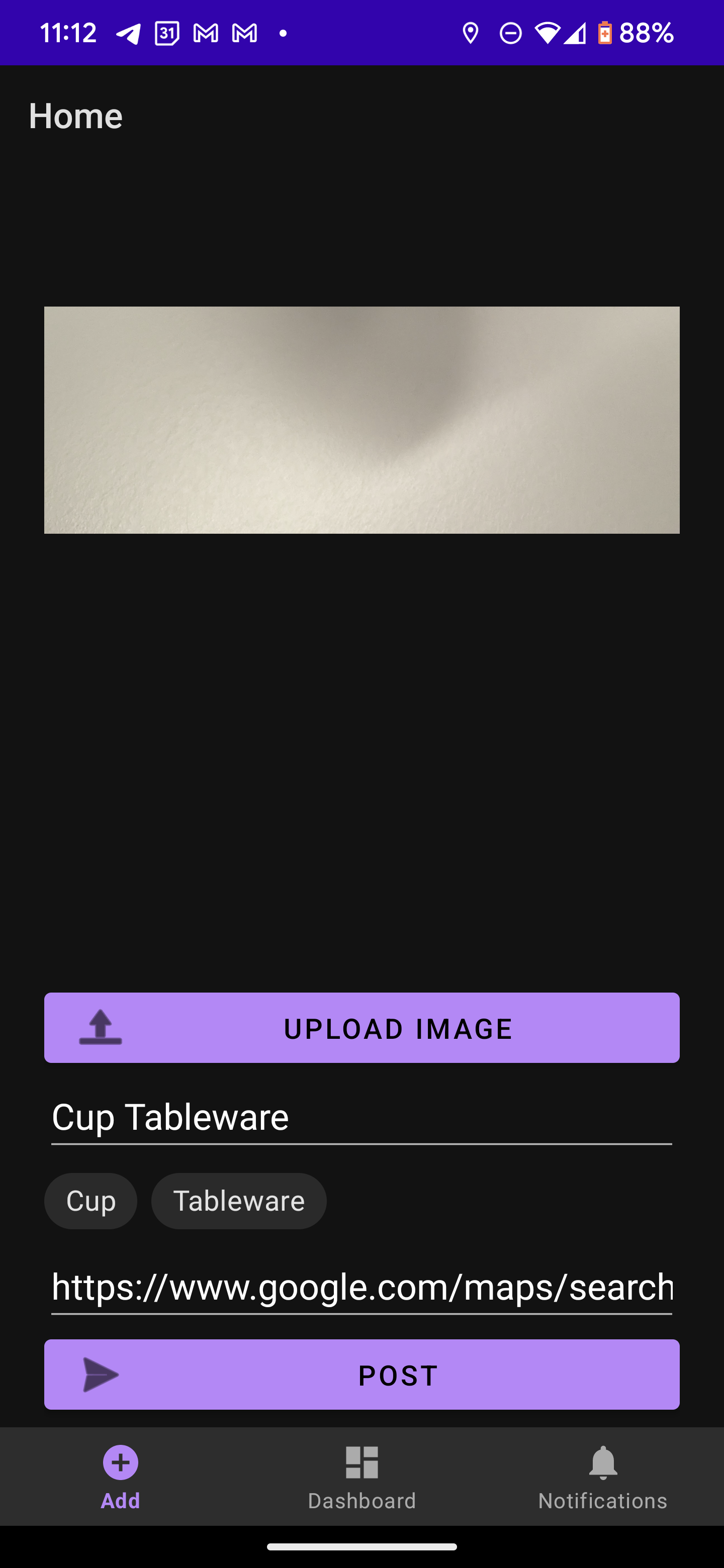
Auto filled labels and location
-
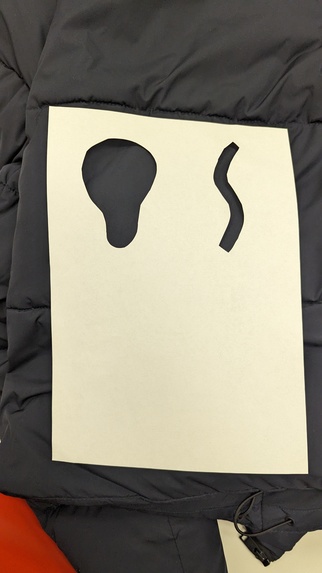
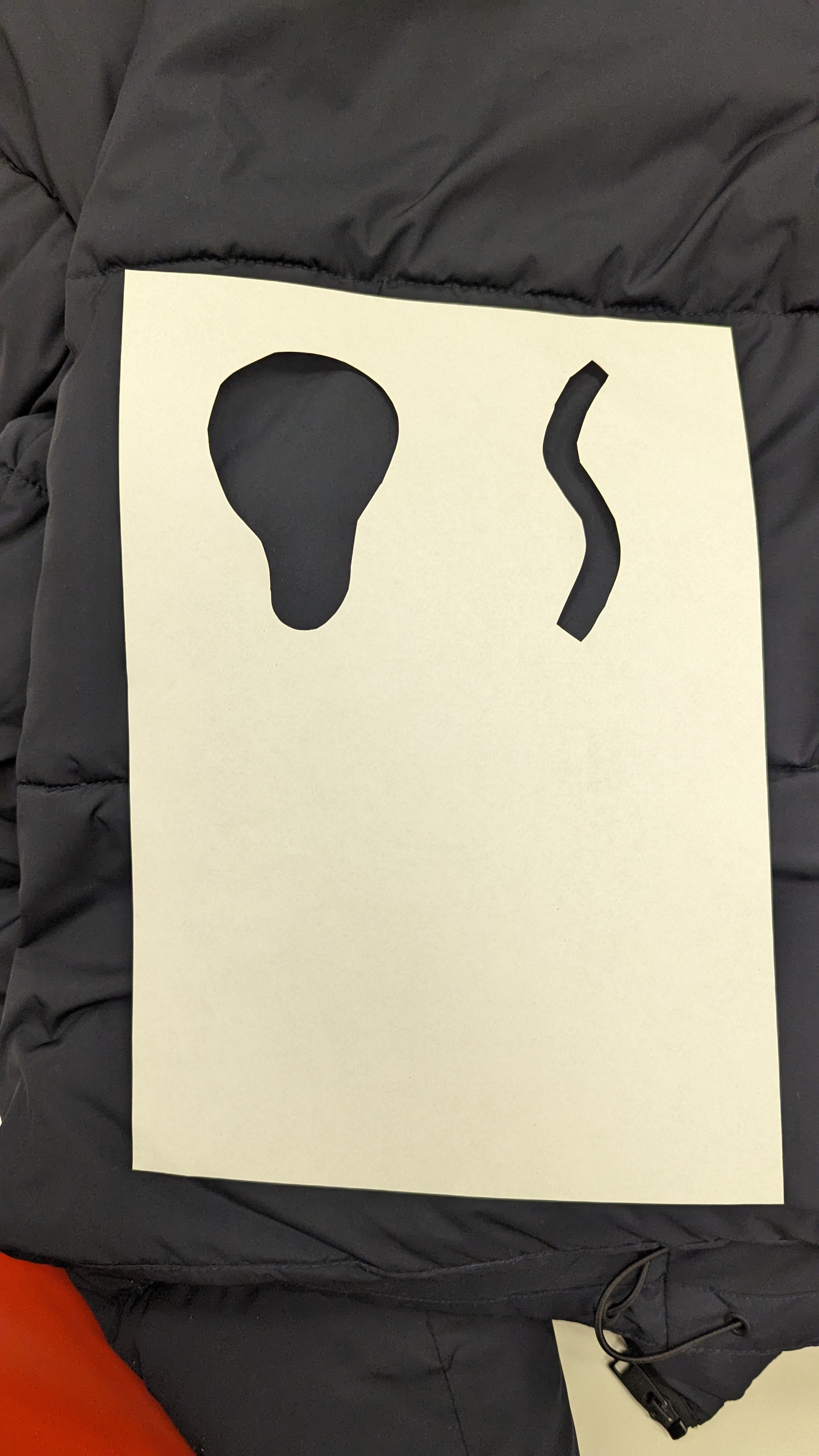
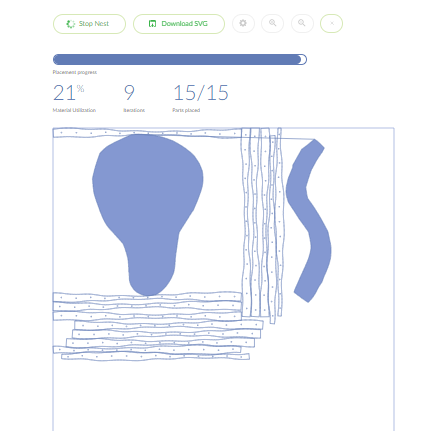
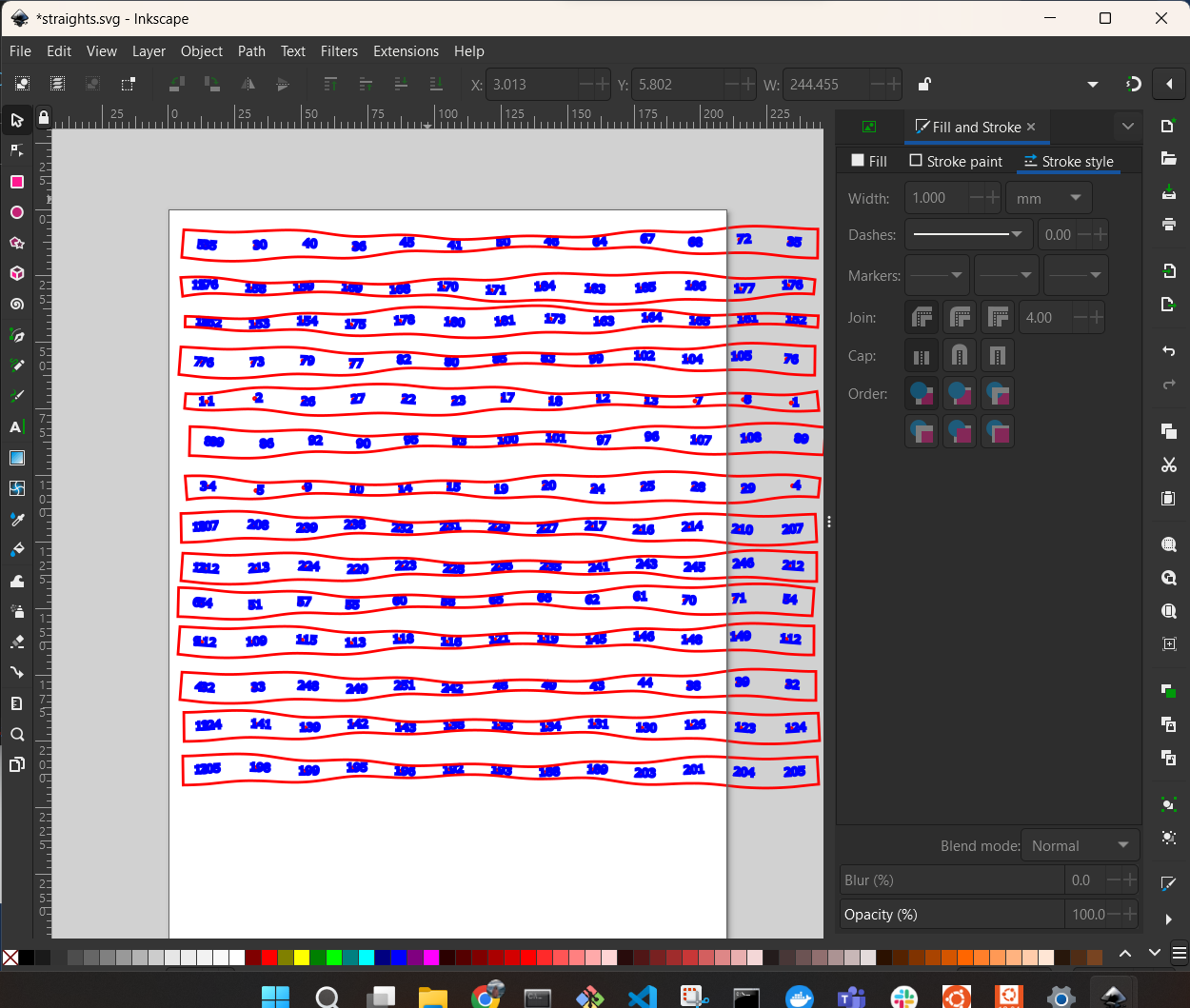
Extra laser cutter material
-
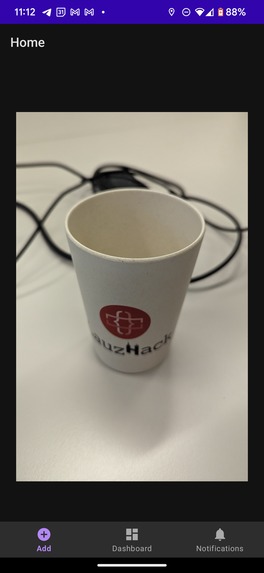
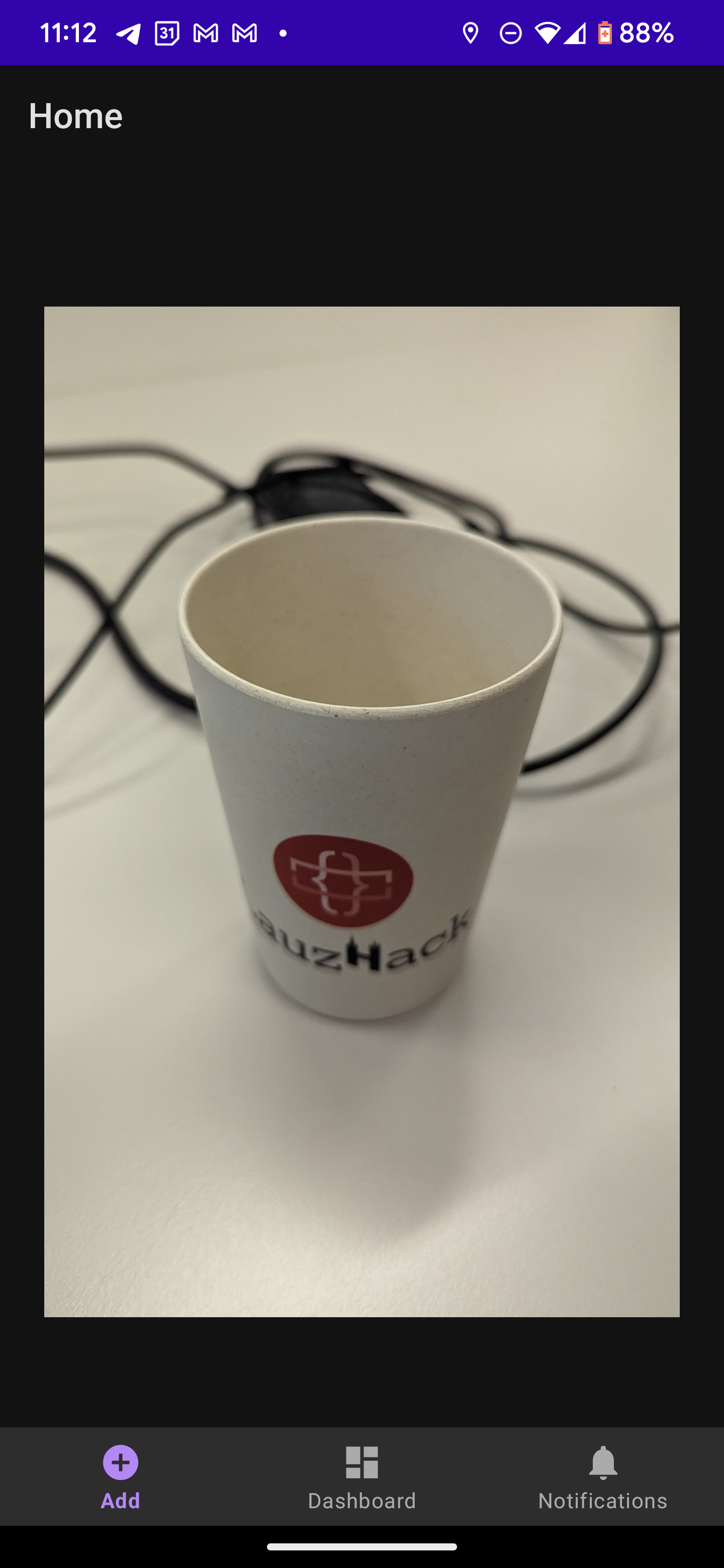
Take a photo
-
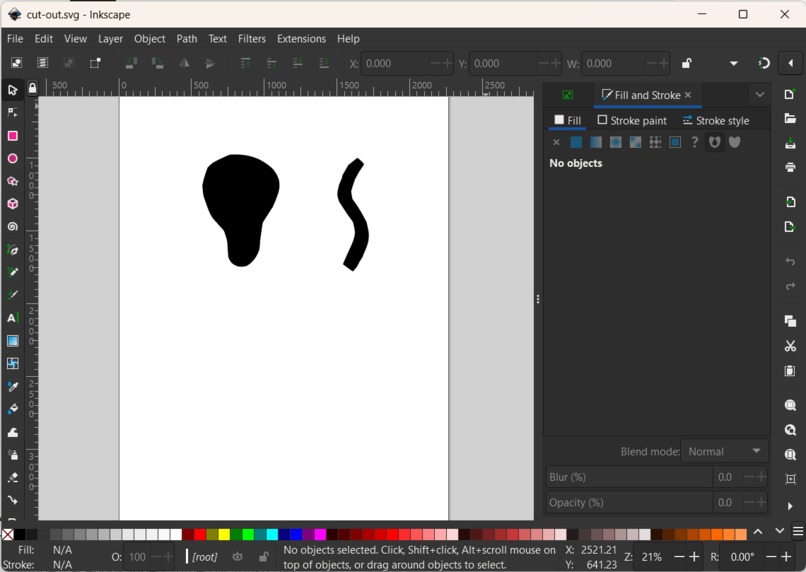
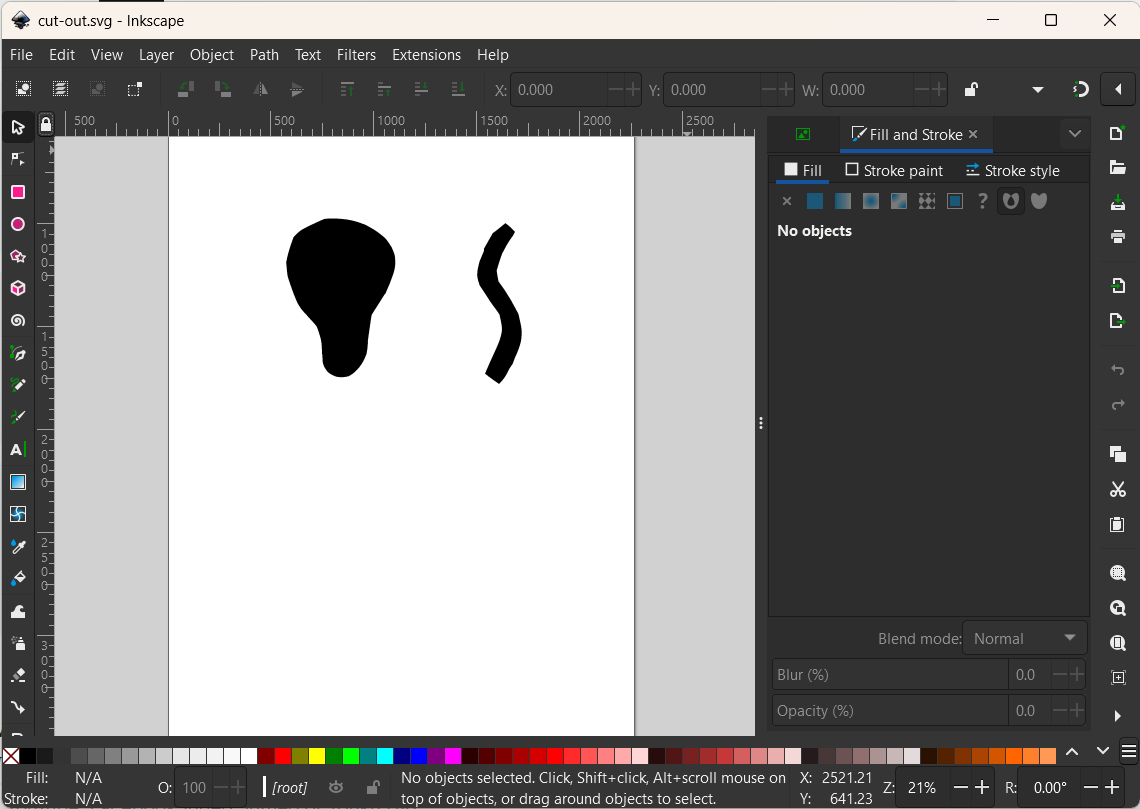
The svg of holes, opened in inkscape
-
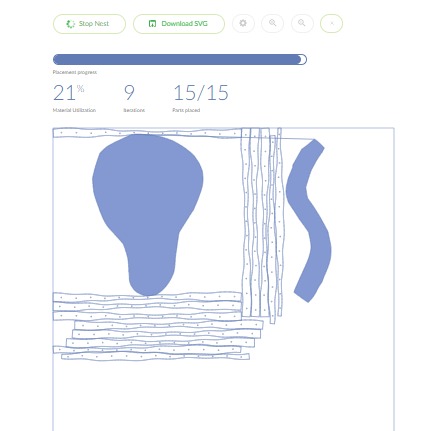
Nesting automatically
-
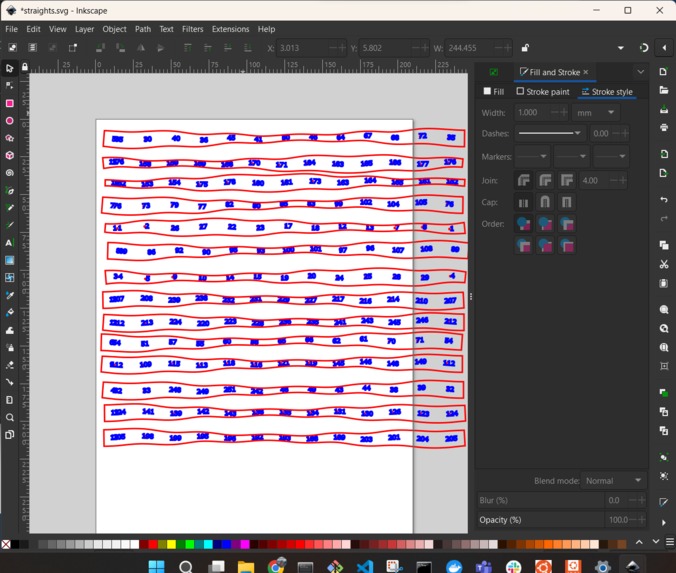
Inspiration
Campuses are a place of constant churn, students and professors come and go and barely use their office supplies and furniture before moving again. In SPOT, materials are half-used and thrown away.
What it does
Instead of throwing away gently used items, this app allows users to take one picture and post them to the university marketplace to give them a second life. One-click posting is more effortless than throwing out the objects! You can even post food that was not eaten from events on campus.
Furthermore, in the SPOT, many people buy a new sheet of material, cut out what they need from it, and then leave the scraps or throw them out. These scraps could be plenty material for a different student's project, but it can be difficult to print around existing holes. Our app also auto-detects the edges of the holes in the material, and converts it into an SVG that you can import into your favourite editing software to design around the holes. Or, you can use the (coming-soon) auto-nesting feature to automatically optimize the placement of your cuts around the existing holes.
How we built it
The marketplace app is an Android application. Google's vision library was used to scan images and produce labels. Android location services were used to automatically detect the user's phone location through GPS or network. Then, a hyperlink is created to allow other users to check out where the product is. Coming-soon features include filtering the products by tag, location, and date.
The edge detection is donve through open-cv as a python application. We adjust the thresholds of the edge detection algorithms until the number of closed-shape edges is reasonably small using a threshold. Then we rescale the image (coming soon), and convert it to SVG and save it for the user.
Next up we will create a nesting plugin to allow users to import both the material with holes (background) and their cuts (a list of svgs) and our algorithm with automatically nest the cuts to optimize the minimal amount of material waste.
Challenges we ran into
- First tried Google's object detection library, but it was very good at bounding boxes and not very good at labelling
- The edge detection was way too sensitive and produced way too many edges
- The Inkscape (SVG editor) plugin creator is a complex tool that I was unable to set up during the hackathon
- Manipulating multiple svgs in python is complex and can be slow
Accomplishments that we're proud of
- The prototypes show off the proof of concept that shows this project is feasible
- the edge detection tool is already useful enough for personal projects
What we learned
- seamless integration of google's apis with android studio (was much easier than expected)
- Edge detection tools and parameters
- The beginning of how to make inkscape plugins
What's next for SecondLife Products and Materials
- Auto-nesting products
Built With
- android
- android-studio
- inkscape
- open-cv
- vs-code

Log in or sign up for Devpost to join the conversation.